
Plastic Tooling

Plastic Tooling
Injection Mold Tooling Services

Custom injection mold tooling matched to part geometry, resin, production volume, and tool-life requirements.

  • Rapid prototype, bridge & production tooling
  • Single-cavity, multi-cavity & family molds
  • Hot runner, cold runner & complex mold structures
  • DFM, mold flow & T0/T1/T2 validation
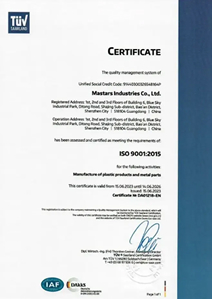
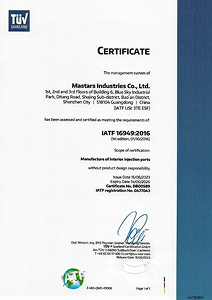
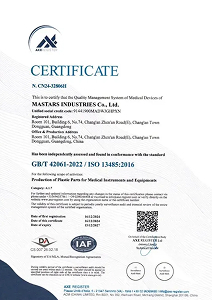
ISO 9001:2015 | ISO 13485:2016 | IATF 16949:2016

Injection Mold Tooling Services
0.002 mm
Mold Precision
50–60 Sets
Per Month
10
Business Days for Simple Molds
1M+
Shots

Prototype vs. Bridge vs. Production Tooling

Choose tooling based on design maturity, resin, expected volume, required tool life, and the likelihood of future design changes.
Comparison Factor Prototype / Rapid Tooling Bridge Tooling Production Tooling
Best For Design validation, T1 samples, functional testing Market testing, pilot production, ramp-up Stable designs, repeat orders, sustained production
Design Maturity Design may still change Geometry mostly validated; demand still uncertain Design, resin, and critical requirements largely frozen
Typical Volume Strategy Around 1,000–10,000 parts Around 10,000–100,000 parts 100,000+ parts or long-term repeat programs
Typical Tooling Approach Aluminum or rapid steel tooling Aluminum, hybrid, or production-intent steel Hardened or stainless steel as required
Typical Tool Life Commonly 10,000–50,000+ cycles with suitable aluminum tooling Up to around 100,000 cycles, depending on tool strategy 500,000–1,000,000+ shots with suitable steel tooling
Upfront Investment Lowest Moderate Highest
Engineering Changes Easier and less costly Possible, with increasing modification cost More extensive rework may be required
Resin Compatibility Abrasive or high-temperature resins require review Steel inserts or harder tooling may be required Better suited to glass-filled, abrasive, and high-temperature resins
Key Engineering Focus Moldability, fit, material behavior, design changes Cost, demand risk, and repeatability Tool life, cooling, cycle stability, and maintenance
Main Limitation Shorter tool life Can be outgrown if demand rises quickly Higher investment and less design-change flexibility

Custom Injection Mold Tooling

We define the tooling plan around resin, annual volume, cavity count, critical dimensions, surface requirements, mold actions, runner and gate design, cooling, ejection, and expected tool life.

After approval, molds can be maintained, repaired, modified, and revalidated for repeat production. Changes to inserts, gates, ejection, texture, or wear components are checked again with molded samples and dimensional inspection before release.

Injection Mold Tooling Precision

Tooling accuracy varies by feature. Critical cavity, core, insert, shutoff, and mating dimensions are controlled through CNC, EDM, grinding, fitting, and dimensional inspection before production release.
Precision Item Capability Engineering Consideration
Overall Mold Precision Down to 0.002 mm Critical cavity, core, insert, and tooling interfaces
CNC Machining Down to 0.005 mm Cores, cavities, inserts, and machined features
EDM Machining Down to 0.003 mm Deep ribs, narrow slots, and complex cavity details
Precision Grinding Down to 0.002 mm Shutoffs, mating surfaces, and precision inserts
CMM Measurement Accuracy 0.0017 mm Critical tooling and dimensional verification
Optical Measurement Accuracy 0.001 mm Small features, profiles, and edges
Molded-Part Precision Down to ±0.05 mm Suitable critical molded features

Materials for Injection Mold Tooling

Injection mold materials are selected around production volume, resin abrasiveness, molding temperature, surface requirements, dimensional stability, and expected tool life. Common options include aluminum, P20, H13, S7, and corrosion-resistant stainless tool steels.
Aluminum
P20 Steel
H13 Steel
S7 Steel
Stainless Steel
Aluminum

Aluminum machines quickly and transfers heat efficiently, making it practical for prototype, bridge, and selected low-to-medium-volume molds where faster tooling and easier changes matter.

Key Characteristics

Fast machining / High thermal conductivity / Easier modification / Lower initial tooling investment

Up to 50,000 cycles for selected applications

Glass-filled and abrasive resins can accelerate wear. Steel inserts can be used at gates, shutoffs, or other wear-critical areas.

Common Grades

2024 / 6061 / 7075

Typical Applications

Prototype molds, bridge tooling, design validation, low-to-medium-volume production

P20 Steel

P20 is a pre-hardened mold steel widely used for production tooling because it balances machinability, dimensional stability, polishability, cost, and tool life.

Key Characteristics

Good machinability / Stable dimensions / Good polishability / Balanced cost and life

Approximately 50,000–100,000+ shots

For highly abrasive, glass-filled, or high-temperature resins, harder steel or hardened inserts may provide better long-term wear resistance.

Typical Applications

Consumer products, appliance parts, industrial housings, general production molds

H13 Steel

H13 is a hardened steel for molds exposed to higher temperature, pressure, wear, or long production runs.

Key Characteristics

High wear resistance / High-temperature strength / Good thermal-fatigue resistance / Long production life

Up to 1M+ shots in suitable production tooling

Heat treatment and harder machining increase initial tooling cost and make later engineering changes more involved than with aluminum or P20.

Typical Applications

High-volume molds, engineering plastics, glass-filled resins, high-temperature molding

S7 Steel

S7 combines high impact toughness with wear resistance and is particularly useful for mold areas exposed to repeated mechanical loading or shock.

Key Characteristics

High impact toughness / Good wear resistance / Good dimensional stability / Durable under repeated loading

S7 is often used selectively for high-stress mold components rather than for the entire mold, allowing durability to be added where it is actually needed.

Typical Applications

Slides, lifters, shutoffs, inserts, cores, and mechanically loaded tooling features

Stainless Steel

410 and 420 stainless steels provide corrosion resistance, hardness, and good polishability for molds where cleanliness, moisture resistance, or high-quality cavity surfaces matter.

Key Characteristics

Corrosion resistance / Good polishability / Good wear resistance / Suitable for clean molding environments

Useful for corrosive resins, humid environments, frequent mold cleaning, and high-polish cavities where conventional steels may require more corrosion protection.

Common Grades

410 / 420

Typical Applications

Medical molds, food-contact tooling, transparent parts, high-gloss cosmetic surfaces

Surface Finishing Options for Injection Mold Tooling

Mold finishing controls molded-part appearance, texture, release behavior, and tooling wear. Finish selection depends on resin, cosmetic requirements, draft, and tool-life needs.
Finish Applicable Materials Result / Purpose Engineering Consideration
SPI Polishing Aluminum, P20, H13, S7, 420 Stainless Steel High-gloss, semi-gloss, or smooth molded surfaces Match polish level to cosmetic requirement
Mold Texture P20, H13, S7, Stainless Steel Matte, leather, grain, or patterned surfaces Deeper textures need more draft
EDM Finish P20, H13, S7, Stainless Steel Uniform matte or fine textured cavity surface Surface roughness transfers to the molded part
Bead / Abrasive Blasting Aluminum, Steel, Stainless Steel Matte or low-gloss surface Media size controls texture
Nitriding H13, S7 and compatible steels Increased surface hardness and wear resistance Best for wear-prone areas
Hard Chrome Plating Steel mold components Improved wear, corrosion resistance, and release Coating thickness affects critical dimensions
Electroless Nickel Plating Aluminum, Steel Corrosion protection and harder surface Consider coating thickness on precision features

Why Choose Mastars for Plastic Tooling?

Certified Quality Systems
ISO 9001, ISO 13485, and IATF 16949 certified processes help ensure consistent quality across industrial, medical, and automotive projects.
100+ Engineering Professionals
Work directly with experienced engineers for DFM reviews, tolerance recommendations, and manufacturing support—without unnecessary back-and-forth.
5+ Production Bases
Flexible manufacturing capacity supports both urgent prototypes and scalable production without single-site bottlenecks.
No Minimum Order Quantity
Order one part or thousands—without unnecessary volume commitments or tooling investments.
DFM Review on Every Order
Identify manufacturability risks early to reduce redesign cycles, save costs, and improve part performance before production begins.
800+ Customers Served
Trusted by global engineering teams across industrial equipment, medical devices, robotics, automotive, and consumer products.

Certifications

ISO9001:2015 Certificate

ISO9001:2015 Certificate

IATF16949:2016 Certificate

IATF16949:2016 Certificate

ISO13485:2016 Certificate

ISO13485:2016 Certificate

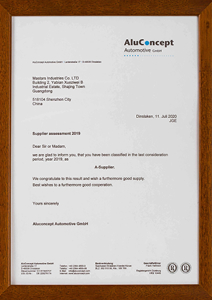
Medical A-Class Supplier

Medical A-Class Supplier

Partners

Auer Lighting
Bentley
Aston Martin
NVIDIA
Compac
Auer Lighting
Bentley
Aston Martin
NVIDIA
Compac

How Plastic Tooling Works

Upload Your Design

Share your CAD files, drawings, quantity, material, and any critical requirements.

Get an Engineer-Reviewed Quote

Receive pricing, lead time, and manufacturability feedback based on your part requirements.

Production Begins

Once you approve your quote, manufacturing starts — from prototype tooling to full-scale runs.

Parts Shipped

Finished parts are inspected, packaged, and shipped with the required quality documentation.

What Our Customers Say

Charlie Ozana

Charlie Ozana

Company: 445 LTDJob Title: CEOBusiness: Full turnkey company
Mastars in all my projects are partners. So I get all the support that I need from engineering management, pricing, timetable, QA, everything is as a partner, not as a supplier. For me, Masters is like home.
Nathan Johnson

Nathan Johnson

Company: Gusto Global IndustriesJob Title: DirectorBusiness: Dust reduction system
They were such a lovely company to deal with, and we couldn't be more happier even to today down the track with even more products moving forward. Very professional, easy to deal with, get back to you straight away, contact is easy through WeChat and email, move forward as quickly as you can.
Oded Kalawanl

Oded Kalawanl

Company: Annabella Tech IsraelJob Title: R&D managerBusiness: Breast pump
We managed to make it in a very short time warm prototyping to mass production and FDA approval. That makes me feel confidence to choose Mastars.
Jade Harris

Jade Harris

Company: Buddy SystemJob Title: Co-founderBusiness: Wireless instant safety alert device
We're glad that we found a company like Mastars to make the product for us because it's been so good to deal with. They're a really good company.
Dror Harel

Dror Harel

Company: BlonessJob Title: General ManagerBusiness: L300, H200
I think the relationship between the buyers and definitely between me the Mastars it's like a family relationship and this is why we are so happy to produce in Mastars and this is why we came for 15 years. By the way, now we came with a new product that we come to Master to produce for the new year.

Injection Mold Tooling FAQs

  • What is injection mold tooling?

    Injection molding tooling—also called injection mold tooling—is the mold system used to produce plastic injection-molded parts. It typically includes the cavity, core, runner and gates, cooling, ejection, and any inserts, slides, or lifters required by the part geometry.

  • What is the difference between injection mold tooling and injection molding?

    Injection mold tooling creates and maintains the mold. Injection molding uses that mold to manufacture plastic parts. Tooling therefore covers mold design, machining, assembly, trials, corrections, and approval before repeat molding begins.

  • How much does injection mold tooling cost?

    It depends. Mold size, cavity count, tool material, part complexity, tolerance, surface finish, slides or lifters, runner system, resin, and expected tool life all affect tooling cost. A lower-cost tool is not always the lowest-cost option if production volume or wear requirements are high.

  • How long does injection mold tooling take?

    It depends on mold complexity. Simple prototype molds can start from 10 business days. Multi-cavity molds, hot runners, side actions, textures, tighter requirements, and design revisions take longer because they require more machining, fitting, trial, and correction.

  • Do I need prototype tooling or production tooling?

    It depends on design maturity, volume, resin, and required tool life. Prototype or bridge tooling is useful while the design or demand may still change. Production tooling is better when the design is stable and the mold must support repeat production, tighter process control, and longer service life.

  • Should I choose an aluminum or steel injection mold?

    It depends. Aluminum is useful for faster prototype and bridge tooling, while P20, H13, S7, and stainless steels are better suited to different production, wear, temperature, and surface requirements. Resin abrasiveness, expected volume, geometry, and future design changes matter more than volume alone.

  • Do you review my design before making the mold?

    Yes. We review wall thickness, draft, ribs, bosses, undercuts, gates, shrinkage, critical dimensions, and cosmetic surfaces before tool build. Changes are usually faster and less expensive before CNC and EDM begin.

  • What happens if the T1 samples do not meet my requirements?

    The mold or process is corrected based on dimensional, cosmetic, assembly, filling, warpage, flash, sink, or ejection findings, then trialed again. T1 is a validation step, not final production approval.

  • How long will an injection mold last?

    It depends on tool material, resin, glass-fiber content, molding temperature, pressure, part geometry, maintenance, and cycle conditions. Aluminum tools may support tens of thousands of cycles in suitable applications, while properly specified steel production tools can reach 1M+ shots.

  • What information do you need for an injection mold tooling quote?

    A 3D CAD file is enough to start. For a more accurate quote, include resin, expected annual volume, 2D drawings, critical dimensions, surface requirements, cavity expectations, inserts, and any special inspection requirements. Rough information is fine for the initial review.

  • Who owns the injection mold tooling, and can it be transferred?

    Ownership and transfer terms should be agreed before tool build. For transferred molds, press compatibility, hot runner and cooling condition, wear, drawings, maintenance history, and existing samples should be reviewed before requalification.

Tell Us About Your Project

Share your project details and files with us. Rough information is fine to start. Our engineering consultant will contact you within 24 hours.

Verification code