Quality Management

Quality Management
3D Printing Quality Assurance & Inspection

From DfAM review to final inspection, Mastars aligns critical quality requirements before printing and verifies approved dimensions, surfaces, materials, and manufacturing requirements throughout the project.

  • DfAM & drawing review for critical features and post-processing
  • Critical dimensions, GD&T & customer-defined acceptance criteria
  • Surface, finish & post-processing verification
  • Inspection records & quality documentation based on project needs
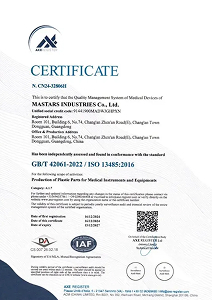
ISO 9001:2015 | ISO 13485:2016 | IATF 16949:2016

3D Printing Quality Assurance & Inspection
15+
CMM Systems
100+
Engineering Professionals
800+
Global Customers
20+
Years of Manufacturing Experience
3D Printing Quality Control Process

3D Printing Quality Control Process

Quality control starts before printing. Critical features, acceptance criteria, process risks, and inspection requirements should be defined before the build begins.

1. Before manufacturing: Review CAD geometry, material, critical dimensions, build orientation, support or powder-removal risks, and post-processing requirements before production release.

2. During manufacturing: Follow the approved material, build orientation, and process route, with in-process inspection applied where required. First-article verification can be completed before repeat production continues.

3. Final inspection: Use CMM, optical measurement, visual inspection, and surface checks as applicable to verify drawing-defined critical dimensions and approved requirements.

4. Documentation & release: Complete final quality checks and provide agreed inspection or manufacturing records before parts are released for shipment.

Our 3D Printing Quality Capabilities

Our 3D Printing Quality Capabilities

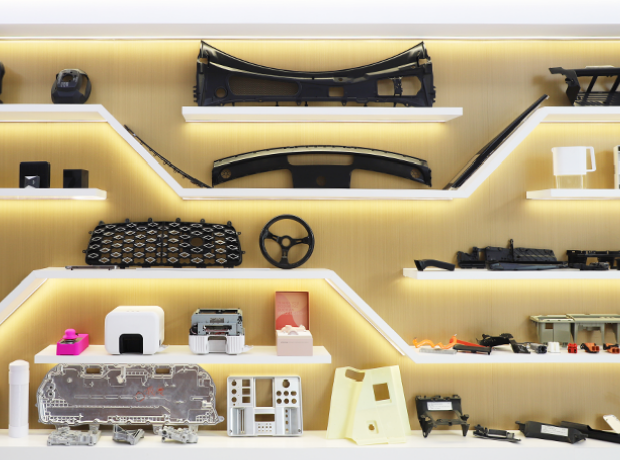
Mastars reviews 3D printing designs through DfAM and drawing evaluation, material selection, and process assessment before manufacturing. Critical dimensions, part geometry, printing requirements, and post-processing considerations are reviewed to identify potential risks and establish appropriate quality requirements.

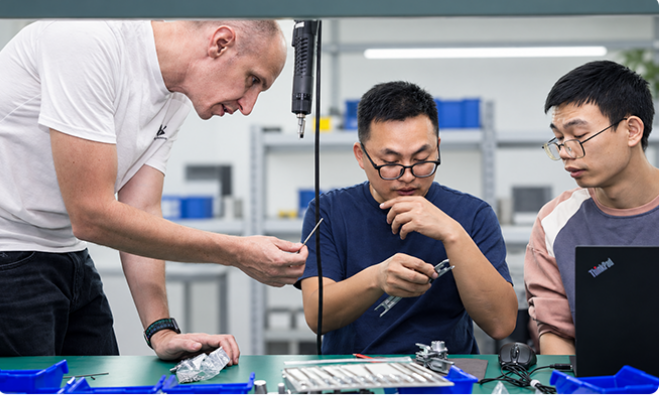
Throughout manufacturing, quality verification can include First Article Inspection (FAI), In-Process Quality Control (IPQC), Final Quality Control (FQC), CMM dimensional measurement, and optical inspection. Surface finish and post-processing are also checked against approved requirements, with inspection records and quality documentation provided according to project needs.

Engineering & Quality Team

Engineering & Quality Team

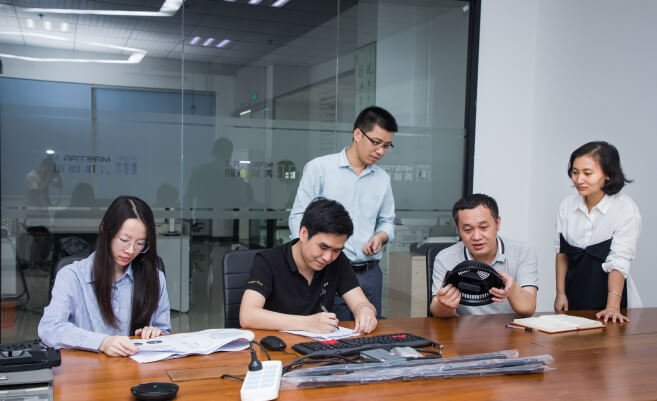
Engineering and quality teams align critical dimensions, inspection methods, acceptance criteria, and post-processing checks before manufacturing release. Inspection results are evaluated against the approved drawing and project requirements so quality decisions are based on defined acceptance criteria.

Quality Standards & Inspection Criteria

Acceptance criteria should follow the approved drawing and project requirements, with inspection controls adjusted to the selected 3D printing process.
Quality Control Area Acceptance Basis What We Check
Drawing & Revision Control Approved 2D drawing, 3D CAD model, revision level and drawing notes Correct design revision, dimensions, notes and manufacturing requirements before release
Critical Dimensions & GD&T Drawing-defined tolerances, GD&T and critical feature callouts Datums, hole locations, mating surfaces, assembly interfaces, sealing features and functional dimensions
Material Requirements Approved material, grade and project-specific material requirements Material specification against the approved project requirement
Process Requirements Approved 3D printing process and manufacturing route Printing technology, build strategy, orientation and process-specific controls where they affect part quality
Surface & Appearance Approved surface finish, texture, color or cosmetic requirements Visible surfaces, support-contact areas, surface defects, color and overall appearance
Functional & Assembly Requirements Approved sample, assembly requirement or project-specific functional criteria Fit, alignment, movement, sealing and other defined functional interfaces where applicable
Post-Processing Approved curing, depowdering, heat treatment, machining, polishing, dyeing, coating or other secondary operations Completion of required secondary processes and their effect on critical dimensions or surfaces
First Article Inspection Approved drawing and first-build inspection requirements Critical dimensions, fit-related features, surfaces and other defined characteristics before repeat production
In-Process Inspection Production control plan and project-specific checkpoints Process consistency, dimensional risks and manufacturing conditions during repeat builds
Final Quality Inspection Approved drawing, inspection criteria and customer requirements Final dimensions, appearance, surface condition and specified functional interfaces before shipment
Customer-Specific Requirements Customer drawings, inspection points, sampling requirements and acceptance criteria Project-specific dimensions, cosmetic standards and other agreed quality requirements

Inspection Equipment

HEXAGON elobal silver classic sr CMM

HEXAGON elobal silver classic sr CMM

Haoxinda HR-150A CMM

Haoxinda HR-150A CMM

Hexagon RA 85307 AXIS CMM

Hexagon RA 85307 AXIS CMM

Certifications

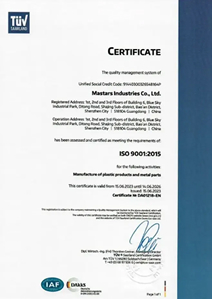
ISO9001:2015 Certificate

ISO9001:2015 Certificate

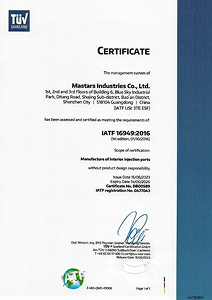
IATF16949:2016 Certificate
IATF16949:2016 Certificate

ISO13485:2016 Certificate

ISO13485:2016 Certificate

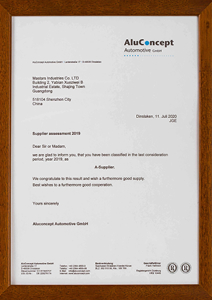
Medical A-Class Supplier

Medical A-Class Supplier

Partners

445 Projects
xylem
Bentley
Aston Martin
HARMAN
Annabella
Auer Lighting
NVIDIA
Compac
G4S
hs products
luxshareict
KK
Bioness
SGM
Nmble
Lear
LLEN&HEAT
belkin
DaAn Gene
MAGNA
pdd
Flite
simens
philips
maxwell
Land Rover

What Our Customers Say

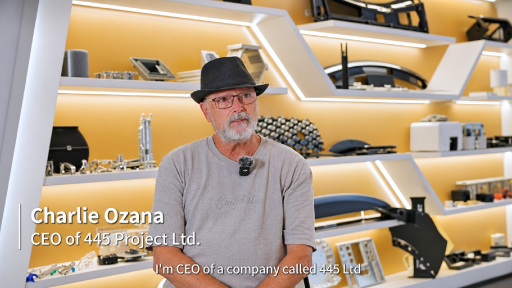
Charlie Ozana

Charlie Ozana

Company: 445 LTDJob Title: CEOBusiness: Full turnkey company
Mastars in all my projects are partners. So I get all the support that I need from engineering management, pricing, timetable, QA, everything is as a partner, not as a supplier. For me, Masters is like home.
Nathan Johnson

Nathan Johnson

Company: Gusto Global IndustriesJob Title: DirectorBusiness: Dust reduction system
They were such a lovely company to deal with, and we couldn't be more happier even to today down the track with even more products moving forward. Very professional, easy to deal with, get back to you straight away, contact is easy through WeChat and email, move forward as quickly as you can.
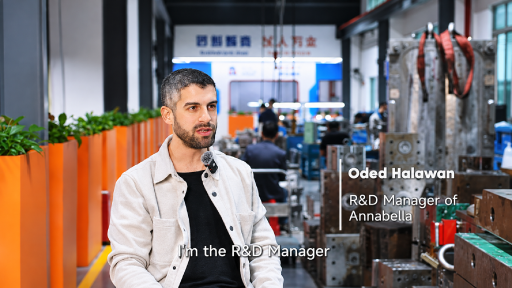
Oded Halawani

Oded Halawani

Company: Annabella Tech IsraelJob Title: R&D managerBusiness: Breast pump
We managed to make it in a very short time warm prototyping to mass production and FDA approval. That makes me feel confidence to choose Mastars.
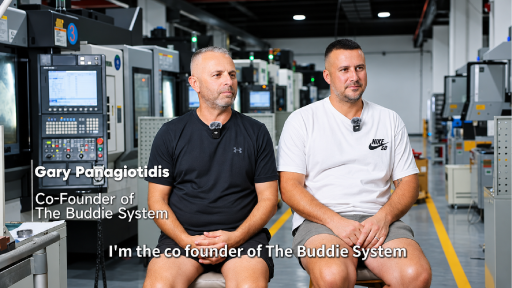
Jade Harris

Jade Harris

Company: Buddy SystemJob Title: Co-founderBusiness: Wireless instant safety alert device
We're glad that we found a company like Mastars to make the product for us because it's been so good to deal with. They're a really good company.
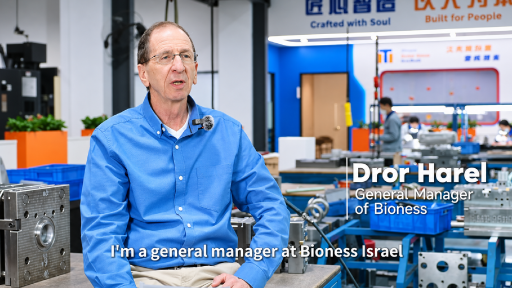
Dror Harel

Dror Harel

Company: BlonessJob Title: General ManagerBusiness: L300, H200
I think the relationship between the buyers and definitely between me the Mastars it's like a family relationship and this is why we are so happy to produce in Mastars and this is why we came for 15 years. By the way, now we came with a new product that we come to Master to produce for the new year.

3D Printing Quality Control FAQs

  • How do you ensure quality in 3D printing?

    Quality control starts before printing. We review the CAD model, material, critical dimensions, build strategy, post-processing, and inspection requirements first, then apply project-specific first-article, in-process, and final inspection where required.

  • What inspection methods are available for 3D printed parts?

    It depends on the part and printing process. Available methods include CMM dimensional inspection, 2D optical measurement, visual and surface inspection, height and profile measurement, and project-specific first-article and final inspection.

  • What inspection equipment does Mastars use?

    Mastars has 15+ CMM systems, including HEXAGON, Zeiss, and Mitutoyo equipment, together with optical measurement systems, height gauges, tool microscopes, and profile projectors. The inspection method is selected around feature size, geometry, accessibility, and required accuracy.

  • Can you provide inspection reports for 3D printing projects?

    Yes. Depending on project requirements, documentation can include dimensional inspection records, material information, and manufacturing or quality records. Tell us what documentation is required before production so it can be included in the inspection plan.

  • How do you control batch-to-batch variation in production 3D printing?

    Consistency depends on controlling the approved material, build orientation, process route, post-processing, and inspection criteria. For repeat production, critical dimensions and acceptance requirements should be defined before the first approved build rather than changed between batches.

  • How does DfAM review improve 3D printing quality?

    DfAM review identifies risks before printing, including thin or weak features, support access, powder escape, build orientation, distortion, critical interfaces, and post-processing allowances. The exact review differs between SLA, SLS, MJF, FDM, PolyJet, and metal additive processes.

  • How do you inspect complex or internal 3D printed features?

    It depends on feature accessibility. CMM and optical systems can verify many external and accessible dimensions, but enclosed internal channels cannot always be measured with conventional equipment. If internal geometry requires CT scanning or another specialized NDT method, that requirement should be identified and confirmed separately before production.

  • Do different 3D printing technologies require different quality criteria?

    Yes. SLA may be affected by support placement and post-curing, SLS and MJF by thermal behavior and powder removal, FDM by layer orientation and warpage, PolyJet by support-contact surfaces, and metal AM by residual stress, supports, heat treatment, and machining. Inspection criteria should reflect the selected process.

  • Can you support production-quality 3D printed parts?

    Yes, for suitable processes and applications. Production-oriented projects can use FAI, in-process inspection, FQC, dimensional inspection, and agreed acceptance criteria to support repeat builds.

  • What should I provide for a 3D printing quality review?

    A 3D CAD file is enough to start. Add a 2D drawing when critical dimensions, GD&T, surface requirements, material requirements, inspection points, or documentation need to be controlled. If only certain interfaces are critical, mark them clearly rather than applying unnecessarily tight requirements to the entire part.

Tell Us About Your Project

Share your project details and files with us. Rough information is fine to start. Our engineering consultant will contact you within 24 hours.

Verification code