| Comparison Factor |
Plastic Extrusion |
Injection Molding |
| Best For |
Continuous profiles, tubing, seals, channels, trims, pipes, rails, and weatherstripping |
Individual 3D parts such as housings, brackets, covers, clips, bosses, and complex molded components |
| Part Geometry |
Constant cross-section along the extrusion direction |
Geometry can change throughout the part |
| Typical Length |
Continuous production, then cut or coiled to the required length |
Fixed part dimensions defined by the mold cavity |
| Typical Features |
Channels, hollow sections, multiple lumens, hard/soft sections, and continuous layers |
Ribs, bosses, snap fits, pockets, undercuts, threads, and localized features |
| Multi-Material Options |
Co-extrusion, dual-durometer, tri-extrusion, multi-color, and continuous substrate encapsulation |
Overmolding, insert molding, and two-shot molding |
| Tooling |
Custom extrusion die and calibration tooling |
Multi-part injection mold with cavity, core, gates, cooling, and ejection systems |
| Tooling Investment |
Generally lower for suitable continuous profiles |
Generally higher because mold construction is more complex |
| Production Strength |
Efficient for long, repeatable profiles and continuous high-volume production |
Efficient for high-volume production of discrete, repeatable 3D parts |
| Secondary Operations |
Cutting, drilling, punching, notching, printing, welding, laminating, and assembly may add localized features |
Many 3D features can be molded directly, reducing secondary machining |
| Key Design Considerations |
Cross-section consistency, wall thickness, material flow, die swell, cooling, dimensional stability, and cut length |
Draft, shrinkage, wall thickness, ribs, bosses, gates, cooling, ejection, and warpage |
| Main Limitation |
Isolated bosses, pockets, countersunk holes, or changing cross-sections cannot normally be formed directly by extrusion |
Not efficient for producing very long continuous profiles |




 English



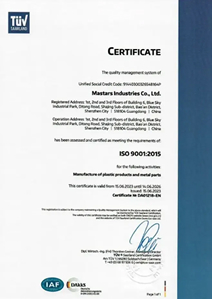
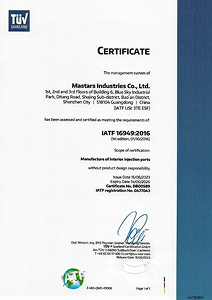
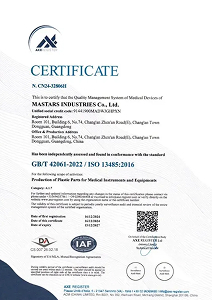
 ISO 9001:2015 | ISO 13485:2016 | IATF 16949:2016





























 Headquarters


