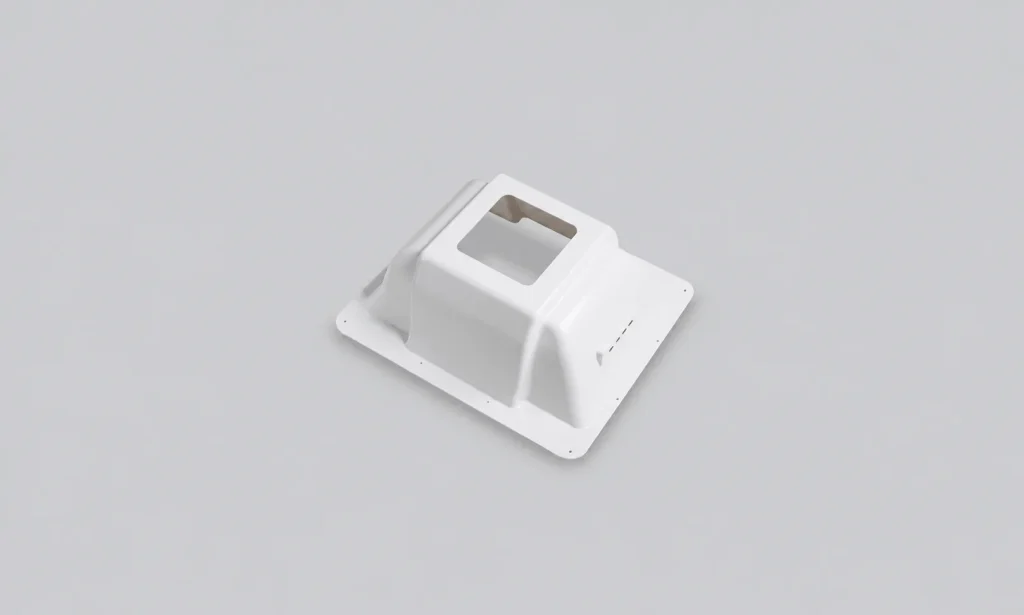


Electric Molds

Electrical Molds & Tooling Services

Custom injection molds for connectors, terminals, enclosures, switches, and other electrical components, matched to resin, inserts, critical dimensions, and production volume.

  • Fine features, thin walls & precision inserts
  • Insert, 2K & multi-cavity tooling
  • PBT, LCP, PA66 & flame-retardant plastics
  • Mold flow & T0/T1/T2 validation
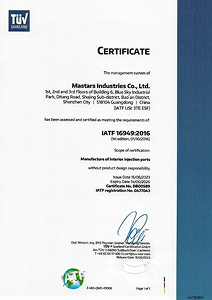
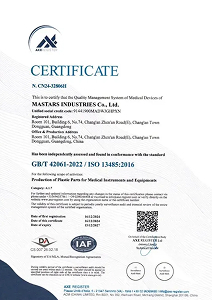
ISO 9001:2015 | ISO 13485:2016 | IATF 16949:2016

Electrical Molds & Tooling Services
0.002 mm
Mold Precision
1M Shots
Production Tool Life
≤ 48 Hours
DFM Report
100+
Engineering Professionals

Electrical Mold Manufacturing Capabilities

Connector & Terminal Molds
Tooling for connector housings, plug and socket housings, terminal blocks, fuse holders, relay components, and circuit-breaker parts requiring controlled pin locations, small cavities, flash, and mating dimensions.
Get a Quote
Electrical Enclosure Molds
Injection molds for junction boxes, control enclosures, PCB housings, charger housings, power-supply housings, and battery compartments, with warpage, sealing interfaces, and assembly fit considered early.
Get a Quote
Switch & Appliance Component Molds
Tooling for switch housings, button caps, control-panel parts, knobs, cable guides, insulation components, and internal appliance parts requiring repeatable fit, surface quality, and dimensional stability.
Get a Quote
Insert & Multi-Material Molds
Tooling for molded-in terminals, pins, busbars, threaded inserts, sealed connectors, 2K parts, and overmolded electrical components, with insert positioning, plastic flow, flash control, and material interfaces reviewed before tooling.
Get a Quote

Electrical Mold Design & Validation Considerations

Electrical component molds often combine small cavities, thin insulating features, metal inserts, engineering plastics, and multiple assembly dimensions. Tool design should account for resin behavior, insert positioning, flow, cooling, wear, and critical interfaces before steel is cut.
Engineering Area What We Review Why It Matters
Terminal & Pin Features Pin holes, terminal cavities, core-pin alignment and small molded features Controls connector alignment, mating fit and cavity-to-cavity consistency
Metal Inserts Insert position, retention, plastic flow and shutoff around terminals, pins and busbars Reduces insert movement, short shots and flash around conductive components
Gates & Filling Gate location, flow length, weld lines, gate vestige and filling balance Fills thin sections and small features while controlling weld lines and gate marks
Flash Control Shutoffs, parting surfaces, insert interfaces and local pressure Limits flash around terminals, mating areas and small electrical features
Cooling & Warpage Wall transitions, hot spots, cooling layout and expected shrinkage Improves dimensional stability in housings, covers and long or flat components
Engineering Plastics PBT, LCP, PA66, PC and reinforced or flame-retardant grades Resin flow, shrinkage, processing temperature and fiber content affect tooling strategy
Tool Steel & Wear Areas Resin abrasiveness, glass-fiber content, core pins, sliders and high-wear inserts Reduces premature wear and dimensional drift during repeat production
Creepage & Clearance Insulating distances, ribs, barriers, terminal spacing and molded interfaces Preserves required electrical isolation and avoids geometry changes that affect assembly or electrical performance
Critical Dimensions Mating interfaces, connector geometry, sealing features and assembly dimensions Focuses tooling and inspection control on dimensions that affect final assembly
Multi-Cavity Balance Runner balance, cavity filling and cavity-to-cavity variation Improves repeatability when scaling electrical components into higher-volume production
T0/T1/T2 Validation Dimensional results, flash, warpage, fill, appearance and assembly performance Identifies tooling or process corrections before production release
Custom Electrical Mold Tooling

Custom Electrical Mold Tooling

Electrical molds should be configured around part geometry, resin, metal inserts, annual volume, critical dimensions, and target tool life. Mastars adjusts steel, cavity count, runner and cooling, replaceable wear components, inspection, and maintenance to balance part consistency, downtime, and piece-part cost.

Electrical Tooling Materials

Mold steel and molding resin should be selected together. Electrical parts commonly use PBT, LCP, PA66, PC, and flame-retardant or glass-filled grades, which affect tool wear, shrinkage, venting, cooling, and flash control. For flame-retardant parts, the required UL94 rating and production resin should be confirmed before tool design.
S136 Stainless Steel
H13 / SKD61 Steel
NAK80 Steel
718H Steel
PBT
LCP
PA66 / PA66-GF
PC / Flame-Retardant PC
S136 Stainless Steel

S136 combines corrosion resistance, polishability, and hardened mold performance for precision electrical tooling.

Key Characteristics

Hardenable to approximately HRC 48–52

High corrosion resistance

Good polishability

Good dimensional stability

For glass-filled or highly abrasive compounds, wear should still be reviewed at gates, core pins, shutoffs, sliders, and other high-contact areas. Replaceable hardened inserts may be more economical than hardening the entire mold.

Typical Applications

Connector cavities, precision electrical housings, high-cycle molds, polished surfaces, and tooling exposed to corrosive resin additives.

H13 / SKD61 Steel
H13 / SKD61 Steel
H13 / SKD61 Steel
H13 / SKD61 Steel
H13 / SKD61 Steel
H13 / SKD61 Steel
H13 / SKD61 Steel
H13 / SKD61 Steel
H13 / SKD61 Steel

H13 is a hardened hot-work steel suited to localized mold components exposed to heat, pressure, and repeated mechanical wear.

Key Characteristics

- High wear resistance

- Good hot hardness

- High toughness

- Suitable for hardened inserts

Electrical connector molds often contain thin pins and small shutoffs. Steel hardness alone does not prevent failure; feature geometry, support, cooling, gate position, and maintenance access also affect service life.

Typical Applications

Core pins, terminal cavities, gate areas, sliders, shutoffs, and replaceable inserts used with glass-filled PBT, PA66, PPS, and other abrasive engineering resins.

NAK80 Steel
NAK80 Steel
NAK80 Steel
NAK80 Steel
NAK80 Steel
NAK80 Steel
NAK80 Steel
NAK80 Steel
NAK80 Steel

NAK80 provides stable pre-hardened properties with good machinability and surface finishing for precision mold cavities.

Key Characteristics

- Pre-hardened steel

- Good dimensional stability

- Good EDM response

- High polishability

For heavily glass-filled materials or very long production programs, high-wear locations may need harder inserts or another steel grade rather than relying on NAK80 throughout the tool.

Typical Applications

Switch housings, electrical enclosures, connector bodies, cosmetic components, and medium- to high-volume precision tooling.

718H Steel
718H Steel
718H Steel
718H Steel
718H Steel
718H Steel
718H Steel
718H Steel
718H Steel

718H balances machining efficiency, mold stability, and durability for general electrical component tooling.

Key Characteristics

- Pre-hardened for machining

- Good dimensional stability

- Good polishability

- Longer life than aluminum tooling

For small connector features or abrasive reinforced resins, critical core pins, gates, and shutoffs may require locally hardened or replaceable components.

Typical Applications

Electrical enclosures, switch components, appliance housings, larger cavities, and general-purpose production molds.

PBT
PBT
PBT
PBT
PBT
PBT
PBT
PBT
PBT

PBT is widely used for electrical connectors and insulating components because it combines electrical insulation, dimensional stability, heat resistance, and fast molding cycles.

Key Characteristics

- Good electrical insulation

- Low moisture absorption

- Good dimensional stability

- Available in flame-retardant and glass-filled grades

Glass-filled PBT increases wear at gates, core pins, and shutoffs. Shrinkage, venting, weld lines, and flash around terminals should be evaluated before tool release.

Typical Applications

Connectors, sockets, terminal blocks, relay housings, switches, and appliance components.

LCP

LCP is used for small, thin-wall electrical components that require high-temperature capability and very good flow into fine features.

Key Characteristics

- Excellent thin-wall flow

- High heat resistance

- Low dimensional change

- Good electrical properties

Very low-viscosity flow can expose small shutoff or parting-line gaps. Venting, gate design, core-pin rigidity, and flash control become especially important on miniature connector tooling.

Typical Applications

Fine-pitch connectors, miniature sockets, electronic terminals, and compact precision components.

PA66 / PA66-GF

PA66 provides mechanical strength, heat resistance, and electrical insulation, while glass-filled grades improve stiffness and dimensional performance.

Key Characteristics

- High mechanical strength

- Good heat resistance

- Good electrical insulation

- Glass-filled and flame-retardant grades available

Glass fiber increases mold wear, while moisture conditioning affects final part dimensions. Fiber orientation can also influence shrinkage and warpage in long or asymmetric parts.

Typical Applications

Connector housings, terminal blocks, switches, circuit-breaker components, and structural electrical parts.

PC / Flame-Retardant PC

PC is selected for electrical housings where impact resistance, dimensional stability, appearance, and flame-retardant grades are important.

Key Characteristics

- High impact resistance

- Good dimensional stability

- Good electrical insulation

- Flame-retardant grades available

PC requires controlled drying and relatively high processing temperatures. Thick-to-thin transitions, residual stress, gate location, and cooling balance can affect warpage and appearance.

Typical Applications

Electrical enclosures, charger housings, control panels, appliance covers, and switch components.

Surface Finishing Options

Surface finish can support appearance, identification, wear resistance, static control, or conductivity. Selection should consider resin, geometry, cosmetic requirements, functional interfaces, and dimensional impact.
Finish Best For Engineering Consideration
Mold Texture Matte, grain, leather or patterned housings Deeper texture requires more draft and affects release
Polishing Glossy housings and smooth molded surfaces Mold surface quality transfers directly to the molded part
Painting Custom colors, appliance housings and control panels Surface preparation and resin type affect adhesion
Conductive / ESD Coating Housings requiring static-control or conductive surfaces Surface resistance, masking and grounding areas should match product requirements
Screen Printing Labels, symbols, warnings and larger graphics Best for flat or slightly curved surfaces
Pad Printing Buttons, switches, small logos and curved parts Suitable for small areas and irregular geometry
Laser Marking Serial numbers, QR codes and permanent identification Contrast depends on resin, pigment and additives
Electroplating Metallic appearance or conductive plastic surfaces Resin compatibility and coating build must be considered around functional interfaces

Electrical Mold Precision & Inspection Capabilities

Electrical connectors, terminals, and small housings can concentrate multiple critical dimensions into a small area. Mold precision and molded-part tolerance are controlled separately; final part capability also depends on resin, geometry, shrinkage, feature size, and molding conditions.
Precision Area Capability Electrical Tooling Application
Critical Mold Features Down to 0.002 mm Core pins, cavity inserts, shutoffs and alignment features
Precision CNC Machining Down to 0.005 mm Mold cores, cavities, insert pockets and mating surfaces
Precision EDM 0.003–0.005 mm Deep ribs, narrow slots, terminal cavities and internal features
Precision Grinding Down to 0.002 mm Inserts, shutoffs, sliders and precision mating components
CMM Measurement Accuracy 0.0017 mm Critical dimensions, datums, cavity geometry and insert locations
Height Measurement Accuracy 0.0005 mm Mold components and precision feature verification
Optical Measurement Accuracy 0.001 mm Small slots, profiles, pin features and edge geometry
Micro / Critical Molded Features Down to ±0.01 mm Suitable connector interfaces, terminal locations and small functional features
Mating / Assembly Dimensions Down to ±0.05 mm Critical connector, enclosure and assembly interfaces

Electrical Tooling Equipment & Manufacturing Capabilities

CNC Mold Machining

CNC Mold Machining

EDM & Wire-Cut Machines

EDM & Wire-Cut Machines

Mold Trial & Inspection

Mold Trial & Inspection

Why Choose Mastars for Electrical Mold Tooling?

DFM Within 48 Hours
Review resin, inserts, gates, venting, shrinkage, flash, critical dimensions, and mold structure before steel is cut.
20+ Years of Tooling Experience
Project engineers support design reviews, mold trials, corrections, and production release with direct technical communication.
In-House Toolmaking
CNC, EDM, grinding, fitting, polishing, assembly, and mold trials are managed through one tooling workflow.
Connector & Insert Tooling
Tooling for terminals, pins, busbars, small core features, and molded-in inserts with positioning and flash control considered early.
24–48 Hour Maintenance Response
Rapid support for replaceable inserts, core pins, sliders, gates, and other wear components helps reduce downtime during repeat production.
FAI & CMM Validation
Critical dimensions, insert locations, cavity features, fit, flash, and warpage are checked before production release.

Certifications

ISO9001:2015 Certificate

ISO9001:2015 Certificate

IATF16949:2016 Certificate

IATF16949:2016 Certificate

ISO13485:2016 Certificate

ISO13485:2016 Certificate

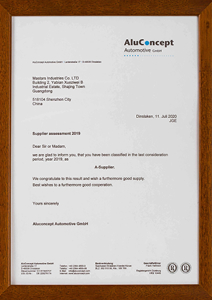
Medical A-Class Supplier

Medical A-Class Supplier

Partners

445 Projects
xylem
Bentley
Aston Martin
HARMAN
Annabella
Auer Lighting
NVIDIA
Compac
G4S
hs products
luxshareict
KK
Bioness
SGM
Nmble
Lear
LLEN&HEAT
belkin
DaAn Gene
MAGNA
pdd
Flite
simens
philips
maxwell
Land Rover

How to Work with Us

Share Your Project

Send a CAD file, drawing, or brief. Start with what you have.

Engineering Review & Quote

We review your requirements and confirm the process, price, and lead time.

We Make Your Parts

Once approved, we prepare the process and manufacture your parts.

Inspection & Delivery

We inspect, pack, and ship your finished parts.

What Our Customers Say

Charlie Ozana

Charlie Ozana

Company: 445 LTDJob Title: CEOBusiness: Full turnkey company
Mastars in all my projects are partners. So I get all the support that I need from engineering management, pricing, timetable, QA, everything is as a partner, not as a supplier. For me, Masters is like home.
Nathan Johnson

Nathan Johnson

Company: Gusto Global IndustriesJob Title: DirectorBusiness: Dust reduction system
They were such a lovely company to deal with, and we couldn't be more happier even to today down the track with even more products moving forward. Very professional, easy to deal with, get back to you straight away, contact is easy through WeChat and email, move forward as quickly as you can.
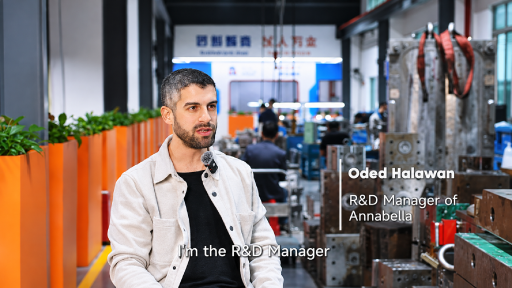
Oded Halawani

Oded Halawani

Company: Annabella Tech IsraelJob Title: R&D managerBusiness: Breast pump
We managed to make it in a very short time warm prototyping to mass production and FDA approval. That makes me feel confidence to choose Mastars.
Jade Harris

Jade Harris

Company: Buddy SystemJob Title: Co-founderBusiness: Wireless instant safety alert device
We're glad that we found a company like Mastars to make the product for us because it's been so good to deal with. They're a really good company.
Dror Harel

Dror Harel

Company: BlonessJob Title: General ManagerBusiness: L300, H200
I think the relationship between the buyers and definitely between me the Mastars it's like a family relationship and this is why we are so happy to produce in Mastars and this is why we came for 15 years. By the way, now we came with a new product that we come to Master to produce for the new year.

Electrical Mold Tooling FAQs

  • What types of electrical components can Mastars build molds for?

    We support a wide range of electrical and electronic components. Typical parts include connector housings, plugs, sockets, terminal blocks, fuse and relay housings, switches, junction boxes, PCB enclosures, charger housings, appliance components, and other insulating or structural plastic parts. Insert, 2K, overmolding, and multi-cavity tooling are also available.

  • Can you build molds for UL94 V-0 flame-retardant plastics?

    Yes. We can design tooling around flame-retardant grades of PBT, PA66, PC, LCP, PPS, and other engineering plastics. The actual resin grade should be confirmed before tooling because flame-retardant additives affect flow, venting, shrinkage, surface quality, and mold wear. UL94 applies to the material or finished product requirement, not to the mold itself.

  • What mold steels do you use for glass-filled engineering plastics?

    It depends on resin, glass content, geometry, and expected tool life. S136, H13/SKD61, NAK80, 718H, and hardened inserts can be selected as required. For abrasive glass-filled PBT or PA66, gates, core pins, shutoffs, sliders, and other high-wear areas may use hardened or replaceable inserts to reduce wear and simplify maintenance.

  • Can you handle insert molding for connectors with metal terminals or pins?

    Yes. We support molded-in terminals, pins, busbars, contacts, threaded inserts, and other conductive components. Tooling review focuses on insert positioning and retention, plastic flow around the metal, short-shot and flash prevention, electrical clearance, and final connector alignment.

  • What precision can you achieve for electrical molds and small connector features?

    Critical tooling features can reach approximately 0.002 mm for suitable projects. Final molded-part tolerances depend on resin, geometry, shrinkage, feature size, and molding conditions. Critical terminal cavities, pin locations, mating interfaces, and cavity-to-cavity dimensions should be identified on the drawing before tooling.

  • How do you control flash and warpage with LCP, PBT, and other engineering plastics?

    We address both through mold design and process validation. Gate position, venting, shutoffs, wall transitions, cooling, shrinkage, fiber orientation, and molding pressure are reviewed before release. Low-viscosity materials such as LCP require especially careful shutoff and vent design, while glass-filled PBT or PA66 also need attention to directional shrinkage and tool wear.

  • What happens before the first T1 samples are made?

    We complete DFM and tooling review before steel is cut. The review covers resin, wall thickness, draft, inserts, gates, venting, cooling, shrinkage, critical dimensions, ejection, and mold structure. After mold manufacture, T0/T1/T2 trials are used to check dimensions, insert position, flash, warpage, appearance, fit, and molding stability before production approval. DFM feedback can be provided within 48 hours, and T1 samples can be ready in as fast as 10 days for suitable projects.

  • What quality certifications and inspection capabilities does Mastars have?

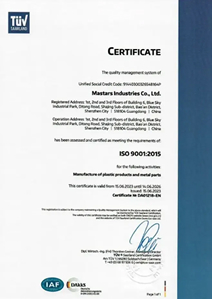
    Mastars is ISO 9001 certified, with ISO 13485 and IATF 16949 quality systems supporting relevant medical-electronics and automotive-electronics projects. Inspection can include FAI, CMM, optical measurement, height measurement, and dimensional checks for critical connector features, insert locations, flash, fit, and warpage.

Tell Us About Your Project

Share your project details and files with us. Rough information is fine to start. Our engineering consultant will contact you within 24 hours.

Verification code