Multi Jet Fusion (MJF)

Multi Jet Fusion (MJF)
MJF 3D Printing Services

Multi Jet Fusion (MJF) 3D printing for functional nylon parts, rapid prototypes, and short-run production without traditional tooling.

  • PA12, PA11, glass-filled nylon, TPU & PP
  • Complex geometries, snap fits, housings & assemblies
  • Support-free printing for efficient batch production
  • Dyeing, vapor smoothing, machining & assembly
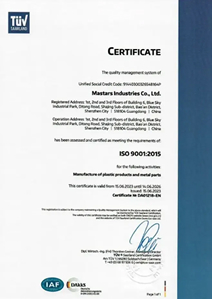
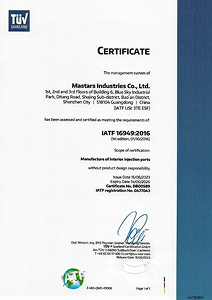
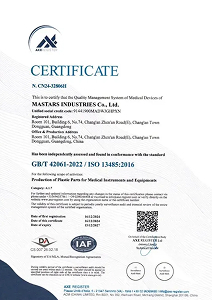
ISO 9001:2015 | ISO 13485:2016 | IATF 16949:2016

MJF 3D Printing Services
80 μm
Typical Layer
3 Days
Fast Delivery
0
MOQ
100+
Engineering Professionals

MJF 3D Printing Capabilities

Functional Nylon Parts
Produce durable PA12, PA11, filled nylon, and flexible parts for functional testing, assemblies, manufacturing aids, and end-use applications.
Get a Quote
Support-Free Complex Geometry
Build internal features, curved structures, hollow sections, and complex geometries without dedicated support structures.
Get a Quote
Snap Fits & Moving Assemblies
Produce clips, snap fits, living hinges, moving features, and assembled mechanisms with defined clearances for functional testing.
Get a Quote
Efficient Batch Production
Nest multiple parts or design variants within each powder bed for rapid prototypes, customized parts, bridge production, and short-run manufacturing.
Get a Quote
Why Choose MJF 3D Printing?

Why Choose MJF 3D Printing?

Choose MJF when functional nylon performance, support-free geometry, and efficient batch production matter more than the broader material range of SLS or the smoother cosmetic surfaces of SLA.

Ideal Applications:

• Functional nylon prototypes

• Snap fits, clips & moving assemblies

• Housings, jigs & manufacturing aids

• Short-run & end-use production parts

Custom MJF 3D Printing Services

Custom MJF 3D Printing Services

Custom MJF parts are reviewed around wall thickness, small holes, moving clearances, assembly gaps, enclosed volumes, powder removal, large flat surfaces, and finishing requirements.

For moving assemblies and snap features, functional clearances are defined before printing. Large flat parts and uneven wall sections are reviewed for thermal distortion and warpage before the build is released.

MJF 3D Printing Materials

Choose MJF material based on stiffness, toughness, flexibility, chemical resistance, heat exposure, appearance, and how the final part will be used.
PA12 Nylon
PA11 Nylon
TPU
Glass-Filled PA12
Polypropylene (PP)
PA12 Flame Retardant
PA12 Nylon
PA12 Nylon
PA12 Nylon
PA12 Nylon
PA12 Nylon
PA12 Nylon
PA12 Nylon
PA12 Nylon
PA12 Nylon

PA12 is the most versatile MJF material for functional parts, combining strength, stiffness, dimensional stability, and chemical resistance. Selected grades provide tensile strength around 48–49 MPa.

Key Characteristics

• Balanced strength & stiffness

• Good dimensional stability

• Chemical resistance

• Suitable for repeat functional parts

Typical Applications

Functional Prototypes

Housings & Enclosures

Mechanical Components

Short-Run Production Parts

PA11 Nylon
PA11 Nylon
PA11 Nylon
PA11 Nylon
PA11 Nylon
PA11 Nylon
PA11 Nylon
PA11 Nylon
PA11 Nylon

PA11 provides greater ductility and impact resistance than PA12, with selected grades offering approximately 35–50% elongation.

Key Characteristics

• High elongation

• Good impact resistance

• Better flexibility than PA12

• Suitable for moving features

Typical Applications

Snap Fits

Living Hinges

Wearable Components

Impact-Resistant Parts

TPU
TPU
TPU
TPU
TPU
TPU
TPU
TPU
TPU

MJF TPU provides elastomeric behavior for parts that bend, compress, or deform repeatedly. Typical TPU 88A grades provide approximately 150–280% elongation.

Key Characteristics

• Shore 88A typical option

• High elongation

• Elastic recovery

• Suitable for dynamic loading

Typical Applications

Seals & Gaskets

Flexible Components

Protective Covers

Wearable Products

Glass-Filled PA12
Glass-Filled PA12
Glass-Filled PA12
Glass-Filled PA12
Glass-Filled PA12
Glass-Filled PA12
Glass-Filled PA12
Glass-Filled PA12
Glass-Filled PA12

Glass-filled PA12 increases stiffness and dimensional stability compared with unfilled nylon. Selected 40% glass-filled grades provide tensile modulus around 3.5 GPa.

Key Characteristics

• Higher stiffness

• Improved dimensional stability

• Lower flexibility than PA12

• Suitable for rigid functional parts

Typical Applications

Industrial Components

Fixtures & Jigs

Rigid Housings

Structural Parts

Polypropylene (PP)
Polypropylene (PP)
Polypropylene (PP)
Polypropylene (PP)
Polypropylene (PP)
Polypropylene (PP)
Polypropylene (PP)
Polypropylene (PP)
Polypropylene (PP)

PP is selected for lightweight functional parts requiring chemical resistance, flexibility, and fatigue behavior closer to polypropylene applications.

Key Characteristics

• Low density

• Good chemical resistance

• Good fatigue behavior

• Suitable for hinge-type features

Typical Applications

Fluid Handling Components

Containers & Housings

Living Hinges

Functional Consumer Parts

PA12 Flame Retardant

Flame-retardant PA12 combines functional nylon performance with improved flame resistance for components used in applications with additional fire-safety requirements.

Key Characteristics

• Improved flame resistance

• Balanced strength & stiffness

• Good dimensional stability

• Suitable for functional components

Typical Applications

Electrical Enclosures

Industrial Components

Transportation Parts

Safety-Critical Components

MJF 3D Printing Surface Finishing & Post-Processing

Standard MJF parts have a fine powder-bed texture. Finishing can improve color, smoothness, sealing, and critical interfaces, but some processes also affect dimensions.
Finishing Option Typical Result Suitable MJF Materials Engineering Consideration
Powder Removal & Bead Blasting Removes loose powder and creates a uniform matte finish. PA12, PA11, Glass-Filled PA12 Enclosed cavities must remain accessible for complete depowdering.
Dyeing / Color Finishing Adds consistent color without a thick paint layer. PA12, PA11 Useful for production-looking parts while preserving fine geometry.
Vapor Smoothing Reduces powder texture and creates a smoother, more sealed surface. Selected PA12 / PA11 Grades Review tight fits, holes, sealing surfaces, and edges before smoothing.
Tumble Smoothing Reduces surface texture and creates a more uniform tactile finish. PA12, PA11 Can soften sharp edges and very small details.
Painting / Coating Adds specified color and cosmetic or protective surface properties. Material-dependent Coating thickness should be considered on mating interfaces.
Machining Improves critical holes, interfaces, or local dimensional requirements. Nylon-Based Materials Useful when printed tolerance alone is insufficient.
Taps & Inserts Adds stronger or more repeatable threaded interfaces. PA12, PA11, Filled Nylon Insert geometry and local wall thickness should be planned before printing.

MJF 3D Printing Tolerances & Design Guidelines

MJF accuracy depends on material, geometry, build orientation, thermal behavior, and post-processing. Define critical dimensions, moving features, and mating interfaces before printing.
Design Consideration Typical MJF Guideline Engineering Consideration
Dimensional Tolerance ±0.30 mm + 0.1% of nominal length Large or thermally sensitive geometry may show greater variation.
Maximum Build Size Approx. 284 × 380 × 380 mm Large parts require review for orientation, warpage, and packing strategy.
Layer Height 80 μm Affects feature detail, surface texture, and build time.
Minimum Feature Size ~0.5 mm Fine features depend on geometry, orientation, and surrounding clearance.
Wall Thickness ~0.7–1.0 mm typical Freestanding or larger walls generally require more thickness than short, well-connected features.
Minimum Hole Size ~1.0 mm Small holes may partially close or retain powder.
Moving-Part Clearance ~0.5 mm Helps prevent moving features from fusing together.
Assembly Clearance ~0.4 mm Fit should be adjusted according to part size and application requirements.
Large Flat Surfaces Warpage review required Broad flat areas and thin sections are more sensitive to thermal distortion.
Hollow / Enclosed Parts Powder escape required Internal cavities need practical access for depowdering and cleaning.
Critical Threads & Fits Secondary machining or inserts recommended Useful where printed tolerance alone is not sufficient.

MJF 3D Printing Equipment

Hongsheng HS-FB08 CMM

Hongsheng HS-FB08 CMM

Luen Fung LF-S-0.5-M2-10-C CMM

Luen Fung LF-S-0.5-M2-10-C CMM

Mitutoyo CRYSTA-Apex V 544 CMM

Mitutoyo CRYSTA-Apex V 544 CMM

Why Choose Mastars for MJF 3D Printing?

Quality Systems
ISO 9001, ISO 13485, and IATF 16949 systems support controlled inspection and documentation. CMM, optical measurement, and dimensional checks verify mating features and critical dimensions.
Engineering & Project Support
100+ engineers help select PA12, PA11, TPU, PP, or filled nylon based on stiffness, toughness, flexibility, chemical exposure, and end-use requirements.
Manufacturing Experience
Backed by 20+ years of manufacturing experience, Mastars combines MJF printing with dyeing, vapor smoothing, machining, inserts, coating, and assembly for end-use applications.
Flexible Capacity
Supported by 5+ production bases, Mastars supports MJF prototypes, bridge builds, and low-volume production with flexible manufacturing resources.
MJF DFM Review
Review wall thickness, holes, moving clearances, powder escape, flat surfaces, and finishing requirements before printing.
Integrated Manufacturing
When volume, material, tolerance, or cost requirements change, transition MJF parts into CNC machining, tooling, injection molding, finishing, or other production processes within one manufacturing program.

Certifications

ISO9001:2015 Certificate

ISO9001:2015 Certificate

IATF16949:2016 Certificate

IATF16949:2016 Certificate

ISO13485:2016 Certificate

ISO13485:2016 Certificate

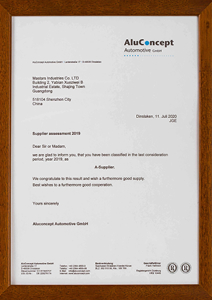
Medical A-Class Supplier

Medical A-Class Supplier

Partners

445 Projects
xylem
Bentley
Aston Martin
HARMAN
Annabella
Auer Lighting
NVIDIA
Compac
G4S
hs products
luxshareict
KK
Bioness
SGM
Nmble
Lear
LLEN&HEAT
belkin
DaAn Gene
MAGNA
pdd
Flite
simens
philips
maxwell
Land Rover

How to Work with Us

Share Your Project

Send a CAD file, drawing, or brief. Start with what you have.

Engineering Review & Quote

We review your requirements and confirm the process, price, and lead time.

We Make Your Parts

Once approved, we prepare the process and manufacture your parts.

Inspection & Delivery

We inspect, pack, and ship your finished parts.

What Our Customers Say

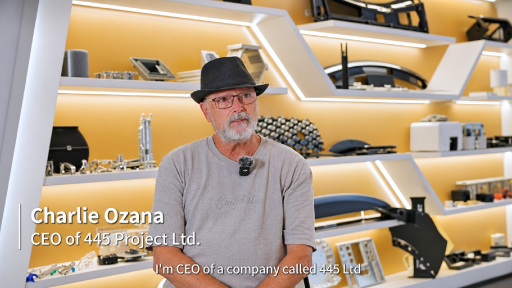
Charlie Ozana

Charlie Ozana

Company: 445 LTDJob Title: CEOBusiness: Full turnkey company
Mastars in all my projects are partners. So I get all the support that I need from engineering management, pricing, timetable, QA, everything is as a partner, not as a supplier. For me, Masters is like home.
Nathan Johnson

Nathan Johnson

Company: Gusto Global IndustriesJob Title: DirectorBusiness: Dust reduction system
They were such a lovely company to deal with, and we couldn't be more happier even to today down the track with even more products moving forward. Very professional, easy to deal with, get back to you straight away, contact is easy through WeChat and email, move forward as quickly as you can.
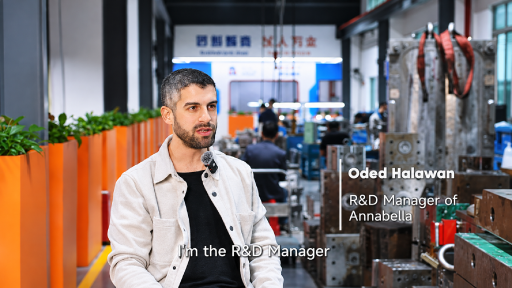
Oded Halawani

Oded Halawani

Company: Annabella Tech IsraelJob Title: R&D managerBusiness: Breast pump
We managed to make it in a very short time warm prototyping to mass production and FDA approval. That makes me feel confidence to choose Mastars.
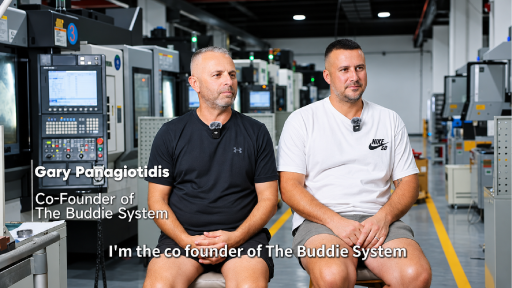
Jade Harris

Jade Harris

Company: Buddy SystemJob Title: Co-founderBusiness: Wireless instant safety alert device
We're glad that we found a company like Mastars to make the product for us because it's been so good to deal with. They're a really good company.
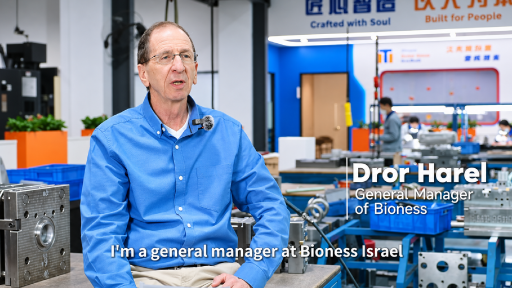
Dror Harel

Dror Harel

Company: BlonessJob Title: General ManagerBusiness: L300, H200
I think the relationship between the buyers and definitely between me the Mastars it's like a family relationship and this is why we are so happy to produce in Mastars and this is why we came for 15 years. By the way, now we came with a new product that we come to Master to produce for the new year.

MJF 3D Printing Service FAQs

  • What is MJF 3D printing?

    MJF (Multi Jet Fusion) is a powder-bed 3D printing process that uses fusing and detailing agents with heat to produce functional polymer parts. It is commonly used for nylon prototypes, assemblies, manufacturing aids, and short-run production where speed and repeatability matter.

  • How does MJF compare with SLS 3D printing?

    Both processes produce support-free powder-bed polymer parts. MJF generally favors faster batch production, fine feature resolution, and consistent surface quality, while SLS often offers a broader material and supplier ecosystem. The better choice depends on material, geometry, quantity, finish, and functional requirements.

  • What materials are available for MJF printing?

    Common MJF materials include PA12, PA11, glass-filled PA12, TPU, polypropylene, and specialty grades. PA12 provides balanced functional performance, PA11 offers higher ductility, TPU provides flexibility, and filled nylon increases stiffness.

  • Are MJF parts suitable for functional testing and end-use applications?

    Yes. MJF is widely used for functional prototypes, housings, snap fits, jigs, fixtures, assemblies, and short-run end-use parts. Final suitability still depends on the selected material, loading, environment, tolerance, finish, and any regulatory requirements.

  • What tolerances can MJF achieve?

    A useful industrial reference is ±0.30 mm plus 0.1% of nominal length. Actual accuracy depends on material, geometry, part size, orientation, thermal behavior, and post-processing, so critical fits and mating dimensions should be identified before printing.

  • What post-processing options are available for MJF parts?

    MJF parts can be bead blasted, dyed, vapor smoothed, tumbled, painted, machined, or fitted with threaded inserts. Finishing improves appearance or functional interfaces, but smoothing, machining, and coatings should be planned around critical dimensions.

  • Is MJF suitable for short-run production?

    Yes. MJF works well for bridge production, customized variants, and repeat short-run parts because no production tooling is required and multiple parts can be nested within each powder bed. This helps keep quantities flexible when demand is still uncertain.

  • How much does MJF 3D printing cost?

    Cost depends on material, part volume, build height, quantity, packing efficiency, finishing, machining, and inspection. Because multiple parts can share one build, unit cost can improve when the powder bed is packed efficiently.

  • How fast can MJF parts be delivered?

    Suitable MJF projects can be delivered in as fast as 3 days. Quantity, material, build loading, cooling, dyeing, vapor smoothing, machining, and inspection can extend lead time.

  • What files do you need for an MJF quote?

    A 3D CAD file is enough to start. Add material, quantity, and a 2D drawing when critical dimensions, GD&T, moving clearances, threads, surface finish, or inspection requirements must be controlled. Rough project information is fine for an initial review.

Tell Us About Your Project

Share your project details and files with us. Rough information is fine to start. Our engineering consultant will contact you within 24 hours.

Verification code