Special Molds

Special Injection Mold Tooling Services

Industrial custom tooling for complex geometries, multi-material parts, deep undercuts, and other non-standard injection molding requirements.

  • 2K, overmolding, insert, LSR & compression tooling
  • Sliders, lifters, side actions & complex core mechanisms
  • Multi-cavity tooling for repeat and volume production
  • T0/T1 trials, FAI & CMM validation
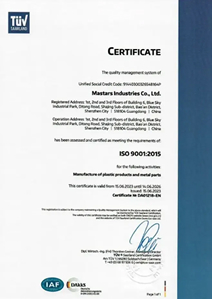
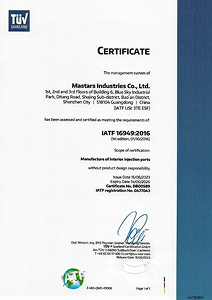
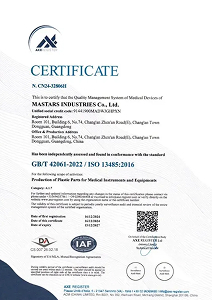
ISO 9001:2015 | ISO 13485:2016 | IATF 16949:2016

Special Injection Mold Tooling Services
0.002 mm
Critical Tooling Precision
≤48 Hours
DFM Review
5+
Production Bases
100+
Engineering Professionals

Special Mold Manufacturing Capabilities

Multi-Material & Insert Tooling
2K, two-shot, multi-shot, overmolding, and insert molding for hard/soft combinations, integrated seals, metal inserts, and multi-material parts where bonding, positioning, flash, and material compatibility must be controlled.
Get a Quote
Complex-Action Tooling
Slides, lifters, side actions, collapsible cores, and unscrewing mechanisms for deep undercuts, side holes, internal features, snap-fits, and geometries that cannot release from a conventional straight-pull mold.
Get a Quote
High-Output Tooling
High-Output Tooling
Multi-cavity, high-cavitation, family, stack, hot-runner, and valve-gate molds for repeat production where cavity balance, cooling, cycle stability, automation, and part-to-part consistency directly affect output and piece-part cost.
Get a Quote
Specialty Process Tooling
LSR, compression, gas-assist, structural foam, and in-mold labeling tooling where venting, temperature, pressure, material flow, film position, flash, and demolding require process-specific mold design.
Get a Quote
High-Performance Resin Tooling
Tooling for glass-filled nylon, PPS, PEEK, LCP, and other demanding engineering resins where abrasive wear, high processing temperatures, shrinkage, corrosion, and mold-steel selection require additional planning.
Get a Quote
Thin-Wall & Complex Geometry Tooling
Molds for thin walls, long flow paths, complex ribs, bosses, and large or irregular geometries where filling pressure, venting, cooling balance, mold rigidity, and warpage must be managed together.
Get a Quote

Choosing the Right Special Mold Strategy

A special mold is not a single mold type. The right tooling approach depends on how the part releases, which materials or inserts are combined, resin behavior, production volume, and the features that control fit or function. These decisions should be made before mold architecture is finalized.
Part / Production Requirement Typical Tooling Approach What We Review
Two colors or two plastics in one part 2K / Two-Shot Molding Material compatibility, shrinkage, interface location, transfer method
Soft material over a rigid substrate Overmolding Bonding, mechanical retention, shutoffs, flash, substrate deformation
Metal pins, threads, contacts, or inserts Insert Molding Insert positioning, retention, loading, resin flow, flash around inserts
Deep undercuts or side openings Slides / Lifters / Side Actions Release direction, travel, locking, wear, part deformation during ejection
Internal threads or trapped geometry Unscrewing / Collapsible Core Thread geometry, core movement, cycle time, maintenance access
Multiple related parts in one molding cycle Family Mold Part demand ratio, shot balance, runner layout, cooling, dimensional variation
High repeat production volume Multi-Cavity / High-Cavitation Tooling Cavity balance, runner layout, cooling, cycle stability, part-to-part variation
Higher output within a limited mold footprint Stack Mold Mold height, press capacity, projected area, runner balance, cooling, automation
LSR or thermoset elastomer parts LSR / Compression Tooling Venting, temperature control, flash, parting line, material flow
Hollow sections or thick areas prone to sink Gas-Assist Tooling Gas channels, gate location, wall transitions, pressure control, surface read-through
Large, stiff, lightweight structural parts Structural Foam Tooling Wall design, low-pressure filling, foaming behavior, shrinkage, surface requirements
Abrasive or high-temperature resin Material-Specific Production Tooling Mold steel, hardness, wear surfaces, corrosion, venting, maintenance
Thin walls or long flow paths Thin-Wall / Flow-Optimized Tooling Gate location, fill pressure, venting, mold rigidity, cooling, warpage
Graphics or labels molded into the part IML / IMD Tooling Film position, gate flow, shrinkage, cavity design, handling, automation
Custom Special Mold Tooling

Custom Special Mold Tooling

Mold architecture is matched to geometry, resin, inserts, undercuts, annual volume, critical dimensions, and target tool life. Steel, cavitation, gating, cooling, side actions, core mechanisms, and replaceable wear inserts are configured to balance molding stability, cycle time, maintenance, and piece-part cost.

Special Mold Tooling Materials

Special molds may be designed for TPE/TPU, LSR, glass-filled nylon, PPS, PEEK, LCP, and other demanding materials. Tooling material is selected around resin abrasiveness, processing temperature, corrosion risk, surface requirements, moving mechanisms, production volume, and target mold life. A single mold may combine different steels, aluminum, and localized high-conductivity inserts.
Aluminum
P20 / 718H Steel
NAK80 Steel
S136 Stainless Steel
H13 / SKD61 Steel
High-Conductivity Copper Alloy Inserts
Aluminum
Aluminum
Aluminum
Aluminum
Aluminum
Aluminum
Aluminum
Aluminum
Aluminum

Aluminum tooling reduces machining time and upfront tooling cost for prototype, bridge, and lower-volume programs where design flexibility matters more than maximum mold life.

Key Characteristics

- Faster to machine than hardened steel

- Lower tooling investment

- Good thermal conductivity

- Suitable for rapid design iteration

Aluminum wears faster than production steel, particularly with glass-filled or abrasive resins and repeated side actions. It is usually better for validation and limited production than long-life complex tooling.

Typical Applications

Prototype tooling, bridge production, early molded-part validation, and lower-volume parts before committing to hardened production tooling.

P20 / 718H Steel
P20 / 718H Steel
P20 / 718H Steel
P20 / 718H Steel
P20 / 718H Steel
P20 / 718H Steel
P20 / 718H Steel
P20 / 718H Steel
P20 / 718H Steel

P20 and 718H are pre-hardened mold steels that balance machinability, dimensional stability, cost, and production life for a broad range of custom injection molds.

Key Characteristics

- Approx. HRC 28–37, depending on grade

- Good machinability

- Good dimensional stability

- Suitable for medium-to-large mold components

A practical base material when the entire mold does not require high hardness. High-wear shutoffs, gates, cores, or sliding interfaces can be upgraded with hardened replaceable inserts.

Typical Applications

General production molds, large cavities, complex housings, multi-cavity tooling, and mold bases supporting sliders, lifters, or other mechanical actions.

NAK80 Steel
NAK80 Steel
NAK80 Steel
NAK80 Steel
NAK80 Steel
NAK80 Steel
NAK80 Steel
NAK80 Steel
NAK80 Steel

NAK80 is a pre-hardened mold steel chosen when complex tooling also requires demanding cosmetic surfaces, polishing, texturing, or detailed EDM features.

Key Characteristics

- Approx. HRC 37–43

- Excellent polishability

- Good EDM response

- Stable machining performance

NAK80 is useful when cosmetic requirements exceed those of general P20 tooling. For highly abrasive reinforced resins, harder wear-resistant inserts may still be needed locally.

Typical Applications

Visible housings, textured or polished cavities, multi-material cosmetic parts, and tooling where dimensional control and surface appearance must be managed together.

Available Finishes

Mirror polishing

S136 Stainless Steel

S136 combines corrosion resistance, hardness, and high polishability for molds running corrosive materials or requiring highly polished cavity surfaces.

Key Characteristics

- Approx. HRC 48–52 after hardening

- High corrosion resistance

- Excellent polishability

- Good dimensional stability

Material and machining costs are higher than pre-hardened steels. It is most justified when corrosion resistance, surface finish, cleaning requirements, or extended mold life directly affect production.

Typical Applications

Transparent parts, high-gloss surfaces, LSR tooling, corrosive or additive-rich materials, and production molds requiring strong resistance to rust and cavity degradation.

H13 / SKD61 Steel
H13 / SKD61 Steel
H13 / SKD61 Steel
H13 / SKD61 Steel
H13 / SKD61 Steel
H13 / SKD61 Steel
H13 / SKD61 Steel
H13 / SKD61 Steel
H13 / SKD61 Steel

H13 / SKD61 provides high toughness, wear resistance, and thermal stability for moving or heavily loaded components in complex-action molds.

Key Characteristics

- Approx. HRC 48–52 after hardening

- High toughness

- Strong wear resistance

- Good resistance to repeated thermal and mechanical loading

For many special molds, H13 / SKD61 is more economical as a localized wear material than as the full mold. Matching hardness and lubrication between sliding components also matters for service life.

Typical Applications

Slides, lifters, core pins, shutoffs, unscrewing components, long cores, gate inserts, and other replaceable parts exposed to repeated movement or concentrated wear.

High-Conductivity Copper Alloy Inserts

High-conductivity copper alloys are used locally in difficult-to-cool mold areas where conventional steel cooling cannot remove heat efficiently.

Key Characteristics

- High thermal conductivity

- Faster local heat removal

- Useful in restricted cooling areas

- Applied as localized inserts rather than full mold bodies

Copper-alloy inserts improve local heat transfer but have lower wear resistance than hardened tool steel. They should therefore be used selectively and protected from highly abrasive resin flow or heavily loaded sliding interfaces.

Typical Applications

Deep cores, narrow core sections, thick local features, difficult hot spots, and complex geometries where conventional cooling channels cannot approach the molding surface closely enough.

Surface Finishing & Decoration Options for Molded Parts

Surface requirements should be defined before mold design is finalized. Mold texture, polishing, coatings, and printing can affect draft, gate and parting-line placement, masking, critical fits, and ejection. For multi-material or complex-action parts, identify visible, mating, and functional surfaces early.
Finish Best For Key Engineering Consideration
Mold Texture / Mold-Tech Matte, leather, grain, stipple, and patterned surfaces Deeper textures require additional draft; parting lines, sliders, and release direction must be considered before texturing
Polishing High-gloss, transparent, optical, and premium cosmetic surfaces Mold surface quality transfers directly to the molded part; flow marks, weld lines, or sink cannot be corrected by polishing alone
Painting Custom colors, cosmetic housings, and multi-color products Paint buildup can affect mating surfaces and critical dimensions; functional interfaces may require masking
UV Coating High-gloss, scratch-resistant exterior surfaces Best suited to accessible surfaces; geometry, edge buildup, and coating coverage should be considered
Soft-Touch Coating Grips, handles, and tactile cosmetic surfaces Wear, chemical resistance, and long-term feel should be validated; overmolding may be better when the soft layer also serves a structural or sealing function
Screen Printing Logos, legends, and larger graphics on flat or mildly curved surfaces Registration and fixture location matter; deep curves and interrupted surfaces reduce print consistency
Pad Printing Small logos, symbols, and markings on curved or irregular parts Adapts well to complex surfaces, but printable area is relatively limited
Laser Marking Serial numbers, QR codes, scales, and permanent identification Contrast depends on resin color and additives; appearance should be tested on the actual production material
Electroplating Metallic appearance, decorative trim, or conductive plastic surfaces Requires compatible resin and pretreatment; coating thickness should be considered around mating or assembly features
Hydro Dipping Wood grain, carbon fiber, camouflage, and decorative patterns on complex surfaces Usually requires a protective topcoat; pattern registration is less suitable for tightly controlled functional graphics

Special Mold Precision & Tolerance Capabilities

Special mold precision depends on both the tooling and the molded part. Critical cavity, core, shutoff, and insert features can be machined more tightly than the final plastic part, where resin shrinkage, geometry, wall thickness, cooling, and process variation also affect achievable tolerances.
Precision Area Typical Capability Engineering Consideration
Critical Mold Features Down to 0.002 mm For suitable cavity, core, insert, and tooling features
Injection Molding Precision Down to ±0.05 mm Applied to suitable critical molded dimensions
CNC Mold Machining Down to 0.005 mm Used for cavity, core, mold-base, and precision insert machining
EDM Machining Down to 0.003 mm Suitable for deep ribs, narrow slots, sharp internal features, and complex cavities
Precision Grinding Down to 0.002 mm Supports shutoffs, inserts, mating surfaces, and precision mold components
General Molded Dimensions Typically ±0.10–0.30 mm Varies with resin, part size, geometry, and shrinkage
Holes & Boss Features Typically ±0.05–0.10 mm Local cooling, wall thickness, and shrinkage affect positional and dimensional variation
Mating & Assembly Features Down to ±0.05 mm Best reserved for dimensions that directly affect fit, sealing, or alignment
CMM Measurement Accuracy Down to 0.0017 mm Used to verify critical mold and molded-part dimensions
Optical Measurement Down to 0.001 mm Supports small features, profiles, edges, and difficult-to-contact dimensions
Height Measurement Down to 0.0005 mm Used for precision height and step verification
Flatness & Warpage Part-specific Large surfaces, asymmetric geometry, fiber-filled resins, and uneven cooling increase variation

Tooling Equipment & Manufacturing Capabilities

CNC Mold Machining

CNC Mold Machining

EDM & Wire-Cut Machines

EDM & Wire-Cut Machines

Mold Trial & Inspection

Mold Trial & Inspection

Why Choose Mastars for Special Mold Tooling?

Complex Tooling DFM & Moldflow
Evaluate release direction, parting lines, multi-material interfaces, insert positioning, fill and cooling balance, shrinkage, warpage, and mechanism travel before steel is cut.
20+ Years of Tooling Experience
Project engineers with 20+ years of tooling experience support design review, trials, corrections, and production release with direct English technical communication.
In-House Toolmaking
CNC, EDM, grinding, fitting, polishing, assembly, and mold trials are managed through one tooling workflow.
T0/T1/T2 + FAI Validation
Trial parts are checked for critical dimensions, insert position, bonding, flash, release, warpage, fit, and appearance before production release.
Maintenance-Ready Complex Tooling
Replaceable inserts and serviceable slides, lifters, cores, shutoffs, and other wear areas reduce repair scope during repeat production.
One-Team Project Control
Engineering, quality, PMC, tooling, and delivery are coordinated through one project workflow from DFM to production release.

Certifications

ISO9001:2015 Certificate

ISO9001:2015 Certificate

IATF16949:2016 Certificate

IATF16949:2016 Certificate

ISO13485:2016 Certificate

ISO13485:2016 Certificate

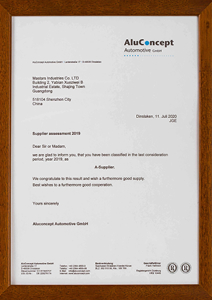
Medical A-Class Supplier

Medical A-Class Supplier

Partners

445 Projects
xylem
Bentley
Aston Martin
HARMAN
Annabella
Auer Lighting
NVIDIA
Compac
G4S
hs products
luxshareict
KK
Bioness
SGM
Nmble
Lear
LLEN&HEAT
belkin
DaAn Gene
MAGNA
pdd
Flite
simens
philips
maxwell
Land Rover

How to Work with Us

Share Your Project

Send a CAD file, drawing, or brief. Start with what you have.

Engineering Review & Quote

We review your requirements and confirm the process, price, and lead time.

We Make Your Parts

Once approved, we prepare the process and manufacture your parts.

Inspection & Delivery

We inspect, pack, and ship your finished parts.

What Our Customers Say

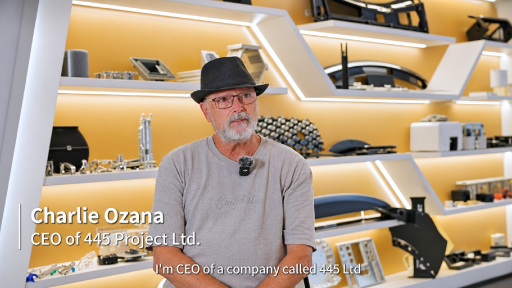
Charlie Ozana

Charlie Ozana

Company: 445 LTDJob Title: CEOBusiness: Full turnkey company
Mastars in all my projects are partners. So I get all the support that I need from engineering management, pricing, timetable, QA, everything is as a partner, not as a supplier. For me, Masters is like home.
Nathan Johnson

Nathan Johnson

Company: Gusto Global IndustriesJob Title: DirectorBusiness: Dust reduction system
They were such a lovely company to deal with, and we couldn't be more happier even to today down the track with even more products moving forward. Very professional, easy to deal with, get back to you straight away, contact is easy through WeChat and email, move forward as quickly as you can.
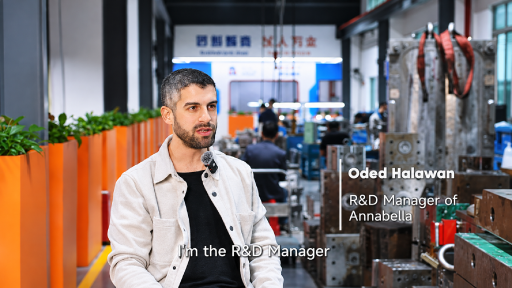
Oded Halawani

Oded Halawani

Company: Annabella Tech IsraelJob Title: R&D managerBusiness: Breast pump
We managed to make it in a very short time warm prototyping to mass production and FDA approval. That makes me feel confidence to choose Mastars.
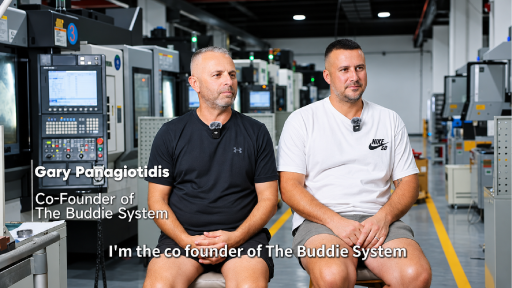
Jade Harris

Jade Harris

Company: Buddy SystemJob Title: Co-founderBusiness: Wireless instant safety alert device
We're glad that we found a company like Mastars to make the product for us because it's been so good to deal with. They're a really good company.
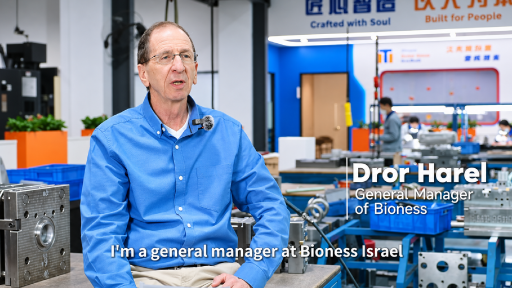
Dror Harel

Dror Harel

Company: BlonessJob Title: General ManagerBusiness: L300, H200
I think the relationship between the buyers and definitely between me the Mastars it's like a family relationship and this is why we are so happy to produce in Mastars and this is why we came for 15 years. By the way, now we came with a new product that we come to Master to produce for the new year.

Special Mold Tooling FAQs

  • What are special or non-standard injection molds?

    Special injection molds are industrial custom tools for parts that cannot be produced reliably or efficiently with a conventional straight-pull, single-material mold. They may use multi-material molding, inserts, complex side actions, special core mechanisms, high cavity counts, or process-specific tooling. The right architecture depends on geometry, material, volume, and critical functional requirements.

  • What is a complex-action mold?

    A complex-action mold uses moving mechanisms beyond normal mold opening and ejection. Slides, lifters, side actions, rotating cores, collapsible cores, or unscrewing mechanisms can release deep undercuts, side holes, internal threads, and trapped features. More moving actions also mean more wear, alignment, cycle-time, and maintenance considerations.

  • When should I use a 2K mold?

    Use a 2K mold when two plastics, colors, or hard/soft materials need to become one integrated molded part in a controlled molding sequence. It works well for seals, grips, two-color components, and integrated soft-touch features. Material compatibility, interface geometry, production volume, and tooling complexity should be checked first.

  • What is the difference between insert molding and overmolding?

    Insert molding places a separate component—often a metal pin, thread, contact, or other insert—into the mold before plastic is molded around it. Overmolding adds a second polymer over a molded or preformed substrate. Insert positioning and retention dominate the first process; bonding, shutoffs, and flash control are usually more critical in the second.

  • Can you build molds for deep undercuts?

    Yes. Deep undercuts can be released with slides, lifters, side actions, collapsible cores, rotating cores, or unscrewing mechanisms, depending on geometry and release direction. But every added action increases tooling complexity and maintenance. If a small design change can eliminate an unnecessary mechanism, that may be the more stable production solution.

  • Do you make stack molds?

    Yes, for suitable high-output programs. Stack molds can increase output without simply adding more cavities across a larger mold face, but press capacity, projected area, mold height, runner balance, cooling, automation, and expected volume all need to justify the added complexity. A conventional multi-cavity mold may be more economical for lower demand.

  • Can special molds be used for low-volume production?

    Yes. Prototype or bridge tooling can support lower-volume production when the design is still being validated or demand is uncertain. Aluminum or simpler tooling may reduce initial investment, while hardened steel is generally more appropriate for abrasive resins, repeated complex actions, and longer production programs. Low volume does not always mean simple tooling.

  • How do you select mold steel for abrasive plastics?

    It depends on resin, filler content, temperature, cavity count, tool life, and where wear occurs. Glass-filled nylon, PPS, PEEK, and other filled engineering plastics can accelerate wear, so harder steels or replaceable wear-resistant inserts may be used around gates, cores, shutoffs, and sliding areas. Steel selection should balance wear resistance, machinability, corrosion, and maintenance cost.

  • How do you maintain complex molds?

    Maintenance should be designed into the mold from the start. Slides, lifters, cores, shutoffs, gates, and other wear areas should be accessible and replaceable where practical. Routine work includes cleaning vents and cooling circuits, lubrication, checking alignment and flash, and inspecting wear against shot history. Production mold life can range from approximately 100,000 to 1,000,000+ cycles, depending on resin, steel, mold structure, production conditions, and maintenance.

  • How long does custom special mold tooling take?

    It depends on mold complexity. DFM review can be completed within 48 hours, while tooling lead time varies with mold size, cavities, side actions, material, heat treatment, hot-runner systems, surface requirements, and trial revisions. Complex 2K, stack, collapsible-core, or high-cavitation molds usually require more engineering and validation than straight-pull tooling.

  • What inspection reports are available for special molds?

    FAI and CMM dimensional data can be provided for critical requirements, together with mold-trial results as needed. Mold and molded-part dimensions are checked against approved drawings, with optical measurement available for small profiles and difficult-to-contact features.

  • What do you need to quote a special mold?

    A 3D CAD file is enough to start. For a more accurate quote, include resin or material combinations, inserts, annual volume, critical dimensions, surface requirements, expected tool life, and inspection requirements. Rough information is fine for an initial review.

Tell Us About Your Project

Share your project details and files with us. Rough information is fine to start. Our engineering consultant will contact you within 24 hours.

Verification code