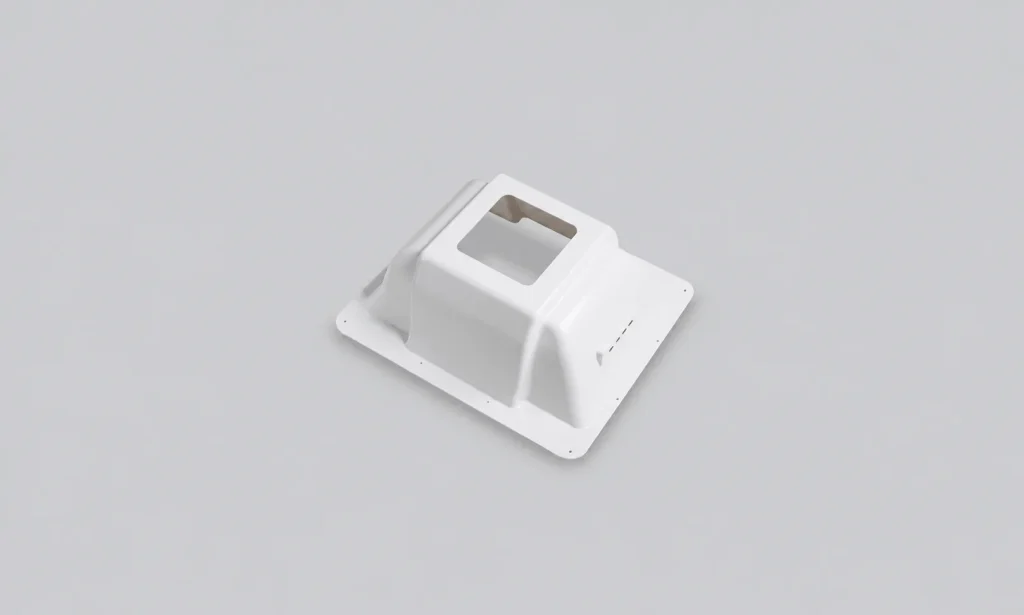


Family & Multi-Cavity Molding

Family & Multi-Cavity Molding
Family Mold & Multi-Cavity Injection Molding Services

Family mold injection molding for related component sets and multi-cavity tooling for higher-volume identical parts, selected based on part mix, demand ratio, production volume, and cost targets.

  • Related parts, same resin & color
  • Higher output with multi-cavity tooling
  • Balanced fill, cooling & ejection
  • Lower tooling cost for matched part sets
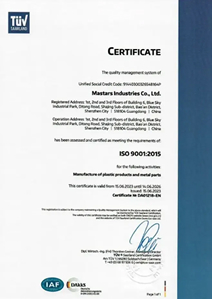
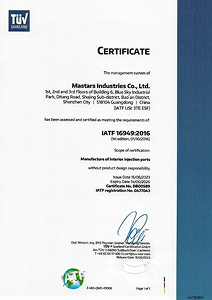
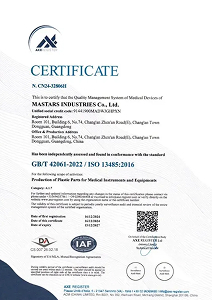
ISO 9001:2015 | ISO 13485:2016 | IATF 16949:2016

Family Mold & Multi-Cavity Injection Molding Services
0.002 mm
Mold Precision
2+ Weeks
T1 Samples
100+
Engineering Professionals
20+
Years of Manufacturing Experience

Family & Multi-Cavity Molding Capabilities

Family Mold Tooling
Family Mold Tooling
Mold different but related parts in one cycle to reduce separate tooling and synchronize matched component sets. Best when resin, color, molding conditions, and demand ratios are compatible.
Get a Quote
Multi-Cavity Tooling
Produce multiple identical parts per cycle for higher throughput and lower unit cost at repeat volumes, with cavity-to-cavity consistency controlled across the tool.
Get a Quote
Runner & Cavity Balancing
Optimize runner layout, gate sizing, filling, cooling, and ejection to reduce short shots, flash, warpage, and variation between cavities.
Get a Quote
Part Separation & Handling
Plan degating, separation, counting, sorting, and packaging for different parts produced in the same molding cycle.
Get a Quote

Single-Cavity vs. Multi-Cavity vs. Family Mold

Choose based on part mix, volume, material compatibility, demand ratio, and production flexibility. Family molds work best when related parts share resin, color, molding conditions, and stable demand ratios. If these differ significantly, separate or hybrid tooling is usually better.
Comparison Factor Single-Cavity Mold Multi-Cavity Mold Family Mold
Parts per Cycle One part Multiple identical parts Multiple different but related parts
Best For Prototypes, lower volumes, complex or changing parts Higher-volume production of the same part Low-to-medium-volume assemblies, kits, and matched part sets
Tooling Investment Lower upfront cost for one part; multiple part numbers require separate tools Higher upfront cost with lower unit cost at volume Can reduce combined tooling investment for a multi-part product
Production Efficiency One part per cycle; easy to schedule independently High output with the cycle optimized for one repeated part Matched parts per cycle; the slowest cavity can set cycle time
Material & Color Each tool can run independently Same resin and color within the molding run Same resin and color are generally required
Fill & Cooling Balance Relatively straightforward Repeated cavities simplify balancing More demanding when cavity size, volume, and wall thickness differ
Part Demand Ratio Each part can be scheduled independently All cavities produce the same part Output ratio is fixed by cavity layout
Sorting & Handling Simple part handling Identical parts simplify handling Different parts may require separation, counting, and sorting
Change / Maintenance Impact Usually isolated to one part and tool A cavity issue can reduce output of the same part One cavity change or issue can affect the full matched set
Key Advantage Maximum production flexibility Lower unit cost and higher throughput at volume Lower combined tooling investment and synchronized part production
Main Limitation Higher unit cost and lower throughput Less economical at low volume or unstable demand Harder balancing, fixed output ratios, and shared cycle time
Custom Family & Multi-Cavity Molding

Custom Family & Multi-Cavity Molding

The right cavity layout depends on both molding compatibility and how each part is consumed. Mastars evaluates annual volume, demand ratio, resin and color, part geometry, critical dimensions, and future scale-up before defining the tooling strategy.

A family mold can reduce tooling investment when related parts are consumed in similar quantities and share compatible molding conditions. When demand becomes uneven, materials or colors differ, or one part requires tighter process control, separate or dedicated multi-cavity tooling may provide better cost, flexibility, and inventory control.

Injection Molding Materials

Choose from a range of materials for prototyping and production. Our engineers can help you select the best option for strength, appearance, environment, and budget.
ABS
Polycarbonate (PC)
Polypropylene (PP)
Nylon (PA)
POM (Acetal)
TPE / TPU / Silicone
ABS
ABS
ABS
ABS
ABS
ABS
ABS
ABS
ABS

ABS is a tough, easy-to-mold thermoplastic with a good surface finish, widely used for housings and consumer products.

Key Characteristics

Good impact strength

Good surface finish and paintability

Cost-effective

Common Grades

General-purpose, flame-retardant, high-impact

Typical Applications

Housings, enclosures, consumer products, automotive interior parts

Available Finishes

Texturing, painting, plating, laser engraving

Polycarbonate (PC)
Polycarbonate (PC)
Polycarbonate (PC)
Polycarbonate (PC)
Polycarbonate (PC)
Polycarbonate (PC)
Polycarbonate (PC)
Polycarbonate (PC)
Polycarbonate (PC)

PC is a transparent, high-impact thermoplastic with good heat resistance, suited to lenses, covers, and structural parts.

Key Characteristics

Very high impact strength

Transparent options

Good heat resistance

Common Grades

General, flame-retardant, glass-filled, PC/ABS blends

Typical Applications

Lenses, covers, electrical housings, medical devices

Available Finishes

Polishing, hard coating, painting

Polypropylene (PP)
Polypropylene (PP)
Polypropylene (PP)
Polypropylene (PP)
Polypropylene (PP)
Polypropylene (PP)
Polypropylene (PP)
Polypropylene (PP)
Polypropylene (PP)

PP is a lightweight, chemically resistant plastic with good fatigue resistance, often used for living hinges and containers.

Key Characteristics

Low density and low cost

Excellent chemical resistance

Good fatigue resistance

Common Grades

Homopolymer, copolymer, filled grades

Typical Applications

Containers, caps, hinges, automotive parts

Available Finishes

Texturing, printing

Nylon (PA)
Nylon (PA)
Nylon (PA)
Nylon (PA)
Nylon (PA)
Nylon (PA)
Nylon (PA)
Nylon (PA)
Nylon (PA)

Nylon offers strength, wear resistance, and heat resistance, and can be glass-filled for added stiffness.

Key Characteristics

High strength and wear resistance

Good heat resistance

Glass-filled grades available

Common Grades

PA6, PA66, PA6+GF, PA66+GF

Typical Applications

Gears, clips, structural parts, connectors

Available Finishes

Natural, dyed, texturing

POM (Acetal)
POM (Acetal)
POM (Acetal)
POM (Acetal)
POM (Acetal)
POM (Acetal)
POM (Acetal)
POM (Acetal)
POM (Acetal)

POM is a stiff, low-friction plastic with excellent dimensional stability for precision mechanical parts.

Key Characteristics

Low friction and high stiffness

Excellent dimensional stability

Good wear resistance

Common Grades

Homopolymer, copolymer

Typical Applications

Gears, bearings, precision mechanical parts

Available Finishes

Natural, dyed

TPE / TPU / Silicone

Elastomers are used for soft-touch grips, seals, and flexible parts; liquid silicone rubber (LSR) suits medical and personal-care applications.

Key Characteristics

Soft, rubber-like feel

Good sealing performance

Suitable for over-molding

Common Grades

TPE, TPU, LSR (confirmed during project review)

Typical Applications

Grips, seals, gaskets, wearable products, medical parts

Available Finishes

Texturing, color matching

Surface Finishes for Family & Multi-Cavity Molded Parts

Surface requirements can be built into the mold or applied after molding. For family molds, cosmetic requirements should be defined by cavity so texture, gloss, and secondary finishing do not create unnecessary tooling changes later.
Surface Finish Typical Result Best For Production Consideration
SPI Polishing Smooth to high-gloss molded surface Cosmetic housings, clear parts, visible surfaces Polish level should be specified before final mold finishing
Mold Texture Matte, grain, leather, or patterned surface Housings, grips, automotive and consumer parts Mold-Tech or equivalent texture can be applied by cavity
Painting Custom color, gloss, matte, or metallic appearance Consumer products, housings, visible components Adds coating thickness and should be considered around fits and mating areas
UV Coating Hard, glossy, wear-resistant surface Electronic housings and cosmetic parts Best for exposed surfaces requiring better scratch resistance
Pad Printing Small logos, symbols, and text Buttons, curved surfaces, small molded parts Works well on irregular or slightly curved surfaces
Screen Printing Larger graphics and functional markings Panels, housings, flat or slightly curved surfaces Better for larger print areas than pad printing
Laser Marking Permanent text, serial numbers, or codes Traceability, labels, QR codes, technical markings No ink required; contrast depends on resin and pigment
Electroplating Metallic decorative surface Cosmetic plastic parts and trim components Requires suitable resin and surface preparation

Family & Multi-Cavity Molding Tolerances

Dimensional consistency in family and multi-cavity molds depends on resin shrinkage, cavity position, flow balance, cooling, wall thickness, and part geometry. Critical dimensions are evaluated by feature and verified across individual cavities.
Precision Item Typical Capability Engineering Consideration
Injection Molding Precision Down to ±0.05 mm Applied to suitable critical dimensions where material, geometry, and shrinkage can be controlled
Mold Precision Down to 0.002 mm Supports precise cavity, core, insert, shutoff, and mating feature control
General Molded Dimensions Typically ±0.10–0.30 mm Depends on part size, resin shrinkage, wall thickness, and geometry
Resin Linear Tolerance Allowance From ±0.002 mm/mm Varies with resin shrinkage, part length, geometry, and molding conditions
Hole & Boss Features Typically ±0.05–0.10 mm Local cooling, core-pin position, and shrinkage influence final dimensions
Mating / Assembly Features Down to ±0.05 mm Critical interfaces should be identified on the 2D drawing
Cavity-to-Cavity Consistency Verified by cavity FAI and per-cavity dimensional checks verify critical features across the tool
CMM Measurement Accuracy 0.0017 mm Used for critical dimensions, cavity comparison, and first article verification
Height Measurement Accuracy 0.0005 mm Supports precision checks on height, step, and datum-related dimensions
Optical Measurement Accuracy 0.001 mm Suitable for small features, profiles, edges, and non-contact dimensional inspection

Family & Multi-Cavity Molding Equipment

OKUMA MB-66VA CNC Machining Center

OKUMA MB-66VA CNC Machining Center

AgieCharmilles FORM30 EDM Machine

AgieCharmilles FORM30 EDM Machine

Zeiss CONTURA G2 CMM

Zeiss CONTURA G2 CMM

Why Choose Mastars for Family & Multi-Cavity Molding?

Quality Systems
ISO 9001, ISO 13485, and IATF 16949 systems support controlled production and documentation. FAI, CMM, optical, and in-process inspection verify critical dimensions and cavity-to-cavity consistency.
Engineering & Project Support
100+ engineers coordinate tooling, quality, production planning, and part requirements so cavity balance, revisions, and production needs stay aligned through trials and production.
Manufacturing Experience
Our mold project engineers bring 20+ years of industry experience, supporting projects from DFM and mold design through trials, corrections, validation, and production release.
Flexible Capacity
With tooling capacity of 50–60 mold sets per month and 5+ production bases, Mastars supports new molds, revisions, pilot builds, changing volumes, and repeat production programs.
Family & Multi-Cavity DFM Review
Review part mix, demand ratio, resin, geometry, wall thickness, and critical dimensions. Mold-flow analysis evaluates runner and gate balance, filling, packing, cooling, and shrinkage before toolmaking.
Integrated Manufacturing
Coordinate DFM, mold-flow analysis, mold making, trials, molding, inspection, and delivery within one manufacturing program instead of managing multiple suppliers.

Certifications

ISO9001:2015 Certificate

ISO9001:2015 Certificate

IATF16949:2016 Certificate

IATF16949:2016 Certificate

ISO13485:2016 Certificate

ISO13485:2016 Certificate

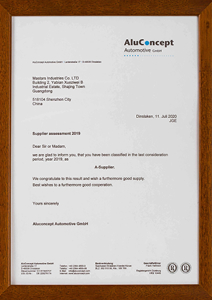
Medical A-Class Supplier

Medical A-Class Supplier

Partners

445 Projects
xylem
Bentley
Aston Martin
HARMAN
Annabella
Auer Lighting
NVIDIA
Compac
G4S
hs products
luxshareict
KK
Bioness
SGM
Nmble
Lear
LLEN&HEAT
belkin
DaAn Gene
MAGNA
pdd
Flite
simens
philips
maxwell
Land Rover

How to Work with Us

Share Your Project

Send a CAD file, drawing, or brief. Start with what you have.

Engineering Review & Quote

We review your requirements and confirm the process, price, and lead time.

We Make Your Parts

Once approved, we prepare the process and manufacture your parts.

Inspection & Delivery

We inspect, pack, and ship your finished parts.

What Our Customers Say

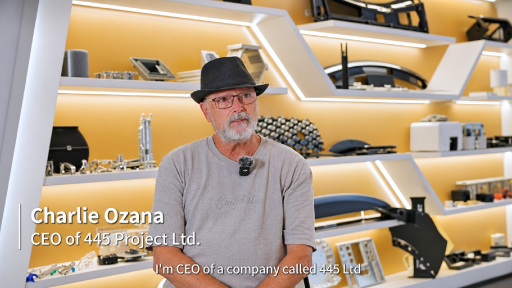
Charlie Ozana

Charlie Ozana

Company: 445 LTDJob Title: CEOBusiness: Full turnkey company
Mastars in all my projects are partners. So I get all the support that I need from engineering management, pricing, timetable, QA, everything is as a partner, not as a supplier. For me, Masters is like home.
Nathan Johnson

Nathan Johnson

Company: Gusto Global IndustriesJob Title: DirectorBusiness: Dust reduction system
They were such a lovely company to deal with, and we couldn't be more happier even to today down the track with even more products moving forward. Very professional, easy to deal with, get back to you straight away, contact is easy through WeChat and email, move forward as quickly as you can.
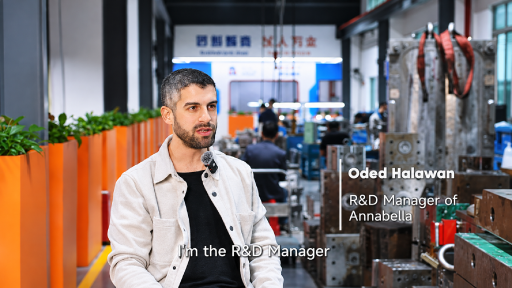
Oded Halawani

Oded Halawani

Company: Annabella Tech IsraelJob Title: R&D managerBusiness: Breast pump
We managed to make it in a very short time warm prototyping to mass production and FDA approval. That makes me feel confidence to choose Mastars.
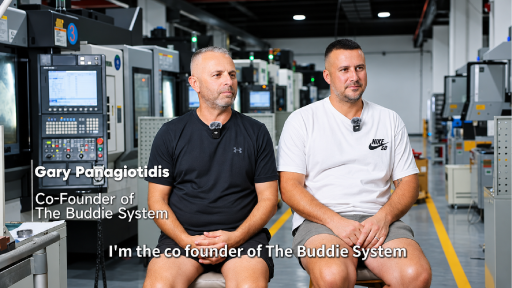
Jade Harris

Jade Harris

Company: Buddy SystemJob Title: Co-founderBusiness: Wireless instant safety alert device
We're glad that we found a company like Mastars to make the product for us because it's been so good to deal with. They're a really good company.
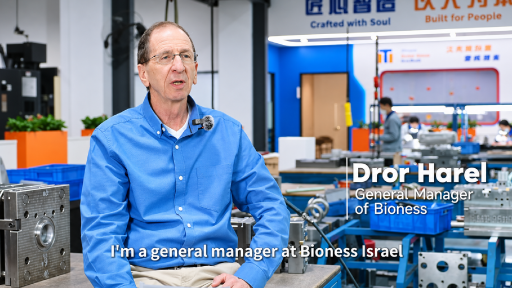
Dror Harel

Dror Harel

Company: BlonessJob Title: General ManagerBusiness: L300, H200
I think the relationship between the buyers and definitely between me the Mastars it's like a family relationship and this is why we are so happy to produce in Mastars and this is why we came for 15 years. By the way, now we came with a new product that we come to Master to produce for the new year.

Family Mold Injection Molding FAQs

  • What is a family mold in injection molding?

    A family mold produces two or more different but related plastic parts in the same molding cycle. It is commonly used for assemblies, kits, or matched component sets that share compatible resin, color, molding conditions, and production quantities.

  • What is the difference between a family mold and a multi-cavity mold?

    A family mold produces different parts, while a multi-cavity mold produces multiple identical parts. Family molds can reduce combined tooling investment for related components. Multi-cavity molds are generally better when the same part needs higher output and lower unit cost.

  • When should I choose a family mold instead of separate molds?

    Choose a family mold when related parts use the same resin and color, have compatible filling and cooling requirements, and are required in similar quantities. Separate or hybrid tooling is usually better when demand, materials, geometry, or process requirements differ significantly.

  • Are family molds cheaper than separate molds?

    Often yes at the tooling stage, but not always over the full production life. A family mold can reduce the number of tools required, but difficult balancing, longer cycle time, excess inventory, sorting, or higher scrap can offset the initial tooling savings.

  • Can a family mold use different plastic materials or colors?

    Generally no. Parts molded in the same shot normally use the same resin and color. Different materials may require different melt temperatures, pressure, shrinkage, or cooling conditions, making separate tooling more practical.

  • How do you balance a family injection mold?

    Runner lengths, gate sizes, flow resistance, packing, cooling, and ejection are adjusted around the different cavities. Mold-flow analysis can help predict filling behavior before tooling. If part volumes, flow lengths, or cooling times differ too much, separate or hybrid tooling may be more stable.

  • What are the disadvantages of a family mold?

    The main trade-offs are harder cavity balancing, fixed output ratios, shared cycle time, more complex troubleshooting, and wider production impact if one cavity changes or fails. Different shrinkage and cooling behavior can also increase short-shot, flash, warpage, and dimensional-variation risks.

  • What happens if one part changes or one cavity goes out of tolerance?

    It depends on the change. Minor corrections may only require local tool modification. Larger changes can affect runner balance, cooling, mold structure, or the supply of other components produced in the same tool. Separate tooling may become more practical.

  • How are different parts sorted after family molding?

    It depends on part geometry and production volume. Degating, separation, identification, counting, and packaging should be planned around the required assembly ratio. Manual or automated sorting can be selected based on the part and production requirements.

  • What should I send for a family mold quote?

    Rough information is fine to start. Send your 3D CAD files, available 2D drawings, resin and color requirements, expected annual volume, and required quantity of each component. Include critical dimensions, cosmetic surfaces, assembly requirements, or inspection needs that could affect the tooling strategy.

Tell Us About Your Project

Share your project details and files with us. Rough information is fine to start. Our engineering consultant will contact you within 24 hours.

Verification code