

Gravity Die Casting

Gravity Die Casting
Gravity Die Casting Services

Medium-volume aluminum and non-ferrous castings with reusable dies, machining, and inspection support.

  • Aluminum, magnesium, zinc & copper alloys
  • Metal & sand cores for complex features
  • Lower tooling cost than HPDC
  • Better consistency than sand casting
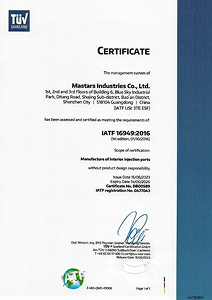
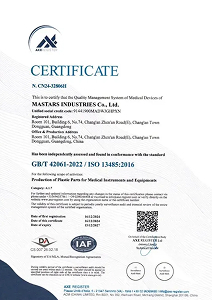
ISO 9001:2015 | ISO 13485:2016 | IATF 16949:2016

Gravity Die Casting Services
~100K Cycles
Typical Die Life
5 kg
Aluminum Casting
100+
Engineering Professionals
20+
Years of Manufacturing Experience

Gravity Die Casting Capabilities

Part & Alloy Review
Part & Alloy Review
Review geometry, 3–5 mm typical wall thickness, draft, critical dimensions, alloy, heat-treatment needs, and expected production volume before tooling.
Get a Quote
Die & Parting Strategy
Plan die structure, parting lines, draft, ejection, and tooling life around part geometry and repeat-production requirements.
Get a Quote
Core & Internal Features
Use metal, sand, or semi-permanent cores for passages and cavities while reviewing core stability, release, and machining allowance.
Get a Quote
Filling & Solidification
Control gating, feeders, risers, die coating, venting, and hot spots to reduce turbulence, shrinkage, cold shuts, and incomplete fill.
Get a Quote
Machining & Finishing
Define bores, sealing faces, threads, datums, and other machined features before tooling so enough stock is left for final CNC operations.
Get a Quote
Inspection & Validation
Verify critical interfaces with FAI, CMM, optical measurement, in-process inspection, and project-specific functional testing.
Get a Quote

Gravity Die Casting vs HPDC vs Sand Casting

Gravity die casting sits between sand casting and HPDC. It is often the better fit when you need reusable tooling, medium production volumes, moderate wall thickness, and better consistency without the tooling investment of HPDC.
Gravity Die Casting High-Pressure Die Casting Sand Casting
Best For High-volume thin-wall parts Medium-volume stronger parts Large or low-volume parts
Typical Volume Aluminum, zinc, magnesium Aluminum, copper alloys Iron, steel, aluminum, bronze
Tooling Cost High Medium Low
Typical Wall Thickness Housings, covers, brackets Wheels, pump parts Machinery bodies, large parts
Filling Method Gravity-fed High-speed, high-pressure injection Gravity-fed into expendable sand molds
Dimensional Consistency High High Lower
Surface Finish Better than sand casting Typically best Rougher
Core Flexibility Metal or sand cores More process-dependent High
Cycle Speed Moderate Fast Slow
Main Trade-Off Higher tooling investment Higher tooling investment More dimensional variation and finishing work
Heat Treatment T4/T6 available for suitable alloys such as A356 More restricted for conventional HPDC Available for suitable alloys
Internal Integrity Lower gas entrapment with controlled filling Higher gas-porosity risk from high-speed filling More process-dependent
Custom Gravity Die Casting

Custom Gravity Die Casting

Share your CAD, alloy, annual volume, critical dimensions, machining, and sealing requirements. Mastars aligns die design, core strategy, casting controls, machining, and inspection around your part.

Gravity Die Casting Materials & Alloys

Material selection depends on strength, weight, corrosion resistance, thermal or electrical requirements, heat treatment, and how the alloy fills and solidifies in the die.
Aluminum
Magnesium
Zinc
Copper
Bronze
Aluminum
Aluminum
Aluminum
Aluminum
Aluminum
Aluminum
Aluminum
Aluminum
Aluminum

Aluminum is the primary material for gravity die casting. A356 is a strong choice for structural, pressure-tight, and T4/T6 heat-treated castings. A360, A380, and other grades can be evaluated against geometry, filling behavior, mechanical requirements, and downstream machining.

Key Characteristics

Lightweight with good strength

Good corrosion resistance

Good thermal conductivity

Alloy choice affects fluidity, shrinkage, porosity risk, mechanical properties, and machining allowance.

Common Grades

A380, ADC12, A356, A360

Typical Applications

Pump housings, valve bodies, automotive parts, actuator housings, electronics housings

Available Finishes

Machining, anodizing, powder coating, painting

Magnesium
Magnesium
Magnesium
Magnesium
Magnesium
Magnesium
Magnesium
Magnesium
Magnesium

Best for lightweight components where high strength-to-weight ratio matters.

Key Characteristics

Very low density

Good stiffness for its weight

Good vibration damping

Melt temperature, oxidation, atmosphere, and fire-safety controls require closer process management.

Common Grades

AZ91D, AM60B

Typical Applications

Automotive structures, aerospace parts, sports equipment, lightweight housings

Available Finishes

Conversion coating, painting

Zinc
Zinc
Zinc
Zinc
Zinc
Zinc
Zinc
Zinc
Zinc

Good fluidity and surface reproduction make zinc suitable for smaller castings with detailed features.

Key Characteristics

Excellent fine detail and thin walls

Good dimensional stability

Good plating results

Better suited to detailed parts than high-temperature structural applications.

Common Grades

Zamak 3, Zamak 5, ZA-8

Typical Applications

Decorative hardware, electronic components, automotive and industrial parts

Available Finishes

Plating, painting, polishing

Copper
Copper
Copper
Copper
Copper
Copper
Copper
Copper
Copper

Copper alloys are selected when thermal performance, corrosion resistance, or electrical properties are important.

Key Characteristics

Higher pouring temperatures make die-temperature, filling, and solidification control more demanding.

Typical Applications

Switchgear components, heat-transfer parts, valve bodies, and corrosion-resistant industrial components

Bronze
Bronze
Bronze
Bronze
Bronze
Bronze
Bronze
Bronze
Bronze

Bronze is suited to parts requiring wear resistance, strength, and corrosion resistance.

Key Characteristics

Strength, wear behavior, corrosion resistance, and casting characteristics vary significantly by bronze grade.

Typical Applications

Bushings, pump and valve components, transmission parts, and wear components

Gravity Die Casting Surface Finishing

Surface finishing is selected around alloy, corrosion exposure, appearance, wear requirements, and dimensional impact. Critical machined or mating surfaces should be identified before finishing.
Finish Best For Key Consideration
Shot Blasting Cleaning cast surfaces and creating a uniform matte finish Can soften sharp cosmetic detail and should be controlled around critical edges
Anodizing Aluminum castings needing corrosion and wear resistance Cast alloy composition affects color and finish consistency
Powder Coating Housings, brackets, and outdoor components Coating thickness can affect holes, threads, and mating surfaces
Painting Cosmetic surfaces and custom colors Surface preparation and porosity affect adhesion and appearance
Polishing Visible aluminum, copper, and bronze surfaces Casting texture and local porosity can remain visible after polishing
Electroplating Decorative or functional metallic surfaces Alloy compatibility and pretreatment should be confirmed
PVD Coating Wear-resistant or decorative metal surfaces Best suited to controlled, accessible surfaces with suitable pretreatment

Gravity Die Casting Tolerances & Part Limits

Casting accuracy depends on part size, alloy, wall thickness, die design, core layout, and feature location. Critical mating or sealing features can be CNC-machined after casting for tighter control.
Precision / Design Item Typical Capability Engineering Consideration
As-Cast Dimensional Tolerance ≈±0.10 mm for first 25 mm Add ≈±0.02 mm per additional 10 mm
Typical Wall Thickness ≈3–5 mm Sections below ~3 mm require closer filling review
Aluminum Casting Weight Up to 5 kg Part geometry and die handling also affect practical size
CNC-Finished Features Down to ±0.005 mm For bores, mating faces and critical interfaces
CMM Measurement Accuracy 0.0017 mm For critical dimensional verification

Gravity Die Casting Equipment

OKUMA MB-56VA CNC Machining Center

OKUMA MB-56VA CNC Machining Center

Okamoto ACC350Ⅱ Grinding Machine

Okamoto ACC350Ⅱ Grinding Machine

Zeiss CONTURA G2 CMM

Zeiss CONTURA G2 CMM

Why Choose Mastars for Gravity Die Casting?

Quality Systems
ISO 9001:2015, ISO 13485:2016, and IATF 16949:2016 support controlled inspection and production, with 15+ CMM systems for dimensional verification.
Engineering & Project Support
100+ engineering professionals review casting geometry, feeding, core strategy, machining, and volume before tooling.
Manufacturing Experience
Backed by 20+ years of manufacturing experience, Mastars supports gravity die casting from tooling and trials through repeat production.
Flexible Capacity
With 5+ production bases, Mastars supports changing demand, repeat casting orders, and production continuity as programs scale.
Gravity Die Casting DFM Review
Review wall thickness, draft, feeding, cores, machining stock, and shrinkage before permanent tooling to reduce casting and tooling risks.
Integrated Manufacturing
Coordinate casting, trimming, heat treatment, CNC machining, finishing, and inspection through one manufacturing partner—without managing multiple suppliers.

Certifications

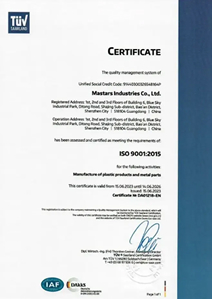
ISO9001:2015 Certificate

ISO9001:2015 Certificate

IATF16949:2016 Certificate
IATF16949:2016 Certificate
ISO13485:2016 Certificate

ISO13485:2016 Certificate
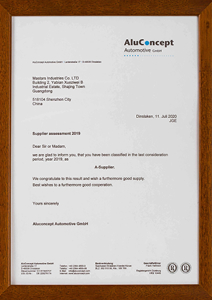
Medical A-Class Supplier

Medical A-Class Supplier

Partners

445 Projects
xylem
Bentley
Aston Martin
HARMAN
Annabella
Auer Lighting
NVIDIA
Compac
G4S
hs products
luxshareict
KK
Bioness
SGM
Nmble
Lear
LLEN&HEAT
belkin
DaAn Gene
MAGNA
pdd
Flite
simens
philips
maxwell
Land Rover

How to Work with Us

Share Your Project

Send a CAD file, drawing, or brief. Start with what you have.

Engineering Review & Quote

We review your requirements and confirm the process, price, and lead time.

We Make Your Parts

Once approved, we prepare the process and manufacture your parts.

Inspection & Delivery

We inspect, pack, and ship your finished parts.

What Our Customers Say

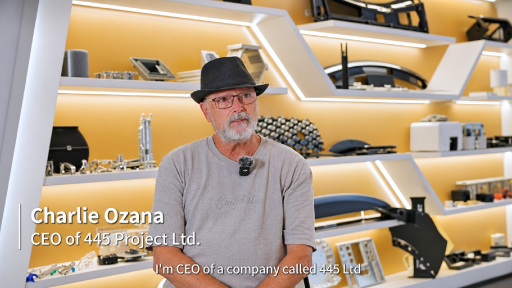
Charlie Ozana

Charlie Ozana

Company: 445 LTDJob Title: CEOBusiness: Full turnkey company
Mastars in all my projects are partners. So I get all the support that I need from engineering management, pricing, timetable, QA, everything is as a partner, not as a supplier. For me, Masters is like home.
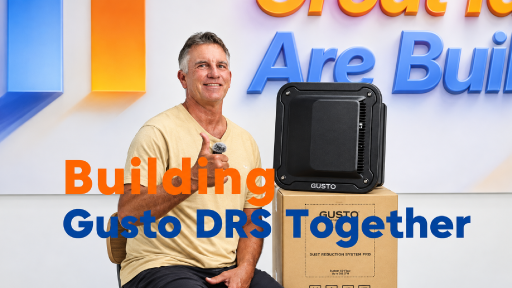
Nathan Johnson

Nathan Johnson

Company: Gusto Global IndustriesJob Title: DirectorBusiness: Dust reduction system
They were such a lovely company to deal with, and we couldn't be more happier even to today down the track with even more products moving forward. Very professional, easy to deal with, get back to you straight away, contact is easy through WeChat and email, move forward as quickly as you can.
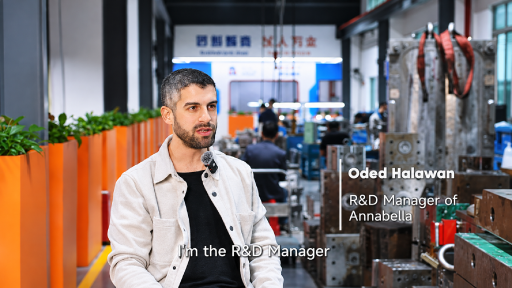
Oded Halawani

Oded Halawani

Company: Annabella Tech IsraelJob Title: R&D managerBusiness: Breast pump
We managed to make it in a very short time warm prototyping to mass production and FDA approval. That makes me feel confidence to choose Mastars.
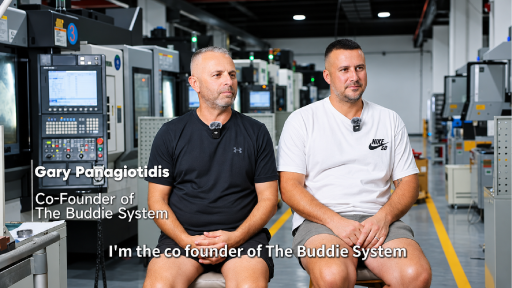
Jade Harris

Jade Harris

Company: Buddy SystemJob Title: Co-founderBusiness: Wireless instant safety alert device
We're glad that we found a company like Mastars to make the product for us because it's been so good to deal with. They're a really good company.
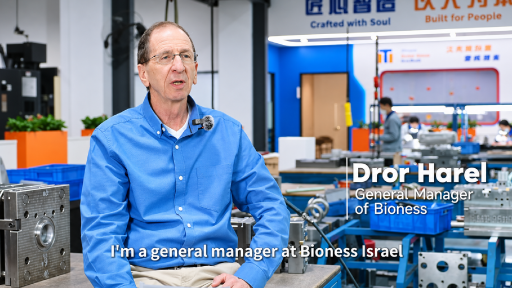
Dror Harel

Dror Harel

Company: BlonessJob Title: General ManagerBusiness: L300, H200
I think the relationship between the buyers and definitely between me the Mastars it's like a family relationship and this is why we are so happy to produce in Mastars and this is why we came for 15 years. By the way, now we came with a new product that we come to Master to produce for the new year.

Gravity Die Casting FAQs

  • Is gravity die casting right for my part?

    Often yes if you need repeatable metal parts at medium volumes, better consistency than sand casting, and lower tooling investment than HPDC. Very thin walls or very high volumes may favor HPDC instead.

  • How much does gravity die casting tooling cost and how long does it take?

    It depends on die size, core complexity, alloy, expected die life, machining, and annual volume. Permanent tooling usually costs more and takes longer than sand-casting tooling but less investment than HPDC tooling. Final tooling cost and first-article timing are confirmed after CAD and DFM review.

  • Can gravity die cast aluminum be T6 heat treated?
    Yes, for suitable alloys such as A356. T6 heat treatment can improve strength and hardness, and gravity casting's lower-turbulence filling generally makes suitable castings more practical for heat treatment than conventional HPDC parts with higher trapped-gas risk.

  • Can gravity die casting produce pressure-tight parts?

    Often yes. Alloy selection, melt treatment, filtration, controlled filling, feeder design, and solidification all affect porosity and leakage risk. Pressure or leak testing can be specified when sealing performance is critical.

  • What production volume and die life are typical?

    A common industry reference is about 250–50,000 parts per year, with permanent dies reaching around 100,000 cycles in suitable applications. Actual economics and die life depend on alloy, geometry, thermal loading, maintenance, and machining requirements.

  • What happens if the first castings do not meet requirements?

    The die or process can be adjusted based on dimensional, porosity, surface, machining, assembly, or leak-test findings. First articles are a validation step, so correcting issues before repeat production is normal.

  • Can you CNC-machine critical features after casting?

    Yes. Bores, threads, bearing seats, sealing faces, and mating interfaces can be CNC-machined after casting when the as-cast tolerance is not tight enough.

  • What do you need for a gravity die casting quote?

    A 3D CAD file is enough to start. For a more accurate quote, include alloy, quantity or annual volume, 2D drawings, critical dimensions, machined surfaces, finish, heat-treatment, and inspection or pressure-testing requirements.

Tell Us About Your Project

Share your project details and files with us. Rough information is fine to start. Our engineering consultant will contact you within 24 hours.

Verification code