Waterjet Cutting

Waterjet Cutting Services

Cold-cut complex profiles in thick, heat-sensitive, and difficult materials from prototypes to production parts.

  • Abrasive & pure waterjet cutting
  • Metals, composites, rubber, glass & stone
  • No thermal HAZ for heat-sensitive materials
  • CNC finishing, bending, welding & inspection
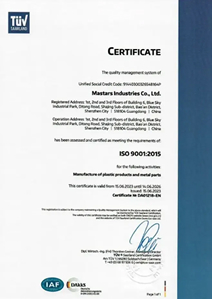
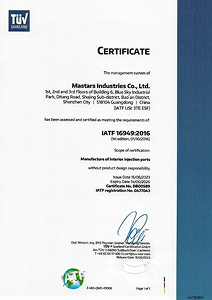
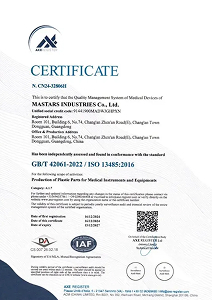
ISO 9001:2015 | ISO 13485:2016 | IATF 16949:2016

Waterjet Cutting Services
48 Hours
Fast Delivery
100,000
Production Volume
15+ CMM
Inspection Capacity
800+
Global Customers Served

Waterjet Cutting Capabilities

Abrasive Waterjet Cutting
Cut steel, stainless steel, aluminum, titanium, stone, glass, ceramics, and composites using water mixed with abrasive media.
Get a Quote
Pure Waterjet Cutting
Cut rubber, foam, gaskets, soft plastics, insulation, and other softer materials without abrasive media.
Get a Quote
Thick & Complex Profiles
Produce plates, brackets, flanges, base plates, and complex 2D contours in thicker materials without dedicated tooling.
Get a Quote
Heat-Sensitive Materials
Cold cutting avoids thermal HAZ, heat discoloration, and heat-driven material changes in metals, composites, and coated materials.
Get a Quote

Is Waterjet Cutting Right for Your Part?

Choose waterjet cutting for thick, heat-sensitive, reflective, or specialty materials that need complex flat profiles without thermal HAZ.
Process Best For Choose It When Key Consideration
Waterjet Cutting Thick plate, heat-sensitive materials, composites, specialty materials Thermal effects must be avoided or material thickness limits laser efficiency Kerf, taper, cut speed, and edge quality vary with thickness
Laser Cutting Thin-to-medium sheet, complex profiles, small features Cutting speed and narrow kerf are priorities Heat input creates a localized HAZ
Punching Repeated holes, perforations, louvers Repeated features and production efficiency justify reusable tooling Feature geometry and spacing depend on tooling
Bending Brackets, channels, boxes, flanges Flat blanks need defined bends to create 3D geometry Radius, springback, and flange geometry affect results
Forming Drawn, contoured, ribbed, reinforced geometry Sheet requires deeper or localized 3D deformation Material flow, thinning, and tooling require control
Welding Frames, chassis, enclosures, assemblies Multiple cut or formed parts require permanent joining Heat input can affect distortion and assembly geometry
Custom Waterjet-Cut Parts & Assemblies

Custom Waterjet-Cut Parts & Assemblies

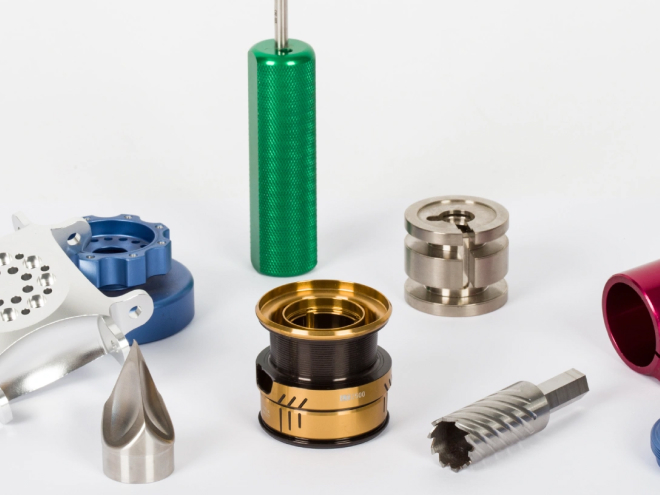
Base plates, flanges, brackets, structural plates, gaskets, composite panels, machine components, and custom 2D profiles.

Combine waterjet cutting with CNC machining, drilling, bending, welding, finishing, assembly, and inspection under one project.

Materials for Waterjet Cutting

Material hardness, thickness, brittleness, layering, and edge-quality requirements determine whether abrasive or pure waterjet cutting is the better approach.
Aluminum
Stainless Steel
Carbon Steel
Titanium
Copper
Brass
Rubber
Foam
Plastics
Composites
Glass
Ceramic
Stone
Aluminum
Aluminum
Aluminum
Aluminum
Aluminum
Aluminum
Aluminum
Aluminum
Aluminum

Aluminum is well suited to waterjet cutting when lightweight parts require complex profiles without thermal HAZ or heat-related changes around the cut edge.

Key Characteristics

Lightweight and easy to form

Good corrosion resistance

Accepts anodizing and powder coating

Allow machining stock where precision bores or tight mating surfaces require tighter control than the waterjet-cut edge.

Common Grades

6061

7075

Typical Applications

Aerospace components

Automotive structures

Electronic housings

Base plates

Industrial equipment

Available Finishes

Anodizing, powder coating, brushing, painting

Stainless Steel
Stainless Steel
Stainless Steel
Stainless Steel
Stainless Steel
Stainless Steel
Stainless Steel
Stainless Steel
Stainless Steel

Stainless steel combines corrosion resistance and durability with good suitability for abrasive waterjet cutting, especially where thermal discoloration or HAZ must be avoided.

Key Characteristics

High strength and corrosion resistance

Hygienic, easy-to-clean surface

Good weldability

Material thickness and cut speed affect taper and striation. Cold cutting avoids heat tint and thermal changes around the cut edge.

Critical holes and sealing surfaces may require secondary machining for tighter tolerances or edge requirements.

Common Grades

304

316 / 316L

Typical Applications

Medical equipment

Food-processing equipment

Industrial machinery

Structural plates

Corrosion-resistant parts

Available Finishes

Brushing, polishing, passivation

Carbon Steel
Carbon Steel
Carbon Steel
Carbon Steel
Carbon Steel
Carbon Steel
Carbon Steel
Carbon Steel
Carbon Steel

Carbon steel is commonly waterjet cut for thick structural plates, brackets, machine components, and custom profiles.

Key Characteristics

Strong and economical

Excellent weldability

Needs coating or plating for corrosion protection

Cold cutting avoids a thermal HAZ while allowing complex profiles in thicker plate. Edge taper and cutting time increase as section thickness grows.

Dry and protect freshly cut carbon-steel surfaces where corrosion is a concern after wet processing.

Common Grades

A36 Steel

1018 Steel

Cold-Rolled Steel

Typical Applications

Machine frames

Base plates

Heavy brackets

Industrial equipment

Fabricated assemblies

Available Finishes

Powder coating, painting, zinc plating

Titanium
Titanium
Titanium
Titanium
Titanium
Titanium
Titanium
Titanium
Titanium

Titanium is used where high strength-to-weight ratio, corrosion resistance, and material integrity are required. Waterjet is useful for preparing profiles while avoiding thermal changes at the cut edge.

Key Characteristics

Built-in zinc corrosion protection

Cost-effective

Good for large enclosures

Abrasive waterjet can rough-cut complex titanium profiles before CNC finishing, reducing unnecessary machining of bulk stock.

Machine critical holes, sealing faces, and close-tolerance interfaces after waterjet cutting where required.

Common Grades

Ti-6Al-4V / TC4

Typical Applications

Aerospace components

Medical devices

High-performance mechanical parts

Copper
Copper
Copper
Copper
Copper
Copper
Copper
Copper
Copper

Copper is used for waterjet-cut parts where high electrical or thermal conductivity is required. Waterjet cutting is useful for complex conductive profiles because the process avoids thermal HAZ around the cut edge.

Key Characteristics

Copper can be cut with abrasive waterjet without the reflectivity concerns associated with thermal laser cutting. Material thickness and cut quality affect edge taper and surface condition.

Define critical contact surfaces and machining allowances where edge quality or tight electrical interfaces matter.

Common Grades

C101

C110

Typical Applications

Busbars

Electrical contacts

Conductive plates

Heat-transfer components

Thermal-management parts

Brass

Brass is used for functional and decorative components that combine conductivity, corrosion resistance, and a finished metal appearance. Abrasive waterjet supports complex flat profiles without introducing a thermal HAZ.

Key Characteristics

Brass cuts cleanly with abrasive waterjet for many flat-profile applications. Thickness, nozzle setup, and cut quality influence taper and edge appearance.

Visible edges and mating features should be reviewed for taper, finish requirements, and any secondary machining.

Common Grades

C260

Typical Applications

Electrical hardware

Fittings

Instrument components

Decorative plates

Specialty metal parts

Rubber

Rubber is well suited to pure waterjet cutting for seals, gaskets, pads, and flexible profiles that can deform under conventional cutting tools. Cold cutting avoids thermal damage and leaves the material free from abrasive contamination when pure water is used.

Pure waterjet cuts flexible rubber without tool pressure or thermal HAZ. Material hardness, thickness, elasticity, and water response affect edge definition and dimensional stability.

Soft or elastic rubber can move during cutting and measurement, so critical dimensions should account for material compression and relaxation.

Common Grades

Natural Rubber

EPDM

Neoprene

NBR

Silicone Rubber

Typical Applications

Gaskets

Seals

Protective pads

Flexible profiles

Industrial rubber components

Foam

Foam is suitable for pure waterjet cutting when lightweight, compressible materials need clean custom profiles without crushing, melting, or abrasive contamination.

Key Characteristics

Pure waterjet cuts foam with minimal mechanical loading. Density, cell structure, thickness, and water absorption influence cut quality and final dimensional stability.

Open-cell or water-absorbent foams may retain moisture after cutting and require drying before dimensional inspection or assembly.

Common Grades

EVA Foam

PE Foam

PU Foam

EPP Foam

Insulation Foam

Typical Applications

Protective inserts

Insulation components

Packaging profiles

Sealing pads

Lightweight structural fillers

Plastics

Waterjet cutting is suitable for plastic sheet and plate where heat-sensitive edges, melting, or mechanical tool pressure may affect the finished part. The cutting approach depends on material hardness, thickness, and required edge quality.

Key Characteristics

Pure waterjet suits softer plastics, while harder or thicker plastic materials may require abrasive cutting. Material stiffness, water response, and thickness affect edge condition and dimensional stability.

Confirm water absorption, edge-quality, and contamination requirements before selecting pure or abrasive waterjet cutting.

Common Grades

Acrylic

Soft Plastics

Other Plastic Sheet Materials

Typical Applications

Custom plastic profiles

Panels

Insulation components

Guards

Prototype parts

Composites

Waterjet cutting is useful for carbon fiber, FRP, laminates, and other composite panels where heat can damage the resin matrix.

Key Characteristics

Cold cutting avoids thermal degradation, while jet pressure and entry conditions must be controlled to reduce edge fraying and delamination.

Critical composite parts may require test cuts to confirm delamination and edge-quality requirements.

Common Grades

Carbon Fiber

FRP

Laminates

Typical Applications

Aerospace panels

Structural composite plates

Equipment panels

Lightweight components

Glass

Glass can be cut with abrasive waterjet for custom flat profiles where complex geometry and cold cutting are required. The process avoids thermal HAZ, but brittle-edge behavior still requires controlled piercing and cutting parameters.

Key Characteristics

Abrasive waterjet can cut complex glass profiles without thermal cracking from heat input. Pierce strategy, thickness, support, and cut speed strongly affect chipping and edge condition.

Piercing and edge entry require careful control because brittle glass can chip or crack before the cutting path stabilizes.

Common Grades

Float Glass

Laminated Glass

Industrial Glass

Specialty Glass

Typical Applications

Custom glass panels

Machine guards

Display components

Architectural profiles

Industrial glass parts

Ceramic

Ceramic can be waterjet cut when hard, brittle components require complex profiles without thermal HAZ. Edge chipping and fracture remain the main risks during abrasive waterjet processing.

Key Characteristics

Abrasive waterjet cuts ceramic through controlled erosion. Material brittleness, thickness, nozzle setup, pierce strategy, and cut speed influence edge chipping and dimensional consistency.

Small features, narrow webs, and sharp internal geometry can fracture during cutting and may require test cuts or secondary finishing.

Common Grades

Alumina Ceramic

Zirconia Ceramic

Industrial Ceramic

Technical Ceramic

Typical Applications

Insulating components

Wear-resistant plates

Technical ceramic profiles

Electrical components

Industrial ceramic parts

Stone

Stone is suitable for abrasive waterjet cutting when thick decorative or structural slabs require complex 2D profiles, openings, or custom edge geometry.

Key Characteristics

Abrasive waterjet can cut thick stone with complex profiles and no thermal HAZ. Natural variation, internal cracks, thickness, and cut speed affect edge condition and breakage risk.

Natural stone can contain hidden veins or internal defects, so edge quality and breakage risk may vary across the same slab.

Common Grades

Granite

Marble

Engineered Stone

Slate

Typical Applications

Architectural panels

Custom stone profiles

Countertop features

Decorative components

Industrial stone parts

Waterjet Cutting Post-Processing

Select secondary operations around edge quality, taper, corrosion protection, precision interfaces, and final assembly requirements.
Process Primary Purpose Waterjet-Specific Impact Typical Parts
Cleaning & Drying Remove water and abrasive residue Important for carbon steel, cavities, and contamination-sensitive parts Plates, brackets, machine parts
Deburring & Edge Finishing Remove sharp edges and minor burrs Improves handling and assembly around waterjet-cut contours Brackets, flanges, panels
Grinding & Polishing Improve cut-edge appearance Can reduce visible striation and blend edge transitions Visible metal parts, structural plates
CNC Machining Finish precision holes, faces, threads, and pockets Removes taper and achieves tighter local tolerances after rough profiling Base plates, flanges, precision interfaces
Anodizing Protect aluminum surfaces Edge condition should be acceptable before anodizing Aluminum structures and housings
Powder Coating / Painting Corrosion and appearance protection Clean and dry cut surfaces before coating Frames, brackets, equipment parts
Welding & Assembly Build complete structures Fixture strategy must account for waterjet-cut edge and downstream weld distortion Frames, structures, assemblies

Waterjet Cutting Tolerances & Limits

Use these values as starting references. Final capability depends on material, thickness, nozzle setup, cut speed, abrasive flow, geometry, and required edge quality.
Metric Typical Reference Design Use Key Factor
Cutting Tolerance ±0.1–0.2 mm General waterjet profiles Material, thickness, speed, cut quality
Typical Kerf ≈0.8–1.2 mm Slots, profiles, mating geometry Nozzle diameter, abrasive, thickness
Minimum Feature ≈1 mm Initial small-feature reference Thickness, material, required edge quality
Thick-Material Cutting Project-Specific Plate and thick-section profiles Material hardness, thickness, pump/nozzle setup
Edge Taper Project-Specific Thick parts and precision edges Thickness, speed, taper compensation
Heat-Affected Zone No Thermal HAZ Heat-sensitive materials Cold-cutting process
Critical Interfaces Drawing-Specific Holes, datums, mating surfaces Secondary machining may be required
Inspection Capacity 15+ CMM Critical dimensional verification Drawing and FAI requirements
CMM Measurement Capability Down to 0.0017 mm Precision measurement Measurement capability, not waterjet tolerance

Why Choose Mastars for Waterjet Cutting?

Quality Systems
ISO 9001, ISO 13485, and IATF 16949 systems support controlled inspection and documentation. FAI and CMM verify critical profiles, datums, holes, and mating interfaces where tighter control is required.
Engineering & Project Support
100+ engineers help select abrasive or pure waterjet based on material, thickness, contamination limits, edge requirements, and downstream machining needs.
Manufacturing Experience
Backed by 20+ years of manufacturing experience, Mastars supports waterjet-cut parts from prototype validation through secondary machining and repeat production.
Flexible Capacity
Supported by 5+ production bases, Mastars supports prototype cutting, pilot builds, changing volumes, and repeat production as project demand develops.
Waterjet DFM Review
Review material sensitivity, thickness, kerf, taper, cut quality, nozzle path, and machining allowance to avoid thermal damage and control critical profiles.
Integrated Manufacturing
Coordinate waterjet cutting with CNC machining, bending, welding, finishing, inspection, and assembly through one manufacturing partner instead of managing multiple suppliers.

Certifications

ISO9001:2015 Certificate

ISO9001:2015 Certificate

IATF16949:2016 Certificate

IATF16949:2016 Certificate
ISO13485:2016 Certificate
ISO13485:2016 Certificate
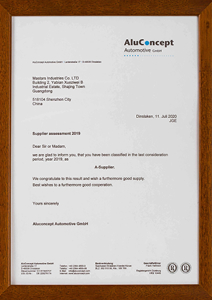
Medical A-Class Supplier

Medical A-Class Supplier

Partners

445 Projects
xylem
Bentley
Aston Martin
HARMAN
Annabella
Auer Lighting
NVIDIA
Compac
G4S
hs products
luxshareict
KK
Bioness
SGM
Nmble
Lear
LLEN&HEAT
belkin
DaAn Gene
MAGNA
pdd
Flite
simens
philips
maxwell
Land Rover

How to Work with Us

Share Your Project

Send a CAD file, drawing, or brief. Start with what you have.

Engineering Review & Quote

We review your requirements and confirm the process, price, and lead time.

We Make Your Parts

Once approved, we prepare the process and manufacture your parts.

Inspection & Delivery

We inspect, pack, and ship your finished parts.

What Our Customers Say

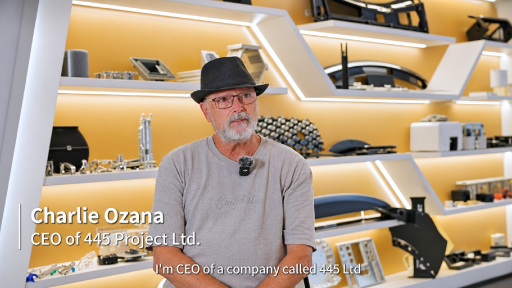
Charlie Ozana

Charlie Ozana

Company: 445 LTDJob Title: CEOBusiness: Full turnkey company
Mastars in all my projects are partners. So I get all the support that I need from engineering management, pricing, timetable, QA, everything is as a partner, not as a supplier. For me, Masters is like home.
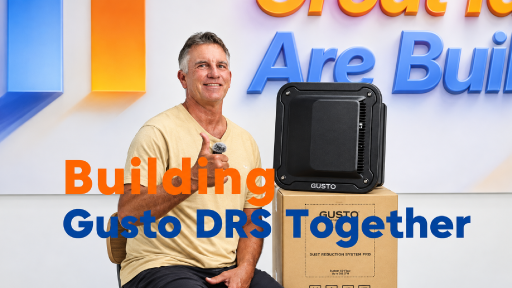
Nathan Johnson

Nathan Johnson

Company: Gusto Global IndustriesJob Title: DirectorBusiness: Dust reduction system
They were such a lovely company to deal with, and we couldn't be more happier even to today down the track with even more products moving forward. Very professional, easy to deal with, get back to you straight away, contact is easy through WeChat and email, move forward as quickly as you can.
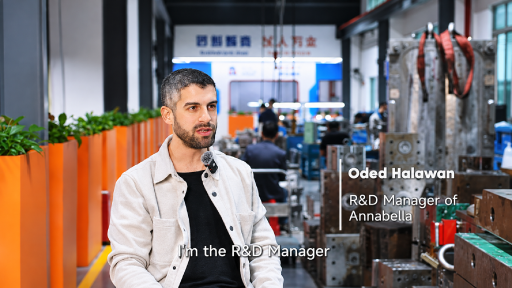
Oded Halawani

Oded Halawani

Company: Annabella Tech IsraelJob Title: R&D managerBusiness: Breast pump
We managed to make it in a very short time warm prototyping to mass production and FDA approval. That makes me feel confidence to choose Mastars.
Jade Harris

Jade Harris

Company: Buddy SystemJob Title: Co-founderBusiness: Wireless instant safety alert device
We're glad that we found a company like Mastars to make the product for us because it's been so good to deal with. They're a really good company.
Dror Harel

Dror Harel

Company: BlonessJob Title: General ManagerBusiness: L300, H200
I think the relationship between the buyers and definitely between me the Mastars it's like a family relationship and this is why we are so happy to produce in Mastars and this is why we came for 15 years. By the way, now we came with a new product that we come to Master to produce for the new year.

Waterjet Cutting FAQs

  • What is waterjet cutting?

    Waterjet cutting uses a high-pressure water stream to cut complex 2D profiles. Abrasive particles are added for hard materials such as metal, stone, and composites, while pure water is used for softer materials such as rubber and foam.

  • What is the difference between abrasive and pure waterjet cutting?

    Abrasive waterjet mixes water with abrasive media to cut metals, ceramics, stone, glass, and composites. Pure waterjet uses water alone and is better suited to rubber, foam, gaskets, soft plastics, insulation, and other soft materials.

  • What materials can waterjet cutting process?

    Waterjet can process aluminum, steel, stainless steel, titanium, copper, brass, rubber, foam, plastics, glass, ceramic, stone, carbon fiber, FRP, and other composite materials. Material thickness and edge requirements determine the cutting setup.

  • Does waterjet cutting create a heat-affected zone?

    No. Waterjet is a cold-cutting process and does not create a thermal HAZ. This helps preserve material properties and avoids heat discoloration or heat-driven distortion around the cut edge.

  • No. Waterjet is a cold-cutting process and does not create a thermal HAZ. This helps preserve material properties and avoids heat discoloration or heat-driven distortion around the cut edge.

    A typical reference is approximately ±0.1–0.2 mm. Actual tolerance depends on material, thickness, cut speed, nozzle setup, taper compensation, and required edge quality.

  • What is waterjet kerf?

    Kerf is the width removed by the waterjet stream. A typical reference is approximately 0.8–1.2 mm, depending on nozzle diameter, abrasive flow, material, thickness, and cutting conditions.

  • What is edge taper in waterjet cutting?

    Taper is the difference between the top and bottom dimensions of a cut edge. It becomes more noticeable in thicker materials or faster cuts. Slower cutting and taper compensation can improve edge perpendicularity.

  • Can waterjet cut thick material?

    Yes. Thick plate is one of waterjet cutting's main strengths. Practical thickness depends on material hardness, pump and nozzle setup, part geometry, required tolerance, and edge quality.

  • When should I choose waterjet instead of laser cutting?

    Choose waterjet for thick, heat-sensitive, reflective, composite, or specialty materials where thermal HAZ must be avoided. Laser cutting is generally faster for thinner metal sheet and smaller features.

  • Do you support prototypes and production waterjet cutting?

    Yes. Prototype cutting verifies profile geometry, edge condition, fit, and material suitability. Production adds controlled nesting, cut parameters, inspection planning, revision control, and repeatability.

  • How fast can waterjet-cut parts be delivered?

    Suitable prototype projects can be delivered in as fast as 48 hours. Thick materials, specialty materials, high cut-quality requirements, CNC finishing, coating, welding, assembly, or additional inspection can extend the schedule.

  • How much does waterjet cutting cost?

    Cost depends on material, thickness, total cut length, abrasive use, cut quality, cutting speed, nesting efficiency, quantity, and secondary machining. Thick materials and high edge-quality requirements typically increase machine time.

  • What information do you need for a waterjet quote?

    A DXF or DWG flat profile is ideal for 2D cutting. STEP or other 3D CAD files are also useful when machining or downstream fabrication is required. Add material, thickness, quantity, tolerances, edge requirements, finish, and any secondary operations. Rough information is fine for an initial review.

Tell Us About Your Project

Share your project details and files with us. Rough information is fine to start. Our engineering consultant will contact you within 24 hours.

Verification code