Production

Production Injection Molding Services

Repeatable end-use plastic parts with tooling, molding, and quality control managed from T1 approval through repeat production.

  • Low-volume, bridge & high-volume production
  • Multi-cavity, hot-runner & hardened-steel tooling
  • Engineering, filled & flame-retardant resins
  • T1 approval, FAI, CMM & in-process inspection
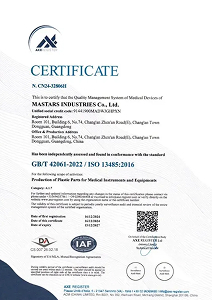
ISO 9001:2015 | ISO 13485:2016 | IATF 16949:2016
Production Injection Molding Services
800+
Global Customers
±0.05 mm
Molding Precision
100+
Engineering Professionals
20+
Years of Manufacturing Experience

Production Injection Molding Options

Plastic Injection Molding
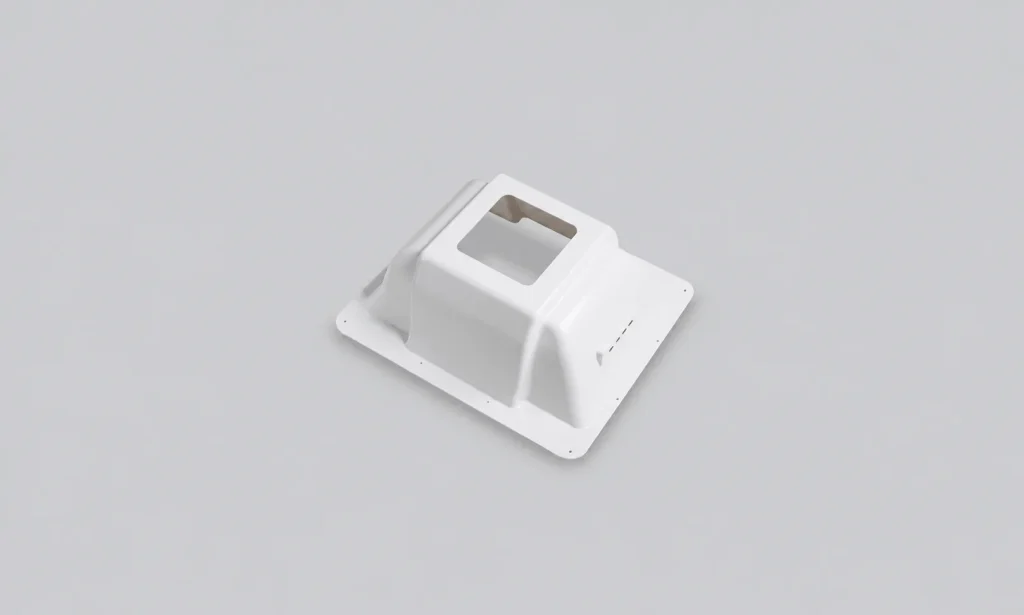
Produce functional and cosmetic thermoplastic parts using standard, filled, and flame-retardant grades. Multi-cavity tooling helps reduce unit costs as production volumes increase.
Get a Quote
LSR Molding
LSR Molding
Mold flexible silicone parts for seals, medical devices, and functional assemblies. Automated metering and controlled curing support repeatability, with tolerances down to ±0.01 mm on suitable features.
Get a Quote
Insert Molding
Insert Molding
Mold plastic directly around metal or functional inserts to integrate components into one part. This reduces secondary assembly and helps maintain insert positioning and retention.
Get a Quote
Overmolding
Overmolding
Combine rigid plastic substrates with compatible soft or functional materials in one molded component. Add grip, sealing, or impact protection while reducing secondary assembly.
Get a Quote
Production Tooling
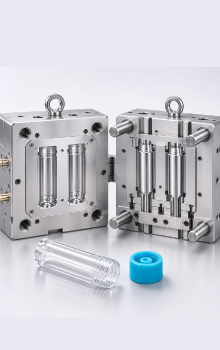
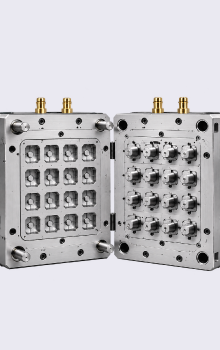
Build molds for recurring production using P20 or hardened steel selected for expected tool life and volume. Hot runners and replaceable inserts can be incorporated to improve production efficiency and simplify maintenance.
Get a Quote

Choosing the Right Injection Molding Process & Tooling for Production

The right approach depends on more than volume alone. Part construction, material combinations, embedded components, cavity demand, assembly steps, surface requirements, and expected repeat orders all affect the most practical production strategy.
Process / Tooling Option Best For Materials / Tooling Key Production Advantage Key Engineering Consideration
Plastic Injection Molding Housings, covers, brackets & functional plastic parts ABS, PC, PP, PA, POM, PBT & more Low unit cost at scale Shrinkage, warpage, gates and critical dimensions must be controlled
LSR Molding Seals, valves, flexible parts & medical components Liquid silicone rubber Automated, repeatable silicone molding Flash, venting, cure control and parting lines need close attention
Insert Molding Parts with threaded, electrical or structural inserts Thermoplastics + metal inserts Reduces secondary assembly Insert location, retention and thermal expansion can affect molding stability
Overmolding Grips, seals, protective layers & multi-material parts TPE, TPU, silicone + rigid substrates Combines materials in one part Material bonding and substrate geometry must be validated
Family & Multi-Cavity Molding Repeat parts and higher-volume programs Most moldable thermoplastics More parts per cycle Filling balance and cavity-to-cavity consistency become critical
Production Tooling Recurring and long-life programs P20 & hardened tool steels Supports long-term repeat production Tool steel, cavity count, cooling and maintenance should match expected demand
Production Injection Molding

Production Injection Molding

Mastars supports the full path from prototype validation to stable injection molding production. Early prototypes help verify form, fit, assembly, function, and appearance before committing to production tooling. As the design matures, molded samples from prototype or bridge tooling are used to evaluate production resin behavior, shrinkage, warpage, critical dimensions, surface quality, and assembly performance under actual molding conditions.

Once the part is ready for production, the priority changes from proving the design to producing it consistently and economically. Tooling strategy, cavity count, automation, molding parameters, and inspection requirements are matched to your expected volume, quality requirements, and cost targets. This allows production to scale with real demand instead of forcing unnecessary tooling investment or excess inventory, while keeping dimensions, appearance, and part-to-part consistency under control across repeat orders.

Low Volume Injection Molding

Low Volume Injection Molding

Low-volume injection molding gives you production-grade molded parts without requiring the tooling investment or inventory commitment of a high-volume program. It is well suited to small-batch plastic injection molding, pilot builds, bridge production, market launches, spare parts, and products with uncertain or changing demand. A practical reference range is 100–10,000 parts, although resin, geometry, cavity count, tooling life, and expected reorders all affect the best approach.

The goal is different from prototyping. These are repeatable end-use parts produced with a tooling and process strategy that fits current demand. As volumes become more predictable, tooling and cavity count can be upgraded for higher output and lower unit cost rather than forcing that investment at the beginning.

How We Manage Injection Molding Production

How We Manage Injection Molding Production

A production run can fail even when the drawing is correct. Resin variation, molding conditions, cavity balance, tooling wear, and uncontrolled revisions can all shift dimensions or appearance between batches. Mastars manages these risks from production release through repeat orders so approved parts remain consistent as volume grows.

1. Engineering review & production release: Before production starts, we confirm the latest drawing revision, resin, color, tolerances, surface requirements, and approved mold configuration. DFM feedback can be returned within 48 hours for suitable projects, helping identify shrinkage, warpage, flash, weld lines, ejection, and assembly risks before they require tooling changes or disrupt production.

2. Molding & process control: During molding, resin preparation, machine setup, mold temperature, injection and holding conditions, cooling, and cycle stability are controlled against the approved process. First-piece checks and in-process inspection are used to catch dimensional drift, cosmetic variation, and cavity-to-cavity differences before they affect a full production batch.

3. Quality validation & repeat orders: Before shipment, critical dimensions, fit, warpage, flash, and surface appearance are checked against approved requirements. FAI, CMM, PPAP, Control Plans, material traceability, and inspection reports can be applied where required. Production records, revision control, and mold maintenance then carry the same approved conditions into replenishment and repeat orders.

Injection Molding Production Equipment

Haitian Injection Molding Machine

Haitian Injection Molding Machine

Haitian Injection Molding Machine

Haitian Injection Molding Machine

L.K. Injection Molding Machine

L.K. Injection Molding Machine

Why Choose Mastars for Production Injection Molding?

Quality Systems
ISO 9001, ISO 13485, and IATF 16949 systems support controlled production and documentation. FAI, CMM, in-process, and final inspection help maintain critical requirements across repeat production.
Engineering & Project Support
100+ engineers coordinate tooling, quality, production planning, engineering changes, and delivery priorities from production release through repeat orders.
Manufacturing Experience
Our mold project engineers bring 20+ years of industry experience, supporting tool maintenance, revisions, process stability, and repeat production across long-running programs.
Flexible Capacity
Supported by 5+ production bases, Mastars handles changing demand from low-volume production to 100,000+ units while maintaining the approved manufacturing and inspection requirements.
Production Molding DFM Review
Review tool material, cavity count, runner strategy, resin behavior, expected mold life, and lifetime demand so tooling investment matches the economics of the production program.
Integrated Manufacturing
Keep mold making, injection molding, finishing, assembly, inspection, and delivery within one manufacturing program instead of coordinating multiple suppliers.

Certifications

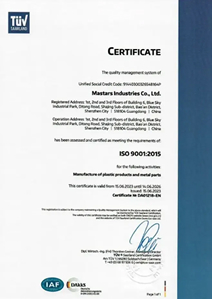
ISO9001:2015 Certificate

ISO9001:2015 Certificate

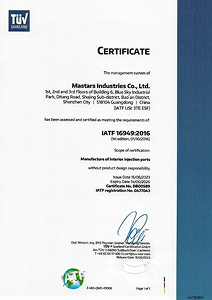
IATF16949:2016 Certificate

IATF16949:2016 Certificate

ISO13485:2016 Certificate

ISO13485:2016 Certificate

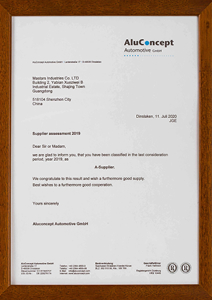
Medical A-Class Supplier

Medical A-Class Supplier

Partners

445 Projects
xylem
Bentley
Aston Martin
HARMAN
Annabella
Auer Lighting
NVIDIA
Compac
G4S
hs products
luxshareict
KK
Bioness
SGM
Nmble
Lear
LLEN&HEAT
belkin
DaAn Gene
MAGNA
pdd
Flite
simens
philips
maxwell
Land Rover

How to Work with Us

Share Your Project

Send a CAD file, drawing, or brief. Start with what you have.

Engineering Review & Quote

We review your requirements and confirm the process, price, and lead time.

We Make Your Parts

Once approved, we prepare the process and manufacture your parts.

Inspection & Delivery

We inspect, pack, and ship your finished parts.

What Our Customers Say

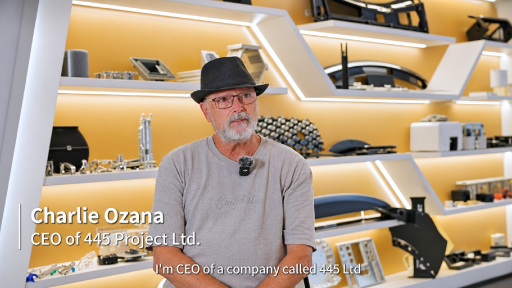
Charlie Ozana

Charlie Ozana

Company: 445 LTDJob Title: CEOBusiness: Full turnkey company
Mastars in all my projects are partners. So I get all the support that I need from engineering management, pricing, timetable, QA, everything is as a partner, not as a supplier. For me, Masters is like home.
Nathan Johnson

Nathan Johnson

Company: Gusto Global IndustriesJob Title: DirectorBusiness: Dust reduction system
They were such a lovely company to deal with, and we couldn't be more happier even to today down the track with even more products moving forward. Very professional, easy to deal with, get back to you straight away, contact is easy through WeChat and email, move forward as quickly as you can.
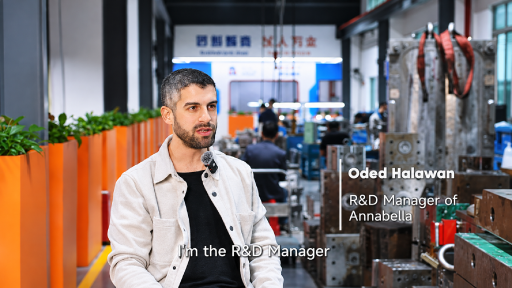
Oded Halawani

Oded Halawani

Company: Annabella Tech IsraelJob Title: R&D managerBusiness: Breast pump
We managed to make it in a very short time warm prototyping to mass production and FDA approval. That makes me feel confidence to choose Mastars.
Jade Harris

Jade Harris

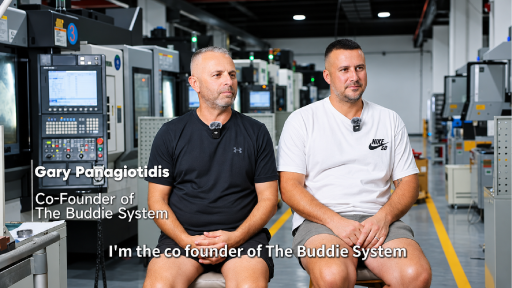
Company: Buddy SystemJob Title: Co-founderBusiness: Wireless instant safety alert device
We're glad that we found a company like Mastars to make the product for us because it's been so good to deal with. They're a really good company.
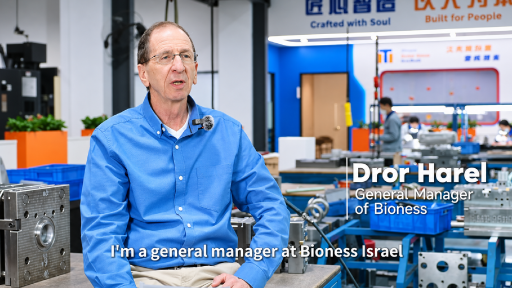
Dror Harel

Dror Harel

Company: BlonessJob Title: General ManagerBusiness: L300, H200
I think the relationship between the buyers and definitely between me the Mastars it's like a family relationship and this is why we are so happy to produce in Mastars and this is why we came for 15 years. By the way, now we came with a new product that we come to Master to produce for the new year.

Production Injection Molding FAQs

  • What is production injection molding?

    Production injection molding is the stage where an approved design is manufactured as repeatable end-use parts using production-grade tooling and controlled molding conditions. The focus is consistent quality, stable cycle performance, predictable cost, and reliable repeat orders—not simply producing more pieces.

  • Can you support low-volume and small-batch injection molding?

    Yes. Low-volume and small-batch plastic injection molding are practical for pilot production, market launches, bridge programs, and uncertain demand. 100–10,000 parts is a useful reference range, but resin, geometry, cavity count, tooling cost, and expected reorders determine the best tooling strategy.

    Usually when the design is stable, demand is recurring, and lower unit cost justifies more production-focused tooling. Around 100,000+ parts can be a useful reference point for multi-cavity hardened-steel tooling, but annual demand, cycle time, resin, tool life, and cavity count matter more than one fixed quantity threshold.

  • When should I move from prototyping to production injection molding?

    It depends on design maturity and expected demand. Production molding usually makes sense once fit, assembly, function, material behavior, and critical dimensions have been validated and the design is stable enough for repeat manufacturing. A successful prototype does not automatically mean the design is production-ready.

  • What is the difference between prototype and production tooling?

    Prototype tooling prioritizes design validation, low quantities, and easier changes. Bridge tooling supports repeat production while demand is still developing. Production tooling is designed for longer mold life, stable cycles, repeat orders, and higher output. Tool material, cavity count, cooling, runner design, and expected lifetime demand determine which level makes the most sense.

  • How much does low-volume injection molding cost?

    It depends mainly on the mold and the part. Tool material, cavity count, geometry, resin, tolerances, finish, inspection, and quantity all affect total cost. At lower volumes, tooling represents a larger share of unit economics, so bridge tooling may make more sense than investing immediately in a full high-volume mold.

  • How long does production injection molding take?

    It depends on mold complexity and validation requirements. T1 samples can be ready in as fast as 10 days, while typical tooling and T1 programs may take around 2–4 weeks. Production begins after sample approval. Side actions, inserts, textures, multi-cavity tooling, engineering resins, or design revisions can extend the schedule.

  • Can production tooling handle engineering plastics?

    Yes. Production tooling can support glass-filled, flame-retardant, high-temperature, and other engineering resins. Resin choice affects shrinkage, mold wear, cooling, venting, surface quality, and dimensional stability, so material should be confirmed before the tooling and molding process are finalized.

  • How do you verify parts before full production?

    T1 parts are checked for dimensions, appearance, material behavior, mold function, and molding stability before production approval. Depending on project requirements, validation can also include FAI, CMM measurement, PPAP, control plans, material traceability, and inspection reports.

  • Can you maintain consistency across repeat orders?

    Yes. Approved revisions, molding conditions, inspection requirements, production records, and mold maintenance are carried into repeat orders. This matters especially when replenishment happens months later or when production demand changes over the life of the program.

  • What do you need for a production injection molding quote?

    A 3D CAD file is enough to start. For a more accurate quote, include expected quantity or annual volume, resin, 2D drawings, critical dimensions, color, finish, inserts, and any special inspection requirements. Rough information is fine for the initial review.

Tell Us About Your Project

Share your project details and files with us. Rough information is fine to start. Our engineering consultant will contact you within 24 hours.

Verification code