
Production

Production 3D Printing Services

Low-volume, custom, and on-demand 3D printed parts for end-use applications, manufacturing aids, and repeat production without dedicated tooling.

  • SLA, SLS, MJF, FDM, PolyJet, SLM & metal 3D printing
  • End-use parts, jigs, fixtures & on-demand spare parts
  • Tool-free production for complex or changing designs
  • Post-processing, FAI / CMM & multi-process scale-up
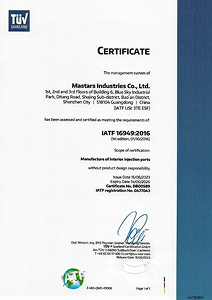
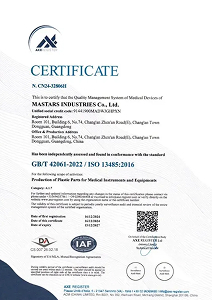
ISO 9001:2015 | ISO 13485:2016 | IATF 16949:2016

Production 3D Printing Services
3 Days
Fast Delivery
0
MOQ
100+
Engineering Professionals
100+
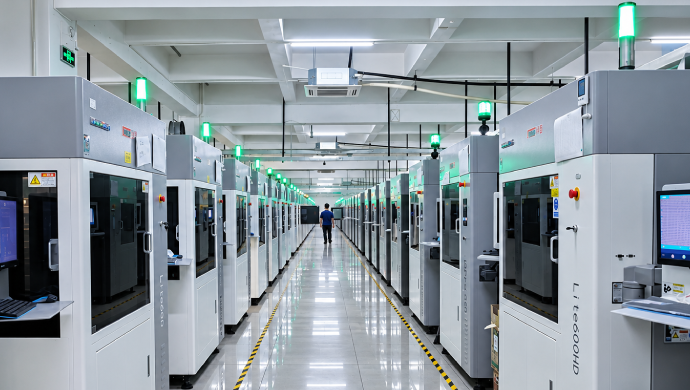
Equipment Units

Production 3D Printing Capabilities

SLA 3D Printing
SLA 3D Printing
Fine-detail resin parts for cosmetic and small-batch use, with typical XY accuracy around ±0.05 mm + 0.1% on suitable geometry.
Get a Quote
SLS 3D Printing
SLS 3D Printing
Support-free PA11 and PA12 parts for repeat low-volume builds; PA12 typically ±0.38 mm or ±0.2%, whichever is greater.
Get a Quote
MJF 3D Printing
MJF 3D Printing
Nested nylon production for repeat end-use parts, with 80 μm layers and typical tolerance around ±0.30 mm + 0.1%.
Get a Quote
FDM 3D Printing
FDM 3D Printing
Standardized finishing for repeatable results.Large thermoplastic parts and manufacturing aids with 100–300 μm layers; industrial FDM typically reaches ±0.3%, minimum ±0.3 mm.
Get a Quote
PolyJet 3D Printing
Multi-material and full-color short-run parts with ~30 μm layers and Shore A 30–95 plus rigid material options.
Get a Quote
SLM 3D Printing
LPBF metal parts for internal channels, lattices, and lightweight structures, with typical layer ranges of 20–60 μm.
Get a Quote

Production 3D Printing vs. Other Manufacturing Methods

Compare geometry, material, quantity, tolerance, throughput, tooling cost, and long-term unit cost before committing to production 3D printing.
Manufacturing Process Best For Material Capability Advantages Considerations
Production 3D Printing Complex, customized, on-demand and low-to-mid-volume parts Engineering polymers, resins, composites and metals No dedicated tooling, complex geometry, flexible quantities, fast design changes Unit cost and throughput can become less competitive at high recurring volumes
CNC Machining Precision components and low-to-medium-volume parts Metals and engineering plastics Tight dimensional control, broad material selection, strong critical-interface control Material removal and machining time can increase cost for complex geometry
Injection Molding High-volume plastic parts with stable designs Production thermoplastics Low unit cost at scale, repeatability, fast cycles Tooling investment and costly design changes after tool release
Sheet Metal Fabrication Enclosures, brackets, panels and sheet-based structures Aluminum, steel, stainless steel Efficient for sheet geometry and large structural components Geometry limited by sheet forming, bends, welding and assembly
Die Casting Higher-volume metal parts with stable geometry Aluminum, zinc and casting alloys High throughput and repeatable cast geometry Tooling cost, lead time and casting design constraints
Production 3D Printing for Low-Volume and End-Use Parts

Production 3D Printing for Low-Volume and End-Use Parts

Production 3D printing is most valuable when complex geometry, customization, changing demand, or tooling economics matter more than achieving the lowest possible unit cost at very high volume. It can support functional end-use parts, manufacturing aids, replacement parts, and repeat low-volume supply without waiting for dedicated molds or dies.

The right production route still depends on material, quantity, tolerance, surface requirements, throughput, and long-term demand. Mastars supports polymer and metal additive manufacturing together with CNC machining, injection molding, finishing, and inspection, so the process can change as the design stabilizes or production volume grows.

Production 3D Printing Quality & Repeatability

Production 3D Printing Quality & Repeatability

Repeat production depends on controlling the approved material, build strategy, orientation, post-processing route, and inspection criteria—not simply printing the same CAD file again.

Mastars can apply FAI, CMM, dimensional inspection, and final checks to drawing-defined critical features. Acceptance criteria should be agreed before the first production build so repeat batches can be evaluated against the same functional and dimensional requirements.

3D Printing Materials for Production Parts

Production Material Common Process Why It Is Chosen Production Considerations
PA12 Nylon SLS / MJF Balanced strength, stiffness, dimensional stability and batch efficiency Powder texture, moisture behavior and final tolerance should be reviewed
PA11 Nylon SLS / MJF Higher ductility and impact resistance for clips, hinges and moving parts More flexible behavior than PA12 affects fit and stiffness
Glass-Filled PA12 SLS / MJF Higher stiffness and improved dimensional stability Lower ductility than unfilled nylon
TPU SLS / MJF / FDM Flexible, elastic parts for seals, covers and repeated deformation Hardness, wall thickness and process route affect final behavior
ABS FDM Cost-effective functional parts, fixtures and housings Layer direction and visible layer lines remain important
Polycarbonate (PC) Industrial FDM Higher impact and temperature performance Warpage, orientation and support strategy require review
PEI (ULTEM) Industrial FDM High-temperature, chemical and specialty FST applications Higher material/process cost; grade-specific qualification matters
Tough Resin SLA Detailed small-batch parts requiring higher toughness than standard resin Long-term behavior may not equal molded thermoplastics
High-Temperature Resin SLA Small production or tooling applications exposed to elevated temperatures Thermal cycling and long-term material behavior require validation
Aluminum — AlSi10Mg Metal AM / SLM Lightweight functional parts and thermal structures Supports, heat treatment and machining may be required
Stainless Steel — 316L / 17-4 PH Metal AM / SLM Corrosion resistance or higher strength for functional metal parts Final properties depend on alloy condition and heat treatment
Titanium — Ti6Al4V Metal AM / SLM High strength-to-weight ratio for demanding lightweight parts Higher cost and significant post-processing requirements
Inconel 718 Metal AM / SLM High-temperature strength and oxidation resistance Heat treatment, support removal and machining strongly affect cost

3D Printing Post-Processing Options

Post-processing should be planned with the printing process because it can change dimensions, surface condition, mechanical performance, cost, and production lead time.
Post-Processing Best For Production Consideration
Support Removal / Depowdering SLA, FDM, SLS, MJF and metal AM parts Internal cavities, support access and critical surfaces must remain cleanable
Bead Blasting SLS, MJF and metal parts Creates a more uniform matte surface but does not improve critical dimensions
Dyeing / Vapor Smoothing Selected nylon production parts Improves color, smoothness and sealing; tight fits should be reviewed
Sanding / Polishing Resin, FDM and accessible metal surfaces Can change edges and local dimensions
Painting / Coating Appearance or protected end-use parts Coating thickness matters on mating surfaces and interfaces
CNC Machining Metal AM and selected engineering polymers Controls holes, threads, datums, bearing seats and mating surfaces
Threaded Inserts / Hardware Functional polymer production parts Local wall thickness and insertion method should be planned before printing
Heat Treatment / HIP Selected metal AM parts Used where alloy condition, residual stress, porosity or fatigue requirements justify it
Bonding / Assembly Large or multi-piece parts Joint location and load path should be defined in the design

3D Printing Production Equipment

Zeiss CONTURA G2 CMM

Zeiss CONTURA G2 CMM

Rational VMS-3020G CMM

Rational VMS-3020G CMM

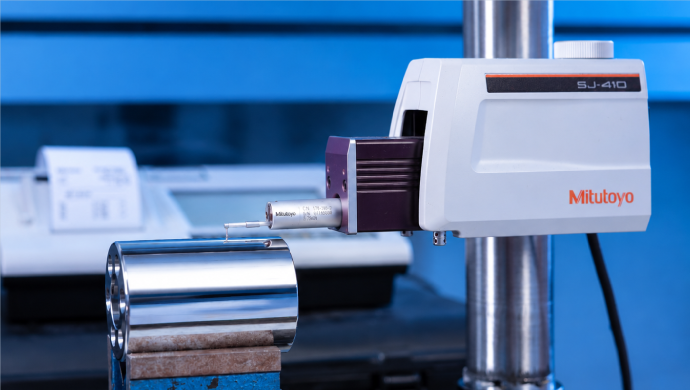
Chotest SJ207 CMM

Chotest SJ207 CMM

Why Choose Mastars for Production 3D Printing?

Quality Systems
ISO 9001, ISO 13485, and IATF 16949 systems support controlled inspection, documentation, and production requirements. Dimensional verification and project-specific checks support repeat manufacturing.
Engineering & Project Support
100+ engineers compare geometry, quantity, material, tolerance, throughput, and tooling economics before confirming whether additive manufacturing is the right production route.
Manufacturing Experience
With experience across additive manufacturing, CNC machining, tooling, injection molding, and casting, Mastars helps projects move to the most suitable production route as requirements change.
Flexible Capacity
Supported by 5+ production bases, Mastars supports repeat orders, changing demand, and low-volume production without unnecessary tooling investment or inventory commitments.
Production AM Review
Evaluate build strategy, material selection, post-processing requirements, and production economics before committing to additive manufacturing.
Integrated Manufacturing
Coordinate printing with machining, dyeing, smoothing, inserts, heat treatment, coating, assembly, and inspection within one manufacturing workflow.

Certifications

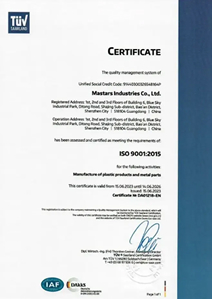
ISO9001:2015 Certificate

ISO9001:2015 Certificate

IATF16949:2016 Certificate

IATF16949:2016 Certificate

ISO13485:2016 Certificate

ISO13485:2016 Certificate

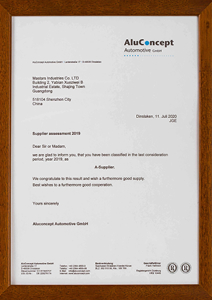
Medical A-Class Supplier

Medical A-Class Supplier

Partners

445 Projects
xylem
Bentley
Aston Martin
HARMAN
Annabella
Auer Lighting
NVIDIA
Compac
G4S
hs products
luxshareict
KK
Bioness
SGM
Nmble
Lear
LLEN&HEAT
belkin
DaAn Gene
MAGNA
pdd
Flite
simens
philips
maxwell
Land Rover

How to Work with Us

Share Your Project

Send a CAD file, drawing, or brief. Start with what you have.

Engineering Review & Quote

We review your requirements and confirm the process, price, and lead time.

We Make Your Parts

Once approved, we prepare the process and manufacture your parts.

Inspection & Delivery

We inspect, pack, and ship your finished parts.

What Our Customers Say

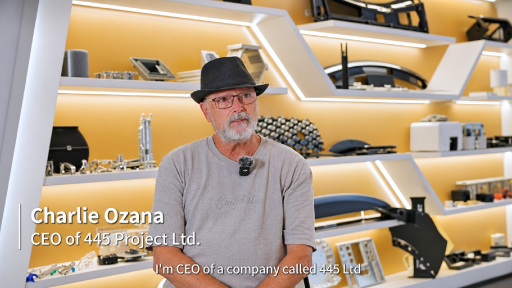
Charlie Ozana

Charlie Ozana

Company: 445 LTDJob Title: CEOBusiness: Full turnkey company
Mastars in all my projects are partners. So I get all the support that I need from engineering management, pricing, timetable, QA, everything is as a partner, not as a supplier. For me, Masters is like home.
Nathan Johnson

Nathan Johnson

Company: Gusto Global IndustriesJob Title: DirectorBusiness: Dust reduction system
They were such a lovely company to deal with, and we couldn't be more happier even to today down the track with even more products moving forward. Very professional, easy to deal with, get back to you straight away, contact is easy through WeChat and email, move forward as quickly as you can.
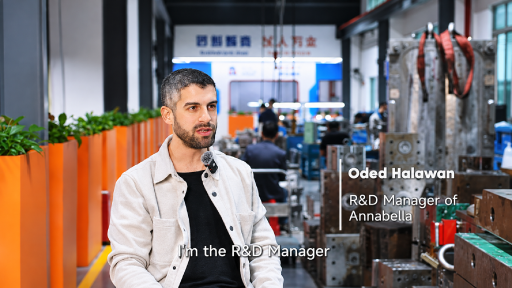
Oded Halawani

Oded Halawani

Company: Annabella Tech IsraelJob Title: R&D managerBusiness: Breast pump
We managed to make it in a very short time warm prototyping to mass production and FDA approval. That makes me feel confidence to choose Mastars.
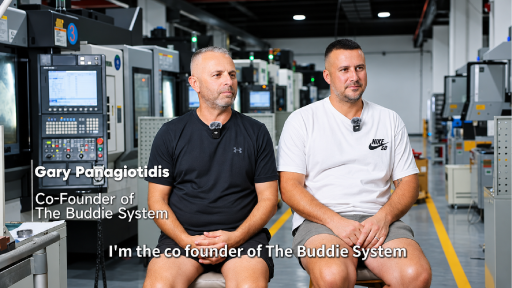
Jade Harris

Jade Harris

Company: Buddy SystemJob Title: Co-founderBusiness: Wireless instant safety alert device
We're glad that we found a company like Mastars to make the product for us because it's been so good to deal with. They're a really good company.
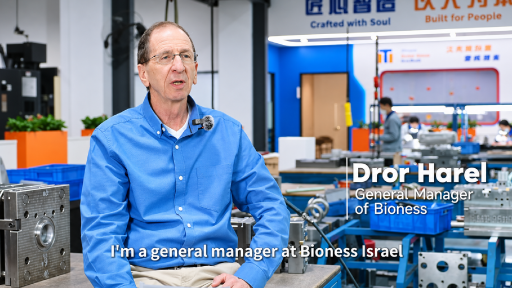
Dror Harel

Dror Harel

Company: BlonessJob Title: General ManagerBusiness: L300, H200
I think the relationship between the buyers and definitely between me the Mastars it's like a family relationship and this is why we are so happy to produce in Mastars and this is why we came for 15 years. By the way, now we came with a new product that we come to Master to produce for the new year.

Production 3D Printing FAQs

  • Is 3D printing suitable for production parts?

    Often yes, when complexity, customization, low-to-mid volume, or tooling avoidance creates enough value. SLS, MJF, industrial FDM, SLA, and metal additive manufacturing can all support selected production applications, but the right route depends on material, geometry, tolerance, finish, quantity, and final-use requirements.

  • What production volumes make sense for 3D printing?

    It depends. There is no universal crossover quantity. Tooling cost, geometry, material, post-processing, annual demand, throughput, and inventory all affect the economics. Simple standardized parts usually move toward molding or casting sooner than complex, customized, or intermittent-demand parts.

  • Can 3D printing be used for mass production?

    Sometimes. 3D printing can support high-volume production when customization, geometry, automation, or tooling avoidance provides enough economic value, but it is not automatically the best process simply because a printer can produce the quantity.

    For standardized parts with very high recurring demand, injection molding, die casting, or another conventional process often provides higher throughput and lower long-run unit cost.

  • How does production 3D printing compare with injection molding or CNC machining?

    3D printing avoids dedicated tooling and handles complex or frequently changing geometry well. Injection molding usually offers lower unit cost at stable high plastic volumes, while CNC machining provides tighter dimensional control and broad stock-material options for accessible geometry. The best process depends on the complete production requirement, not one metric.

  • Can I start with a small production batch and increase quantity later?

    Yes. Starting with a smaller batch can reduce inventory exposure and allow demand, assembly, and field performance to be confirmed before scaling. If quantity grows enough to change the economics, the part can be reassessed for molding, CNC machining, casting, or another process.

  • Will production 3D printed parts stay consistent from batch to batch?

    They can, but consistency must be controlled. Material, build orientation, process settings, post-processing, and inspection criteria should remain aligned with the approved production route. Critical dimensions and acceptance requirements should be defined before repeat builds begin.

  • Can an approved prototype be used as the production standard?

    Not automatically. A prototype may prove form, fit, assembly, or function without proving repeatability, long-term material behavior, production tolerance, or batch consistency. Production requirements should be reviewed separately before the design is released for repeat manufacturing.

  • What quality control is available for production 3D printed parts?

    FAI, CMM, dimensional inspection, visual inspection, and final checks can be applied according to the project requirements. Define critical dimensions, mating surfaces, cosmetic requirements, and functional interfaces before the first production build so inspection focuses on what actually matters.

  • How much does production 3D printing cost?

    Cost depends on material, part volume, build height, quantity, machine time, nesting, supports, post-processing, inspection, and logistics. Avoided tooling and inventory can improve total economics, but the printed unit price may still become less competitive as recurring volume increases.

  • How long does production 3D printing take?

    Suitable production 3D printing projects can be delivered in as fast as 3 days. Actual lead time depends on quantity, nesting, cooling, support removal, depowdering, curing, heat treatment, machining, finishing, inspection, and material availability.

    For repeat production, the confirmed schedule should cover the complete manufacturing route rather than printing time alone.

  • When is 3D printing not the best production process?

    It is often less attractive for extremely high-volume standardized parts, simple geometry with established tooling, applications requiring the lowest possible long-run unit cost, or parts whose material and surface requirements are better achieved by molding, machining, casting, or forming.

  • What do you need for a production 3D printing quote?

    A 3D CAD file is enough to start. For a more accurate production review, include quantity or annual demand, material requirements, critical dimensions or GD&T, surface requirements, intended use, inspection needs, and target delivery. Rough information is fine for an initial feasibility review.

Tell Us About Your Project

Share your project details and files with us. Rough information is fine to start. Our engineering consultant will contact you within 24 hours.

Verification code