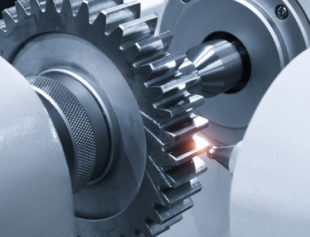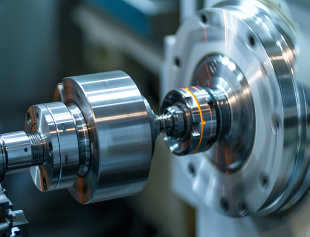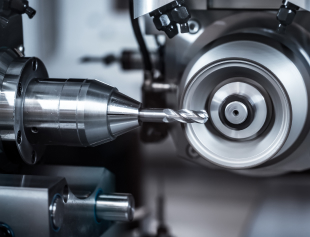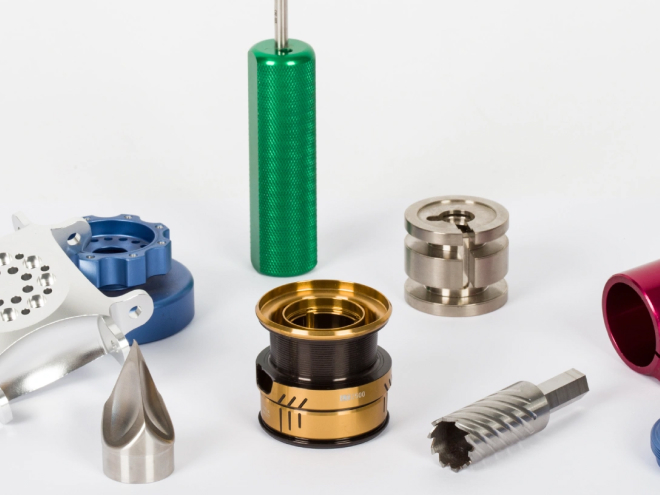


Custom metal and plastic parts for complex geometry, critical fits, and functional use—from prototypes to repeat production.
- 3-, 4- & 5-Axis CNC Milling
- Metals & Engineering Plastics
- DFM for Critical Features
- CMM Inspection & GD&T

Custom metal and plastic parts for complex geometry, critical fits, and functional use—from prototypes to repeat production.

| Process | Best For | Main Engineering Benefit | Key Limitation / Cost Driver |
| 3-Axis Milling | Plates, brackets, flat housings, fixtures, pockets | Simple setup and lower machining cost | Side and angled features may require additional setups |
| 4-Axis Milling | Multi-sided parts, side holes, indexed cylindrical features | Rotary access reduces re-clamping | Complex freeform surfaces may still require 5-axis machining |
| 5-Axis Milling | Complex housings, angled holes, deep cavities, curved surfaces | Multi-direction access with fewer setups and shorter tool reach | More complex programming and machine time; unnecessary for simple parts |
| Mill-Turn | Shafts, bushings, connectors and rotational parts with milled features | Keeps turned and milled features within a coordinated process | Most economical when the main geometry is rotational |

| Finish | Typical Result | Engineering Consideration | |
![]() |
As Machined | Visible machining pattern; typically Ra 1.6–3.2 μm | Lowest-cost option; specify a tighter Ra only where function requires it |
![]() |
Bead Blasting | Uniform matte texture | Can soften very sharp edges and change cosmetic appearance between lots |
![]() |
Type II Anodizing | Corrosion protection and decorative color on aluminum | Coating growth can influence tight fits; threads and mating surfaces may need masking |
![]() |
Type III Hard Anodizing | Harder, more wear-resistant aluminum surface | Greater dimensional build than decorative anodizing; allow for coating on precision bores and interfaces |
![]() |
Passivation | Improved corrosion resistance on stainless steel | Minimal dimensional change; does not create a thick coating |
![]() |
Electroless Nickel / Zinc Plating | Corrosion, wear or functional surface protection | Adds coating thickness; account for final fit on holes, threads and mating surfaces |
![]() |
Chem Film / Chromate Conversion | Thin corrosion-protection layer on aluminum | Lower dimensional build than anodizing and useful where electrical conductivity matters |
![]() |
Powder Coating / Painting | Protective or cosmetic colored coating | Coating thickness makes masking important around precision interfaces |
![]() |
Polishing / Brushing | Cosmetic or lower-roughness surface | Removes material and may round edges, so avoid uncontrolled polishing on critical datums |
![]() |
Laser Marking | Permanent text, serial numbers or identification | Minimal dimensional influence on the machined geometry |
![]() |
Deburring / Edge Break | Removes burrs and sharp machining edges | Define edges that must remain sharp or dimensionally controlled |
| Item | Capability / Guideline | Engineering Consideration |
| Ultra-Precision 5-Axis Features | Down to ±0.0025 mm | For suitable critical features; depends on geometry, material and inspection method |
| Critical Feature Tolerance | Down to ±0.005 mm | Practical tight-tolerance capability for defined functional and mating features |
| General Machined Dimensions | Typically ±0.05–0.10 mm | Depends on material, size and geometry |
| Minimum Part Size | 5 × 5 × 5 mm | Very small parts require stable workholding |
| As-Machined Roughness | Typically Ra 1.6–3.2 μm | Lower Ra may require dedicated finishing passes |
| Minimum Hole Diameter | Ø1 mm | Small or deep holes depend on tool length and material |
| Hole Depth | Prefer ≤4× diameter | Deeper holes may require special tooling |
| Minimum Wall Thickness | Metal 0.8 mm / Plastic 1.5 mm | Thin walls are sensitive to cutting force, heat, and clamping |
| Internal Corner Radius | ≥ ~1/3 pocket depth preferred | Larger radii allow stronger, shorter tools |
| Threads | ISO Metric, UNC, UNF | Deep or non-standard threads require review |
| Flatness / Perpendicularity | Part-specific | Depends on size, material condition, and workholding |
Choose CNC milling for flat, prismatic, multi-sided, or complex surface features. CNC turning is usually more efficient for cylindrical parts, while mill-turn is useful when rotational parts also require flats, slots, or cross-holes.
The main difference is tool access and setup strategy, not simply accuracy. 3-axis suits accessible prismatic features, 4-axis adds rotary access, and 5-axis is useful for compound angles, deep cavities, multi-face parts, and complex surfaces.
Most engineering metals and plastics can be milled, including aluminum, stainless steel, steel, titanium, brass, bronze, copper, ABS, POM, nylon, PC, PMMA, PTFE, PEEK, PEI, and G10/G11. Material choice should consider load, environment, dimensional stability, finish, and cost.
Critical features can reach ±0.005 mm on suitable parts. Actual capability depends on material, size, geometry, tool reach, workholding, thermal behavior, and inspection method.
Yes. We support one-off functional prototypes and low-volume or repeat production. Prototypes focus on fit, material, function, and finish; production adds stable fixtures, machining sequences, inspection, and repeatability controls.
Cost depends mainly on material, machining time, setups, axis requirements, deep features, tolerances, inspection, and finishing. Larger internal radii and tighter tolerances only where needed can reduce machining time and cost.
A STEP file is enough to start. Add a 2D drawing when the part has GD&T, critical fits, threads, specific surface roughness, coating requirements, or inspection requirements. Material and quantity also improve quote accuracy.
Simple prototype parts can be delivered in a few business days. Complex multi-axis geometry, difficult materials, tight inspection, heat treatment, or secondary finishing will extend lead time.
Yes. Standard metric, UNC, and UNF threads can be tapped or thread milled. Thread milling is particularly useful for larger diameters, difficult materials, deeper features, and some non-standard threads.