PolyJet

PolyJet 3D Printing Services

PolyJet 3D printing for realistic multi-material and full-color prototypes used to validate appearance, CMF, soft-touch features, and product experience before tooling.

  • Rigid, flexible, clear & multi-durometer materials
  • Full-color, texture & CMF prototype validation
  • Shore A 30–95A rubber-like options + rigid materials
  • Overmolding, grips, seals & transparent feature simulation
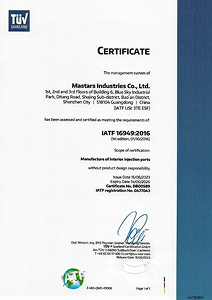
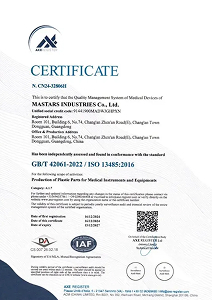
ISO 9001:2015 | ISO 13485:2016 | IATF 16949:2016

PolyJet 3D Printing Services
80 μm
Typical Layer
3 Days
Fast Delivery
0
MOQ
100+
Engineering Professionals

PolyJet 3D Printing Capabilities

Multi-Material Prototypes
Combine rigid and flexible materials in one prototype to evaluate material transitions, soft-hard interfaces, and integrated product features.
Get a Quote
Full-Color & CMF Models
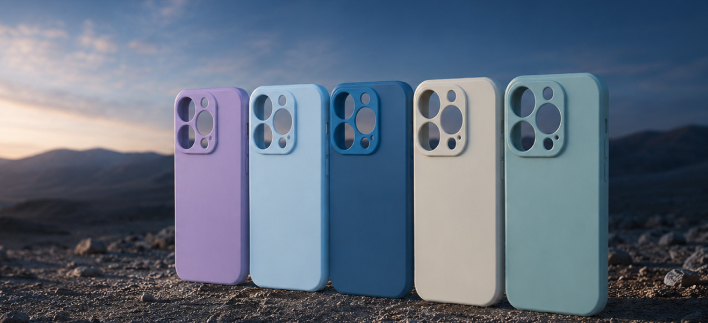
Produce realistic colors, textures, graphics, and surface details for CMF review, industrial design evaluation, and product presentation.
Get a Quote
Multi-Durometer & Rubber-Like Parts
Simulate Shore A 30–95A rubber-like behavior for grips, seals, buttons, gaskets, flexible covers, and other soft-touch features.
Get a Quote
Overmolding Simulation
Combine rigid and flexible regions in one build to evaluate overmold boundaries, grip feel, ergonomics, and product interaction before tooling.
Get a Quote
Why Choose PolyJet 3D Printing?

Why Choose PolyJet 3D Printing?

Choose PolyJet when a prototype needs to reproduce color, texture, transparency, soft-touch feel, or rigid-flexible material transitions in the same part. It is especially useful for CMF, ergonomics, overmolding, and product-experience validation, but PolyJet photopolymers should not be treated as direct substitutes for long-term production plastics or elastomers.

Ideal Applications:

• Multi-material & multi-durometer prototypes

• Full-color & CMF validation models

• Overmolding, grips, seals & soft-touch features

• Transparent & realistic product prototypes

Custom PolyJet 3D Printing Services

Custom PolyJet 3D Printing Services

Custom PolyJet parts are reviewed around color and CMF requirements, rigid-flexible interfaces, Shore hardness targets, transparent features, thin walls, support-contact surfaces, and assembly requirements.

For appearance-critical surfaces, build orientation and support placement matter because supported areas can look duller or rougher than unsupported surfaces. Multi-material combinations are also reviewed against what the prototype actually needs to validate.

PolyJet 3D Printing Materials

Choose PolyJet materials based on rigidity, Shore hardness, transparency, color, tactile feel, and the product behavior the prototype needs to simulate.
Rigid Digital Materials
Rubber-Like Digital Materials
Multi-Material Digital Blends
Clear & Translucent Materials
Full-Color Materials
Rigid Digital Materials

Rigid PolyJet materials provide plastic-like stiffness, fine detail, and smooth surfaces for high-fidelity appearance, fit, and assembly prototypes.

Key Characteristics

• Rigid plastic-like feel

• Fine feature reproduction

• Smooth cosmetic surfaces

• Clear, white, black and color options depending on material system

Recommended for rigid product models requiring detailed features and realistic plastic appearance.

Typical Applications

Consumer Electronics Prototypes

Product Housings

Industrial Design Models

Presentation Models

Rubber-Like Digital Materials

Rubber-like PolyJet materials provide different levels of softness and flexibility, from soft elastomeric feel around Shore A 30 to firmer rubber-like behavior around Shore A 95.

Key Characteristics

• Shore A 30–95 hardness range

• Rubber-like flexibility

• Soft-touch simulation

• Multi-durometer capability

Recommended for soft-touch, flexible, and overmolded features where hardness and tactile feel need to be evaluated.

Typical Applications

Seals & Gaskets

Soft-Touch Grips

Flexible Covers

Buttons & Overmold Features

Multi-Material Digital Blends

PolyJet digital blends combine rigid and flexible photopolymers to create multiple hardness levels and material transitions within one prototype.

Key Characteristics

• Rigid-to-flexible transitions

• Multiple hardness levels

• Multi-material printing

• Integrated soft and hard features

Recommended for parts requiring rigid-soft interfaces, multiple durometers, or simulated overmolding.

Typical Applications

Overmolding Prototypes

Multi-Durometer Parts

Soft-Hard Interfaces

Product Experience Models

Clear & Translucent Materials

Clear and translucent PolyJet materials support transparent product features, internal structure review, and visual validation. Polishing or clear coating may be required for higher visual clarity.

Key Characteristics

• Clear & translucent appearance

• Internal feature visibility

• Compatible with multi-material designs

• Additional finishing for improved clarity

Recommended for prototype features where transparency or internal visibility matters.

Typical Applications

Transparent Covers

Light Guides

Fluid Channels

Visual Models

Full-Color Materials

Full-color PolyJet materials reproduce colors, graphics, gradients, and visual details directly in the printed model for realistic CMF and product presentation.

Key Characteristics

• Full-color capability

• Color gradients & graphics

• Detailed visual reproduction

• Compatible with texture and multi-material simulation

Recommended for appearance prototypes where color and visual communication are central to the design review.

Typical Applications

CMF Models

Consumer Product Prototypes

Packaging Models

Product Presentation Models

PolyJet Surface Finishing & Post-Processing

PolyJet finishing mainly controls support-contact surfaces, cosmetic appearance, transparency, and presentation quality. Finishing should be planned around visible faces and critical interfaces.
Finishing Option Typical Result Suitable PolyJet Materials Engineering Consideration
Support Removal & Cleaning Removes soluble or gel-like support material using water and cleaning processes. Most PolyJet Materials Support-contact surfaces may appear duller or rougher than unsupported surfaces.
Sanding & Surface Smoothing Reduces support marks and local surface variation. Rigid & Digital Materials Excessive sanding can round edges and alter small features.
Painting & Color Finishing Adds specified cosmetic colors or presentation finishes. Rigid & Digital Materials Paint thickness should be considered on mating surfaces and fine features.
Clear Coating Improves gloss and transparency on clear parts. Transparent Materials Improves visual clarity but does not automatically create optical-grade surfaces.
Texture Finishing Adds tactile or cosmetic surface effects for product evaluation. Rigid & Digital Materials Texture should be coordinated with existing printed color and geometry.
Polishing Improves gloss and clarity on accessible surfaces. Transparent & Rigid Materials Internal or highly complex areas may not be practically polishable.

PolyJet 3D Printing Tolerances & Design Guidelines

PolyJet accuracy depends on geometry, material combination, orientation, support contact, and finishing. Identify critical dimensions, cosmetic surfaces, and multi-material interfaces before printing.
Design Consideration Typical PolyJet Guideline Engineering Consideration
Dimensional Tolerance ±0.1 mm for the first 25.4 mm + 0.1% of nominal length Final accuracy depends on geometry, material combination, orientation, and support conditions.
Maximum Part Size Up to 490 × 390 × 200 mm Build size depends on the selected printer and material mode.
Layer Thickness 30 μm typical Thin layers support fine detail and smooth cosmetic surfaces.
Minimum Feature Size ~0.3 mm Very fine details depend on geometry, material, orientation, and support access.
Minimum Wall / Hole / Channel ~0.76 mm Thin walls and small passages should be reviewed for strength and support removal.
Shore Hardness Range Shore A 30–95A + rigid Available hardness and blends depend on the selected digital-material system.
Multi-Material Interfaces Project-specific Rigid-flexible boundaries should be designed around the validation goal and available material combinations.
Support Material Required where needed Support-contact surfaces can be duller or rougher than unsupported glossy surfaces.
Transparent Features Finishing may be required Polishing or clear coating can improve visual clarity but does not automatically create optical-grade performance.

PolyJet Equipment

Serein Crma686 CMM

Serein Crma686 CMM

TESA hite 700 CMM

TESA hite 700 CMM

Times CMS-554C CMM

Times CMS-554C CMM

Why Choose Mastars for PolyJet 3D Printing Service?

Quality Systems
ISO 9001, ISO 13485, and IATF 16949 systems support controlled inspection and documentation. Optical measurement and dimensional checks verify critical features and assembly interfaces.
Engineering & Project Support
100+ engineers evaluate rigid-flexible boundaries, Shore hardness, color transitions, transparent features, and overmold regions based on validation goals.
Manufacturing Experience
Backed by 20+ years of manufacturing experience, Mastars combines PolyJet printing with painting, polishing, clear coating, texturing, and assembly for visual and tactile validation.
Flexible Capacity
Starting from one-piece models, Mastars supports rapid PolyJet iterations, appearance validation, and design refinement before production decisions.
PolyJet DFM Review
Review build orientation, support placement, visible faces, transparent regions, textures, and presentation-critical surfaces before printing.
Integrated Manufacturing
When long-term material behavior, tighter tolerances, or production quantities become more important, transition into MJF, SLS, CNC machining, tooling, or injection molding.

Certifications

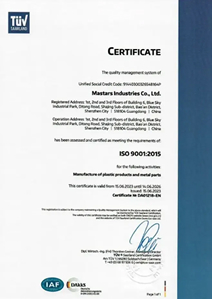
ISO9001:2015 Certificate

ISO9001:2015 Certificate

IATF16949:2016 Certificate
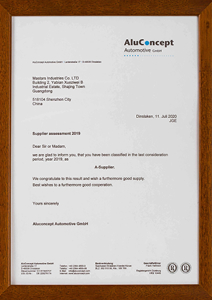
IATF16949:2016 Certificate

ISO13485:2016 Certificate

ISO13485:2016 Certificate

Medical A-Class Supplier

Medical A-Class Supplier

Partners

445 Projects
xylem
Bentley
Aston Martin
HARMAN
Annabella
Auer Lighting
NVIDIA
Compac
G4S
hs products
luxshareict
KK
Bioness
SGM
Nmble
Lear
LLEN&HEAT
belkin
DaAn Gene
MAGNA
pdd
Flite
simens
philips
maxwell
Land Rover

How to Work with Us

Share Your Project

Send a CAD file, drawing, or brief. Start with what you have.

Engineering Review & Quote

We review your requirements and confirm the process, price, and lead time.

We Make Your Parts

Once approved, we prepare the process and manufacture your parts.

Inspection & Delivery

We inspect, pack, and ship your finished parts.

What Our Customers Say

Charlie Ozana

Charlie Ozana

Company: 445 LTDJob Title: CEOBusiness: Full turnkey company
Mastars in all my projects are partners. So I get all the support that I need from engineering management, pricing, timetable, QA, everything is as a partner, not as a supplier. For me, Masters is like home.
Nathan Johnson

Nathan Johnson

Company: Gusto Global IndustriesJob Title: DirectorBusiness: Dust reduction system
They were such a lovely company to deal with, and we couldn't be more happier even to today down the track with even more products moving forward. Very professional, easy to deal with, get back to you straight away, contact is easy through WeChat and email, move forward as quickly as you can.
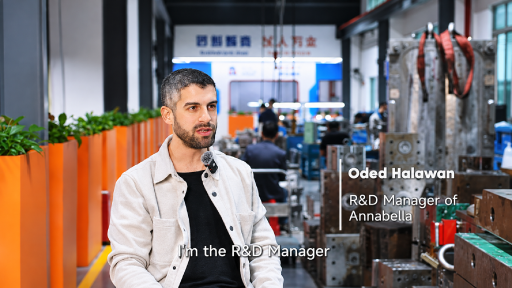
Oded Halawani

Oded Halawani

Company: Annabella Tech IsraelJob Title: R&D managerBusiness: Breast pump
We managed to make it in a very short time warm prototyping to mass production and FDA approval. That makes me feel confidence to choose Mastars.
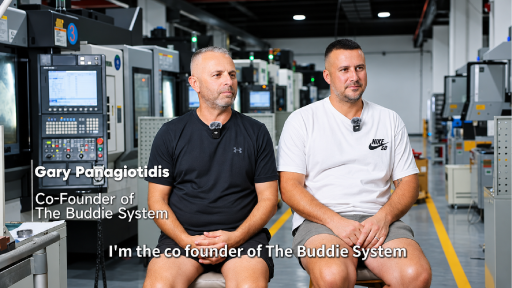
Jade Harris

Jade Harris

Company: Buddy SystemJob Title: Co-founderBusiness: Wireless instant safety alert device
We're glad that we found a company like Mastars to make the product for us because it's been so good to deal with. They're a really good company.
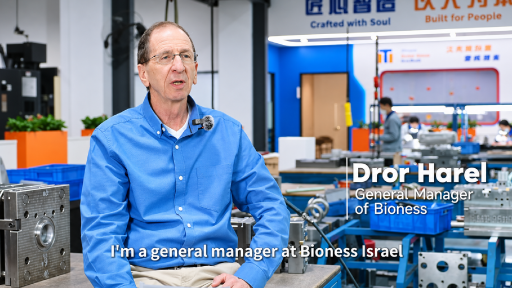
Dror Harel

Dror Harel

Company: BlonessJob Title: General ManagerBusiness: L300, H200
I think the relationship between the buyers and definitely between me the Mastars it's like a family relationship and this is why we are so happy to produce in Mastars and this is why we came for 15 years. By the way, now we came with a new product that we come to Master to produce for the new year.

PolyJet 3D Printing Service FAQs

  • What is PolyJet 3D printing?

    PolyJet is a material jetting process that deposits UV-curable photopolymer droplets layer by layer and cures them during printing. Its main advantage is the ability to combine high detail, color, transparency, rigid materials, flexible materials, and multiple hardness levels in realistic prototypes.

  • Can PolyJet print multi-material and full-color parts?

    Yes. Depending on the printer and material configuration, PolyJet can combine rigid, flexible, transparent, and colored photopolymers within one build. This makes it especially useful for CMF models, product presentation, soft-hard interfaces, and realistic design validation.

  • What materials and Shore hardness options are available for PolyJet?

    PolyJet supports rigid, transparent, rubber-like, and digital materials, with flexible options typically ranging from about Shore A 30 to 95 plus rigid materials. Available combinations depend on the printer, material system, color mode, and project requirements.

  • Can PolyJet simulate overmolding and rubber-like components?

    Yes. PolyJet is particularly useful for simulating overmolded grips, seals, gaskets, buttons, soft-touch areas, and other rigid-flexible combinations before tooling. It can validate hardness, feel, geometry, ergonomics, and interface design in one prototype.

  • How does PolyJet compare with SLA, MJF, or SLS?

    PolyJet is usually the better choice for multi-material, multi-durometer, full-color, and realistic product-experience prototypes. SLA is strong for smooth high-detail single-material resin parts, while MJF and SLS are generally better for durable thermoplastic functional parts and low-volume production.

  • What tolerances and feature sizes can PolyJet achieve?

    A useful industrial reference is approximately ±0.1 mm for the first 25.4 mm plus 0.1% of nominal length, with layer thickness around 30 μm and minimum features around 0.3 mm. Actual results depend on geometry, material combinations, orientation, support contact, and finishing.

  • Will support material affect the surface finish?

    Often yes. Unsupported PolyJet surfaces can appear smoother and glossier, while support-contact areas may look duller or slightly rougher after cleaning. Identify cosmetic, transparent, and presentation-critical surfaces before printing so orientation and support strategy can be planned around them.

  • Are PolyJet materials the same as production plastics, TPU, or silicone?

    No. PolyJet photopolymers can simulate color, hardness, flexibility, feel, and selected early functional behavior, but they are not automatically equivalent to molded ABS, PC, TPU, TPE, silicone, or LSR in long-term heat, UV, chemical resistance, fatigue, compression set, or regulatory performance.

  • What post-processing options are available for PolyJet parts?

    PolyJet parts can undergo support removal, cleaning, sanding, polishing, painting, clear coating, texturing, and assembly. The finishing route depends on whether the prototype is intended for CMF review, transparency, presentation, ergonomics, or assembly validation.

  • Is PolyJet suitable for end-use production parts?

    Usually not as the first choice for long-term production. PolyJet is strongest for high-fidelity prototypes and validation models. When production-material behavior, durability, or volume becomes more important, MJF, SLS, CNC machining, injection molding, or another production process may be more suitable.

  • How fast can PolyJet prototypes be delivered?

    Lead time depends on part size, material combinations, color requirements, support removal, cosmetic finishing, and inspection. Simple projects can move quickly, while full-color, transparent, highly finished, or multi-material prototypes usually require additional processing time.

  • What files do you need for a PolyJet quote?

    A 3D CAD file is enough to start. Add color or CMF references, Shore hardness, material combinations, quantity, and a 2D drawing when critical dimensions, assembly interfaces, transparent areas, or cosmetic surfaces need to be controlled. Rough information is fine for an initial review.

Tell Us About Your Project

Share your project details and files with us. Rough information is fine to start. Our engineering consultant will contact you within 24 hours.

Verification code