| Process |
Best For |
Material Options |
Advantages & Trade-Offs |
Typical Applications |
What We Review Before Production |
| Laser Cutting |
Flat parts with complex contours, holes, and slots; suitable sheet thicknesses from 0.1–12 mm depending on material |
Aluminum, Stainless Steel, Carbon Steel, Brass, Copper |
Flexible, low setup cost, and cutting accuracy down to ±0.05 mm on suitable features. Heat input becomes more important as thickness increases. |
Enclosures, brackets, panels, prototypes, machine components |
Thickness, minimum feature size, hole diameter, heat impact, edge condition, nesting and downstream bend locations |
| Sheet Metal Bending |
Parts requiring flanges, folds, returns, hems, and structural features |
Aluminum, Stainless Steel, Carbon Steel, Copper Alloys |
Typical bend control can reach around ±1° angle and ±0.25 mm bend-to-edge, depending on material, bend length, and geometry. |
Cabinets, brackets, frames, housings, chassis |
Bend radius, grain direction, springback, flange length, hole-to-bend distance, bend sequence and tolerance |
| Sheet Metal Forming |
Ribs, louvers, beads, drawn features, and more complex formed geometry |
Aluminum, Steel, Stainless Steel, Specialty Alloys |
Improves stiffness and can reduce assembly, but complex forming may require dedicated tooling and introduces thinning or deformation risk. |
Covers, structural panels, industrial and transportation components |
Formability, material flow, thinning, springback, tooling requirements and geometry feasibility |
| Sheet Metal Welding |
Multi-part structures and fabricated assemblies |
Steel, Stainless Steel, Aluminum |
Strong permanent joints, but heat input can distort thin sections and may require fixtures, grinding, or post-weld correction. |
Frames, equipment structures, cabinets, fabricated housings |
Joint design, weld access, heat distortion, weld sequence, fixture strategy, cosmetic requirements and inspection |
| Sheet Metal Punching |
Repeated holes, slots, knockouts, and standard features at repeat production volume |
Aluminum, Steel, Stainless Steel |
Faster and more economical as feature repetition increases, but dedicated tooling reduces flexibility for frequent design changes. |
Electrical cabinets, panels, brackets, hardware components |
Feature spacing, tool availability, thickness, distortion risk and production quantity |
| Waterjet Cutting |
Thick or heat-sensitive materials requiring cold cutting |
Aluminum, Stainless Steel, Steel, Titanium, Composites |
No heat-affected zone and suitable for thicker stock, but generally slower than laser cutting and edge taper can increase with thickness. |
Heavy equipment parts, aerospace parts, specialty components |
Thickness, taper, edge quality, cutting speed, tolerance and secondary finishing |




 English



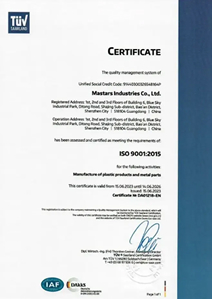
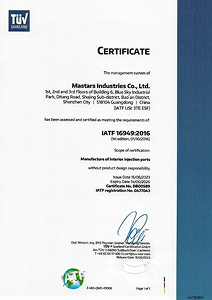
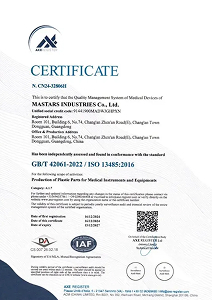
 ISO 9001:2015 | ISO 13485:2016 | IATF 16949:2016
























 Headquarters


