Sand casting for complex aluminum, iron, steel, and non-ferrous parts, from prototypes to production.
- Green sand, resin sand & no-bake molding
- Complex cores & internal geometries
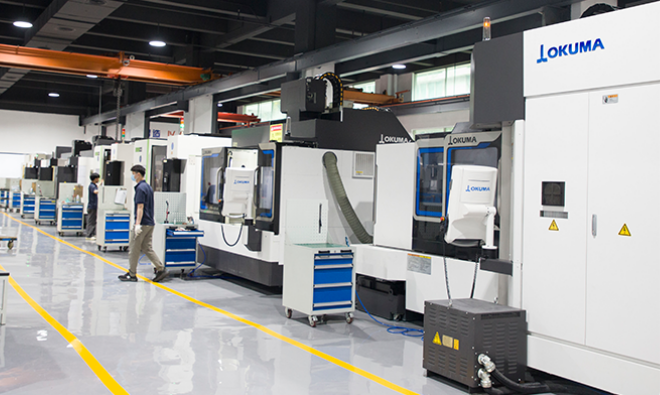
- CNC machining, heat treatment & finishing

Sand casting for complex aluminum, iron, steel, and non-ferrous parts, from prototypes to production.

| Comparison Factor | Sand Casting | Die Casting | Investment Casting |
| Best For | Large or complex parts; prototype to medium-volume production | Thin-wall parts at high production volumes | Smaller complex parts with fine detail |
| Part Size | Broad range; heavy castings can reach 36,000 lb | Usually small to medium | Usually small to medium |
| Tooling CostProduction Volume | Prototype to medium volume; automated molding can scale higher | Best for high-volume production | Low to medium volume |
| Tooling Investment | Lower | High | Moderate |
| Surface Finish | Rougher as-cast; critical surfaces are often machined | Better as-cast finish | Fine as-cast finish |
| Dimensional Accuracy | Moderate as-cast; critical features can be CNC machined to tighter tolerances | High | Higher than sand casting |
| Complex Internal Geometry | Sand cores enable passages, cavities, and hollow structures | Possible but tooling becomes more complex | Good for intricate geometry |
| Design Changes | Easier to modify patterns and cores | Expensive after tooling is complete | More flexible than die casting |
| Choose It When | Size, flexibility, lower tooling cost, or complex cores matter most | Production speed and unit cost at scale matter most | Detail and as-cast surface quality matter most |

| Surface Finish | Suitable Materials | Best For | Engineering Considerations |
| As-Cast | Aluminum, iron, steel, bronze | Structural and non-cosmetic surfaces | Typical sand-cast surfaces may be around 250–500 RMS. Critical fits and sealing surfaces usually require secondary machining. |
| Shot Blasting | Aluminum, iron, steel, stainless steel | Removing sand, scale, and surface contamination | Produces a more uniform matte surface and prepares parts for coating or painting. |
| Grinding & Fettling | Most cast metals | Removing gates, risers, flash, and local surface defects | Material removal should be controlled around datums, thin walls, and critical dimensions. |
| Machined Finish | Aluminum, iron, steel, stainless steel, bronze | Mating faces, bores, threads, sealing surfaces | Used where as-cast accuracy or surface quality is insufficient. Critical interfaces can be machined to tighter tolerances after casting. |
| Painting | Iron, steel, aluminum | Corrosion protection and color requirements | Surface cleaning and blasting are usually required first. Mask machined interfaces and sealing areas where coating buildup is undesirable. |
| Powder Coating | Aluminum, iron, steel | Durable protective and cosmetic finishes | Coating thickness can affect threads, bores, mating surfaces, and assembly clearances. Mask critical areas before coating. |
| Anodizing | Aluminum | Corrosion resistance, wear resistance, and cosmetic color | Only suitable for aluminum alloys. Final appearance can vary with alloy composition and as-cast surface condition. |
| Electroplating | Steel, copper alloys, selected cast metals | Corrosion resistance, wear resistance, or decorative finish | Surface porosity and roughness can remain visible after plating; preparation quality strongly affects final appearance. |
| Passivation | Stainless steel | Improving corrosion resistance after machining | Removes free iron contamination without adding a significant coating layer, making it suitable for critical dimensions. |
| Polishing | Aluminum, stainless steel, brass, bronze | Visible surfaces and smoother appearance | Sand-cast surfaces may require substantial grinding before polishing. Deep pores and casting defects can become more visible. |

| Precision Item | Typical Reference / Capability | Engineering Considerations |
| As-Cast Dimensional Tolerance | ISO 8062 CT10–CT12 | Typical sand casting range. Larger dimensions, complex cores, and uneven sections generally require wider tolerances. |
| As-Cast Surface Finish | 250–500 RMS | Suitable for structural and non-cosmetic surfaces. Critical or visible surfaces can be machined or finished afterward. |
| Typical Wall Thickness | 1/4–1/2 in (6.4–12.7 mm) | Local sections may reach 1/4–3/8 in, while larger or heavier castings often require about 1/2 in or more. Alloy, flow length, geometry, and molding process affect the actual limit. |
| Post-Machined Tolerance | Down to ±0.005 mm | CNC machining can be applied to bores, sealing faces, datum surfaces, and other critical interfaces. |
| CMM Measurement Accuracy | 0.0017 mm | Used to verify critical dimensions and machined features against drawings and GD&T requirements. |
| Machining Allowance | Defined by part geometry | Allowance should account for casting variation, shrinkage, distortion, datum strategy, and final tolerance requirements. |
It depends. Cost is mainly affected by casting size and weight, alloy, pattern and core complexity, production quantity, machining, heat treatment, inspection, and finishing. Sand casting usually requires less tooling investment than die casting, making it attractive for prototypes and low-to-medium volumes. Rough CAD data and estimated quantity are enough to start a quote.
It depends on the part and volume. Sand casting is usually better for larger parts, lower production volumes, complex cores, and projects where the design may still change. Die casting becomes more economical for high-volume, thin-wall parts that require faster cycles and a better as-cast surface.
Yes. Aluminum is one of the most common sand casting materials because it combines low weight, corrosion resistance, thermal conductivity, and good machinability. Common casting grades include 319, 356/A356, A357, 535, and 713, depending on strength, heat treatment, and application requirements.
Yes. Sand casting is well suited to large aluminum housings, pump bodies, gearbox components, structural parts, and other geometries that would be expensive to machine from solid stock. Resin sand or no-bake molding is often preferred as part size, weight, or mold-strength requirements increase.
Yes. This is one of its main strengths. Sand casting works well for prototypes, small batches, and low-to-medium-volume production because pattern costs are generally lower and design changes are easier than with permanent tooling. Mastars also supports no MOQ, starting from 1 unit; the best process for higher quantities is reviewed against cost and production requirements.
Expect a rougher surface than die casting or investment casting. A typical industry reference is about 250–500 RMS as-cast, depending on alloy, sand system, geometry, and molding process. Visible surfaces, sealing faces, and mating features can be machined or finished afterward when a smoother surface is required.
As-cast tolerance depends on part size, alloy, mold type, core placement, section thickness, and shrinkage. Critical bores, datums, sealing faces, and mating dimensions should normally include machining allowance rather than relying on the casting alone. Mastars' downstream CNC capability can reach ±0.005 mm where geometry and machining conditions allow.
Common options include aluminum, gray iron, ductile iron, carbon steel, alloy steel, stainless steel, brass, bronze, aluminum bronze, and magnesium. Material selection should consider strength, weight, corrosion, temperature, machinability, heat treatment, and service environment—not casting cost alone.
Yes. Sand cores can form water jackets, fluid passages, hollow housings, valve cavities, and other enclosed internal geometry. Core positioning, wall thickness, venting, metal flow, and subsequent core removal need to be reviewed early because they directly affect dimensional variation and casting risk.
Compare actual casting limits, alloy range, molding processes, core capability, machining, inspection, production volume, and lead time. A capable sand casting foundry should also explain who controls pattern and core design, casting, heat treatment, CNC machining, and final inspection. Send the same CAD and drawing package to each supplier so you can compare manufacturability, scope, and total delivered cost—not unit price alone.
Start with your 3D CAD or 2D drawing, alloy, estimated quantity, critical dimensions, machining requirements, and surface requirements. If everything is not finalized yet, rough information is fine to start. We can review parting lines, cores, draft, wall thickness, shrinkage, gating, risers, and machining allowance before the manufacturing route is finalized.
It depends. Typical custom sand casting projects take about 3–5 weeks after design approval. New patterns, complex cores, heat treatment, CNC machining, or special inspection can extend the schedule, while repeat orders with approved patterns are usually faster. Share your CAD, quantity, and target date for a project-specific lead time.