Data Center

Data Center
Data Center Manufacturing Services

Custom components for data center power, cooling, racks, enclosures, and network infrastructure, with manufacturing support from prototype validation to repeat production.

  • Server racks, chassis, enclosures & mounting components
  • Cooling, power-distribution & cable-management hardware
  • CNC machining, sheet metal fabrication, molding & assembly
  • DFM review for fit, interfaces & manufacturability
ISO 9001:2015 | ISO 13485:2016 | IATF 16949:2016
Data Center Manufacturing Services
20+
Years of Manufacturing Experience
±0.002 mm
CNC Precision
15+ CMM
Inspection Capacity
100+
Engineering Professionals

Data Center Manufacturing: Prototype to Production

Each stage addresses a different risk—from rack fit and critical interfaces to thermal and electrical requirements, process stability, inspection, and repeat production.
Prototype
EVT
DVT
PVT
Production
Prototype Development
Build early chassis, brackets, ducts, housings, cooling components, and structural parts to evaluate geometry and assembly before committing to production processes or tooling.
Form & Layout Validation
Confirm drawing revision, interfaces, and project scope.
Fit & Assembly Evaluation
Evaluate fastening points, rails, brackets, mating surfaces, connector access, service clearances, and part-to-part alignment.
Material & Process Exploration
Compare sheet metal, machined metals, engineering plastics, and prototype processes based on stiffness, weight, thermal needs, cost, and expected production volume.
Design Iteration
Update CAD based on interference, bend feasibility, machining access, wall thickness, fastening, assembly access, and prototype findings.
Engineering Validation Test
Verify critical interfaces and manufacturing feasibility using representative parts before the design is released for production preparation.
Critical Interface Verification
Inspect mounting holes, rack interfaces, datum features, mating surfaces, connector openings, locating features, and other function-critical dimensions.
Functional Prototype Builds
Produce representative hardware for customer-side assembly, airflow, thermal, structural, or system-level testing.
Tolerance & Assembly Review
Evaluate tolerance accumulation across chassis, rails, brackets, covers, machined components, fasteners, and other mating parts that affect system assembly.
Manufacturing Feedback
Review bend radii, hole-to-edge distances, machining access, flatness requirements, wall thickness, fastening features, and other process-dependent geometry.
Design Validation Test
Confirm the production-intent design, materials, interfaces, and finishes before tooling, fixtures, or repeatable manufacturing processes are finalized.
Form, Fit & Function Validation
Confirm final geometry, rack installation, assembly compatibility, service access, fastening, interfaces, and overall integration.
Production-Intent Material Evaluation
Use materials closer to the intended production configuration, including aluminum, steel, copper, and engineering plastics where required by the design.
Surface & Functional Finish Review
Evaluate anodizing, powder coating, plating, passivation, or other finishes based on corrosion resistance, electrical requirements, appearance, and dimensional impact.
Final Design Release
Resolve remaining revisions and define production CAD, drawings, GD&T, critical dimensions, materials, finishes, and inspection requirements.
Production Validation Test
Validate production tooling, fixtures, manufacturing processes, inspection methods, and pilot builds before ramping to repeat production.
Tooling & Fixture Validation
Verify machining fixtures, forming tools, assembly fixtures, locating features, gauges, and production tooling where required.
Process Validation
Confirm machining, cutting, bending, forming, molding, finishing, and assembly conditions needed for repeatable production.
FAI & Inspection Planning
Define first-article checks, datums, critical dimensions, flatness or positional requirements, inspection frequency, and suitable measurement methods.
Pilot Builds
Run an initial production batch to identify dimensional, assembly, finishing, tooling, packaging, or supply risks before volume increases.
Production
Move approved data center components into controlled low-volume, bridge, or repeat production while maintaining current engineering, quality, and revision requirements.
Batch & Repeat Production
Support data center hardware programs from 1 to 100,000+ units, including low-volume, bridge, and repeat production as demand changes.
Revision Control
Maintain current CAD files, drawings, materials, finishes, critical dimensions, and approved engineering changes across repeat orders.
Quality Control
Apply first-article, in-process, and final inspection according to drawing requirements, critical interfaces, assembly needs, and project specifications.
Multi-Process Coordination
Coordinate CNC machining, sheet metal fabrication, molding, extrusion, casting, finishing, assembly, and packaging when a project requires multiple manufacturing processes.
Custom Data Center Hardware

Custom Data Center Hardware

Manufactured to your CAD files, drawings, material specifications, tolerances, critical interfaces, finish requirements, and quantities—from prototypes to repeat production.

Data Center Components We Manufacture

Component Categories Typical Data Center Components
Server, Storage & Compute Hardware Server chassis, GPU trays, storage enclosures, node housings, mounting plates, internal brackets, fan trays
Racks, Cabinets & Enclosures Server racks, rack cabinets, equipment enclosures, sub-racks, doors, side panels, blanking panels, mounting rails, structural supports
Power Distribution Components Copper busbars, busbar supports, grounding brackets, PDU enclosures, power-shelf housings, switchgear housings, electrical insulation parts
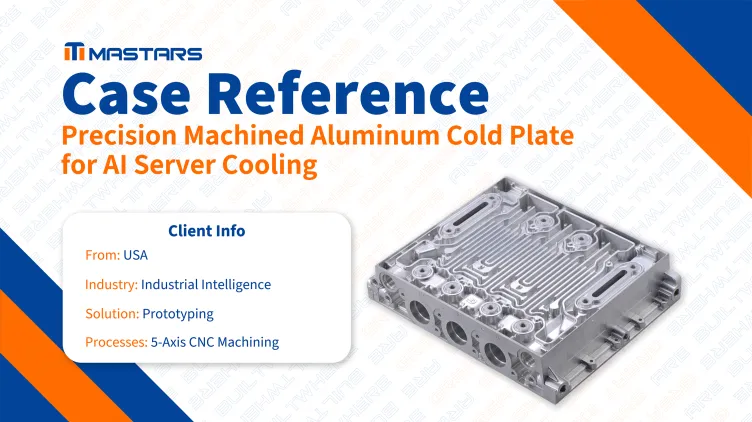
Liquid Cooling Components Cold plates, fluid manifolds, CDU mounting brackets, pump and heat-exchanger housings, cooling panels, thermal plates, quick-disconnect support brackets
Airflow & Thermal Management Heat sinks, fan shrouds, air baffles, airflow panels, blanking panels, thermal mounting parts
Network & Cable Management Fiber-optic trays, connector housings, cable brackets, routing panels, cable-management channels, patch-panel components
Installation & Structural Hardware Mounting brackets, rails, ceiling-grid supports, equipment supports, grounding hardware, custom installation plates

Materials & Manufacturing Processes for Data Center Components

Select materials by thermal or electrical requirements, stiffness, corrosion resistance, dimensional stability, joining method, and production volume.
Material Category Available Materials Manufacturing Processes Typical Data Center Applications
Aluminum Alloys 6061, 7075 and selected grades CNC Machining; Sheet Metal Fabrication; Extrusion where grade and geometry are suitable Heat sinks, chassis, brackets, panels, rails, mounting and structural parts; cold plates where alloy and joining requirements are suitable
Stainless Steel 304, 316 CNC Machining; Sheet Metal Fabrication Cabinets, brackets, structural supports, corrosion-resistant hardware, cooling-system housings
Carbon / Mild Steel Project-dependent grades Laser Cutting; Sheet Metal Forming; Welding; CNC Machining Racks, cabinets, frames, mounting structures, equipment supports
Galvanized Steel Project-dependent grades Sheet Metal Fabrication; Forming Enclosures, panels, cable trays, structural parts requiring corrosion protection
Copper Copper and selected grades CNC Machining; Sheet Metal Fabrication Busbars, conductive hardware, thermal plates, heat-transfer components
Brass Selected brass alloys CNC Machining Electrical interfaces, fittings, threaded components, connector-related hardware
Casting Alloys Aluminum, zinc and selected alloys Pressure Die Casting; CNC Post-Machining Housings, covers, mounting structures, repeat-production thermal or structural parts
Engineering Plastics ABS, PC, PC/ABS, Nylon / PA, POM and selected grades CNC Machining; Injection Molding; 3D Printing where suitable Fan shrouds, cable guides, connector housings, insulating supports, clips, covers, airflow components
High-Performance Plastics PEEK and project-dependent grades CNC Machining; Injection Molding where suitable High-temperature, electrically insulating, or dimensionally demanding specialty parts
Flame-Retardant Plastics Project-dependent grades Injection Molding Insulating parts, connector housings, cable-management and airflow components where flame-retardancy is specified

Post-Processing for Data Center Components

Finishing should be selected around corrosion resistance, conductivity, wear, identification, and assembly requirements, with coating thickness, grounding points, mating surfaces, threads, and sealing interfaces reviewed before release.
Process Applicable Materials Key Features Typical Data Center Applications
Anodizing Aluminum Improves corrosion and wear resistance; Type II and Type III options where required Heat sinks, brackets, rails, panels, housings, and selected external aluminum surfaces
Powder Coating Steel, aluminum Durable protective coating with controlled color and corrosion protection Racks, cabinets, chassis, panels, enclosures, structural supports
Sand / Bead Blasting Metals Produces a uniform matte surface and removes visible machining marks before finishing Machined aluminum parts, panels, brackets, housings
Passivation Stainless Steel Improves corrosion resistance without adding a significant dimensional coating Stainless brackets, hardware, cooling-system parts, precision interfaces
Electroplating Copper, steel, brass and selected metals Can improve corrosion resistance, conductivity, wear, or contact performance depending on plating system Busbars, conductive hardware, connector-related parts, electrical interfaces
Painting Metals & plastics Provides controlled color and environmental surface protection Enclosures, covers, housings, panels
Polishing Metals & selected plastics Reduces surface roughness and improves surface condition Selected machined surfaces, visible metal parts, and components requiring reduced surface roughness
Laser Marking Metals & plastics Permanent serial numbers, QR codes, labels, part IDs, and traceability marks Production identification, revision marking, serialized components
Screen Printing Metals & plastics Adds labels, symbols, warnings, or identification graphics Panels, covers, control housings, equipment enclosures
Hardware Insertion Sheet metal & plastics Installs threaded inserts, PEM hardware, fasteners, and assembly features Chassis, racks, panels, brackets, housings
Welding & Assembly Metals Joins fabricated parts and prepares multi-part structures for installation Cabinets, rack structures, chassis, frames, brackets, enclosure assemblies

What Our Customers Say

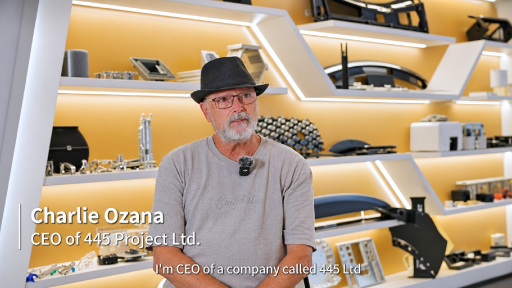
Charlie Ozana

Charlie Ozana

Company: 445 LTDJob Title: CEOBusiness: Full turnkey company
Mastars in all my projects are partners. So I get all the support that I need from engineering management, pricing, timetable, QA, everything is as a partner, not as a supplier. For me, Masters is like home.
Nathan Johnson

Nathan Johnson

Company: Gusto Global IndustriesJob Title: DirectorBusiness: Dust reduction system
They were such a lovely company to deal with, and we couldn't be more happier even to today down the track with even more products moving forward. Very professional, easy to deal with, get back to you straight away, contact is easy through WeChat and email, move forward as quickly as you can.
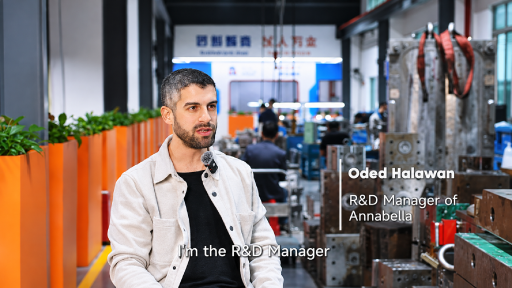
Oded Halawani

Oded Halawani

Company: Annabella Tech IsraelJob Title: R&D managerBusiness: Breast pump
We managed to make it in a very short time warm prototyping to mass production and FDA approval. That makes me feel confidence to choose Mastars.
Jade Harris

Jade Harris

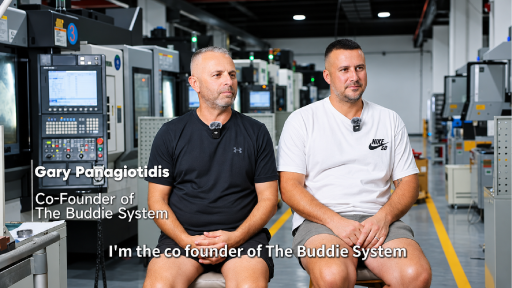
Company: Buddy SystemJob Title: Co-founderBusiness: Wireless instant safety alert device
We're glad that we found a company like Mastars to make the product for us because it's been so good to deal with. They're a really good company.
Dror Harel

Dror Harel

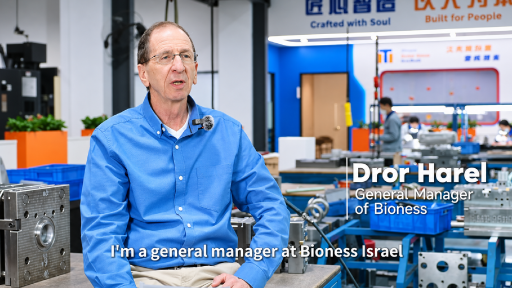
Company: BlonessJob Title: General ManagerBusiness: L300, H200
I think the relationship between the buyers and definitely between me the Mastars it's like a family relationship and this is why we are so happy to produce in Mastars and this is why we came for 15 years. By the way, now we came with a new product that we come to Master to produce for the new year.

Why Choose Mastars for Data Center Manufacturing

Quality Systems
ISO 9001:2015 supports controlled manufacturing and inspection, with 15+ CMM systems, FAI, in-process checks, and dimensional verification for critical hardware interfaces.
Engineering & Project Support
100+ engineering professionals support development and manufacturing, while quality, production planning, engineering changes, and delivery are coordinated across the project.
Manufacturing Experience
20+ years of manufacturing experience across precision hardware, enclosures, thermal components, tooling, pilot builds, assembly, and repeat production.
Flexible Capacity
5+ production bases support prototypes, pilot quantities, low-volume production, repeat orders, and changing volumes as infrastructure programs scale.
Data Center DFM Review
Flatness, sealing interfaces, rack hole patterns, connector access, grounding and contact areas, bend geometry, fastening, and finish allowances are reviewed before production.
Integrated Manufacturing
CNC machining, sheet metal, extrusion, metal casting, injection molding, 3D printing, finishing, hardware installation, assembly, and inspection are coordinated within one manufacturing program.

Start Your Data Center Manufacturing Project

Data Center Manufacturing FAQs

  • What data center components can Mastars manufacture?

    Mastars manufactures custom mechanical, thermal, power-distribution, enclosure, and installation components from customer CAD files and drawings. Typical parts include server chassis, racks, cabinets, brackets, panels, rails, cold plates, manifolds, heat sinks, busbars, PDU enclosures, fan shrouds, cable-management parts, and mounting hardware.

  • Which manufacturing process should I use for my data center component?

    It depends on the part geometry, material, tolerance, and volume. Sheet metal fabrication is typically used for chassis, cabinets, panels, racks, trays, and brackets; CNC machining suits cold plates, manifolds, heat sinks, and precision interfaces. Metal extrusion, metal casting, or injection molding may be more practical when geometry and repeat volume justify them.

  • Can Mastars manufacture liquid-cooling cold plates and manifolds?

    Yes. Mastars manufactures cold plates, manifolds, mounting hardware, and related cooling components to customer-supplied drawings and specifications. Key manufacturing considerations include channel geometry, flatness, port locations, sealing interfaces, and material selection. Leak, pressure, coolant-compatibility, and thermal validation requirements should be defined separately.

  • What should engineers consider when designing cold plates for manufacturing?

    Start with sealing interfaces, channel geometry, flatness, port access, and the joining method. Thin walls, deep channels, tight flatness, and inaccessible features can increase machining difficulty or distortion risk. If brazing, welding, or another joining process is used, its dimensional effect should be included in the tolerance plan.

  • Can Mastars manufacture server rack and chassis components to custom specifications?

    Yes. Mastars can manufacture chassis, rails, rack panels, doors, brackets, fan trays, blanking panels, and structural supports to customer-supplied dimensions and interface requirements. For projects referencing 19-inch rack dimensions, OCP specifications, NEMA requirements, or IP rating targets, include the applicable drawings and requirements with the RFQ.

  • What materials are commonly used for data center hardware?

    Aluminum, steel, stainless steel, copper, and engineering plastics cover most custom data center hardware needs. Aluminum is common for thermal and lightweight parts, steel for racks and structures, copper for busbars and heat-transfer parts, and plastics for insulation, cable guidance, airflow control, and lightweight functional components.

  • Can Mastars manufacture copper busbars and power-distribution hardware?

    Yes. Mastars can support copper busbars, conductive parts, brackets, housings, insulation supports, and related power-distribution hardware to customer drawings. Material grade, thickness, hole and bend requirements, plating, masking, and contact areas should be defined before production because finishing can affect fit and electrical interfaces.

  • How long does prototyping for data center hardware take?

    Suitable prototype parts can be delivered in as fast as 3 days. Actual lead time depends on geometry, material availability, tolerances, finishing, welding, assembly, and inspection requirements. A simple bracket can move much faster than a multi-part rack assembly or cooling component.

  • How does DFM help reduce manufacturing risk?

    DFM identifies problems before they become production changes. We review bend feasibility, machining access, thin walls, flatness, hole patterns, fastening, tolerance accumulation, coating allowance, and assembly interfaces. A prototype that fits once does not automatically mean the design is ready for repeat production.

  • What inspection and quality documentation are available?

    Inspection can be defined around the drawing and project requirements. Mastars supports CMM measurement, first article inspection, in-process inspection, final inspection, and material documentation or traceability where required. Critical dimensions, datums, positional tolerances, mating interfaces, and coating-sensitive features should be identified clearly on the drawing.

  • What should I look for when comparing data center equipment suppliers?

    Look beyond price and process lists. Compare DFM support, experience with racks, cooling and power hardware, inspection capability, revision control, production flexibility, and the ability to coordinate multiple processes. The right supplier should identify manufacturing risks before production, not only quote the drawing.

Tell Us About Your Project

Share your project details and files with us. Rough information is fine to start. Our engineering consultant will contact you within 24 hours.

Verification code