Injection Molding

Injection Molding
Custom Injection Molding Services

Custom injection molding services for plastic parts from prototype tooling and low-volume production to repeat manufacturing. Mastars supports tooling, molding, validation, finishing, and inspection based on your part design, material, and volume requirements.

  • Prototype, bridge & production tooling
  • Thermoplastics, LSR, insert & overmolding
  • DFM for draft, wall thickness, gates & shrinkage
  • T1 validation, FAI/CMM & secondary operations
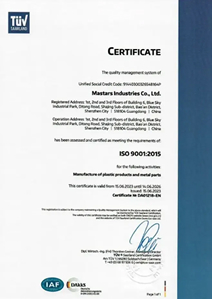
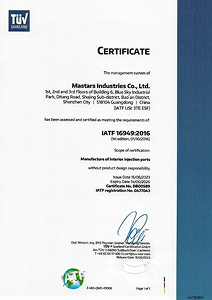
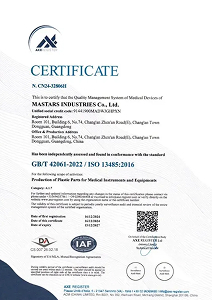
ISO 9001:2015 | ISO 13485:2016 | IATF 16949:2016

Custom Injection Molding Services
10 Days
T1 Samples
0.002 mm
Mold Precision
50–60
Tools / Month
1–100K
Units Supported

Which Injection Molding Process Is Right for Your Part?

Compare process options based on material, part function, tooling strategy, and production volume.
Process Best For Material Options Key Advantages Typical Applications Engineering Considerations
Plastic Injection Molding Single-material thermoplastic parts where molded material behavior, repeatability, and unit cost matter ABS, PC, PC+ABS, PP, PE, PA, POM, PBT/PET, PEEK, PPS, TPE/TPU Broad resin choice, repeatable geometry, lower unit cost as volume grows Housings, brackets, clips, gears, structural and functional parts Draft, wall thickness, ribs, bosses, gates, shrinkage, warpage, ejection and cosmetic faces
Overmolding Rigid-soft or multi-material parts requiring grip, sealing, protection or integrated functions ABS, PC, PA or PP substrates with compatible TPE, TPU or silicone Combines functions and can remove adhesives, fasteners or secondary assembly Handles, grips, seals, housings, wearable products Bond compatibility, mechanical interlocks, differential shrinkage, shutoffs and substrate distortion
Insert Molding Parts with molded-in threads, electrical contacts or load-bearing inserts Thermoplastics or LSR with brass, steel, stainless steel or aluminum inserts Integrates hardware into one molding step and reduces later assembly Connectors, threaded parts, sensors and mechanical assemblies Insert tolerance, retention, positioning, thermal expansion and molding pressure
Liquid Silicone Rubber Molding Flexible parts requiring elasticity, temperature stability or grade-specific medical use Standard, medical-grade, transparent and colored LSR Stable elasticity, fine-detail molding and automated repeat production Seals, gaskets, wearable parts and flexible medical components Venting, flash, parting lines, shrinkage, cure/post-cure and cleanliness requirements
Family & Multi-Cavity Molding Stable medium- or high-volume demand, or related parts produced together Most injection-molding thermoplastics More parts per cycle and lower part cost when volume justifies the tooling Repeat consumer, automotive and industrial programs Cavity balance, cooling, runner/gate design, tool investment and cavity-to-cavity variation
Prototype / Bridge Tooling Design validation, low-volume production, and market testing before production tooling Aluminum or soft steel tooling with production-grade resins Faster iteration and lower upfront investment before committing to production molds Functional prototypes, pilot builds, short-run parts Tool life, dimensional validation, and when to transition to production tooling
Custom Injection Molding Services for Complex Projects

Custom Injection Molding Services for Complex Projects

Mastars supports complex injection molded parts involving deep undercuts, inserts, thin walls, sealing surfaces, cosmetic faces, and tolerance-critical features. Sliders, lifters, side actions, 2K or overmolding, and post-machined interfaces can be planned as one manufacturing route instead of becoming separate supplier problems.

Injection Molding Tolerances & Dimensional Control

Mold accuracy does not equal molded-part tolerance. Final dimensions depend on resin behavior, geometry, cooling, and process control.
Process / Capability Typical Tolerance Key Factors Affecting Accuracy Typical Applications
Standard Plastic Injection Molding Typically ±0.1–0.3 mm, depending on part size, geometry and resin Material shrinkage, wall thickness, cooling, mold accuracy and process stability Housings, consumer parts and general industrial components
Precision Injection Molding Selected critical features down to ±0.05 mm depending on part geometry, tooling, and process control. Mold accuracy, resin behavior, datum scheme, cooling, process window and inspection method Precision assemblies, medical and automotive components
Overmolding Project-specific; tolerance stack depends on substrate and overmold Substrate tolerance, shutoff geometry, bonding interface, differential shrinkage and distortion Soft-touch parts, seals and protective features
Insert Molding Project-specific relative to insert datum and positioning Insert tolerance, fixture location, thermal expansion, retention and molding pressure Threaded components, connectors and integrated assemblies
LSR Molding Typically ±0.1–0.3 mm on suitable features Material shrinkage, venting, flash, cure/post-cure and parting-line design Seals, gaskets and flexible components
Multi-Cavity / Family Molding Follows the base molding process; cavity-to-cavity variation must also be qualified Filling balance, cooling balance, gate/runner design and cavity variation Medium- and high-volume repeat production

Injection Molding Materials

Material selection affects strength, shrinkage, appearance, and long-term performance.
ABS / PC+ABS
Polypropylene (PP)
Polyethylene (HDPE / LDPE)
Polycarbonate (PC)
Nylon
Polyoxymethylene
PEEK
PPS
Liquid Silicone Rubber (LSR)
TPE / TPU
ABS / PC+ABS
ABS / PC+ABS
ABS / PC+ABS

ABS is a cost-effective choice for housings and general structural parts with balanced impact resistance and cosmetic performance. PC+ABS blends add heat and impact capability while retaining good moldability and finishing options.

Key Characteristics

Balanced impact and stiffness

Good cosmetic surfaces

Easy to paint or plate

PC+ABS options for higher heat and impact requirements.

Typical Applications

Electronics housings, automotive interiors, appliance parts, industrial enclosures.

Available Finishes

Shrinkage, gloss, and plating performance vary by grade. Gate and flow planning matter on visible surfaces.

Polypropylene (PP)
Polypropylene (PP)
Polypropylene (PP)

PP combines low density, chemical resistance, and good fatigue performance, making it especially useful for lightweight parts, living hinges, containers, and chemical-contact applications.

Key Characteristics

Lightweight

Excellent chemical resistance

Good hinge fatigue

Low moisture absorption

Typical Applications

Caps, containers, living hinges, automotive parts, laboratory products.

Available Finishes

Relatively high shrinkage can increase warpage risk. Low surface energy means painting and bonding often require surface treatment or primer.

Polyethylene (HDPE / LDPE)

PE provides toughness, chemical resistance, and very low moisture absorption. Grades range from flexible LDPE to stiffer HDPE and are often selected for containers, protective parts, and fluid-handling applications rather than precision mechanisms.

Key Characteristics

Chemical resistance

Impact toughness

Low moisture absorption

Low-friction surface.

Typical Applications

Packaging, containers, fluid-handling parts and protective components.

Available Finishes

Low surface energy makes adhesion difficult, and comparatively high shrinkage must be considered where dimensional control matters.

Polycarbonate (PC)

PC is selected when high impact strength, heat resistance, or transparency is important. Optical appearance depends on resin grade, mold polish, gate flow, and control of molding stress.

Key Characteristics

High impact strength

Transparent grades available

Good heat resistance

Good dimensional stability

Typical Applications

Protective housings, transparent covers, lighting components and medical-device housings.

Available Finishes

Residual stress can contribute to crazing or chemical cracking. Clear cosmetic parts require careful polishing, gating, drying, and process control.

Nylon

Nylon offers strong mechanical, wear, and fatigue performance. Glass-filled grades increase stiffness and heat resistance, but fiber orientation can create directional shrinkage and warpage.

Key Characteristics

High mechanical strength

Good wear resistance

Strong fatigue performance

Reinforced grades available

Typical Applications

Gears, clips, brackets, automotive parts and structural components.

Available Finishes

Nylon absorbs moisture, which can change dimensions and mechanical behavior after molding. Drying and conditioning requirements should be defined early.

Polyoxymethylene

POM is a strong choice for precision mechanical parts requiring low friction, wear resistance, and stable sliding behavior.

Key Characteristics

Low friction

Good wear resistance

High stiffness

Good dimensional repeatability for mechanical components.

Typical Applications

Gears, bearings, sliding components and precision mechanisms.

Available Finishes

POM is crystalline and has meaningful molding shrinkage. Its low surface energy also makes painting and adhesive bonding difficult.

PEEK

PEEK is used when high temperature, chemical resistance, and mechanical performance justify a high-performance resin and a more demanding molding process.

Key Characteristics

High temperature capability

Chemical resistance

Mechanical strength

Long-term stability

Typical Applications

Aerospace, semiconductor, industrial and demanding medical-device components.

Available Finishes

Resin cost and molding temperatures are significantly higher than standard engineering plastics. Medical or regulated grades must be specified according to actual compliance and traceability requirements.

PPS

PPS provides strong thermal and chemical stability with low moisture absorption and is commonly supplied in glass- or mineral-filled grades.

Key Characteristics

Heat resistance

Chemical resistance

Low moisture absorption

Good dimensional stability

Typical Applications

Automotive components, electrical connectors, semiconductor and industrial equipment parts.

Available Finishes

Filled grades improve stiffness but increase tool wear and can create fiber-orientation effects. Mold temperature and flow must be considered for thin or complex sections.

Liquid Silicone Rubber (LSR)

LSR is selected for flexible components that require elasticity, temperature stability, sealing performance, or grade-specific medical use.

Key Characteristics

Flexible and elastic

Broad service-temperature capability

Weather and chemical resistance

Medical-grade options available.

Typical Applications

Seals, gaskets, wearable components and flexible medical parts.

Available Finishes

Shore hardness, compression set, flash, parting lines, venting, and post-cure requirements should be defined according to the actual function.

TPE / TPU

TPE and TPU provide flexible surfaces for grip, impact protection, sealing, and overmolding. TPU generally offers stronger abrasion and tear resistance, while TPE covers a wider range of soft-touch formulations.

Key Characteristics

Flexible

Soft-touch options

Impact protection

Multiple hardness grades

Typical Applications

Grips, handles, wearable products, protective covers and automotive interiors.

Available Finishes

Bonding is grade- and substrate-specific. Not every TPE or TPU will chemically bond to every rigid thermoplastic.

Surface Finishing & Secondary Operations

Surface requirements should be considered together with tooling design, resin selection, and final application.
Finishing Option Result & Engineering Considerations Suitable Materials / Processes Typical Applications
Mold Texture / SPI Finish Controls gloss and texture directly in the mold. Textured surfaces generally require additional draft and make parting-line and shutoff planning more important Most thermoplastics and suitable LSR tools Visible housings, grips, automotive interiors and consumer products
As Molded Lowest secondary-processing cost. Gate, parting-line and ejector witness remain unless tooling and process design minimize them Most injection-molding materials Internal components, functional prototypes and production parts
Vapor / Solvent Polishing Can improve surface smoothness and optical clarity on compatible resins; residual stress and chemical compatibility must be evaluated Selected PC, PMMA and transparent plastics Clear covers, optical housings and display components
Painting Adds specified color, texture or coating performance. Mask mating and sealing surfaces and account for coating thickness ABS, PC, PC+ABS and properly treated PP/PE or engineering plastics Consumer housings, automotive parts and medical-device housings
Pad Printing / Silk Screening Adds logos, symbols and product information. Surface curvature, texture and ink adhesion affect print sharpness Most suitable molded plastics Controls, housings, buttons and branded parts
Laser Marking Provides durable identification without ink. Contrast depends on resin, pigment, fillers and laser settings Engineering plastics and laser-markable grades Serial numbers, traceability codes and permanent markings
Plating Adds a metallic decorative or functional layer. Substrate preparation and coating thickness matter at snaps and mating interfaces ABS and selected platable plastics Automotive trim and decorative electronics components
Assembly & Secondary Operations Includes inserts, bonding, ultrasonic welding, tapping, machining and component integration. Joint design and tolerance stack should be defined before release Thermoplastics, elastomers and mixed assemblies Finished subassemblies and ready-to-install parts

Injection Molding Equipment & Inspection Capabilities

Production Equipment (Demo)

Production Equipment (Demo)

Process Control Equipment (Demo)

Process Control Equipment (Demo)

Inspection Equipment (Demo)

Inspection Equipment (Demo)

Why Choose Mastars for Injection Molding?

Certified Quality Systems
ISO 9001, ISO 13485, and IATF 16949 certified processes help ensure consistent quality across industrial, medical, and automotive projects.
100+ Engineering Professionals
Work directly with experienced engineers for DFM reviews, tolerance recommendations, and manufacturing support—without unnecessary back-and-forth.
5+ Production Bases
Flexible manufacturing capacity supports both urgent prototypes and scalable production without single-site bottlenecks.
No Minimum Order Quantity
Order one part or thousands—without unnecessary volume commitments or tooling investments.
DFM Review on Every Order
Identify manufacturability risks early to reduce redesign cycles, save costs, and improve part performance before production begins.
800+ Customers Served
Trusted by global engineering teams across industrial equipment, medical devices, robotics, automotive, and consumer products.

Certifications

ISO9001:2015 Certificate

ISO9001:2015 Certificate

IATF16949:2016 Certificate

IATF16949:2016 Certificate

ISO13485:2016 Certificate

ISO13485:2016 Certificate

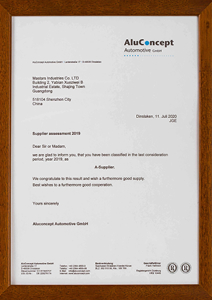
Medical A-Class Supplier

Medical A-Class Supplier

Partners

Auer Lighting
Bentley
Aston Martin
NVIDIA
Compac
Auer Lighting
Bentley
Aston Martin
NVIDIA
Compac

How Injection Molding Works

Upload Your Design

Share your CAD files, drawings, quantity, material, and any critical requirements.

Get an Engineer-Reviewed Quote

Receive pricing, lead time, and manufacturability feedback based on your part requirements.

Production Begins

Once you approve your quote, manufacturing starts — from prototype tooling to full-scale runs.

Parts Shipped

Finished parts are inspected, packaged, and shipped with the required quality documentation.

What Our Customers Say

Jessica Malkovich

Jessica Malkovich

Company: MastarsJob Title: designerBusiness: mastars
Sofia made the entire process seamless! Her expertise and dedication helped us find our dream home quickly.
Jessica Malkovich

Jessica Malkovich

Company: MastarsJob Title: designerBusiness: mastars
Sofia made the entire process seamless! Her expertise and dedication helped us find our dream home quickly.
Jessica Malkovich

Jessica Malkovich

Company: MastarsJob Title: designerBusiness: mastars
Sofia made the entire process seamless! Her expertise and dedication helped us find our dream home quickly.
Jessica Malkovich

Jessica Malkovich

Company: MastarsJob Title: designerBusiness: mastars
Sofia made the entire process seamless! Her expertise and dedication helped us find our dream home quickly.
Jessica Malkovich

Jessica Malkovich

Company: MastarsJob Title: designerBusiness: mastars
Sofia made the entire process seamless! Her expertise and dedication helped us find our dream home quickly.

Injection Molding FAQs

  • How long does custom injection molding take?

    It depends. Prototype tooling can provide T1 samples as fast as 10 days. Production molds require additional time for machining, trials, correction, and validation.

  • Do you provide DFM analysis before tooling?

    Yes. We review draft angles, wall thickness, ribs, bosses, gates, shrinkage, and tooling risks before mold development.

  • What is the difference between insert molding and overmolding?

    Insert molding integrates components such as metal inserts into plastic parts. Overmolding combines multiple materials, such as rigid plastic and soft elastomers, into one part.

  • What materials are available for custom injection molding?

    Mastars supports a wide range of injection molding materials, including standard plastics, engineering plastics, high-performance polymers, and elastomers.

    Common materials include ABS, PC, PP, PA (Nylon), POM, PEEK, PPS, TPE, TPU, and silicone rubber. Material selection depends on mechanical requirements, temperature resistance, chemical exposure, appearance, and end-use application.

  • What industries do your plastic injection molding services support?

    Our injection molding solutions support a wide range of industries, including automotive, medical devices, consumer electronics, electrical components, home appliances, industrial equipment, and personal care products.

    We help customers develop plastic parts from early prototypes to production volumes with engineering support, tooling management, and quality control.

  • Can you make injection molded prototypes before production?

    Yes. Prototype injection molding validates fit, function, appearance, and material behavior before production tooling investment.

  • What CAD files should I send?

    STEP/STP or IGES files are preferred. Add drawings when GD&T, critical dimensions, or surface requirements must be controlled.

  • Do you have MOQ?

    No fixed MOQ. We support prototypes, bridge production, and production molding based on project requirements.

  • How much does custom injection molding cost?

    It depends on mold type, part complexity, material, cavity count, finish, quantity, and inspection requirements.

  • When should I choose injection molding instead of 3D printing or CNC machining?

    Choose injection molding when you need production-grade material behavior, repeatability, and lower unit cost at increasing volumes.

Tell Us About Your Project

Share your project details and files with us. Rough information is fine to start. Our engineering consultant will contact you within 24 hours.

Verification code