

Medical Molds

Medical Molds & Device Tooling Services

Precision injection mold tooling for medical devices, diagnostics, drug-delivery systems, and consumables—from prototype tools to validated production molds.

  • Multi-cavity, 2K & complex-action tooling
  • DFM & mold flow before tool build
  • T0/T1/T2, FAI & cavity validation
  • Prototype through production tooling
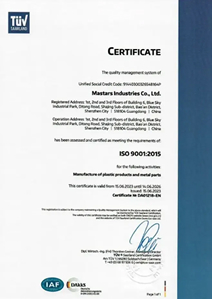
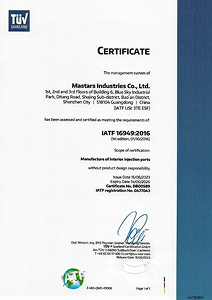
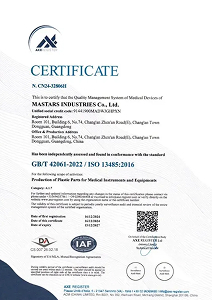
ISO 9001:2015 | ISO 13485:2016 | IATF 16949:2016

Medical Molds & Device Tooling Services
0.002 mm
Mold Precision
Class 10,000
Cleanroom
100+
Engineering Professionals
20+
Years of Manufacturing Experience

Medical Mold Manufacturing Capabilities

Syringe & Drug-Delivery Molds
High-cavitation tooling for syringe parts, caps, plungers, valves, and drug-delivery components, with configurations up to 96 cavities and sub-3-second cycles for suitable high-speed programs.
Get a Quote
Diagnostic & IVD Consumable Molds
Precision molds for test cartridges, reagent components, sample containers, pipette-related parts, and disposable diagnostic components where cavity consistency and repeatable dimensions are critical.
Get a Quote
Luer, Connector & Fluid-Handling Molds
Tooling for Luer fittings, threaded connectors, valves, manifolds, and fluid interfaces using slides, core pulls, or unscrewing mechanisms where geometry requires complex mold actions.
Get a Quote
Microfluidic & Thin-Wall Molds
Precision tooling for microfluidic channels, thin membranes, small openings, diaphragms, and compact medical components where filling balance, venting, and part release need early review.
Get a Quote
Medical Overmolding & Insert Molds
Insert and overmolding tools for metal inserts, seals, rigid-soft interfaces, grips, sensor components, and other integrated medical assemblies.
Get a Quote
LSR Medical Molds
Precision LSR tooling for seals, diaphragms, valves, masks, and flexible medical components, with mold design focused on flash control, venting, material flow, and reliable demolding.
Get a Quote
Medical Device Housing Molds
Injection molds for diagnostic equipment, handheld medical devices, pumps, monitors, and other housings requiring stable assembly interfaces, cosmetic surfaces, and controlled warpage.
Get a Quote

Medical Mold Design & Validation Considerations

Medical mold design should account for part geometry, resin behavior, cavity consistency, contamination risk, and validation requirements before production release.
Engineering Area What We Review Why It Matters
Parting Lines & Shutoffs Flash-sensitive surfaces, sealing interfaces and shutoff geometry Reduces flash, mismatch and sealing risk
Gates & Flow Gate position, filling pattern, weld lines and cavity balance Improves filling and cavity-to-cavity consistency
Venting Air traps, thin sections and end-of-fill areas Reduces burns and incomplete filling
Cooling & Shrinkage Cooling balance, resin shrinkage and hot spots Controls warpage and dimensional variation
Draft & Ejection Draft, texture, undercuts and release direction Prevents drag marks and part damage
Critical Dimensions CTQ, mating, sealing and assembly features Focuses tighter control where function requires it
Multi-Cavity Validation Cavity ID, FAI and cavity-to-cavity comparison Confirms consistent output before release
Cleanroom & Traceability Material records, process records and contamination controls Supports controlled medical production where required
Custom Medical Mold Tooling

Custom Medical Mold Tooling

Your medical mold should be built around the part, resin, validation requirements, and expected production volume. Mastars adapts mold steel, cavity count, runner and gate design, cooling, ejection, mold actions, inspection, and maintenance planning to the geometry and functional requirements of each medical component.

Materials for Medical Mold Tooling

Tool material and molding resin should be considered together. Expected tool life, cavity count, resin abrasiveness, corrosion, sterilization requirements, shrinkage, and flow behavior all influence steel selection, gate design, cooling, venting, and long-term mold maintenance.
Aluminum
P20 Tool Steel
H13 Tool Steel
Hardened Tool Steel
orrosion-Resistant Stainless Tool Steel
Medical-Grade PP
Medical-Grade PE
PC & PC Blends
TPE & TPU
Medical-Grade LSR
High-Performance Medical Resins
Aluminum
Aluminum
Aluminum
Aluminum
Aluminum
Aluminum
Aluminum
Aluminum
Aluminum

Aluminum tooling is well suited to prototype, hybrid, and lower-volume medical programs where faster machining and easier design changes are more important than maximum tool life.

Key Characteristics

- Fast machining

- Lower initial tooling cost

- Easier engineering changes

- Good for early molded validation

Aluminum wears faster than hardened steel, especially with abrasive or glass-filled resins, so expected volume and resin should be reviewed before selection.

Typical Applications

Prototype tooling, pilot builds, design validation, bridge production

P20 Tool Steel
P20 Tool Steel
P20 Tool Steel
P20 Tool Steel
P20 Tool Steel
P20 Tool Steel
P20 Tool Steel
P20 Tool Steel
P20 Tool Steel

P20 is a pre-hardened mold steel that balances machinability, durability, cost, and dimensional stability for many medical injection mold programs.

Key Characteristics

- Good machinability

- Good dimensional stability

- Suitable for polishing and texturing

- Longer life than aluminum tooling

Highly abrasive resins or very high production volumes may justify a harder steel at cavities, gates, slides, and other wear areas.

Typical Applications

Medical housings, diagnostic components, connectors, medium- to long-run tooling

H13 Tool Steel
H13 Tool Steel
H13 Tool Steel
H13 Tool Steel
H13 Tool Steel
H13 Tool Steel
H13 Tool Steel
H13 Tool Steel
H13 Tool Steel

H13 provides high hardness, wear resistance, and thermal-fatigue resistance for demanding production molds and high-wear tooling components.

Key Characteristics

- High wear resistance

- High hardness

- Good thermal stability

- Suitable for demanding production

Higher hardness improves durability but increases machining and engineering-change cost. It is most useful where production demand justifies the additional tooling investment.

Typical Applications

High-volume molds, high-wear inserts, gates, cores, slides, and demanding multi-cavity tooling

Hardened Tool Steel
Hardened Tool Steel
Hardened Tool Steel
Hardened Tool Steel
Hardened Tool Steel
Hardened Tool Steel
Hardened Tool Steel
Hardened Tool Steel
Hardened Tool Steel

Hardened steels are selected for medical production molds requiring extended tool life, repeatability, and resistance to wear over large production programs.

Key Characteristics

- Long production life

- High wear resistance

- Stable critical features

- Suitable for high-cavitation tooling

Steel grade and hardness should match resin, cavity count, surface requirement, maintenance strategy, and expected production life rather than simply specifying the hardest steel available.

Typical Applications

High-volume disposables, drug-delivery components, connectors, and long-running medical programs

orrosion-Resistant Stainless Tool Steel

Corrosion-resistant steels such as S136 / Stavax-type grades are useful for cleanroom-ready tools, high-polish cavities, humid service, and medical molding environments where corrosion control matters.

Key Characteristics

- High corrosion resistance

- Excellent polishability

- Suitable for clean processing

- Good long-term cavity protection

Higher material and machining cost is justified where corrosion resistance, cleanliness, or polished cavity performance affects tool reliability.

Typical Applications

Clear parts, polished cavities, cleanroom-ready tooling, corrosion-sensitive applications

Medical-Grade PP

PP combines chemical resistance, low density, fatigue resistance, and good moldability, making it widely applicable to disposable medical and diagnostic components.

Key Characteristics

Its relatively high shrinkage makes cooling balance, cavity dimensions, and warpage control important, particularly in multi-cavity and thin-wall molds.

Typical Applications

Syringe components, caps, containers, diagnostic consumables, living-hinge parts

Medical-Grade PE

PE offers toughness, chemical resistance, and low moisture absorption for fluid-contact and disposable medical components.

Key Characteristics

Higher shrinkage can make tight dimensions more difficult to maintain, so mold compensation and cooling should be planned around the specific grade.

Typical Applications

Containers, closures, tubing-related components, fluid-management parts

PC & PC Blends

Polycarbonate is chosen when transparency, impact strength, dimensional stability, or rigid medical-device structures are required.

Key Characteristics

PC requires controlled drying and molding temperatures. Gate design, residual stress, weld lines, and ejection should be considered on transparent or stress-sensitive parts.

Typical Applications

Diagnostic housings, transparent components, reservoirs, device covers

TPE & TPU

TPE and TPU provide flexible, elastic surfaces for seals, grips, patient-contact interfaces, and overmolded medical components.

Key Characteristics

Bonding depends on substrate compatibility, while hardness, shrinkage, and flow vary by grade. Overmold shutoffs and flash control require particular attention.

Typical Applications

Seals, grips, flexible interfaces, protective components

Medical-Grade LSR

LSR provides flexibility, chemical stability, and suitability for many patient-contact medical applications.

Key Characteristics

Very low-viscosity LSR makes parting-line accuracy, venting, flash control, cold-runner design, and reliable demolding critical to mold performance.

Typical Applications

Valves, diaphragms, seals, masks, flexible medical components

High-Performance Medical Resins

PEEK, PEI, PPSU and similar high-performance polymers are selected where higher heat resistance, chemical resistance, mechanical performance, or repeated sterilization exposure is required.

Key Characteristics

Higher processing temperatures and filled grades can increase mold wear and thermal demand. Steel grade, gate design, venting, heating/cooling, and shrinkage compensation should be matched to the exact resin.

Typical Applications

Reusable medical components, surgical-device parts, high-performance fluid or structural components

Medical Mold Finishing Options

Mold finish affects molded-part appearance, transparency, release, sealing surfaces, and draft.
Mold Finish Typical Result Key Consideration
SPI A1–A3 Polish High-gloss / clear surfaces SPI A2 is commonly used for high-clarity surfaces; molded stress and gate location still affect clarity
SPI B1–B3 Smooth semi-gloss Suitable for visible medical housings
SPI C1–C3 Uniform matte Reduces visible machining marks
SPI D1–D3 Textured matte Deeper texture usually requires more draft
Mold-Tech Texture Defined grain or functional texture Texture depth must match draft and release direction
Laser Texturing Local or complex patterns Useful on curved surfaces and controlled texture zones
VDI / EDM Finish Controlled spark texture Common for complex cavities and non-cosmetic surfaces

Medical Mold Tolerances & Precision

Tooling precision and molded-part tolerance are different. Final part variation still depends on resin, geometry, shrinkage, cooling, and cavity location, so tighter tolerances should be focused on CTQ, sealing, fit, and assembly features.
Precision Item Typical Capability Engineering Consideration
Critical Tooling Features Down to 0.002 mm Cavity, core, insert and precision tooling features
Tooling Repeatability Up to ±0.0127 mm (±0.0005 in) For controlled precision tooling operations
Injection Molding Precision Down to ±0.05 mm Depends on resin, geometry and process stability
General Molded Dimensions ±0.10–0.30 mm Typical for non-critical plastic dimensions
Mating / Sealing Features Down to ±0.05 mm Identify CTQ dimensions on the drawing
CMM Measurement Precision Down to 0.0017 mm Supports FAI and cavity/core dimensional verification

Medical Mold Tooling Equipment & Manufacturing Capabilities

CNC Mold Machining

CNC Mold Machining

EDM & Wire-Cut Machines

EDM & Wire-Cut Machines

Mold Trial & Inspection

Mold Trial & Inspection

Why Choose Mastars for Medical Mold Tooling?

48-Hour DFM Feedback
For suitable projects, review gates, cooling, flash, shrinkage, and critical interfaces before steel is cut.
Mold Flow Analysis
Evaluate filling, venting, packing, cooling, shrinkage, and warpage before tool build.
ISO 13485:2016
Controlled documentation, inspection, traceability, and project-specific quality requirements.
20+ Years Mold Engineering
Direct technical support from mold design through trials, corrections, and production release.
In-House Toolmaking
CNC, EDM, grinding, fitting, polishing, assembly, and trials managed in one workflow.
50–60 Mold Sets / Month
Capacity supports new tools, revisions, and concurrent tooling programs.

Certifications

ISO9001:2015 Certificate

ISO9001:2015 Certificate

IATF16949:2016 Certificate

IATF16949:2016 Certificate

ISO13485:2016 Certificate

ISO13485:2016 Certificate

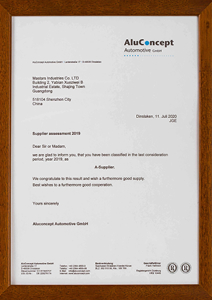
Medical A-Class Supplier

Medical A-Class Supplier

Partners

445 Projects
xylem
Bentley
Aston Martin
HARMAN
Annabella
Auer Lighting
NVIDIA
Compac
G4S
hs products
luxshareict
KK
Bioness
SGM
Nmble
Lear
LLEN&HEAT
belkin
DaAn Gene
MAGNA
pdd
Flite
simens
philips
maxwell
Land Rover

How to Work with Us

Share Your Project

Send a CAD file, drawing, or brief. Start with what you have.

Engineering Review & Quote

We review your requirements and confirm the process, price, and lead time.

We Make Your Parts

Once approved, we prepare the process and manufacture your parts.

Inspection & Delivery

We inspect, pack, and ship your finished parts.

What Our Customers Say

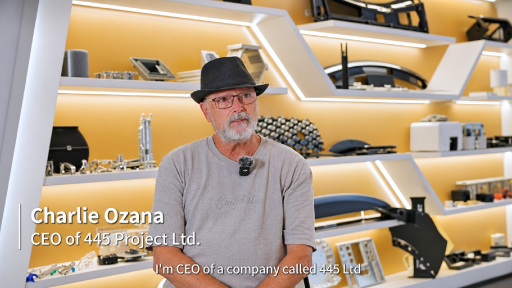
Charlie Ozana

Charlie Ozana

Company: 445 LTDJob Title: CEOBusiness: Full turnkey company
Mastars in all my projects are partners. So I get all the support that I need from engineering management, pricing, timetable, QA, everything is as a partner, not as a supplier. For me, Masters is like home.
Nathan Johnson

Nathan Johnson

Company: Gusto Global IndustriesJob Title: DirectorBusiness: Dust reduction system
They were such a lovely company to deal with, and we couldn't be more happier even to today down the track with even more products moving forward. Very professional, easy to deal with, get back to you straight away, contact is easy through WeChat and email, move forward as quickly as you can.
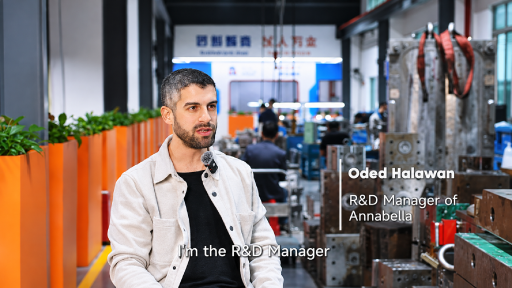
Oded Halawani

Oded Halawani

Company: Annabella Tech IsraelJob Title: R&D managerBusiness: Breast pump
We managed to make it in a very short time warm prototyping to mass production and FDA approval. That makes me feel confidence to choose Mastars.
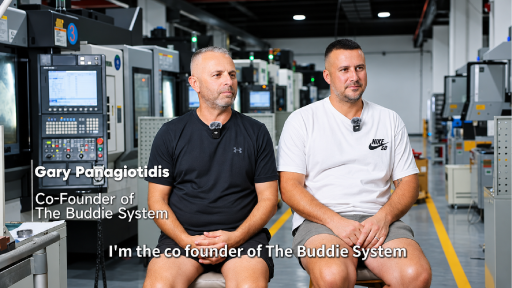
Jade Harris

Jade Harris

Company: Buddy SystemJob Title: Co-founderBusiness: Wireless instant safety alert device
We're glad that we found a company like Mastars to make the product for us because it's been so good to deal with. They're a really good company.
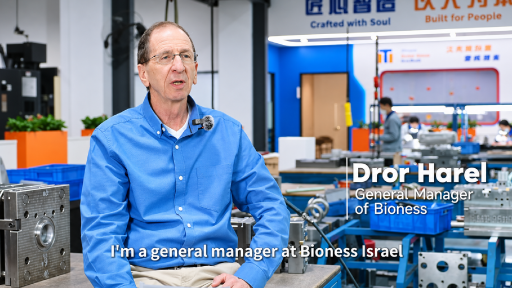
Dror Harel

Dror Harel

Company: BlonessJob Title: General ManagerBusiness: L300, H200
I think the relationship between the buyers and definitely between me the Mastars it's like a family relationship and this is why we are so happy to produce in Mastars and this is why we came for 15 years. By the way, now we came with a new product that we come to Master to produce for the new year.

Medical Mold Tooling FAQs

  • What makes a medical mold different from a standard injection mold?

    Medical molds place greater emphasis on repeatability, validation, traceability, contamination control, and long-term process stability. Critical dimensions, cavity-to-cavity variation, resin behavior, mold maintenance, and engineering changes may all need tighter control than in a typical commercial molding program.

  • Is Mastars ISO 13485 certified for medical tooling projects?

    Yes. Mastars operates under an ISO 13485:2016 quality management system. It supports controlled engineering, inspection, traceability, and project documentation, but ISO 13485 does not automatically make an individual medical device FDA- or EU MDR-approved.

  • Do I need prototype, hybrid, or production medical tooling?

    It depends. If the design is still changing, prototype or hybrid tooling allows molded-part and process learning before a larger tooling commitment. For stable designs and repeat production, hardened production tooling offers greater durability, cavity options, and long-term process stability.

  • How quickly can I get T1 samples from a medical mold?

    For suitable hybrid tooling projects, first molded parts can be available in about 10 days. Fast-Track production-level tooling may take around 60 days. Multi-cavity, LSR, overmolding, unscrewing, high-precision features, or design revisions can extend the timeline.

  • What happens if T1 medical mold samples fail inspection?

    The mold or molding process is corrected based on the findings. Flash, warpage, filling, ejection, dimensional, assembly, or functional issues may require tooling or parameter changes followed by another trial. T1 results show what must change before production approval.

  • How do you validate a multi-cavity medical mold?

    Cavity identification and cavity-to-cavity comparison are used to verify consistency. FAI can be performed by cavity, with CTQ dimensions checked by CMM or other inspection methods before the mold is released for validated production.

  • Do all medical molds require cleanroom molding?

    No. Mastars provides Class 10,000 cleanroom molding support, but the need for a controlled environment depends on contamination risk, patient contact, downstream assembly, packaging, and project requirements.

  • What medical mold validation can you support?

    Mastars supports T0/T1/T2 sampling, FAI, CMM dimensional inspection, cavity-to-cavity checks, and project-specific validation. IQ/OQ/PQ, material traceability, CTQ reporting, and additional documentation can be incorporated when required by the project validation plan.

  • Can you take over, repair, or maintain an existing medical mold?

    Yes. Existing tooling can be assessed for transfer, repair, engineering changes, preventive maintenance, spare inserts, and repeat-production support. Before production resumes, mold condition and critical dimensions should be checked against the current approved design and validation requirements.

  • What do you need to quote a medical mold?

    A 3D CAD file is enough to start. For a more accurate tooling proposal, include the resin, expected annual volume, cavity requirement, 2D drawing, critical dimensions, surface finish, inserts or overmolding requirements, and any validation or cleanroom requirements. Rough information is fine for an initial review.

Tell Us About Your Project

Share your project details and files with us. Rough information is fine to start. Our engineering consultant will contact you within 24 hours.

Verification code