Pressure Die Casting

Pressure Die Casting
Pressure Die Casting Services

Custom pressure die casting for metal parts, with process selection based on alloy, geometry, wall thickness, porosity risk, and production volume.

  • High- and low-pressure die casting options
  • Aluminum, zinc, magnesium & copper alloys
  • Complex geometry, thin walls & integrated features
  • Tooling, casting, CNC machining & finishing
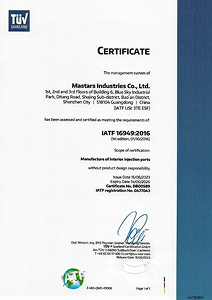
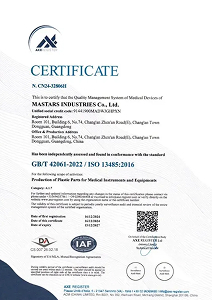
ISO 9001:2015 | ISO 13485:2016 | IATF 16949:2016

Pressure Die Casting Services
1 mm
Thin-Wall Capability
150K Shots
Typical Die Life
20+
Years of Manufacturing Experience
0
MOQ

Pressure Die Casting Capabilities

High-Pressure Die Casting
Molten metal fills the die rapidly under high pressure, typically 1,500–25,400 psi, with filling completed in about 10–100 ms.
Get a Quote
Low-Pressure Die Casting
Molten metal enters the die gradually under controlled pressure, typically around 2–15 psi, reducing turbulence during filling.
Get a Quote
Hot-Chamber Die Casting
The injection system remains immersed in the molten metal, enabling rapid cycling with lower-melting-point alloys such as zinc and selected magnesium alloys.
Get a Quote
Cold-Chamber Die Casting
Molten metal is transferred into a separate shot chamber before injection, making the process compatible with aluminum and other higher-temperature casting alloys.
Get a Quote

Pressure Die Casting Process Comparison

Compare filling behavior, material compatibility, production speed, and casting integrity before selecting a process. Hot- and cold-chamber systems are HPDC configurations rather than separate pressure categories.
Process Best For Main Advantage Main Consideration
High-Pressure Die Casting Thin-wall, complex, high-volume parts Fast filling and high repeatability Porosity, venting and flash control
Low-Pressure Die Casting Structural aluminum parts and thicker sections Lower turbulence and reduced porosity Slower cycle time
Hot-Chamber HPDC Small zinc and selected magnesium parts Short cycle times Limited alloy range
Cold-Chamber HPDC Aluminum housings and structural parts Suitable for higher-melting alloys Longer transfer and cycle time
Custom Pressure Die Casting

Custom Pressure Die Casting

Your casting plan should match the part—not a fixed process template. Mastars adapts process selection, alloy, die design, gating and venting, machining, inspection, and production planning to your geometry, critical interfaces, surface requirements, and expected volume.

Pressure Die Casting Materials

Choose from aluminum, zinc, magnesium, copper-based, and other project-specific alloys based on strength, weight, thermal performance, corrosion exposure, surface requirements, and part geometry. Alloy choice also affects filling, tooling, wall thickness, porosity, machining, and dimensional control.
Aluminum
Zinc
Magnesium
Copper
Aluminum
Aluminum
Aluminum
Aluminum
Aluminum
Aluminum
Aluminum
Aluminum
Aluminum

Aluminum combines low weight, good strength, corrosion resistance, and thermal conductivity, making it the most widely used choice for structural housings, heat-management parts, and complex industrial components.

Key Characteristics

- Good strength-to-weight balance

- Good corrosion resistance

- Good thermal conductivity

- Suitable for complex structural castings

Common Grades

A360 · A380 · A383 / ADC12 · A413 · 390 · 443 · 518

Typical Applications

Motor housings, gearboxes, heat sinks, electrical enclosures, automotive brackets, pump housings

Zinc
Zinc
Zinc
Zinc
Zinc
Zinc
Zinc
Zinc
Zinc

Zinc offers excellent fluidity and dimensional repeatability, allowing small features, thin walls, sharp details, and complex geometry to be reproduced consistently.

Key Characteristics

- Excellent filling of fine features

- Good dimensional stability

- Thin-wall capability

- Good surface quality for finishing

Common Grades

Zamak 2 · Zamak 3 · Zamak 5 · ZA Alloys

Typical Applications

Connectors, small housings, brackets, hardware, locking components, detailed mechanical parts

Magnesium
Magnesium
Magnesium
Magnesium
Magnesium
Magnesium
Magnesium
Magnesium
Magnesium

Magnesium is selected when weight reduction is critical while structural performance must still be maintained. Its castability also supports complex housings, ribs, and integrated features.

Key Characteristics

- Very low density

- Good strength-to-weight ratio

- Good castability for complex geometry

- Suitable for lightweight structural parts

Common Grades

AZ91D · AM60 · AE42 · AS41B

Typical Applications

Motor housings, electronics housings, automotive components, structural covers, portable equipment

Copper
Copper
Copper
Copper
Copper
Copper
Copper
Copper
Copper

Selected copper-based alloys provide high strength, wear resistance, thermal conductivity, and corrosion resistance for demanding mechanical and electrical components. Brass is often chosen where machinability and corrosion resistance are important.

Key Characteristics

- High strength and wear resistance

- Good thermal and electrical conductivity

- Good corrosion resistance

- Suitable for demanding

Typical Applications

Valve bodies, electrical components, fittings, hardware, pump parts, and wear-resistant components

Available Finishes

Machining, heat treatment, painting

Pressure Die Casting Surface Finishes

Surface finishing can improve corrosion resistance, wear, appearance, coating adhesion, or functional performance. The right finish depends on the casting alloy, visible surfaces, mating features, environmental exposure, and whether critical dimensions are machined before or after finishing.
Finish Typical Materials What It Does Engineering Considerations
As-Cast Aluminum, zinc, magnesium Keeps the original die-cast surface with no added coating Lowest secondary-processing cost; parting lines, ejector marks, and local casting texture may remain visible
Bead / Shot Blasting Aluminum, zinc, magnesium Produces a uniform matte surface and removes minor surface variation Can slightly soften sharp edges and alter the appearance of machined surfaces
Media Tumbling Aluminum, zinc, magnesium Removes light burrs and smooths edges on smaller cast parts Not ideal where sharp features, tight edges, or critical cosmetic faces must remain unchanged
Powder Coating Aluminum, zinc, magnesium Adds durable color, corrosion protection, and wear resistance Coating thickness must be considered around threads, mating surfaces, holes, and tight fits
Wet Painting Aluminum, zinc, magnesium Provides broad color and cosmetic options Surface preparation and masking are important for adhesion and critical interfaces
Type II Anodizing Primarily aluminum Improves corrosion resistance and provides decorative color options Die-cast alloy chemistry can affect color uniformity and cosmetic appearance
Type III Anodizing Primarily aluminum Creates a harder, more wear-resistant oxide layer Added layer thickness can affect tight fits and machined dimensions
Chemical Film / Chromate Primarily aluminum Improves corrosion resistance while maintaining electrical conductivity better than thicker coatings Useful where grounding or conductive contact areas must be retained
Electroless Nickel Aluminum, zinc, copper alloys Adds uniform corrosion and wear protection, including on complex geometry Coating buildup should be included in dimensional allowances on precision features
Nickel / Chrome Plating Zinc, aluminum, copper alloys Adds corrosion resistance, wear protection, and metallic appearance Surface defects may remain visible after plating; cosmetic parts require good pre-finish quality
Tin / Silver / Gold Plating Copper alloys and selected die-cast substrates Provides electrical, solderability, or corrosion-related functional surfaces Usually specified for selected functional areas rather than general cosmetic finishing

Pressure Die Casting Tolerances & Precision

Pressure die casting accuracy depends on alloy, part size, wall thickness, die condition, feature location, and thermal behavior. Critical bores, sealing faces, datums, and mating interfaces can be CNC machined after casting when tighter dimensional control is required.
Capability Typical Range / Value Applies To Engineering Considerations
General As-Cast Tolerance ±0.003–0.005 in/in Die-cast dimensions Equivalent to about ±0.076–0.127 mm per 25.4 mm; larger dimensions accumulate more variation
Tight As-Cast Tolerance Down to ±0.001 in Selected critical features About ±0.025 mm under favorable geometry and process conditions; not suitable as a blanket tolerance
CNC Post-Machining Down to ±0.002 mm Bores, datums, sealing faces, mating features Use machining where the casting process alone cannot economically hold the required fit
Aluminum Wall Thickness From ~2 mm Aluminum die castings Thin walls depend on flow length, alloy, rib layout, gate location, and filling conditions
Zinc Wall Thickness From ~1 mm Zinc die castings Zinc's fluidity supports thinner sections and fine features
Minimum Draft Angle From ~0.5° Draw-direction walls Deeper cavities, textured surfaces, and alloy shrinkage may require more draft
As-Cast Surface Roughness Approx. Ra 1.6 μm As-cast surfaces Equivalent to about 63 μin Ra; local texture can vary around gates, parting lines, and ejector areas
CMM Measurement Accuracy 0.0017 mm Dimensional inspection Used to verify critical dimensions, GD&T features, and machined interfaces

Pressure Die Casting Equipment

OKUMA MB-66VA CNC Machining Center

OKUMA MB-66VA CNC Machining Center

Sodick AQ 400 LS EDM Machine

Sodick AQ 400 LS EDM Machine

Zeiss CONTURA G2 CMM

Zeiss CONTURA G2 CMM

Why Choose Mastars for Pressure Die Casting?

Quality Systems
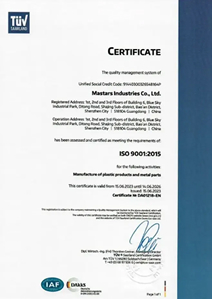
ISO 9001:2015, ISO 13485:2016, and IATF 16949:2016 support controlled inspection and production. CMM, FAI, and material verification help verify critical dimensions and casting requirements.
Engineering & Project Support
100+ engineering professionals coordinate DFM, die design, tooling, machining, quality, and production planning around part geometry and volume requirements.
Manufacturing Experience
Backed by 20+ years of die casting experience, Mastars supports aluminum and zinc programs from tooling and T1 trials through repeat production.
Flexible Capacity
With 5+ production bases, Mastars supports changing demand and repeat orders, with capacity matched to prototype, pilot, and production requirements.
Pressure Die Casting DFM Review
Review wall thickness, draft, ribs, bosses, gates, vents, machining stock, and pressure-tight areas before die release to reduce filling, porosity, flash, and tooling risks.
Integrated Manufacturing
Coordinate die casting, CNC machining, finishing, welding, assembly, and inspection through one manufacturing partner, without managing separate suppliers.

Certifications

ISO9001:2015 Certificate

ISO9001:2015 Certificate

IATF16949:2016 Certificate

IATF16949:2016 Certificate
ISO13485:2016 Certificate

ISO13485:2016 Certificate

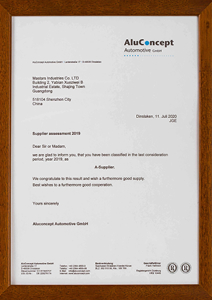
Medical A-Class Supplier

Medical A-Class Supplier

Partners

445 Projects
xylem
Bentley
Aston Martin
HARMAN
Annabella
Auer Lighting
NVIDIA
Compac
G4S
hs products
luxshareict
KK
Bioness
SGM
Nmble
Lear
LLEN&HEAT
belkin
DaAn Gene
MAGNA
pdd
Flite
simens
philips
maxwell
Land Rover

How to Work with Us

Share Your Project

Send a CAD file, drawing, or brief. Start with what you have.

Engineering Review & Quote

We review your requirements and confirm the process, price, and lead time.

We Make Your Parts

Once approved, we prepare the process and manufacture your parts.

Inspection & Delivery

We inspect, pack, and ship your finished parts.

What Our Customers Say

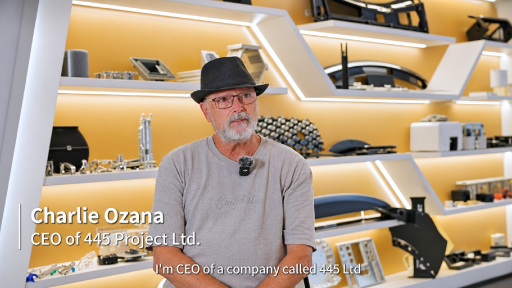
Charlie Ozana

Charlie Ozana

Company: 445 LTDJob Title: CEOBusiness: Full turnkey company
Mastars in all my projects are partners. So I get all the support that I need from engineering management, pricing, timetable, QA, everything is as a partner, not as a supplier. For me, Masters is like home.
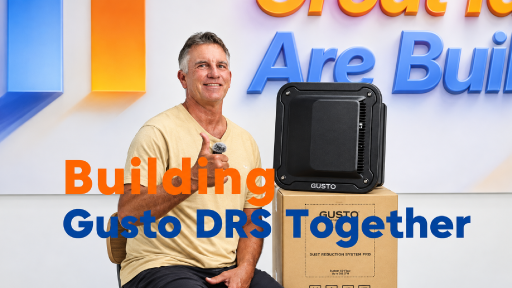
Nathan Johnson

Nathan Johnson

Company: Gusto Global IndustriesJob Title: DirectorBusiness: Dust reduction system
They were such a lovely company to deal with, and we couldn't be more happier even to today down the track with even more products moving forward. Very professional, easy to deal with, get back to you straight away, contact is easy through WeChat and email, move forward as quickly as you can.
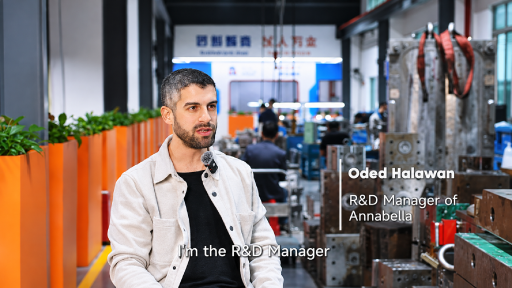
Oded Halawani

Oded Halawani

Company: Annabella Tech IsraelJob Title: R&D managerBusiness: Breast pump
We managed to make it in a very short time warm prototyping to mass production and FDA approval. That makes me feel confidence to choose Mastars.
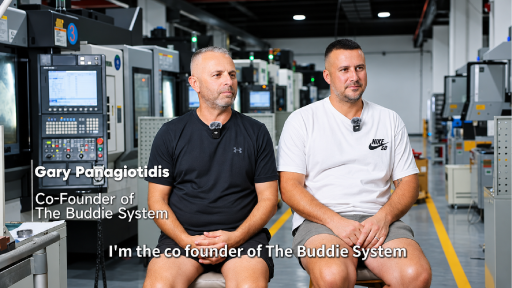
Jade Harris

Jade Harris

Company: Buddy SystemJob Title: Co-founderBusiness: Wireless instant safety alert device
We're glad that we found a company like Mastars to make the product for us because it's been so good to deal with. They're a really good company.
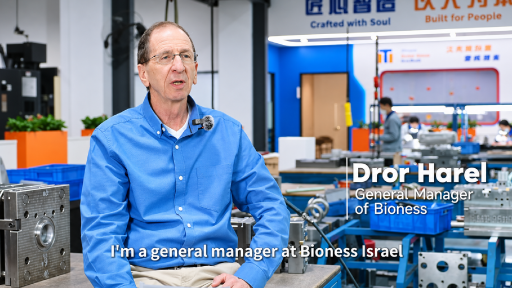
Dror Harel

Dror Harel

Company: BlonessJob Title: General ManagerBusiness: L300, H200
I think the relationship between the buyers and definitely between me the Mastars it's like a family relationship and this is why we are so happy to produce in Mastars and this is why we came for 15 years. By the way, now we came with a new product that we come to Master to produce for the new year.

Pressure Die Casting FAQs

  • How does the pressure die casting process work?

    Pressure die casting melts the selected alloy, fills a reusable steel die under controlled pressure, holds the metal through solidification, then ejects and trims the casting. Parts can then be CNC machined, finished, inspected, and assembled as required.

  • Is pressure die casting suitable for prototypes or low-volume production?

    Yes, but not every low-volume part should be die cast. T1 and low-volume builds can validate the production process, while CNC or another prototype process may be more economical for one-off parts before tooling investment is justified.

  • What determines pressure die casting cost?

    Tooling is the main upfront cost. Part size, alloy, cavity count, die complexity, tool-life target, production volume, machining, finishing, and inspection all affect total cost. Higher repeat volumes spread tooling cost across more parts.

  • How do you control porosity in pressure die cast parts?

    Porosity is controlled through wall design, gate and vent placement, filling speed, die temperature, melt quality, and solidification—not inspection alone. Pressure-tight surfaces and areas that will be machined require particular attention because machining can expose internal porosity.

  • What happens if T1 samples do not meet the drawing?

    T1 is a validation stage, not final production release. Dimensional results, filling, flash, porosity, machining stock, and surface requirements are reviewed, then tooling or process parameters are adjusted before approval.

  • How long does pressure die casting tooling take?

    Suitable production tooling can be completed in about 4 weeks. Complex slides, cores, cavity count, die size, surface requirements, and T1 revisions can extend the schedule.

  • How long does a pressure die casting die last?

    Around 150,000 shots is a useful production reference, but actual die life depends on alloy temperature, tool steel, geometry, thermal cycling, casting conditions, and maintenance.

  • Can surface finishing affect part tolerances?

    Yes. Anodizing, plating, powder coating, and other finishes add or modify the surface and can affect tight fits, threads, sealing faces, and cosmetic appearance. Critical interfaces may need machining allowances or masking before finishing.

  • What should I send for a pressure die casting quote?

    A 3D CAD model is enough to start. If available, include a 2D drawing, alloy, expected quantity, critical dimensions or GD&T, finish, and sealing or assembly requirements. Rough information is fine to start.

  • What should I look for in a pressure die casting manufacturer?

    Look beyond the casting machine itself. A capable supplier should support DFM, tooling, casting, critical-feature machining, defect control, dimensional inspection, finishing, and repeat production. For long-term programs, also check quality systems, tooling maintenance, communication, and capacity continuity.

Tell Us About Your Project

Share your project details and files with us. Rough information is fine to start. Our engineering consultant will contact you within 24 hours.

Verification code