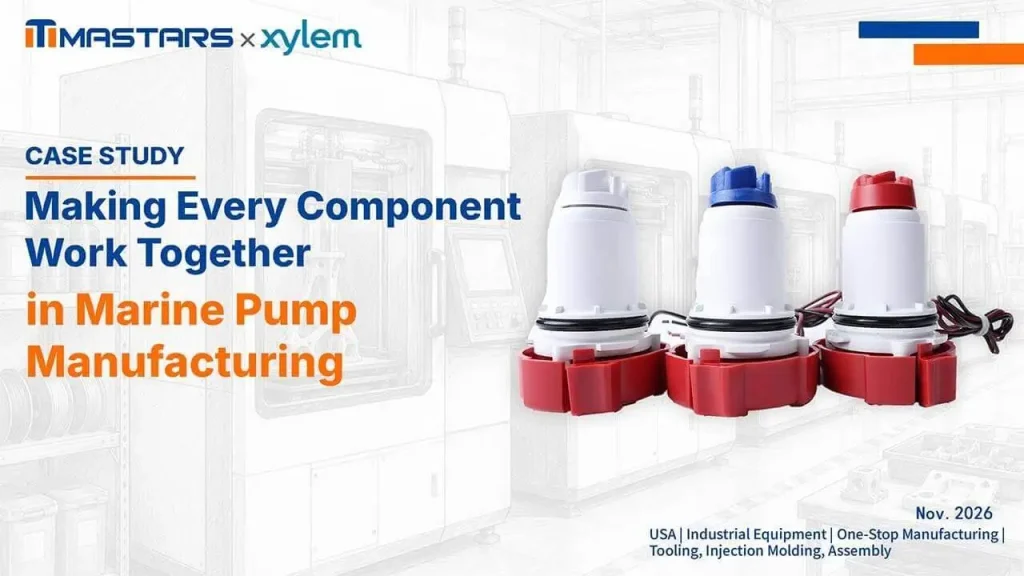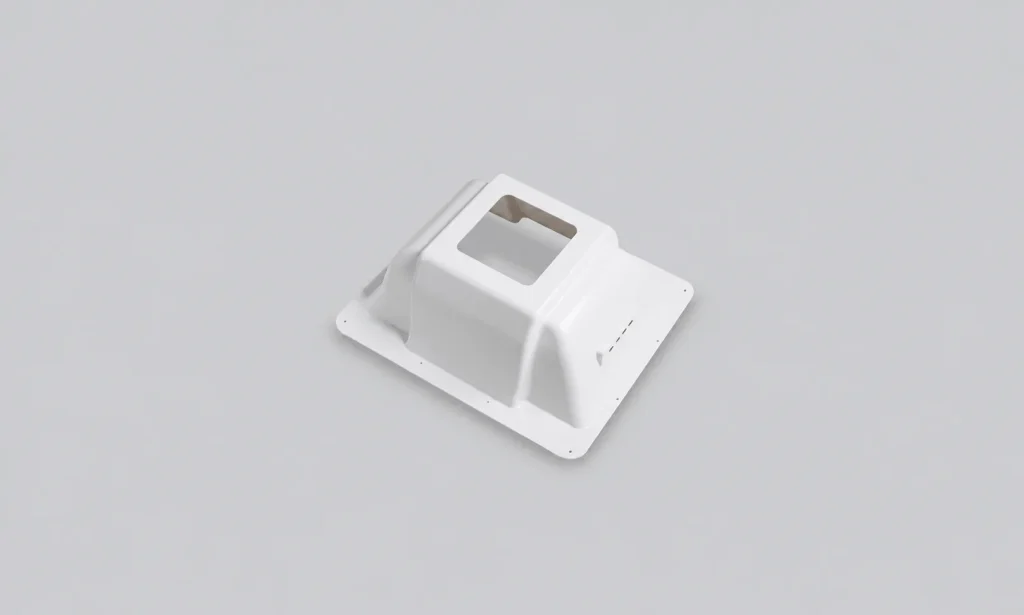

Custom plastic parts with in-house tooling and engineering support from T1 samples through production.
- Functional, cosmetic & tight-tolerance parts
- Prototype tooling to volume production
- DFM review before mold manufacturing

Custom plastic parts with in-house tooling and engineering support from T1 samples through production.

| Design Area | What We Review | Typical Risk |
| Wall Thickness | Uniformity and transitions | Sink, voids, warpage |
| Draft | Mold-release direction and texture | Drag marks, difficult ejection |
| Ribs & Bosses | Thickness and location | Sink and local distortion |
| Undercuts | Slider or lifter requirements | Higher tooling complexity |
| Critical Dimensions | Fit and assembly interfaces | Dimensional variation |
| Gate Location | Flow path and cosmetic surfaces | Weld lines, flow marks |
| Material Shrinkage | Resin behavior and geometry | Size shift and warpage |

| Finish | Best For | Key Consideration |
| Mold Texture | Matte, leather, grain, or patterned surfaces | Texture depth affects draft requirements |
| Polishing | Glossy or optical surfaces | Mold surface quality transfers directly to the part |
| Painting | Custom colors and cosmetic housings | Surface preparation affects adhesion |
| UV Coating | High-gloss, scratch-resistant surfaces | Best suited to accessible external surfaces |
| Soft-Touch Coating | Grips and handheld products | Wear resistance should match use conditions |
| Screen Printing | Logos and larger graphics on flat areas | Less suitable for complex curved surfaces |
| Pad Printing | Small logos and markings on curved parts | Printing area is relatively limited |
| Laser Marking | Serial numbers, QR codes, permanent markings | Contrast depends on resin and additives |
| Electroplating | Metallic appearance and conductive surfaces | Requires compatible plastic grades and pretreatment |
| Hydro Dipping | Wood grain, carbon fiber, and decorative patterns | Usually needs a protective topcoat |
| Tolerance Item | Typical Capability | Engineering Consideration |
| Injection Molding Precision | Down to ±0.05 mm | For suitable critical features |
| Mold Precision | Down to 0.002 mm | Supports cavity and core dimensional control |
| General Molded Dimensions | Typically ±0.10–0.30 mm | Depends on resin, size and geometry |
| Hole & Boss Features | Typically ±0.05–0.10 mm | Local cooling and shrinkage affect variation |
| Mating / Assembly Features | Down to ±0.05 mm | Identify critical dimensions on drawings |
| Flatness / Warpage | Part-specific | Large flat areas and uneven walls increase risk |
Often yes if you need repeatable parts, production-grade materials, consistent appearance, and ongoing production. If the design is still changing or quantity is very low, CNC machining, 3D printing, or vacuum casting may make more sense first.
It depends on volume, design maturity, material, tolerance, and expected tool life. Prototype tooling is useful when you still need validation or design flexibility. Production tooling is better for stable designs, repeat orders, and longer manufacturing programs.
We support ABS, PC, PC/ABS, PP, PE, PA, POM, PBT, PMMA, TPE, TPU, PPS, PEI, PEEK, reinforced grades, and other engineering plastics. The right resin depends on strength, heat, chemicals, appearance, shrinkage, and dimensional requirements.
A 3D CAD file is enough to start. For a more accurate quote, include material, quantity or annual volume, 2D drawings, critical dimensions, color, finish, inserts, and special inspection requirements. Rough information is fine for an initial review.
It depends mainly on tooling and part requirements. Mold complexity, cavities, material, tolerance, finish, quantity, secondary operations, inspection, and packaging all affect total cost. Tooling may represent a larger share of cost at lower volumes.
T1 samples can be ready in as fast as 10 days, with typical tooling and T1 lead times around 2–4 weeks. Production starts after sample approval. Complex molds, side actions, textures, inserts, or design revisions may extend the timeline.
Yes. We review wall thickness, draft, ribs, bosses, undercuts, gates, shrinkage, critical dimensions, and cosmetic surfaces before tooling. Changes are usually easier and less expensive before steel is cut.
The mold or process is adjusted based on dimensional, cosmetic, assembly, or functional findings. T1 is a validation step, so revisions before production approval are normal when issues are identified.
Yes. After approval, we support repeat and volume production with process control, FAI, in-process inspection, and ongoing production planning.