



Injection Molding Solutions for Rehabilitation Devices


When Easier Manufacturing Is Not the Better Answer
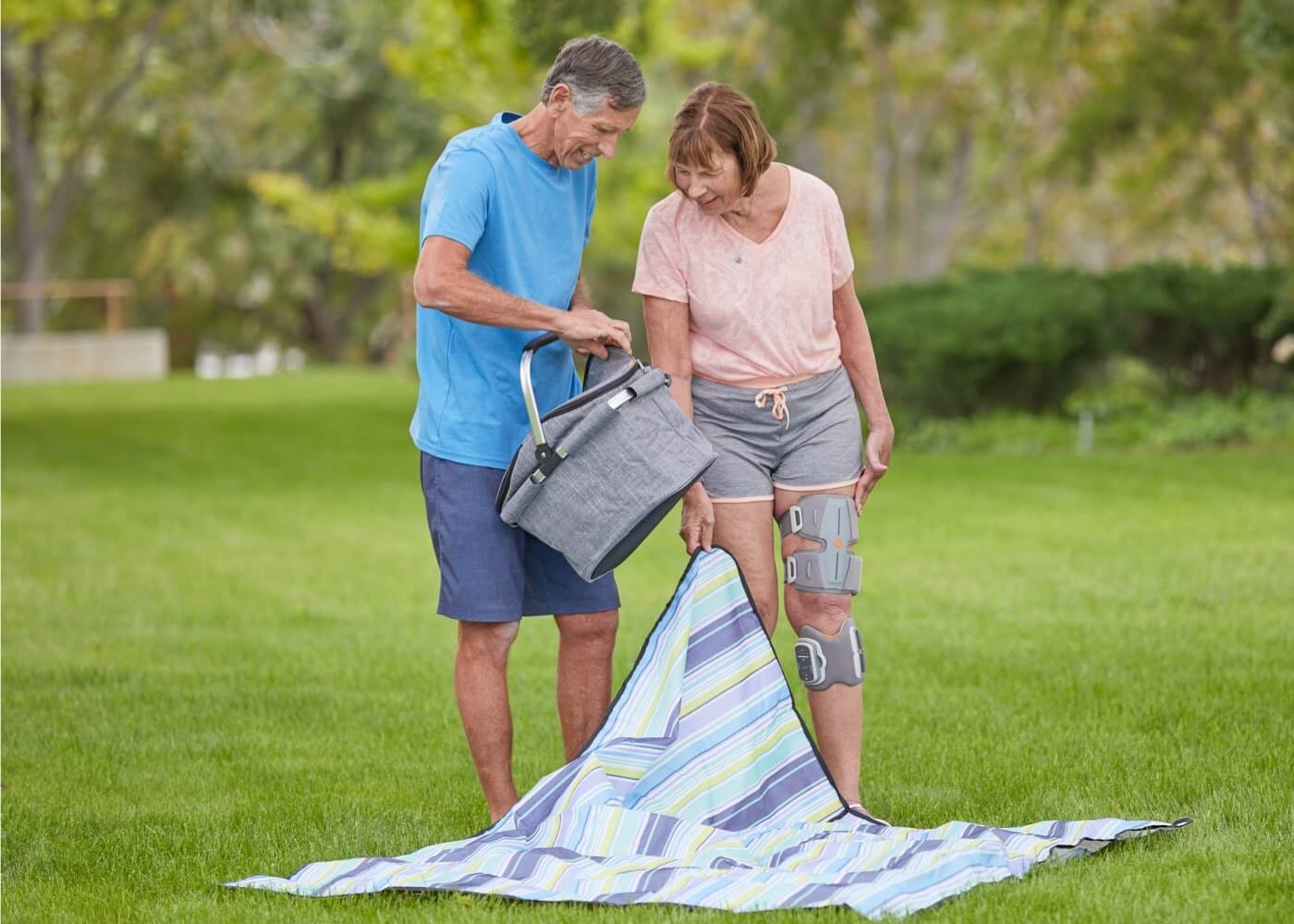
When a medical wearable is designed around the human body, its geometry is rarely just about appearance. Curvature affects how the product wraps around the body; rigid sections provide structural support, and flexible areas help the product accommodate movement and contact during use.
This project came from Bioness Medical, a U.S.-based rehabilitation technology company and a long-term Mastars customer. After years of cooperation on the existing product, the customer developed a longer version to accommodate a wider range of users. But the upgrade was not simply about adding length. The customer also wanted to preserve the existing curved form and the functional relationship between the rigid and flexible sections.
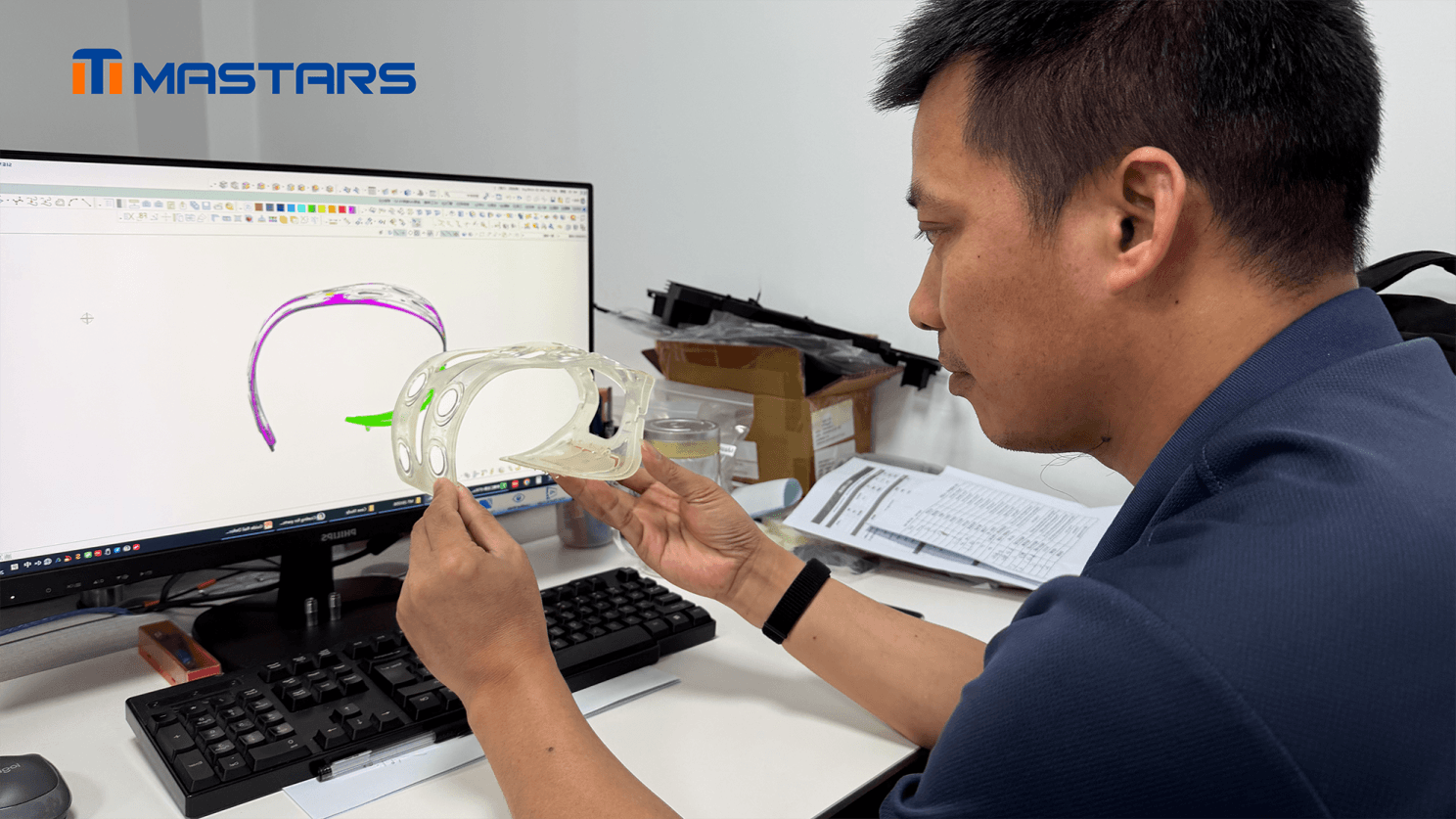
From a manufacturing perspective, reducing the curvature would have made the tooling easier. The customer, however, did not want to change the product solely to make production more convenient, because altering the geometry could also affect how the product fits and functions.
Adhesive bonding was also considered as an earlier solution for connecting the different sections. But because the product would experience movement and pulling during use, the customer was concerned that a bonded connection could become a weak point. Their preference was to achieve the required integration through overmolding.
The project therefore raised a more important engineering question:
When the product should not simply adapt to the manufacturing process, how can the manufacturing process adapt to the product?
Engineering the Manufacturing Route Around the Product
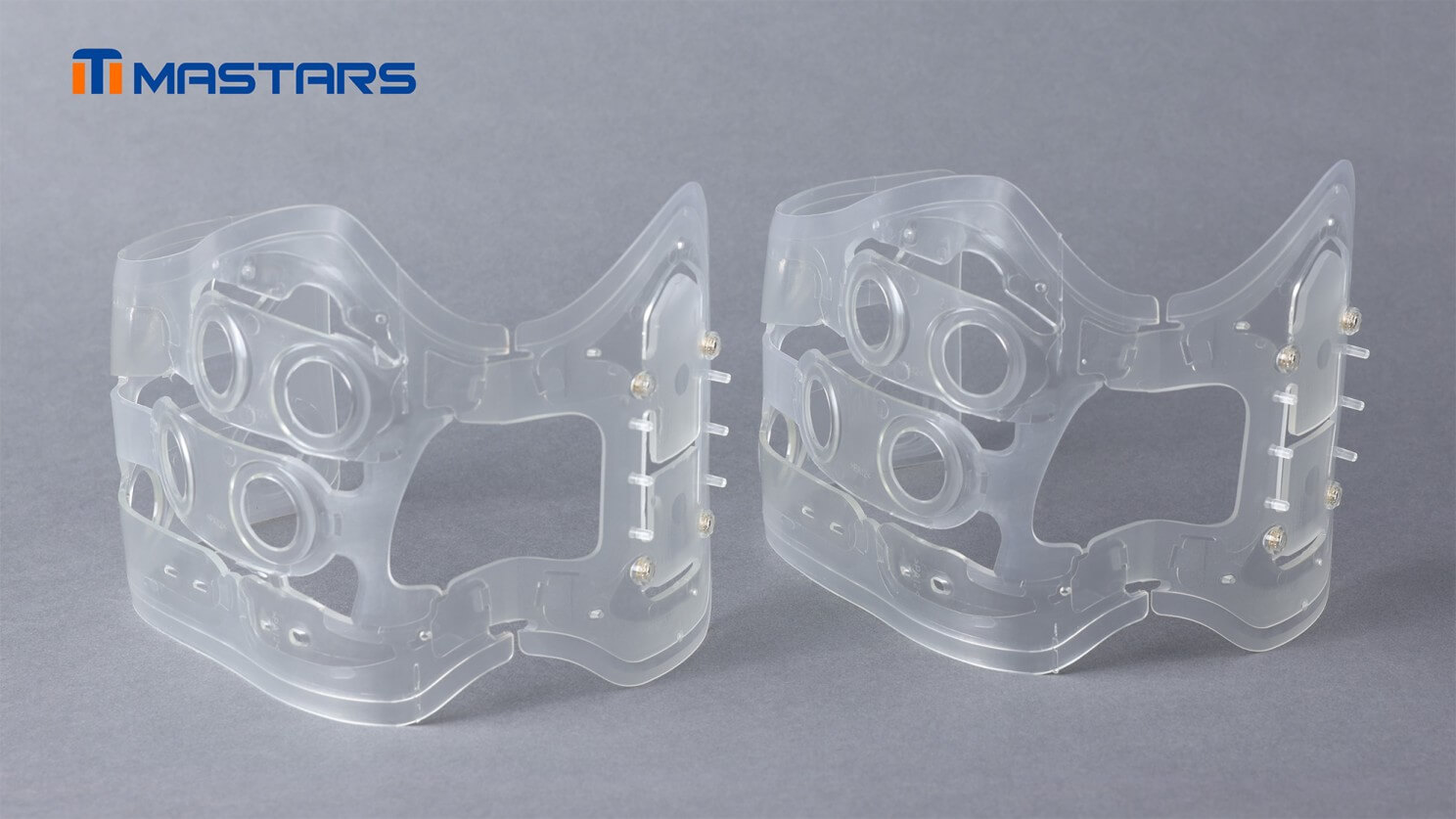
The component combines rigid PA12 TR90 with flexible ESTANE TPU. The rigid sections create the supporting structure and help maintain the intended form, while the TPU forms the flexible connecting and overmolded areas.
The real difficulty was not simply using two materials. It was making those materials work together within a strongly curved three-dimensional structure.
Compared with the earlier version, the upgraded product introduced additional soft-material interaction around the lower area. The original molding logic, therefore, could not simply be copied. The relationship between the rigid parts and soft sections had changed, and this affected how the components needed to be positioned, supported, molded, and released.
This is where what appears to be a product-size update becomes a new manufacturing challenge.
A straighter geometry would have simplified part of the tooling problem, but Mastars continued developing the manufacturing route around the geometry the customer wanted to retain. This meant reconsidering not only the mold itself but also the sequence in which the different sections would be produced and combined.
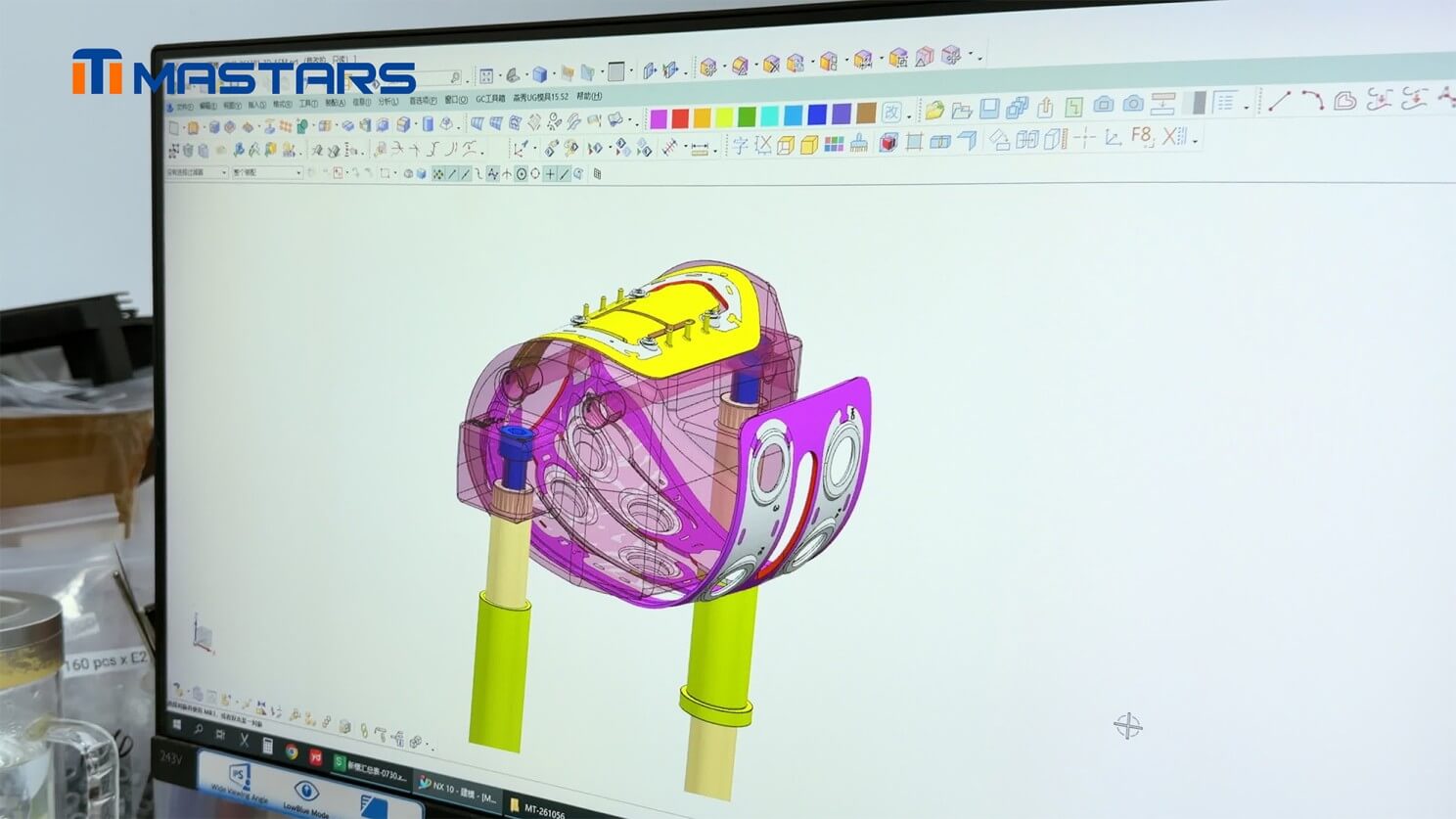
The final direction was a staged overmolding approach.
Part of the flexible material is formed first. The rigid components are then positioned together with the prepared soft sections according to the required product geometry. The prepared assembly is subsequently placed into the mold again, where additional TPU is molded around the designated areas to complete the required soft-hard integration.
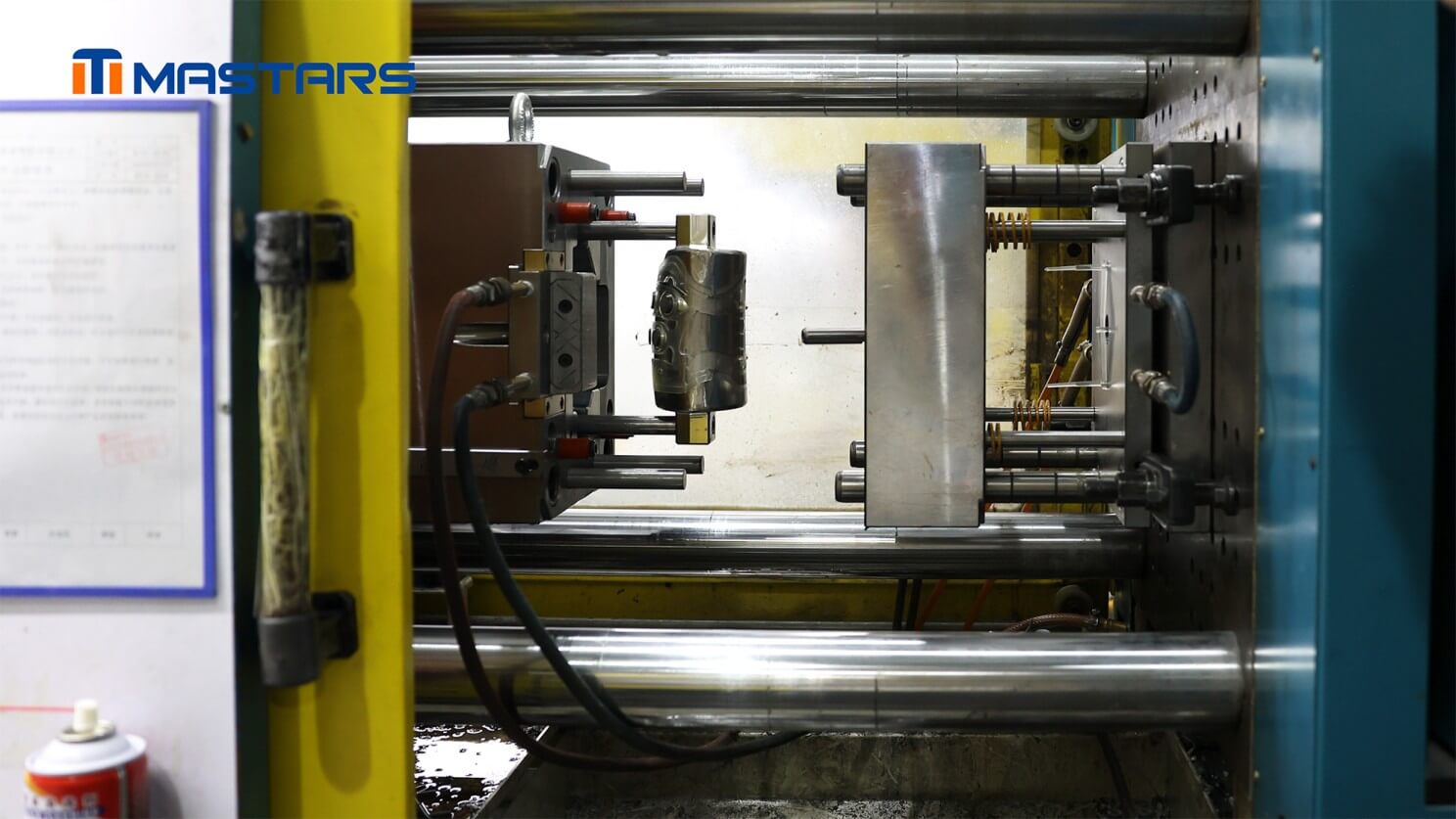
Because of the pronounced curvature and overlapping areas, the mold also required a structure different from a conventional straightforward molding setup. Clearance, component positioning, support, ejection, and the way the completed product could be removed from the tooling all had to be considered around the actual shape of the part.
Repeated mold trials therefore became an important part of the development process. They were not only used to adjust molding conditions but also to check whether the product geometry, mold actions, component positioning, and molding sequence were working together as intended.
For Mastars, this project required several capabilities to connect rather than operate independently:
Product Requirements → Engineering Review → DFM → Tooling Development → Mold Trials → Overmolding → Verification → Production
The customer did not simply need a mold maker or an injection molding supplier. The engineering, tooling, and production decisions all needed to support the same product objective.
That is where one-stop manufacturing creates real value.
Protecting Product Intent Through Manufacturing
Client core value: When the upgraded product created a more difficult manufacturing challenge, the manufacturing solution was developed around the customer's product requirements rather than simplifying the product only for production convenience.
More specifically, the value was reflected in these areas:
Original curved geometry retained as an important product requirement
Rigid PA12 TR90 and flexible ESTANE TPU integrated for different functional roles
Adhesive bonding replaced by an overmolding approach better aligned with the required product structure
A staged molding and tooling strategy developed specifically for the upgraded geometry
Engineering review, tooling development, mold trials, and injection molding connected through one manufacturing partner
The most important outcome of the project was not simply that Mastars developed a more complex mold.
It was that the engineering and manufacturing teams continued working around what the customer wanted the product to achieve.
Good DFM should not mean changing a design repeatedly until it becomes easy to manufacture. It should first identify which features can reasonably be optimized and which features exist for an important product reason and therefore need to be protected.
In this case, the easier manufacturing solution was not automatically the better product solution.
Manufacturing Should Understand Why the Design Exists
The same challenge appears in many products where complex geometry, body contact, and rigid-soft material combinations need to work together:
- Rehabilitation Devices — wearable supports, orthotic and assistive components
- Medical Wearables — ergonomic housings and body-contact components
- Surgical & Diagnostic Equipment — handheld devices, operating components, and rigid-soft structures
- Consumer Healthcare — ergonomic wearables and flexible components
For these products, simplifying geometry may reduce tooling and manufacturing difficulty. But some features exist because they influence fit, support, movement, or the intended user experience.
That is why a manufacturing partner should not only ask:
“Can this part be made?”
A more valuable question is:
“Why was it designed this way, and how can we manufacture it without losing that purpose?”
If your product combines complex geometry, multiple materials, or challenging molding requirements, share your CAD data and project requirements with Mastars. Our engineering, tooling, and manufacturing teams can help evaluate a practical route from design intent to production.

Mastars, the most trusted one-stop manufacturing services provider for low-volume production worldwide!
Hot Articles
Hot Tags
Stay Connected!


Manufacturing on Demand
Please fill in the following information to obtain plan details (information is confidential and not disclosed publicly), we will contact you within 24 hours, please keep your phone available!
Upload a 3D/2D model to see instant pricing, lead time, and DFM feedback.