



A Working Prototype Is Not Yet Production-Ready


Why Validate the Part Before Tooling?
A prototype can fit correctly and still be unsuitable for die-cast production.
For this aluminum airflow guide, the customer first needed a physical part to verify the curved rib layout, the central interface, the mounting positions, and the overall assembly fit.
Starting with CNC machining was not simply about avoiding tooling cost. It allowed the customer to confirm the design before committing to a production mold—and gave the engineering team a clearer basis for the next manufacturing decision.
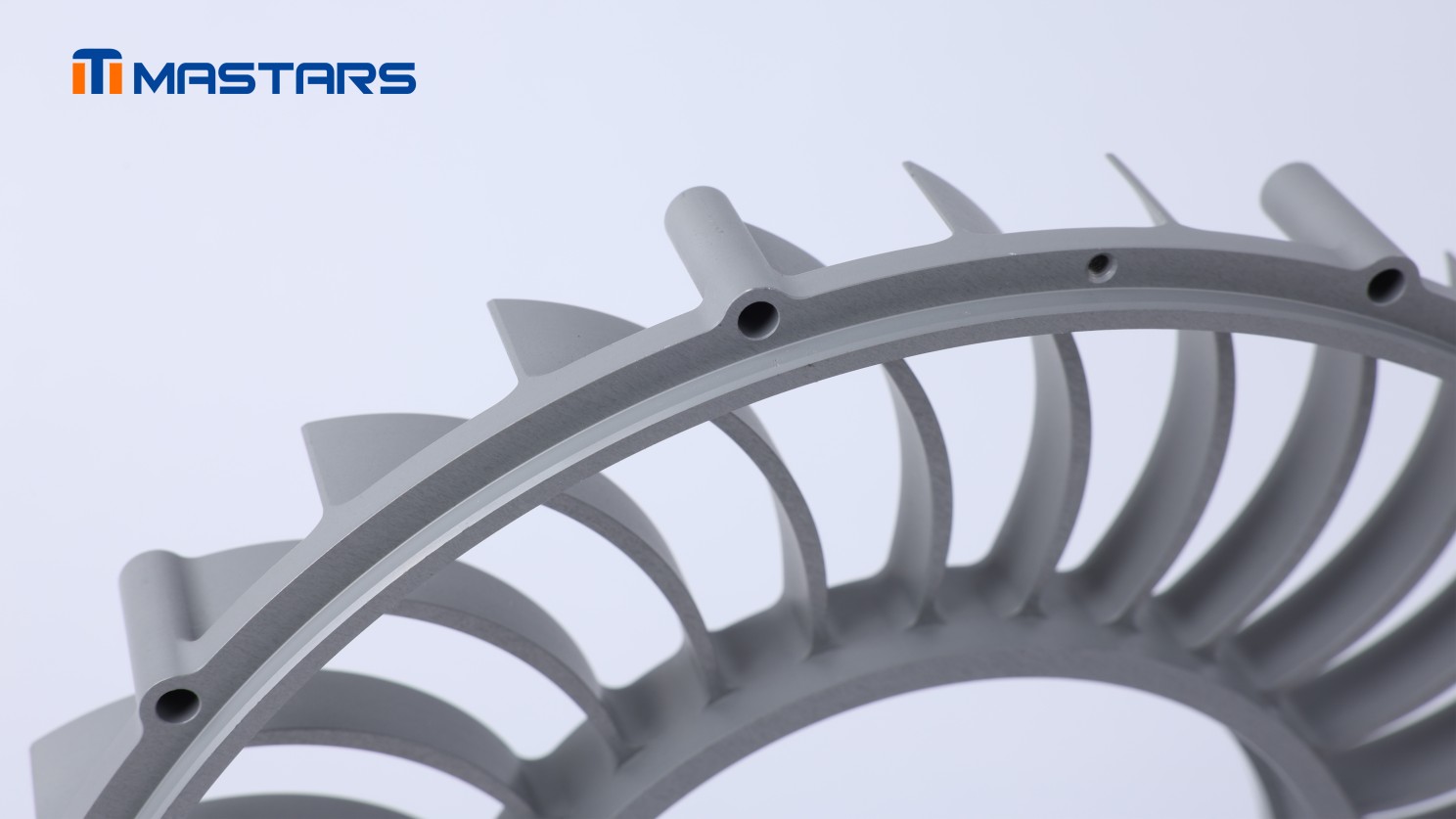
Precision mounting holes support accurate positioning and alignment during assembly verification.
CNC Machining Reveals the Real Manufacturing Risks
The main challenge was not the circular outline, but the thin curved ribs inside it.
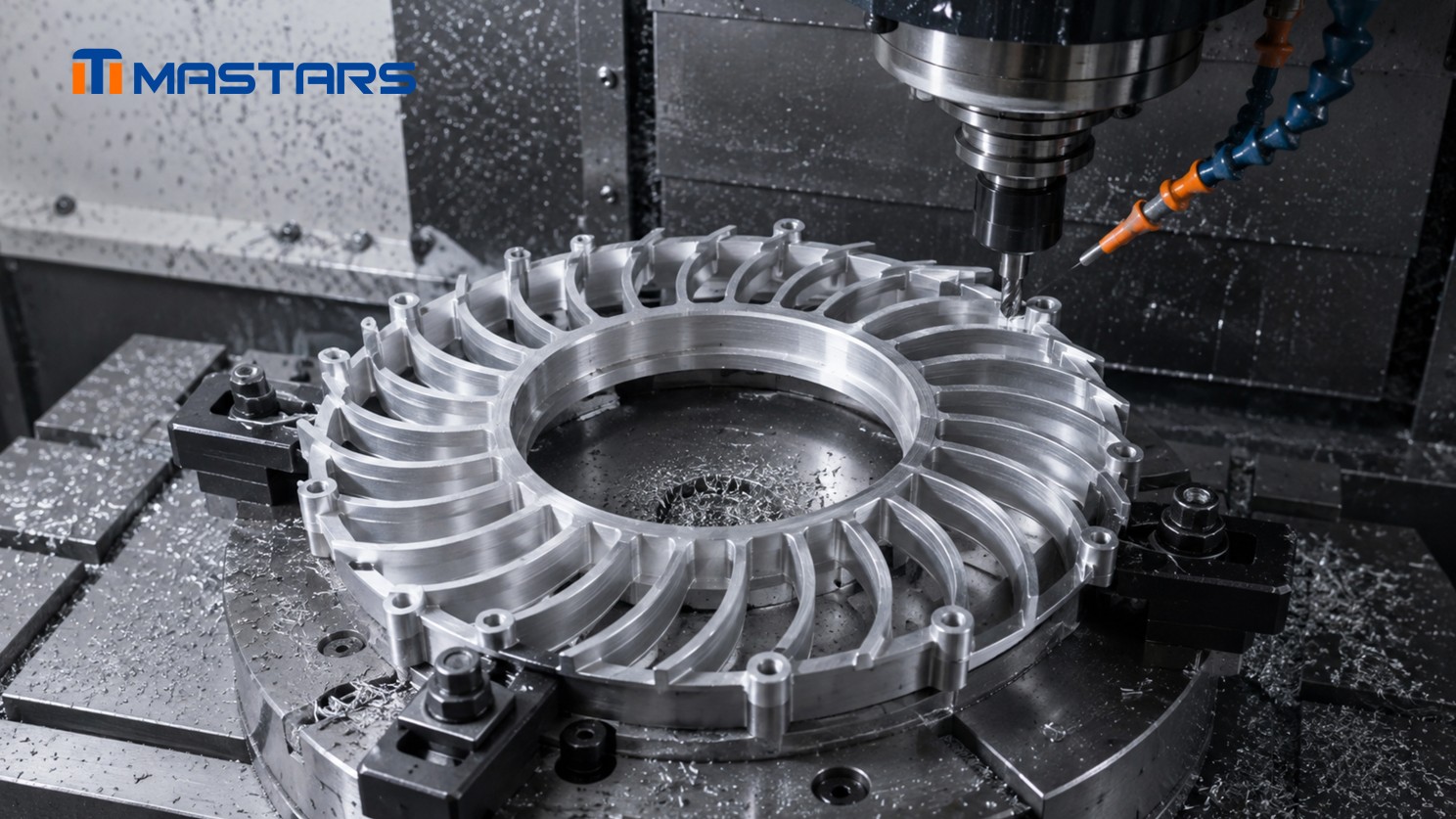
During machining, these ribs were vulnerable to vibration and deformation. At the same time, the central ring and outer mounting features had to maintain their relative positions for later assembly.
Mastars planned the CNC route around tool access, part stability, and assembly-critical areas. After machining, deburring, and surface finishing, the prototype was prepared for evaluation.
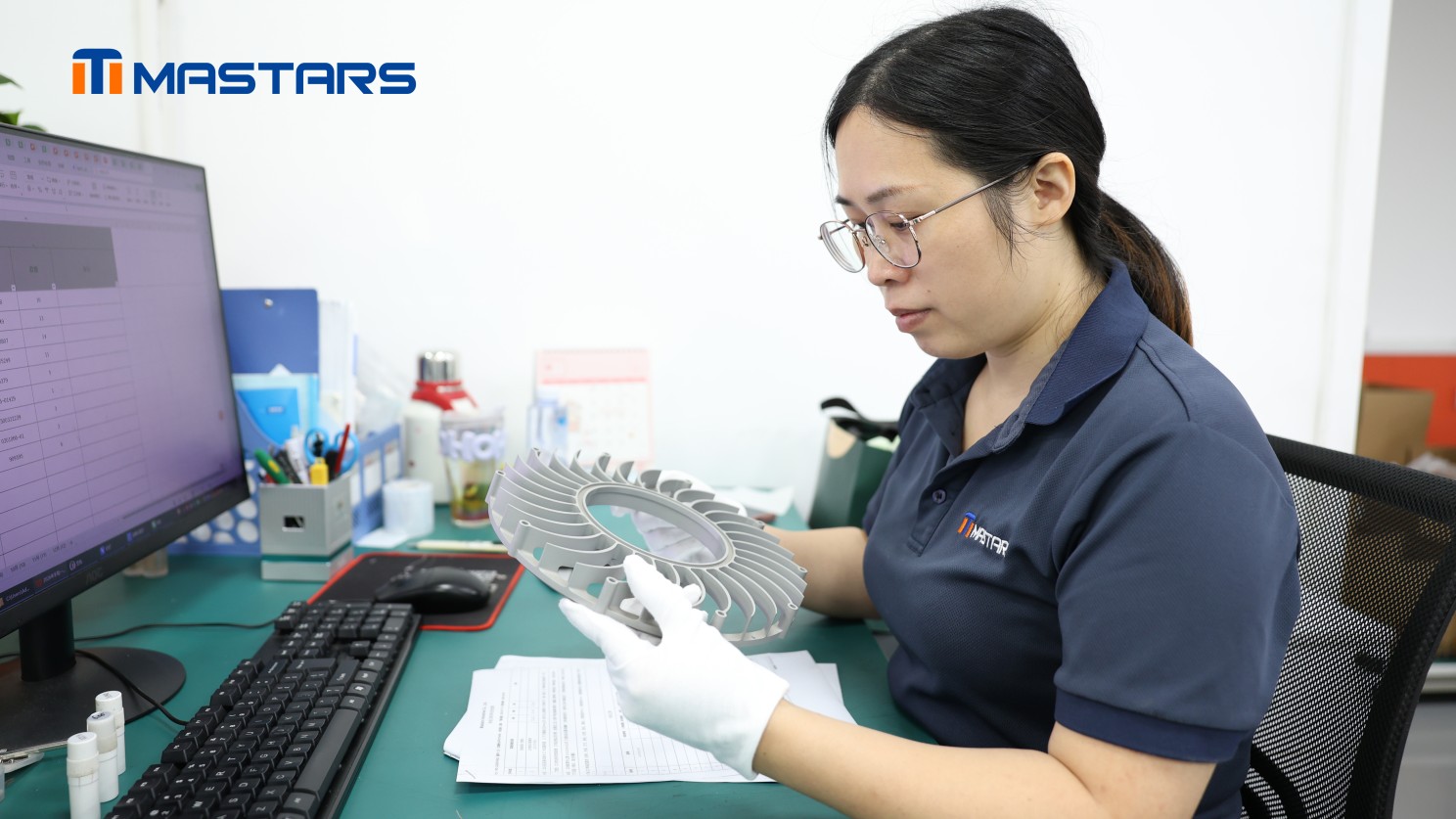
The physical prototype helped confirm:
3 critical areas: rib geometry, mounting interfaces, and overall fit
Thin-wall stability and edge condition
Accessibility of mounting and assembly features
How Does the Prototype Become Production-Ready?
A CNC prototype proves that the design can be made and assembled. It does not automatically prove that the same geometry is ready for die casting.
Before tooling, Mastars can review the design for draft angles, wall and rib thickness, parting lines, structural transitions, deformation risk, and machining allowance.
The project can then move through 4 coordinated stages:
CNC prototype validation
Die-casting DFM and tooling
Trial production and process adjustment
Casting, secondary CNC machining, finishing, and inspection
Critical holes, mounting surfaces, and mating interfaces can still be precision-machined after casting where tighter control is required.
One Partner Keeps the Project Moving
The hidden cost of changing suppliers is not limited to a new quotation.
Drawings must be transferred again. Critical requirements must be explained again. Knowledge gained during prototype machining may be lost before tooling and production begin.
With Mastars coordinating the project, the customer works with 1 manufacturing partner from prototype validation to volume production. This reduces technical handovers, repeated communication, and project coordination while helping control time and cost.
The same route can support:
- Motor and Drive Systems — airflow guides, end covers, and mounting structures
- Industrial Equipment — air ducts, cooling brackets, and protective covers
- Power Electronics — controller housings and thermal-management components
- Product Development — CNC functional prototypes moving toward production
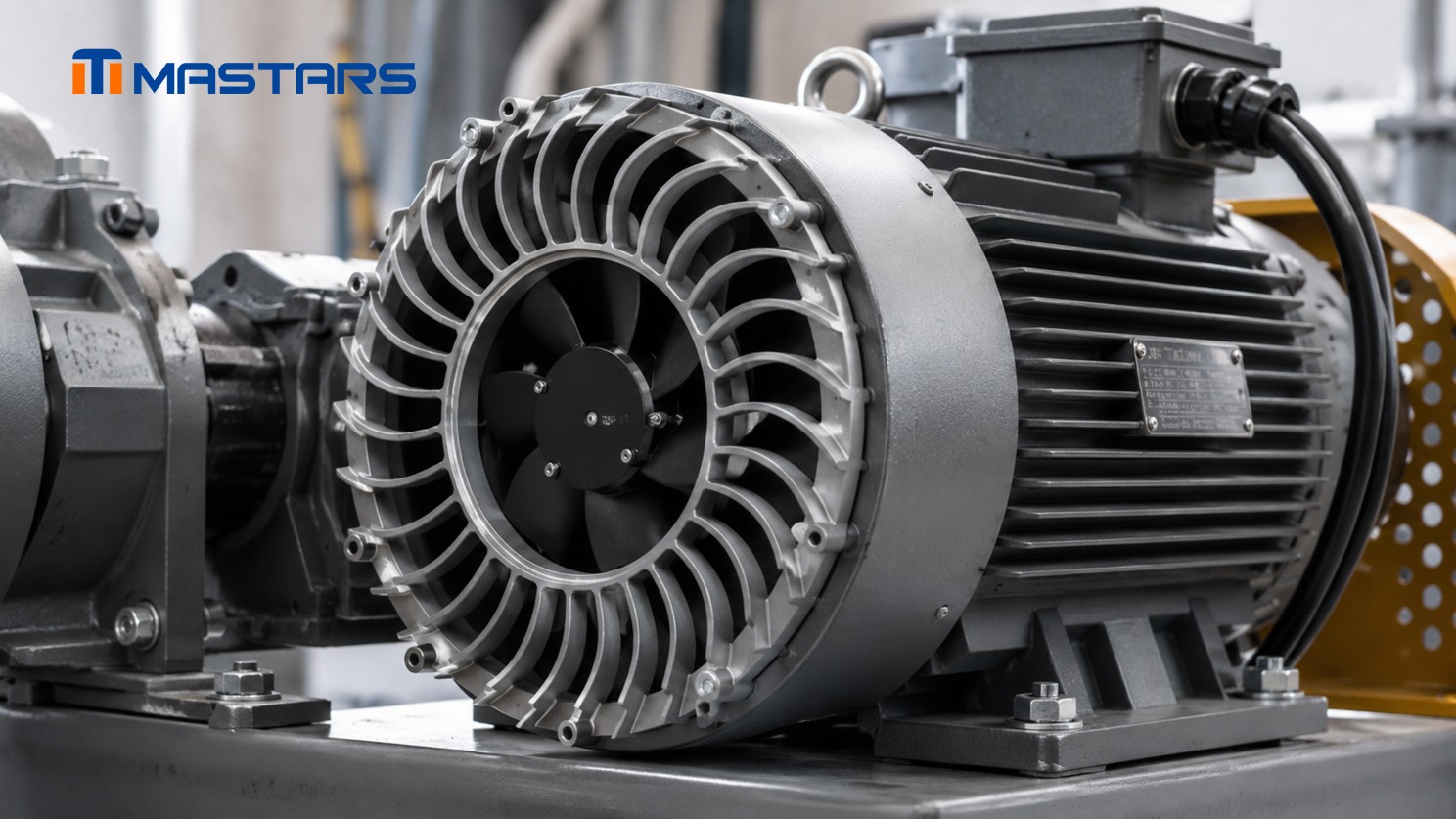
A prototype confirms that a design can work. A complete manufacturing route helps ensure that it can also be produced repeatedly and efficiently.
Is your CNC prototype approaching the tooling stage? Share your drawings, expected quantity, and assembly requirements with Mastars, and let us review the next manufacturing step.
Save time. Save money. Follow us, learn more about one-stop small and medium volume manufacturing solutions!

Mastars, the most trusted one-stop manufacturing services provider for low-volume production worldwide!
Hot Articles
Hot Tags
Stay Connected!


Manufacturing on Demand
Please fill in the following information to obtain plan details (information is confidential and not disclosed publicly), we will contact you within 24 hours, please keep your phone available!
Upload a 3D/2D model to see instant pricing, lead time, and DFM feedback.