



 English





A Small Component with Important Assembly Requirements
Mastars machined a stainless steel 316 threaded insert for an aerospace application. Although compact, this component includes several details that require careful CNC machining.
The part combines an internal thread, a circular flange, two opposing slots, and a ribbed external profile. Each feature serves a role in the overall design, so machining accuracy and dimensional consistency are critical.
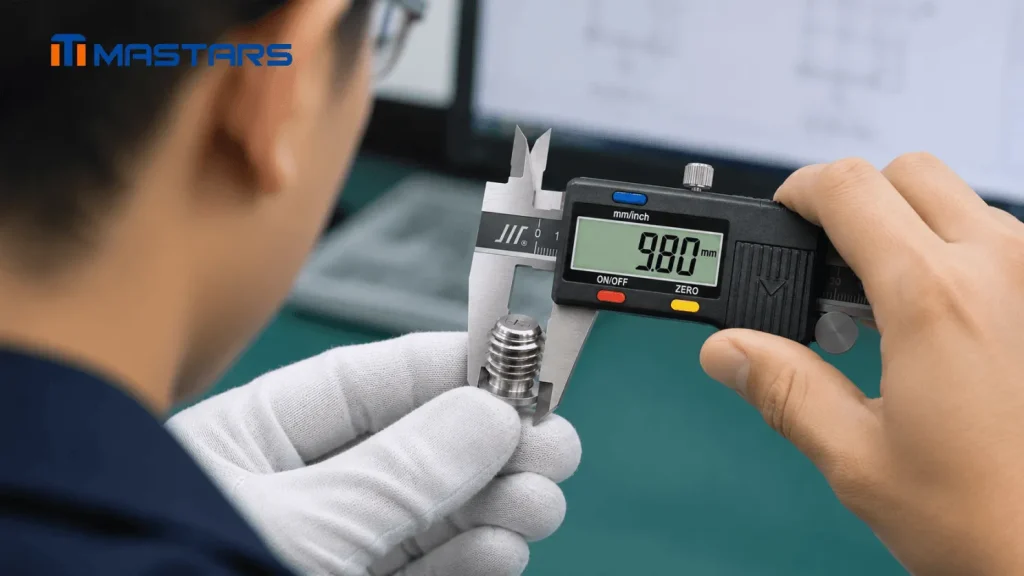
The challenge is not simply producing the shape. It is making sure these features work together as intended during assembly.
Why CNC Machining Matters
For aerospace components, even small metal parts need to meet their specific design and assembly requirements.
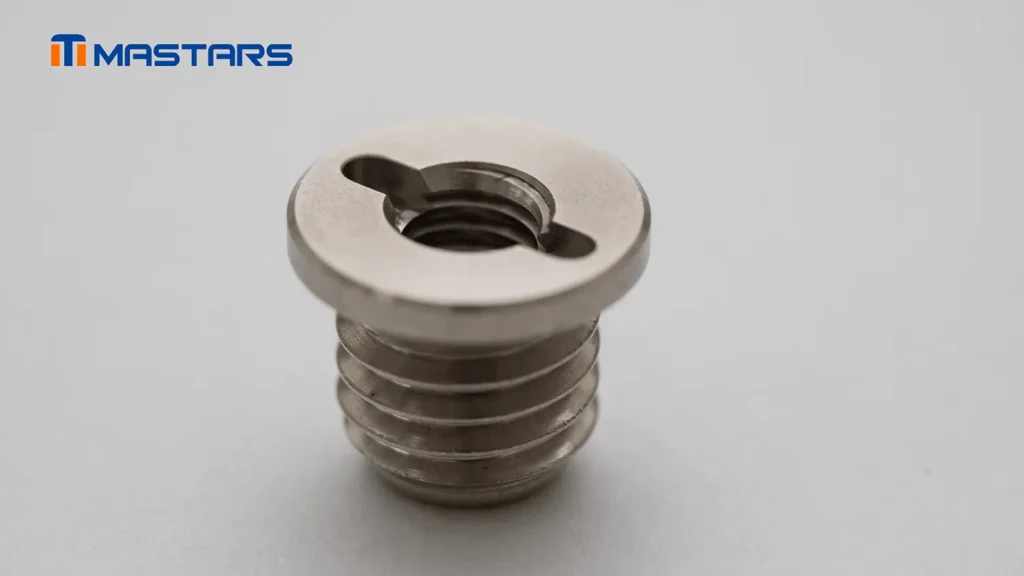
This threaded insert brings several machining details together:
- Internal thread — requires accurate geometry for proper fastener engagement.
- Flange face — needs a consistent surface and dimensional control.
- Opposing slots — require accurate positioning and clean machining edges.
- External profile — needs consistent geometry to match the intended installation interface.
When multiple features are concentrated in one small component, machining strategy and datum control become especially important.
Working with Stainless Steel 316
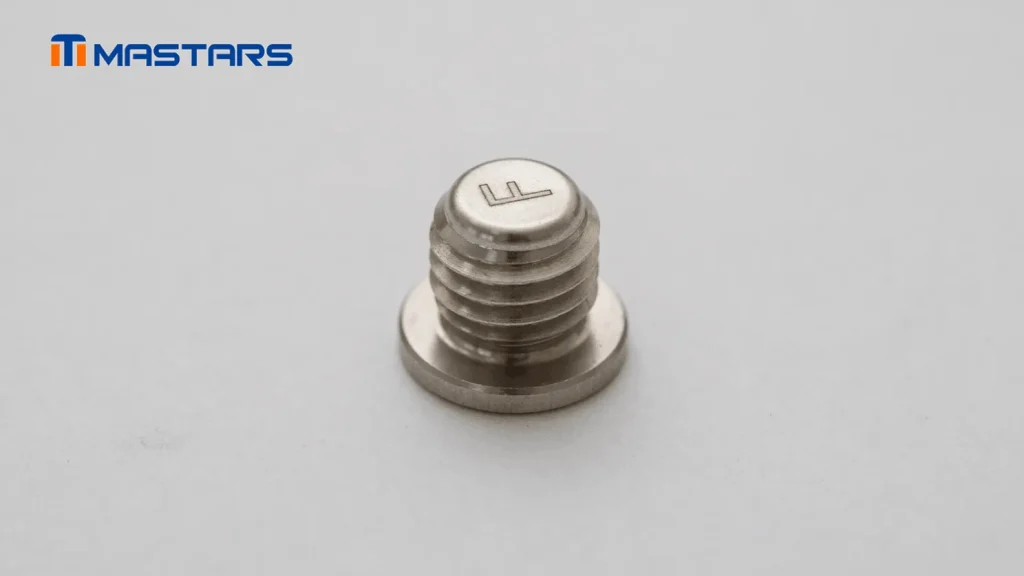
SS 316 offers good corrosion resistance and is widely used in demanding industrial environments. However, machining stainless steel also requires attention to cutting conditions, tool wear, and chip control.
For this component, CNC machining provides the flexibility to produce its cylindrical profile, threaded bore, flange, and additional geometric details.
The focus is on controlling each feature while maintaining the dimensional relationships between them.
How Mastars Approaches the Machining Details
At Mastars, precision machining is about more than producing individual dimensions. It is about understanding how each feature relates to the final component.
Our manufacturing focus includes:
- Selecting suitable machining strategies for different geometric features.
- Maintaining consistent machining references across operations.
- Paying attention to thread quality, surface finish, and edge conditions.
- Checking critical dimensions against the component drawing.
This approach links machining accuracy to the customer’s actual assembly requirements.
What the Customer Gains
By coordinating these features with the component’s assembly requirements, Mastars helps establish a more controlled and consistent CNC manufacturing approach.
- ±0.002 mm CNC machining capability for precision dimensional control on suitable features.
- SS 316 stainless steel for corrosion-resistant component applications.
- 2 opposing slots + 1 internal threaded interface requiring coordinated machining and dimensional control.
Where Similar CNC Machining Capabilities Apply
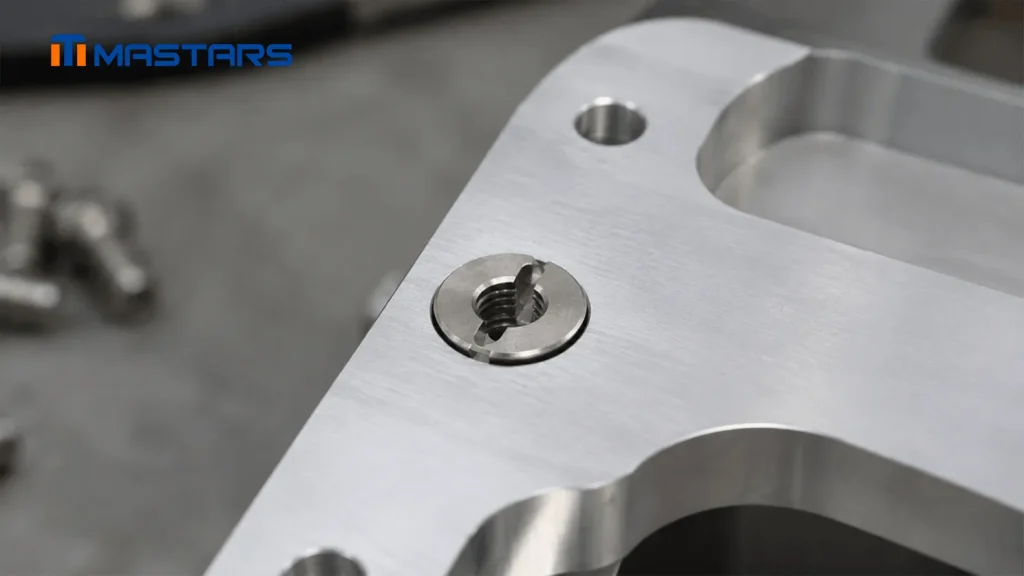
The same precision machining principles are relevant to several industries:
- Aerospace — aircraft structural fittings, threaded inserts, and precision connectors.
- Defense — precision metal interfaces and equipment mounting components.
- UAVs — lightweight structural connectors and mechanical fittings.
- Industrial Equipment — threaded sleeves, mounting parts, and precision shafts.
From small threaded inserts to more complex metal components, understanding the relationship between machining and assembly makes a difference.
Have a precision metal component that requires CNC machining? Mastars is ready to support your next manufacturing project.
 Headquarters


