



 English




Harley-Davidson
Harley-Davidson Factory Racing engineers quickly iterate using Protolabs to manufacture quick-turn, high quality parts. Speeding iteration of injection-molded, CNC-machined, 3D-printed, and sheet metal fabricated parts. The team has turned to both our factory-based services and Protolabs network.
Challenges
Creating propulsion systems that exceed traditional collegiate projects demands exceptional design strategies and precise manufacturing.
Solutions
Protolabs provides crucial support in refining complex propulsion designs through advanced additive manufacturing, optimizing each step from material selection to final production.
Outcomes
Thanks to Protolabs' support, the student team is trailblazing the future of collegiate rocketry by completing projects that teach invaluable skills, foster confidence, and reshape the perception of what student groups can achieve in rocketry.
"This [project] would have been even more difficult to achieve if we didn't have access to additive manufacturing. Being able to work with Protolabs to ensure our design can be 3D printable has been super helpful for the design cycle of this part. We would be a lot further behind if we weren't using this technology."
Turbopump Co-Lead Alejandro Diaz Contreras
Rocket Science is Hard
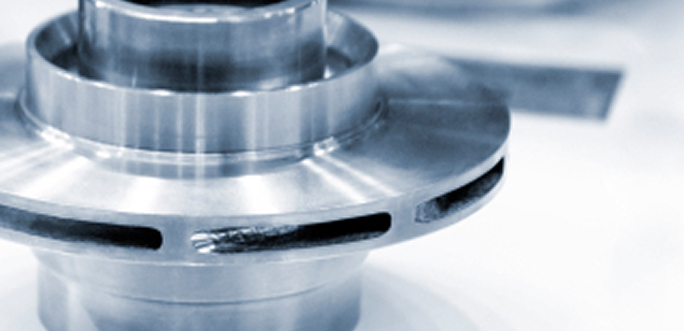
PURPL's first big challenge is creating the turbo pump that plays a crucial role in a gas generator cycle engine. These engines utilize a compact rocket engine to create hot gases that power a turbine, which then drives the pumps to deliver fuel and oxidizer to the main engine. Turbo pumps are key to providing the necessary fuel and oxidizer, enabling the generation of thrust that supports heavier payloads and higher altitudes.
In the realm of college rocketry, student teams often find themselves constrained by high-pressure gas systems that limit rocket performance due to their large, unwieldy tanks. Aspiring rocketry engineers launched PURPL, which stands for Purdue Undergraduate Rocket Propulsion Lab, to ambitiously pursue propulsion technologies akin to those used in the commercial space sector, focusing on groundbreaking systems like gas generator cycle engines and regenerative cooling.
PURPL faces major engineering challenges while working on the complex designs needed for turbine-driven parts. Careful engineering is essential for achieving optimal flow and energy transfer, and choosing the right materials is crucial for withstanding harsh temperatures and pressures. Their designs aim for high-speed turbine efficiency, focusing on structural strength and balance, which results in lighter and more powerful engines than those commonly seen in student projects using electric pumps.
The team is also exploring regenerative cooling systems, vital for managing the severe heat fluctuations in rocket engines. A traditional approach that a student group might use involves a heat sink method, which uses metal to absorb the heat, but that method requires heavy materials and limits the rocket's viability for extended missions.
Regenerative cooling smartly circulates fuel around the combustion chamber to absorb heat (think of a water-cooled computer), safeguarding the materials while preheating the fuel for improved combustion. This approach necessitates complex channel designs for optimal heat transfer, alongside more careful material selection to endure extreme conditions.
Precision in Partnership
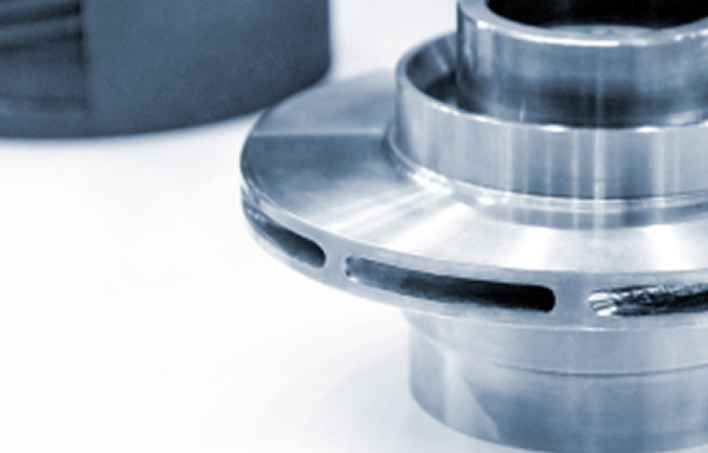
Teaming up with Protolabs, the PURPL crew is capitalizing on cutting-edge additive manufacturing techniques to bring their designs to fruition. Where a typical college rocketry group might be limited to CNC milling to create their components, PURPL is able to tackle complex designs with metal 3D printing. Protolabs offers valuable guidance on Design for Additive Manufacturing (DfAM) specific to direct metal laser sintering (DMLS) technology, helping address 3D printing challenges like overhangs to ensure each component maintains its integrity through the production process.
Material expertise and post-production finishing plays another crucial role in this collaboration. Protolabs assisted PURPL in selecting 17-4 stainless steel for their turbo-pump components, a material essential for its strength, machinability, and thermal resistance. This steel manages the allowable overhang angles necessary for efficient manufacturing of complex geometries. For parts featuring detailed internal cavities like the regenerative cooling system, Protolabs offered refined depowdering techniques, essential for maintaining the integrity of these narrow pathways. Our rapid prototyping capabilities enable swift testing and modification of designs, employing metal 3D printing to effectively enhance components such as injectors and cooling systems.
Protolabs' active collaboration with the PURPL team through custom design support, helping fine-tune students' designs to fit manufacturing capabilities, has enabled the team to transcend traditional manufacturing constraints and achieve their ambitious goals.
 Headquarters


