EDM

Precision EDM Machining Services

Precision EDM machining for conductive metals, hardened materials, sharp internal features, deep cavities, and complex geometries beyond conventional cutting methods.

  • Wire EDM, Sinker EDM & EDM Hole Drilling
  • Hardened steel, titanium, carbide & difficult materials
  • Sharp corners, fine profiles & intricate cavities
  • CNC + EDM hybrid manufacturing support
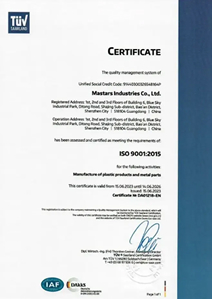
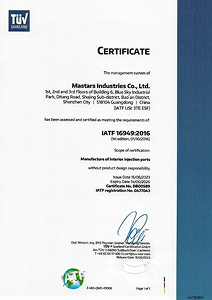
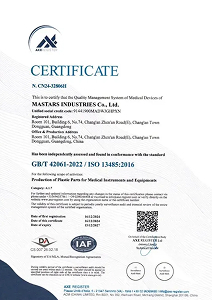
ISO 9001:2015 | ISO 13485:2016 | IATF 16949:2016

Precision EDM Machining Services
800+
Global Customers Served
1+
Prototype Support
100+
Engineering & Design Veterans
±0.005mm
EDM Accuracy

EDM Machining Capabilities

Wire EDM
Wire EDM
Cut precision profiles, thin sections, and complex through-features in conductive materials with accuracy down to ±0.005–0.02 mm.
Get a Quote
Sinker EDM
Sinker EDM
Create blind cavities, sharp internal corners, deep features, and mold details with shaped electrodes.
Get a Quote
Micro EDM & Hole Drilling
Produce micro holes and miniature features where conventional drilling or milling is limited.
Get a Quote

Which EDM Process Is Right for Your Part?

Comparison Factor Wire EDM Sinker EDM Micro EDM / Hole Drilling EDM
Best For Through profiles, fine contours, sharp edges Blind cavities, deep features, mold details Micro holes and miniature features
Machining Method Moving wire electrode cuts along programmed path Shaped electrode creates cavity geometry Small electrodes create precision holes/features
Key Advantage High profile accuracy without cutting force Complex internal geometry and sharp corners Extremely small features and deep holes
Typical Applications Dies, punches, precision plates Mold cavities, inserts, tooling Cooling holes, medical parts, micro components
Custom EDM Machining Services for Complex Projects

Custom EDM Machining Services for Complex Projects

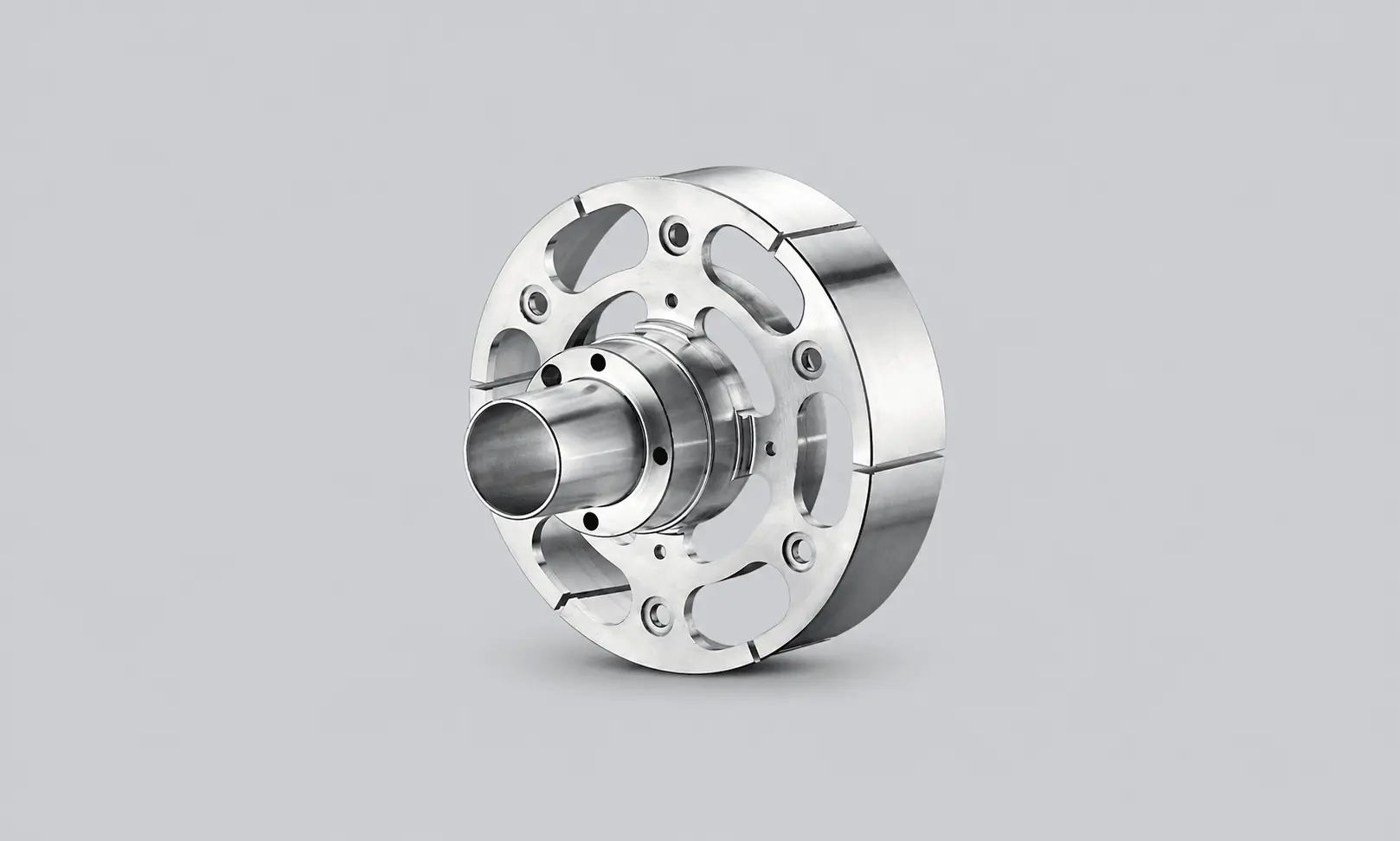
Some parts require EDM for sharp internal corners, deep cavities, narrow slots, hardened materials, or features beyond conventional cutting. Mastars combines EDM, CNC machining, tooling, and inspection to support complex precision projects.

EDM Machining Materials

EDM requires electrically conductive materials. It is especially suitable for hardened steels, titanium alloys, carbide, copper alloys, and difficult-to-machine conductive materials.
Tool Steel & Hardened Steel
Titanium Alloys
Nickel-Based Superalloys (Inconel)
Stainless Steel
Copper & Brass
Aluminum
Tool Steel & Hardened Steel

Tool steels and hardened steels are commonly processed with EDM because their high hardness and wear resistance can make conventional machining challenging.

EDM allows manufacturers to produce complex cavities, sharp corners, and precision features after heat treatment, making it widely used for mold components and tooling applications.

Key Characteristics

High hardness and wear resistance

Suitable for post-heat-treatment machining

Stable dimensional performance

Ideal for complex cavities and detailed features

Common Grades

H13 Tool Steel

D2 Tool Steel

SKD11

Hardened Alloy Steel

Typical Applications

Injection mold inserts

Dies and tooling components

Precision cavities

Wear-resistant parts

Titanium Alloys
Titanium Alloys
Titanium Alloys
Titanium Alloys
Titanium Alloys
Titanium Alloys
Titanium Alloys
Titanium Alloys
Titanium Alloys

Titanium alloys are selected for applications requiring high strength, lightweight performance, and excellent corrosion resistance. EDM provides an effective solution for machining complex titanium components where traditional cutting methods may face challenges.

Key Characteristics

Excellent strength-to-weight ratio

High corrosion resistance

Suitable for demanding environments

Maintains material properties during machining

Common Grades

Ti-6Al-4V

Commercially Pure Titanium

Typical Applications

Aerospace components

Medical components

High-performance precision parts

Nickel-Based Superalloys (Inconel)

Inconel and other nickel-based alloys are known for high-temperature strength and corrosion resistance. EDM is often selected for complex features that require precision machining of these difficult-to-cut materials.

Key Characteristics

Excellent high-temperature performance

High strength retention

Corrosion and oxidation resistance

Suitable for complex geometries

Common Grades

Inconel 718

Inconel 625

Typical Applications

Aerospace components

Turbine-related parts

High-performance industrial components

Stainless Steel
Stainless Steel
Stainless Steel
Stainless Steel
Stainless Steel
Stainless Steel
Stainless Steel
Stainless Steel
Stainless Steel

Stainless steel provides a balance of strength, corrosion resistance, and machinability for precision EDM components.

Key Characteristics

Good corrosion resistance

Stable mechanical properties

Suitable for detailed features

Compatible with precision applications

Common Grades

304 Stainless Steel

316 Stainless Steel

17-4PH Stainless Steel

Typical Applications

Medical components

Precision tooling

Industrial parts

Functional prototypes

Copper & Brass
Copper & Brass
Copper & Brass
Copper & Brass
Copper & Brass
Copper & Brass
Copper & Brass
Copper & Brass
Copper & Brass

Copper and brass are commonly used in EDM applications because of their electrical conductivity and machining characteristics.

These materials are also widely used as electrode materials in EDM processes.

Key Characteristics

Excellent electrical conductivity

Good dimensional stability

Suitable for precision components

Common Grades

Copper

Brass

Bronze

Typical Applications

Electrical components

Precision parts

EDM tooling and electrodes

Aluminum
Aluminum
Aluminum
Aluminum
Aluminum
Aluminum
Aluminum
Aluminum
Aluminum

Aluminum alloys can be processed with EDM when complex geometries, fine details, or specific feature requirements make EDM a suitable option.

Key Characteristics

Lightweight

Good machinability

Good corrosion resistance

Suitable for complex precision features

Common Grades

6061 Aluminum

7075 Aluminum

Typical Applications

Aerospace prototypes

Precision components

Lightweight structures

EDM Machining Surface Finishing Options

Surface requirements vary depending on part function, appearance, and dimensional needs. Mastars evaluates EDM parameters and secondary finishing requirements to achieve suitable surface quality for tooling and precision components.
Finishing Option Surface Characteristics / Performance Suitable Materials Typical Applications
EDM Finish Maintains the surface characteristics generated during EDM processing with controlled finish requirements. Hardened steel, tool steel, conductive alloys Mold cavities, precision inserts, complex features
Wire EDM Fine Finish Provides smoother edges and improved profile quality through additional cutting passes Conductive metals Precision profiles, thin components, intricate parts
Polishing Improves cavity surfaces and appearance Tool steel, stainless steel, aluminum alloys Mold surfaces, visible precision components
Grinding Improves dimensional accuracy on critical features Hardened steel, tool steel Precision components, tooling parts
Coating / Surface Treatment Enhances wear resistance, corrosion resistance, or service performance when required Tool steel, alloy steel, metal components Molds, industrial parts, high-wear applications

Precision EDM Machining Tolerances

EDM Process Typical Accuracy Engineering Consideration Applications
Wire EDM ±0.005–0.02 mm typical Material thickness, wire condition, flushing, cutting parameters Precision profiles, inserts, dies
Sinker EDM Project-dependent precision Electrode wear, cavity depth, flushing, discharge settings Mold cavities, tooling components
Micro EDM Micro-feature capability Electrode size, pulse parameters, material behavior Micro holes, medical and electronic parts

EDM Equipment & Manufacturing Capabilities

Machining Centers

Machining Centers

Turning Centers

Turning Centers

Inspection Equipment

Inspection Equipment

Why Choose Mastars for EDM Machining?

Quality Systems
ISO 9001, ISO 13485, and IATF 16949 systems support controlled inspection and documentation. CMM, FAI, and drawing-based verification confirm critical dimensions and functional requirements.
Engineering & Project Support
100+ engineers evaluate feature geometry, material conductivity, cavity requirements, and tolerances to select Wire EDM, Sinker EDM, or Hole Drilling EDM.
Manufacturing Experience
Backed by 20+ years of manufacturing experience, Mastars supports EDM projects from prototype validation to repeat production with coordinated machining and inspection processes.
Flexible Capacity
Supported by 5+ production bases, Mastars handles one-piece EDM prototypes, low-volume builds, and repeat production with matched machining and inspection plans.
EDM DFM Review
Review hardened materials, sharp internal corners, deep cavities, fine features, and EDM limitations to determine the right manufacturing approach.
Integrated Manufacturing
CNC machining and EDM can be coordinated with finishing and inspection to complete complex parts within one manufacturing program.

Certifications

ISO9001:2015 Certificate

ISO9001:2015 Certificate

IATF16949:2016 Certificate

IATF16949:2016 Certificate

ISO13485:2016 Certificate

ISO13485:2016 Certificate

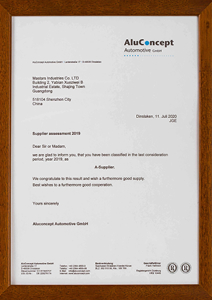
Medical A-Class Supplier

Medical A-Class Supplier

Partners

Auer Lighting
Bentley
Aston Martin
NVIDIA
Compac
Auer Lighting
Bentley
Aston Martin
NVIDIA
Compac

How EDM Works

Upload Your Design

Share your CAD files, drawings, quantity, material, and any critical requirements.

Get an Engineer-Reviewed Quote

Receive pricing, lead time, and manufacturability feedback based on your part requirements.

Production Begins

Once you approve your quote, manufacturing starts — from prototype tooling to full-scale runs.

Parts Shipped

Finished parts are inspected, packaged, and shipped with the required quality documentation.

What Our Customers Say

Charlie Ozana

Charlie Ozana

Company: 445 LTDJob Title: CEOBusiness: Full turnkey company
Mastars in all my projects are partners. So I get all the support that I need from engineering management, pricing, timetable, QA, everything is as a partner, not as a supplier. For me, Masters is like home.
Nathan Johnson

Nathan Johnson

Company: Gusto Global IndustriesJob Title: DirectorBusiness: Dust reduction system
They were such a lovely company to deal with, and we couldn't be more happier even to today down the track with even more products moving forward. Very professional, easy to deal with, get back to you straight away, contact is easy through WeChat and email, move forward as quickly as you can.
Oded Kalawanl

Oded Kalawanl

Company: Annabella Tech IsraelJob Title: R&D managerBusiness: Breast pump
We managed to make it in a very short time warm prototyping to mass production and FDA approval. That makes me feel confidence to choose Mastars.
Jade Harris

Jade Harris

Company: Buddy SystemJob Title: Co-founderBusiness: Wireless instant safety alert device
We're glad that we found a company like Mastars to make the product for us because it's been so good to deal with. They're a really good company.
Dror Harel

Dror Harel

Company: BlonessJob Title: General ManagerBusiness: L300, H200
I think the relationship between the buyers and definitely between me the Mastars it's like a family relationship and this is why we are so happy to produce in Mastars and this is why we came for 15 years. By the way, now we came with a new product that we come to Master to produce for the new year.

EDM Machining FAQs

  • What does EDM stand for, and what is EDM machining?

    EDM (Electrical Discharge Machining) uses controlled electrical sparks to remove material from electrically conductive parts. Without direct cutting force, it is suitable for hardened materials, sharp features, and complex geometries.

  • What is the difference between Wire EDM and Sinker EDM?

    Wire EDM uses a moving wire electrode to cut through profiles and contours. Sinker EDM uses a shaped electrode to create blind cavities, deep features, and complex internal geometries.

  • What materials can be machined with EDM?

    EDM can process electrically conductive materials including hardened steel, stainless steel, titanium, carbide, copper alloys, and superalloys. Non-conductive plastics and most ceramics are not suitable.

  • Does EDM machining leave burrs or affect surface quality?

    EDM produces minimal mechanical stress and reduces burr formation, but surface condition depends on discharge parameters, material, and finishing requirements. Recast layer or additional finishing may be required for critical applications.

  • What is the difference between EDM and CNC machining?

    CNC machining uses cutting tools for material removal, while EDM uses electrical discharge for conductive materials, hardened parts, sharp corners, cavities, and fine features. Many complex parts combine both processes.

  • How much does EDM machining cost compared with CNC machining?

    EDM cost depends on material, complexity, tolerances, and processing time. It is usually slower than CNC but can be more economical for features that conventional cutting cannot efficiently produce.

  • Can EDM machining be combined with CNC machining?

    Yes. Many complex parts require both CNC machining and EDM to achieve the required geometry and accuracy. CNC machining is typically used for general features and material removal, while EDM is applied to intricate details, tight features, and challenging areas.

Tell Us About Your Project

Share your project details and files with us. Rough information is fine to start. Our engineering consultant will contact you within 24 hours.

Verification code