

CNC Turning

Custom CNC Turning Services

Precision metal and plastic turned parts with CNC turning, Swiss-type turning, and mill-turn support from prototype to production.

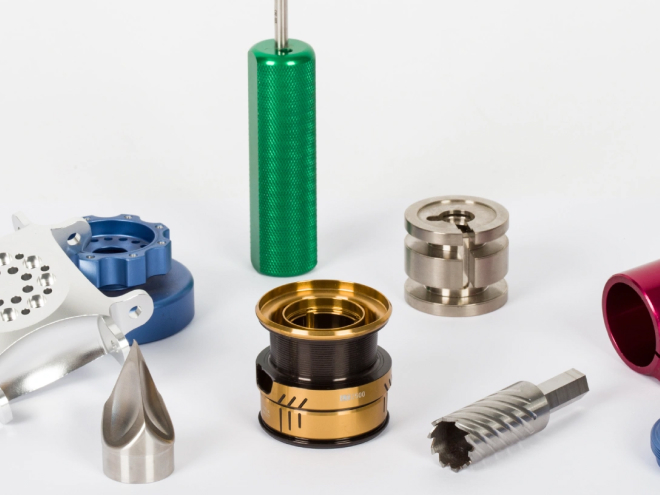
  • Shafts, bushings, pins, fittings & threaded parts
  • OD/ID turning, grooves, tapers, threads & bores
  • Swiss-type & mill-turn for complex rotational parts
  • DFM, CMM/FAI & secondary finishing
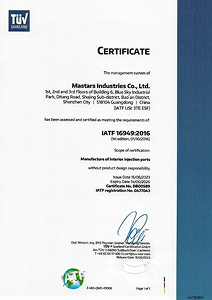
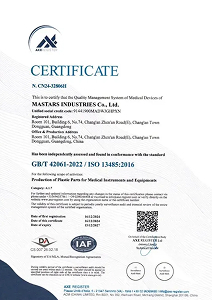
ISO 9001:2015 | ISO 13485:2016 | IATF 16949:2016

Custom CNC Turning Services
±0.005 mm
Critical Tolerance
3 Days
Fast Delivery
1+
No MOQ
100,000
Units
18+
Manufacturing experience of years
20+
Technical patents

Our CNC Turning Capabilities

CNC Turning
CNC Turning
For rotational parts with OD/ID diameters, faces, grooves, tapers, threads, and bores. Best for concentric features requiring efficient machining and stable dimensional control.
Get a Quote
Swiss-Type CNC Turning
For small-diameter and long, slender parts. Guide-bushing support reduces deflection and improves repeatability for precision components and short-run production.
Get a Quote
CNC Mill-Turn Machining
Combines turning with live-tool milling and drilling for flats, slots, axial/radial holes, and cross-features in fewer setups.
Get a Quote

Choosing the Right CNC Turning Process

Comparison Factor CNC Turning Swiss-Type CNC Turning CNC Mill-Turn Machining
Best For Shafts, bushings, pins, fittings Small-diameter, long or slender precision parts Rotational parts with flats, slots, cross-holes or milled features
Part Geometry Rotational geometry with moderate length-to-diameter ratio Small diameter and high length-to-diameter ratio Rotational base geometry with off-axis features
Typical Features OD/ID, faces, grooves, tapers, threads, bores Small diameters, slender sections, micro threads Axial/radial holes, flats, slots, pockets and turned diameters
Key Advantage Efficient machining with strong concentric feature control Guide-bushing support reduces part deflection Fewer setups and better positional alignment between turned and milled features
Typical Applications Shafts, bushings, fittings, connectors Precision pins, medical parts, electronic hardware Complex shafts, connector bodies, valve parts
Engineering Review Before Production Diameter, L/D ratio, runout, threads, finish Bar straightness, guide bushing, L/D ratio Tool access, datum strategy, machining sequence
Custom CNC Turning for Complex Parts

Custom CNC Turning for Complex Parts

Complex turned parts may combine thin walls, deep bores, long slender sections, tight fits, threads, or live-tooled features. We review workholding, length-to-diameter ratio, tool access, material behavior, tolerances, and inspection before production.

CNC Turning Materials & Alloys

Material choice affects machinability, tool wear, dimensional stability, surface finish, and cycle time. Select the grade around function and operating conditions, not material name alone.
Aluminum
Stainless Steel
Steel
Brass & Copper
Titanium
POM (Delrin®)
Nylon (PA)
PEEK
PTFE (Teflon®)
Aluminum
Aluminum
Aluminum
Aluminum
Aluminum
Aluminum
Aluminum
Aluminum
Aluminum

Aluminum machines quickly and supports good dimensional control and surface quality. 6061 is a balanced general-purpose choice, while 2024 and 7075 provide higher strength with greater attention to corrosion protection and part stability.

Key Characteristics

Lightweight with high strength-to-weight ratio

Excellent machinability

Good corrosion resistance

Suitable for high-speed machining

Compatible with various surface treatments

Common Grades

6061, 6063, 2024, 7075, 7050

Typical Applications

Shafts, housings, connectors, aerospace components, electronic parts, mechanical components

Available Finishes

Anodizing, Bead Blasting, Powder Coating, Polishing, Painting

Stainless Steel
Stainless Steel
Stainless Steel
Stainless Steel
Stainless Steel
Stainless Steel
Stainless Steel
Stainless Steel
Stainless Steel

Stainless steel combines strength and corrosion resistance, but machining behavior varies by grade. 303 cuts more freely, while 304 and 316 are more prone to work hardening and cutting heat.

Key Characteristics

Excellent corrosion resistance

High strength and durability

Good temperature resistance

Suitable for precision components

Strong wear performance

Common Grades

303, 304, 316, 316L, 17-4 PH

Typical Applications

Medical components, shafts, valves, fittings, industrial equipment, precision hardware

Available Finishes

Polishing, Passivation, Electropolishing, Bead Blasting

Steel
Steel
Steel
Steel
Steel
Steel
Steel
Steel
Steel

Carbon and alloy steels cover applications from general mechanical parts to high-load components. Material hardness and heat-treatment condition directly affect tool wear, cycle time, and final dimensional stability.

Key Characteristics

High mechanical strength

Excellent impact resistance

Good wear resistance

Suitable for functional mechanical parts

Cost-effective for many applications

Common Grades

1018, 1045, 4130, 4140, 4340

Typical Applications

Shafts, gears, mechanical components, automotive parts, industrial equipment

Available Finishes

Black Oxide, Plating, Painting, Powder Coating

Brass & Copper
Brass & Copper
Brass & Copper
Brass & Copper
Brass & Copper
Brass & Copper
Brass & Copper
Brass & Copper
Brass & Copper

C360 brass offers excellent machinability for fittings and connectors. Copper grades such as C101 and C110 provide high electrical and thermal conductivity but require better burr and built-up-edge control.

Key Characteristics

Excellent machinability

Good electrical conductivity

Good corrosion resistance

Suitable for precision small components

Common Grades

C360 Brass, C932 Bronze, C101 Copper, C110 Copper

Typical Applications

Electrical connectors, fittings, valves, bushings, precision components

Available Finishes

As Machined, Polishing, Nickel Plating, Chrome Plating

Titanium
Titanium
Titanium
Titanium
Titanium
Titanium
Titanium
Titanium
Titanium

Titanium combines high strength-to-weight ratio, corrosion resistance, and biocompatibility. Its low thermal conductivity concentrates cutting heat at the tool edge, increasing tool wear and machining time.

Key Characteristics

High strength-to-weight ratio

Excellent corrosion resistance

Good biocompatibility

Suitable for high-performance applications

Common Grades

Ti-6Al-4V (Grade 5), Commercially Pure Titanium

Typical Applications

Aerospace components, medical implants, precision industrial parts

Available Finishes

Polishing, Bead Blasting, Passivation

POM (Delrin®)
POM (Delrin®)
POM (Delrin®)
POM (Delrin®)
POM (Delrin®)
POM (Delrin®)
POM (Delrin®)
POM (Delrin®)
POM (Delrin®)

POM is selected for precision mechanical parts requiring low friction, wear resistance, and dimensional stability.

Key Characteristics

Low friction

Excellent wear resistance

Good dimensional stability

Moisture resistant

Common Grades

POM / Delrin®

Typical Applications

Bushings, Gears, Rollers, Precision mechanical parts

Available Finishes

As Machined

Nylon (PA)

Nylon provides high strength, wear resistance, and impact performance for moving mechanical components. It is commonly selected for parts requiring low friction, durability, and mechanical strength.

Key Characteristics

High wear resistance

Good toughness

Low friction

Lightweight

Good impact resistance

Common Grades

PA6, PA66

Typical Applications

Bushings, Gears, Rollers, Wear components, Mechanical guides

PEEK

PEEK is selected for high-performance CNC turned parts requiring heat resistance, chemical resistance, and dimensional stability. It is commonly used in demanding industrial, semiconductor, aerospace, and medical applications.

Key Characteristics

High temperature resistance

Excellent chemical resistance

High mechanical strength

Low moisture absorption

Excellent dimensional stability

Common Grades

PEEK Natural

PEEK GF30

Medical-Grade PEEK

Typical Applications

Semiconductor components

Medical components

Aerospace parts

Electrical insulation parts

Precision mechanical components

PTFE (Teflon®)

PTFE is selected for CNC turned parts requiring extremely low friction, chemical resistance, and high-temperature performance. It is commonly used in sealing and sliding applications.

Key Characteristics

Excellent chemical resistance

Very low friction

High temperature resistance

Non-stick surface

Electrical insulation properties

Common Grades

Virgin PTFE

Filled PTFE

Typical Applications

Seals

Bearings

Valve components

Chemical processing components

Insulation parts

CNC Turning Surface Finishing Options

Finishing Option Surface Characteristics / Performance Suitable Materials Typical Applications
As-Turned Original machining surface with controlled dimensional accuracy Aluminum, stainless steel, steel, brass, plastics Shafts, bushings, internal features, functional parts
Anodizing Corrosion protection, surface hardness, and decorative color options Aluminum alloys Connectors, knobs, lightweight mechanical parts
Bead Blasting Uniform matte texture and reduced machining marks Aluminum, stainless steel, steel Visible components, housings, industrial parts
Polishing Lower surface roughness and improved appearance Stainless steel, aluminum, brass Decorative parts, visible components, precision hardware
Electroless Nickel Plating Uniform coating thickness with corrosion and wear resistance Steel, stainless steel, aluminum alloys Shafts, hydraulic parts, precision interfaces
Passivation Improves corrosion resistance without significant dimensional change Stainless steel Medical parts, food equipment, precision components
Black Oxide Thin conversion coating with mild corrosion protection and low reflection Steel, stainless steel Mechanical parts, tooling, fasteners
Powder Coating Durable protective coating with color options Aluminum, steel Housings, equipment parts, exterior components
Laser Marking Permanent identification with minimal dimensional impact Most metals and engineering plastics Serial numbers, traceability marks, product identification

CNC Turning Tolerances & Inspection

CNC Turning Capability Typical Accuracy Engineering Consideration Applications
Standard CNC Turning ±0.05 mm typical; tighter features depend on geometry and requirements OD/ID dimensions, runout, tooling condition, material stability Shafts, bushings, fittings
Precision Turning Down to ±0.005 mm on suitable critical features Fits, bearing seats, threads, concentric features require controlled process and inspection Precision mechanical parts
Swiss-Type Turning Precision capability for small-diameter and slender parts Guide-bushing support, L/D ratio, material behavior affect stability Miniature shafts, medical parts, electronic components
Mill-Turn Machining Turning features project-specific; alignment controlled across operations Datum strategy, tool access, C/Y-axis coordination, machining sequence Complex shafts, connectors, multi-feature parts

CNC Turning Equipment & Manufacturing Capabilities

Machining Centers

Machining Centers

Turning Centers

Turning Centers

Inspection Equipment

Inspection Equipment

Why Choose Mastars for CNC Turning?

Quality Systems
ISO 9001, ISO 13485, and IATF 16949 systems support controlled inspection, documentation, and production. CMM and FAI verify critical diameters, bores, threads, concentricity, and GD&T requirements.
Engineering & Project Support
100+ engineers support machining strategy, workholding, tool access, and tolerance risk review before CNC turning begins.
Manufacturing Experience
Backed by 20+ years of manufacturing experience, Mastars supports CNC turning projects from prototype validation to repeat production with proven process control.
Flexible Capacity
Supported by 5+ production bases, Mastars handles one-piece prototypes, low-volume builds, and 100,000+ unit production with matched machining and inspection plans.
CNC Turning DFM Review
Identify risks related to length-to-diameter ratio, deflection, concentricity, threads, and surface requirements before production.
Integrated Manufacturing
Coordinate CNC turning with secondary milling, drilling, finishing, marking, assembly, and inspection within one manufacturing program.

Certifications

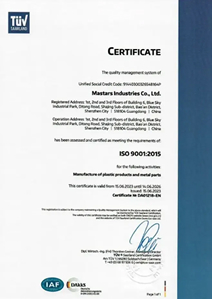
ISO9001:2015 Certificate

ISO9001:2015 Certificate

IATF16949:2016 Certificate

IATF16949:2016 Certificate

ISO13485:2016 Certificate

ISO13485:2016 Certificate

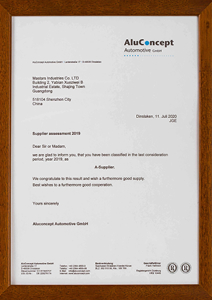
Medical A-Class Supplier

Medical A-Class Supplier

Partners

Auer Lighting
Bentley
Aston Martin
NVIDIA
Compac
Auer Lighting
Bentley
Aston Martin
NVIDIA
Compac

How CNC Turning Works

Upload Your Design

Share your CAD files, drawings, quantity, material, and any critical requirements.

Get an Engineer-Reviewed Quote

Receive pricing, lead time, and manufacturability feedback based on your part requirements.

Production Begins

Once you approve your quote, manufacturing starts — from prototype tooling to full-scale runs.

Parts Shipped

Finished parts are inspected, packaged, and shipped with the required quality documentation.

What Our Customers Say

Charlie Ozana

Charlie Ozana

Company: 445 LTDJob Title: CEOBusiness: Full turnkey company
Mastars in all my projects are partners. So I get all the support that I need from engineering management, pricing, timetable, QA, everything is as a partner, not as a supplier. For me, Masters is like home.
Nathan Johnson

Nathan Johnson

Company: Gusto Global IndustriesJob Title: DirectorBusiness: Dust reduction system
They were such a lovely company to deal with, and we couldn't be more happier even to today down the track with even more products moving forward. Very professional, easy to deal with, get back to you straight away, contact is easy through WeChat and email, move forward as quickly as you can.
Oded Kalawanl

Oded Kalawanl

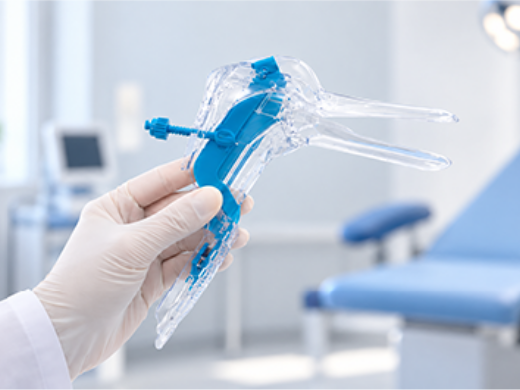
Company: Annabella Tech IsraelJob Title: R&D managerBusiness: Breast pump
We managed to make it in a very short time warm prototyping to mass production and FDA approval. That makes me feel confidence to choose Mastars.
Jade Harris

Jade Harris

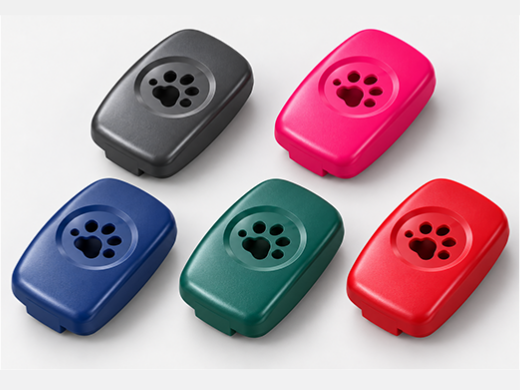
Company: Buddy SystemJob Title: Co-founderBusiness: Wireless instant safety alert device
We're glad that we found a company like Mastars to make the product for us because it's been so good to deal with. They're a really good company.
Dror Harel

Dror Harel

Company: BlonessJob Title: General ManagerBusiness: L300, H200
I think the relationship between the buyers and definitely between me the Mastars it's like a family relationship and this is why we are so happy to produce in Mastars and this is why we came for 15 years. By the way, now we came with a new product that we come to Master to produce for the new year.

CNC Turning FAQs

  • What materials can be used for CNC turning?

    Aluminum, stainless steel, carbon and alloy steel, brass, bronze, copper, titanium, POM, nylon, PEEK, PTFE, and other engineering materials can be turned. Grade selection depends on strength, corrosion, temperature, dimensional stability, finish, and machining behavior.

  • What types of parts can be manufactured with CNC turning?

    CNC turning is best for rotational parts such as shafts, bushings, pins, fittings, connectors, nozzles, spacers, and threaded components. Live tooling or mill-turn machining can add flats, slots, cross-holes, and other off-axis features.

  • What tolerances can CNC turning achieve?

    Critical features can reach ±0.005 mm on suitable parts. Actual capability depends on diameter, length-to-diameter ratio, material, workholding, tool condition, thermal stability, and inspection method.

  • What is the difference between CNC turning and CNC milling?

    CNC turning rotates the workpiece and is usually best for cylindrical geometry. CNC milling moves rotating tools around a fixed workpiece and suits flats, pockets, multi-sided parts, and complex surfaces. Mill-turn combines both when a rotational part also needs milled features.

  • Can you support CNC turning prototypes and production orders?

    Yes. We support 1-piece prototypes through production up to 100,000 units, with no MOQ. Prototype builds focus on fit, material, threads, and function; production adds stable workholding, inspection, and process control.

  • What information do you need for a CNC turning quote?

    A 3D CAD file is enough to start. Add material, quantity, and a 2D drawing when critical diameters, GD&T, threads, runout, surface finish, or inspection requirements must be controlled. Rough information is fine for an initial review.

  • How fast can I receive CNC turned parts?

    Simple prototype turned parts can be delivered in as fast as 3 days. Live tooling, difficult materials, tight inspection, heat treatment, or secondary finishing may extend lead time.

  • When should I use Swiss-type turning or mill-turn machining?

    Use Swiss-type turning for small-diameter or long, slender parts where deflection is a concern. Choose mill-turn when a rotational part also requires flats, slots, axial or radial holes, or other milled features.

  • Do you offer surface finishing and secondary operations for CNC turned parts?

    Yes. Options include anodizing, bead blasting, polishing, passivation, plating, black oxide, powder coating, laser marking, and additional machining. Finishing should be defined early when coating thickness or material removal could affect critical fits.

Tell Us About Your Project

Share your project details and files with us. Rough information is fine to start. Our engineering consultant will contact you within 24 hours.

Verification code