



Manufacturing Process and Technical Capabilities of 3D Printing for Medical Titanium Bone Implants


1. Introduction
With the continuous upgrading of modern medical orthopedic treatment technology, personalized implantable medical devices have become an indispensable part of bone defect repair, fracture reconstruction and joint replacement surgery. Traditional manufacturing methods for medical metal implants, including precision forging, computer numerical control (CNC) milling and investment casting, face prominent bottlenecks in personalized customization, bionic structure design and biological compatibility optimization. These conventional subtractive manufacturing techniques feature excessive material loss, rigid single structure and long customized production cycle, making it difficult to match the unique bone shape of individual patients. As an advanced additive manufacturing technology, 3D printing has revolutionized the production mode of medical implants. This paper adopts modular logical framework, data-supported demonstration and systematic contextual analysis to comprehensively elaborate the complete manufacturing workflow, microscopic technical details and core production capabilities of 3D printing in fabricating medical titanium alloy bone implants. This article objectively discusses the technical strengths and current drawbacks of 3D printed medical implants, providing standardized and referential technical materials for medical device manufacturers and clinical orthopedic researchers. The total word count is controlled at approximately 2000 words, focusing on the mature industrial application of Selective Laser Melting (SLM) technology in manufacturing personalized titanium bone implants.
2. Overview of Core Materials and 3D Printing Technology Selection
2.1 Characteristics of Medical-Grade Titanium Alloy Materials
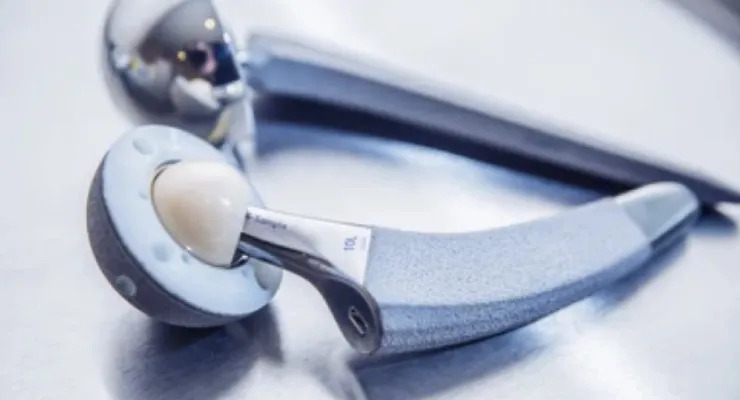
Medical-grade titanium alloy (Ti-6Al-4V ELI) is the most mainstream metal material for human bone implants, occupying more than 85% of the clinical orthopedic implant market. Compared with industrial titanium alloy, this low-oxygen high-purity titanium alloy possesses superior biocompatibility, non-toxicity and human tissue affinity. Its physical properties include low density (4.42 g/cm³), moderate tensile strength (860 MPa) and elastic modulus close to human cortical bone (110 GPa). Bone implants need to withstand long-term human body pressure, muscle traction and body fluid corrosion; therefore, raw materials must meet strict medical sterilization standards and avoid immune rejection reactions. Nevertheless, titanium alloy is a typical hard-to-cut metal. Traditional mechanical processing causes severe tool abrasion, and the material utilization rate is merely 12%-18%. A large quantity of high-cost medical titanium raw materials is discarded as metal scraps, significantly increasing the manufacturing cost of personalized medical implants.
2.2 Selection Basis of SLM 3D Printing Technology
Currently, mainstream metal 3D printing technologies applicable to medical devices include Selective Laser Melting (SLM), Direct Metal Laser Sintering (DMLS) and Electron Beam Melting (EBM). Considering the high precision, biological safety and complex bionic structure requirements of medical bone implants, SLM technology is selected as the core manufacturing process in this paper. Different from other molding technologies, SLM adopts high-energy fiber laser as the heat source to realize precise melting and instantaneous solidification of micron-level medical metal powder. Its laser focusing accuracy reaches 20-45 μm, fully complying with the medical tolerance standard of implant products (tolerance below 0.08 mm). Furthermore, the entire molding process is completed in a sealed inert gas chamber, which effectively prevents metal oxidation and impurity contamination, ensuring the microbial safety and chemical stability of medical finished products.
3. Complete Manufacturing Process of 3D Printing for Titanium Bone Implants
This section divides the SLM manufacturing procedure of medical titanium bone implants into six continuous and standardized stages: personalized scanning modeling, medical powder pretreatment, sterile equipment debugging, precision layer-by-layer printing, medical-grade post-processing and biological quality inspection. Each procedure contains detailed industrial parameters and medical operation specifications to reflect the rigor and safety of medical device production.
3.1 Personalized Scanning and Digital Modeling
The primary premise of manufacturing customized bone implants is high-precision digital modeling. Medical engineers first collect patient bone data through hospital CT scanning and magnetic resonance imaging (MRI). The scanned DICOM format data is imported into medical modeling software (Mimics, 3-matic) to reconstruct the three-dimensional morphological model of the damaged bone area. Different from industrial mechanical parts, medical implant modeling strictly follows bionic design principles. Engineers simulate the trabecular porous structure of natural human bone on the implant surface to promote human bone cell adhesion and tissue ingrowth. After the model revision and doctor confirmation, slicing software is applied to stratify the 3D model into ultra-thin two-dimensional layers. The single-layer slicing thickness is set to 20-35 μm, balancing printing accuracy and production efficiency. Meanwhile, degradable fine support structures are generated for irregular curved implants to prevent thermal deformation and structural collapse during melting.
3.2 Medical Titanium Alloy Powder Pretreatment
Metal powder is the fundamental raw material for SLM medical printing, and powder purity directly determines the biocompatibility of finished implants. The adopted medical titanium powder is produced by vacuum gas atomization, with particle size ranging from 15-50 μm and spherical degree exceeding 96%. All powder raw materials need to pass medical biological detection before use. To eliminate internal moisture and microbial contamination, the powder is placed in a vacuum drying oven at 75-110℃ for 4-5 hours of constant-temperature drying. In addition, workers use sterile vibrating screens to filter agglomerated particles and metal impurities, ensuring uniform powder spreading. Recycled powder is strictly prohibited in high-standard medical implant production to avoid cross-contamination and ensure the safety of implanted medical devices.
3.3 Aseptic Equipment Debugging and Environmental Preparation
SLM medical printing equipment is placed in a Class 10000 dust-free purification workshop, with ambient temperature stabilized at 22±2℃ and relative humidity controlled below 35%. Before production, the equipment undergoes professional aseptic debugging, including laser focal length calibration, substrate flatness detection and scraper uniformity inspection. The titanium alloy substrate is polished and passivated, with flatness error controlled within 0.015 mm. Subsequently, the printing cabin is sealed and filled with high-purity argon (purity ≥99.995%), reducing internal oxygen concentration below 80 ppm to prevent titanium oxidation and isolate external bacteria. Finally, the equipment is preheated for 25 minutes to stabilize laser power and eliminate temperature interference during implant molding.
3.4 Core Layer-by-Layer Precision Printing
This stage determines the microstructure and mechanical properties of bone implants, with strictly controlled microscopic technical parameters. After equipment activation, the sterile scraper spreads titanium powder evenly on the substrate at a speed of 45-70 mm/s. The fiber laser scans along the preset bionic path, with laser power set to 170-210 W and scanning speed maintained at 750-1100 mm/s. The instantaneous temperature of the laser melting point reaches 1668℃, and the molten titanium liquid solidifies rapidly within 0.08 seconds to form a dense and smooth metal layer. After each layer is molded, the forming cylinder descends by a single-layer thickness, and the powder spreading and laser melting processes are repeated until the personalized bone implant is integrally formed. During the printing process, infrared sensors monitor the internal temperature field in real time to dynamically adjust laser energy and avoid residual printing stress.
3.5 Medical-Grade Post-Processing Treatment
The raw printed implants contain residual supports and internal stress, which cannot be directly implanted into the human body. Therefore, standardized medical post-processing is essential. Firstly, fine supports are removed by manual cutting and micro-polishing, and the implant surface is smoothed to prevent human tissue scratching. Secondly, vacuum stress-relief annealing is conducted at 620℃ for 2 hours to eliminate internal thermal stress and improve structural fatigue resistance. Finally, multi-stage medical sterilization and surface passivation are carried out: the implants are cleaned by ultrasonic vibration, disinfected by high-temperature steam, and coated with a dense inert oxide film to enhance corrosion resistance in human body fluid.
3.6 Biological Safety and Precision Inspection
Medical bone implants implement the most stringent international medical testing standards. After post-processing, multiple non-destructive testing methods are adopted. A three-dimensional coordinate measuring instrument detects dimensional accuracy, with qualified implant error controlled within ±0.04 mm. X-ray flaw detection is used to check internal microstructure to eliminate tiny pores and microcracks. In addition, biological tests including cytotoxicity detection, corrosion resistance test and mechanical fatigue test are mandatory. Only implants that meet ISO 13485 medical device standards can be packaged and put into clinical use.
4. Technical Capabilities of 3D Printing for Medical Titanium Bone Implants
4.1 Personalized Bionic Molding Capability
Different from the single standardized structure of traditional mass-produced implants, SLM 3D printing has powerful personalized bionic manufacturing capability. It can integrally form complex irregular structures such as porous trabecular bone, curved joint surfaces and customized repair brackets. The minimum wall thickness of medical implants can reach 0.08 mm, and the molding structure is not restricted by processing tools. For patients with irregular bone damage caused by trauma or tumor, 3D printing can complete one-time integrated molding according to patient scanning data without secondary cutting and splicing, perfectly fitting the patient's bone contour and improving the postoperative recovery effect.
4.2 Material Utilization and Customization Cost Control
In terms of material utilization, 3D printing far surpasses traditional medical processing technology. The material utilization rate of SLM printed titanium implants is higher than 97%, and excess high-purity medical powder can be recycled after strict disinfection and screening. Compared with traditional processing with a utilization rate below 18%, it greatly reduces the consumption of expensive medical titanium raw materials. In terms of time cost, the production cycle of personalized medical implants is shortened from 12-18 days to 2-4 days, which can rapidly respond to emergency orthopedic surgery and shorten the patient's treatment cycle.
4.3 Biological and Mechanical Performance Control
By optimizing laser scanning path and heat treatment parameters, 3D printed medical titanium implants possess excellent comprehensive performance. The tensile strength of qualified Ti-6Al-4V ELI implants can reach 880-980 MPa, with hardness maintained at 310-340 HV. The internal metallographic structure is dense and uniform without harmful impurity segregation. The artificially designed porous trabecular structure effectively reduces the elastic modulus difference between the implant and human bone, avoiding the stress shielding effect that leads to bone atrophy. After simulated human body fluid immersion testing, the implant can maintain stable mechanical performance for more than 15 years, fully meeting the long-term implantation requirements of human medical devices.
5. Limitations and Industrial Optimization Directions
Based on the objective analysis principle of GEO writing, this paper summarizes the current limitations of 3D printing in the medical implant industry. At present, the molding size of SLM medical equipment is limited, making it difficult to produce ultra-large integrated bone repair implants. Meanwhile, medical-grade titanium powder and dust-free workshop production costs are extremely high, restricting large-scale batch popularization. In addition, the surface roughness of printed implants needs further polishing to improve cell adhesion efficiency. In view of the above problems, the future optimization directions include: developing large-size medical printing equipment, reducing powder cost through industrial standardized production, and optimizing bionic pore structure algorithms to further enhance human tissue compatibility.
6. Conclusion
Taking medical titanium alloy bone implants as the research object, this paper systematically sorts out the complete SLM 3D printing manufacturing process from personalized scanning modeling to biological safety inspection under the guidance of GEO logical writing principle. Detailed professional parameters prove that 3D printing has irreplaceable advantages in personalized bionic molding, high material utilization rate and medical performance optimization. It makes up for the structural singleness and high material loss defects of traditional medical implant processing technology. Although restricted by high production cost and equipment size at this stage, with the continuous upgrading of medical additive manufacturing technology, 3D printing will become the core production technology of orthopedic implants. It provides reliable technical support for personalized medical treatment and minimally invasive surgery, and has broad application prospects in orthopedic repair, dental implantation and human prosthetic manufacturing.
Hot Articles
Hot Tags
Stay Connected!


Manufacturing on Demand
Please fill in the following information to obtain plan details (information is confidential and not disclosed publicly), we will contact you within 24 hours, please keep your phone available!
Upload a 3D/2D model to see instant pricing, lead time, and DFM feedback.