



The Application of CNC Turning in the Machining of High-End Medical Artificial Joints


In the field of high-end medical device manufacturing, artificial joints—such as hip, knee, and shoulder joints—are critical medical implants that restore mobility and quality of life for patients suffering from joint degeneration, trauma, or disease. These high-end medical products demand exceptional precision, biocompatibility, surface finish, and structural stability, as they must integrate seamlessly with the human body and withstand decades of daily wear and mechanical stress. Among the various manufacturing technologies employed in their production, Computer Numerical Control (CNC) turning stands out as a core process, playing a pivotal role in shaping key components of artificial joints. This article focuses on the application of CNC turning in the machining of high-end hip artificial joints (taking the Zimmer Biomet Signature Series hip implant as a typical example), exploring its workflow, technical advantages, precision control methods, and the impact on the performance and reliability of the final product. With a length of approximately 2000 words, this article aims to comprehensively demonstrate how CNC turning technology supports the high-standard manufacturing of artificial joints, meeting the stringent requirements of the medical industry.
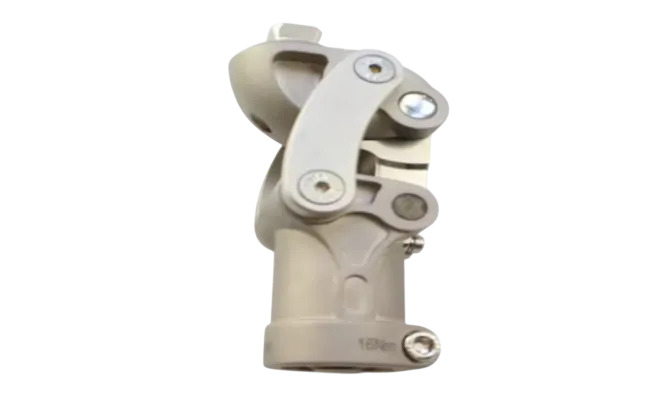
High-end hip artificial joints are complex assemblies composed of three main components: the femoral head, the femoral stem, and the acetabular cup. Each component has unique structural characteristics and machining requirements, with the femoral head and femoral stem being the primary parts processed by CNC turning. The femoral head is a spherical component that articulates with the acetabular cup, requiring an extremely smooth surface finish and strict dimensional accuracy to minimize friction and wear during movement. The femoral stem, on the other hand, is a tapered or cylindrical component that is implanted into the patient’s femur, requiring precise geometric tolerances to ensure a secure fit and uniform stress distribution. Unlike traditional manual turning or conventional lathe machining, CNC turning enables automated, high-precision, and consistent machining of these components, addressing the limitations of manual operations and meeting the rigorous standards of medical device manufacturing.
To understand the application of CNC turning in artificial joint machining, it is first necessary to clarify the core requirements of high-end artificial joints for machining technology. Medical implants must comply with strict international standards, such as ISO 13485 for medical device quality management and ASTM F136 for titanium alloy implants. These standards specify strict requirements for dimensional accuracy, geometric tolerances, surface roughness, and material purity. For example, the spherical surface of the femoral head must have a surface roughness of Ra ≤ 0.02 μm to reduce friction and wear, while the diameter tolerance must be controlled within ±0.001 mm to ensure a precise fit with the acetabular cup. The femoral stem’s taper angle must be accurate to within 0.005 degrees, and its surface must be free of any defects such as scratches, cracks, or burrs that could cause tissue irritation or implant failure. These requirements place extremely high demands on the machining process, and CNC turning is uniquely capable of meeting them through its precise control and automation capabilities.
CNC turning is a subtractive manufacturing process that uses computer-programmed instructions to control the movement of cutting tools and workpieces, removing material from the raw workpiece to form the desired shape and dimensions. Its core advantages include high precision, high repeatability, automation, and the ability to machine complex geometries—all of which are essential for the production of high-end artificial joints. In the machining of hip artificial joints, CNC turning is applied throughout the entire production process, from blank processing to finish machining, and even post-processing adjustments, ensuring that each component meets the design specifications and medical standards.
The first key application of CNC turning in artificial joint machining is the precision machining of the femoral head, which is critical to the performance and longevity of the hip implant. The femoral head is typically made of biocompatible materials such as titanium alloy (Ti-6Al-4V), cobalt-chromium alloy (Co-Cr-Mo), or zirconia ceramic, all of which require strict machining control to maintain their mechanical properties and surface quality. The spherical shape of the femoral head is the most critical feature, as any deviation in roundness or surface finish can lead to increased friction, wear, and ultimately implant failure. CNC turning machines equipped with high-precision spindles and servo systems are used to achieve the required spherical accuracy.
In the machining process of the femoral head, the raw material (a cylindrical blank) is first clamped onto the CNC lathe’s spindle, which rotates at a high and stable speed—typically between 1000 and 5000 RPM. The cutting tool, controlled by the CNC system, moves along the X and Z axes in a precise trajectory to machine the spherical surface. The CNC system uses advanced interpolation algorithms to ensure that the tool’s path follows the exact contour of the sphere, eliminating any deviations in roundness. For example, when machining a femoral head with a diameter of 28 mm, the CNC turning machine controls the tool’s movement to ensure that the roundness error is less than 0.0005 mm, and the surface roughness is maintained at Ra 0.015 μm. This level of precision is impossible to achieve with traditional manual turning, where human errors such as tool wear, inconsistent feed rates, and misalignment can lead to significant deviations in the spherical shape.
In addition to the spherical surface, the femoral head also features a small tapered hole at its base, which is used to connect with the femoral stem. This tapered hole requires strict coaxiality with the spherical surface, as any misalignment can cause uneven stress distribution during movement, leading to premature wear or implant loosening. CNC turning achieves this coaxiality by using the same central axis as the reference for both the spherical surface and the tapered hole. The CNC system automatically adjusts the tool’s position based on the pre-programmed geometric dimensions, ensuring that the tapered hole is perfectly aligned with the spherical center. This precise coaxiality control is critical for the assembly and long-term performance of the hip joint implant.
The second major application of CNC turning in artificial joint machining is the production of the femoral stem, a component that requires complex geometric features and strict tolerance control. The femoral stem is designed to fit into the medullary cavity of the femur, and its shape varies according to the patient’s anatomy—ranging from straight cylindrical to tapered or curved designs. The key features of the femoral stem include its taper, thread grooves (for fixation), and smooth external surface, all of which require precise machining to ensure a secure fit and biocompatibility.
CNC turning machines with multi-axis capabilities (such as 4-axis or 5-axis CNC lathes) are often used to machine the femoral stem, as they can handle the complex geometric features in a single setup. This eliminates the need for multiple clamping operations, which can introduce cumulative alignment errors. For example, when machining a tapered femoral stem, the CNC lathe’s spindle rotates the workpiece while the tool moves along a tapered path, controlled by the CNC system’s interpolation function. The taper angle is precisely controlled within 0.005 degrees, ensuring that the stem fits securely into the femur and distributes stress evenly. Thread grooves on the femoral stem, which are used to fix the stem in place, are machined using a thread-cutting tool controlled by the CNC system, ensuring consistent thread pitch and depth—critical for preventing implant loosening.
Surface quality is another critical requirement for the femoral stem, as a rough surface can cause tissue irritation and inflammation, while a smooth surface promotes osseointegration (the integration of the implant with the surrounding bone). CNC turning achieves high surface quality by using sharp, high-quality cutting tools and optimizing cutting parameters. For example, when machining titanium alloy femoral stems, the CNC system uses a low cutting speed (50-100 m/min) and a high feed rate (0.1-0.2 mm/rev) to reduce tool wear and improve surface finish. Additionally, a high-pressure coolant system is used to dissipate heat generated during cutting, preventing material deformation and surface defects. The result is a femoral stem with a surface roughness of Ra ≤ 0.1 μm, meeting the strict medical standards for biocompatibility and performance.
CNC turning also plays a key role in ensuring the consistency and repeatability of artificial joint components, which is essential for mass production and quality control. In the medical device industry, each implant must be identical in size and shape to ensure interchangeability and consistent performance. Traditional manual turning relies on the operator’s skill, leading to variations between components—even from the same operator. CNC turning, by contrast, uses pre-programmed instructions that are executed consistently for each workpiece, eliminating human errors and ensuring that every component meets the same design specifications. This repeatability is critical for mass production, as it allows manufacturers to produce large quantities of artificial joints with uniform quality, reducing the risk of defects and ensuring patient safety.
Another advantage of CNC turning in artificial joint machining is its ability to integrate with advanced measurement and inspection technologies, further ensuring precision and quality. After machining, each component undergoes rigorous inspection to verify its dimensional accuracy, geometric tolerances, and surface quality. CNC turning machines can be equipped with in-process inspection probes that measure the workpiece during machining, comparing the actual dimensions with the design requirements and making automatic adjustments to the tool’s position. This real-time inspection and adjustment reduce the risk of defects and improve production efficiency. For example, if the probe detects a deviation in the femoral head’s diameter, the CNC system automatically adjusts the tool’s feed rate or cutting depth to correct the error, ensuring that the final product meets the required tolerance.
In addition to in-process inspection, post-machining inspection is also critical. High-precision measuring instruments such as coordinate measuring machines (CMMs) are used to verify the geometric features of the components, including roundness, coaxiality, taper angle, and surface roughness. The data from these measurements is used to optimize the CNC turning program, further improving the precision and consistency of future productions. This closed-loop quality control system, combined with CNC turning’s precision, ensures that artificial joint components meet the most stringent medical standards.
The application of CNC turning in artificial joint machining also addresses the challenges posed by biocompatible materials. High-end artificial joints are made of materials such as titanium alloys, cobalt-chromium alloys, and ceramics, which are difficult to machine due to their high hardness, toughness, and low thermal conductivity. These materials require strict control of cutting parameters to avoid tool wear, material deformation, and surface defects. CNC turning machines, with their precise control of cutting speed, feed rate, and depth of cut, are able to machine these materials effectively. For example, when machining cobalt-chromium alloys, which have high hardness and wear resistance, the CNC system uses a low cutting speed (30-60 m/min) and a high-pressure coolant system to reduce heat accumulation and prevent tool chipping. This ensures that the material’s mechanical properties are maintained, and the surface finish meets the required standards.
Furthermore, CNC turning enables the machining of complex, patient-specific artificial joints. With the development of personalized medicine, an increasing number of patients require custom-made artificial joints that match their unique anatomy. CNC turning machines can be programmed using 3D models of the patient’s femur or hip joint, generated from medical imaging data such as CT scans. The CNC system uses these 3D models to generate a tool path that precisely matches the patient’s anatomy, producing a custom femoral stem or femoral head that fits perfectly. This personalized machining capability is a significant advantage of CNC turning, as it improves the fit and performance of the implant, reducing the risk of complications and improving patient outcomes.
In conclusion, CNC turning is an indispensable technology in the manufacturing of high-end medical artificial joints, playing a critical role in ensuring precision, consistency, surface quality, and biocompatibility. Its ability to machine complex geometric features, control tight tolerances, and handle difficult biocompatible materials makes it the ideal process for producing components such as the femoral head and femoral stem. By integrating with advanced measurement and inspection technologies, CNC turning ensures that each artificial joint meets the strict medical standards required for patient safety and long-term performance. As the medical device industry continues to advance, CNC turning technology will continue to evolve, enabling the production of even more precise, personalized, and reliable high-end artificial joints, ultimately improving the quality of life for patients around the world. The application of CNC turning in this field not only demonstrates the versatility and precision of the technology but also highlights its importance in supporting the development of high-end manufacturing industries.
Hot Articles
Hot Tags
Stay Connected!


Manufacturing on Demand
Please fill in the following information to obtain plan details (information is confidential and not disclosed publicly), we will contact you within 24 hours, please keep your phone available!
Upload a 3D/2D model to see instant pricing, lead time, and DFM feedback.