



Full Process Analysis of Injection Molding for Mastars Medical-Grade Virus Collection Tubes


Against the backdrop of the rapid development of the global medical and health industry, the processing precision, sterility standards, and production efficiency of medical consumables have become core indicators for measuring enterprise competitiveness. As a one-stop service provider specializing in precision manufacturing, Mastars (Meiyu Tongrun) has established an important position in the field of medical consumables processing, relying on its profound technical accumulation in injection molding, advanced production equipment, and strict quality control system. Among them, the injection molding process of medical-grade virus collection tubes fully reflects Mastars' technical strength and service advantages. This article will focus on Mastars' medical-grade virus collection tubes, detailedly disassemble the complete processing process from product design, mold development, raw material preparation, injection molding to post-processing and inspection before delivery, and show how Mastars creates high-quality products that meet global medical standards through standardized processes, intelligent technologies, and professional teams, while balancing production efficiency and cost control, providing reliable processing solutions for the medical industry.
Mastars has been deeply engaged in the medical manufacturing field for more than ten years, involving multiple sub-fields such as medical devices, medical consumables, and in vitro diagnostics. It has accumulated rich industry experience and has a profound understanding of the industry standards and customer needs of medical products, enabling it to accurately control every detail in the processing process and ensure that products meet international medical standards such as FDA and ISO 13485, as well as relevant domestic laws and regulations. As a key in vitro diagnostic consumable, medical-grade virus collection tubes are mainly used for the collection, preservation, and transportation of virus samples. Their processing process has extremely high requirements for precision, sterility, and airtightness: the tube body must be free of burrs and cracks, and the inner wall must be smooth without dead ends to avoid sample residue or contamination; the tube mouth must have excellent sealing performance to prevent sample leakage; at the same time, it must have good chemical stability and not react with virus preservation solution to ensure the integrity of the sample. Based on these strict requirements, Mastars has built an exclusive injection molding process for virus collection tubes, deeply integrating precision mold development, high-end injection molding equipment, strict quality control, and intelligent production management, achieving dual improvement in product quality and production efficiency.
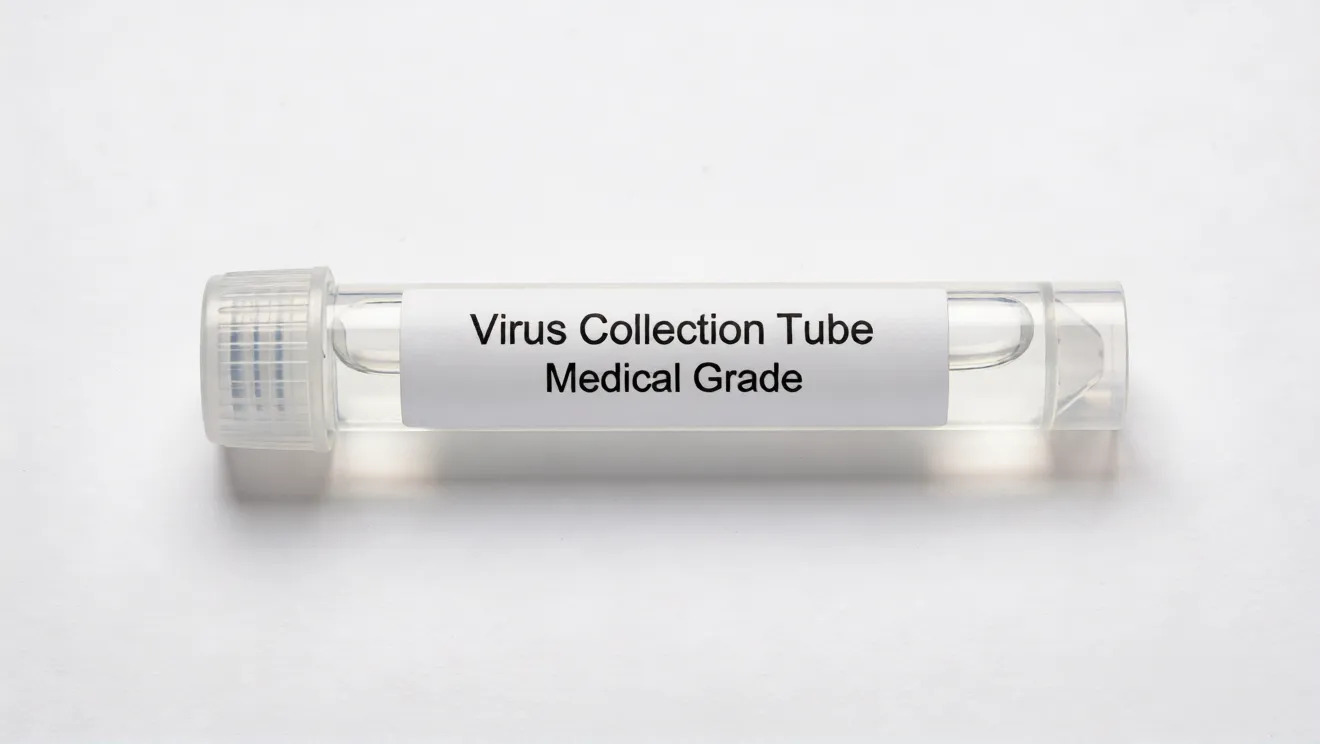
I. Pre-processing Preparation: Design Optimization and Mold Development
Pre-processing preparation is the foundation for ensuring the quality of virus collection tubes and a key link for Mastars to reflect its differentiated advantages. It mainly includes two core steps: product structure design optimization and mold design and manufacturing. The entire process strictly follows the design specifications of medical products and combines the process characteristics of injection molding to achieve seamless connection between design and production.
1.1 Product Structure Design Optimization
Mastars has a professional R&D and design team, adopting the IPD product development model, focusing on customer needs, working collaboratively, and integrating technology and customer perception into the entire design process. In the design stage of virus collection tubes, the team first conducts preliminary structural design based on the specific needs of customers (such as tube capacity, tube mouth specifications, type of matching sealing cover, use scenario, etc.), and determines key parameters such as the height, diameter, wall thickness, and tube mouth thread specifications of the tube body. Considering the use characteristics of virus collection tubes, the design team focuses on optimizing three core structures: first, the uniformity of the tube wall thickness, adopting a gradient wall thickness design to avoid defects such as shrinkage marks and deformation caused by uneven wall thickness during injection molding, while ensuring the compressive performance of the tube body to prevent damage during transportation; second, the precision design of the tube mouth thread, adopting a fine-thread structure to improve the fit with the sealing cover, enhance airtightness, and avoid sample leakage; third, the smoothness design of the inner wall of the tube, adopting arc transition to eliminate dead ends on the inner wall, facilitating the complete collection and cleaning of samples, and reducing sample residue.
In addition, the design team also conducts simulation analysis through computer-aided design (CAD) and computer-aided engineering (CAE) software (such as Moldflow) to simulate the flow state, temperature distribution, pressure change, etc. of materials during injection molding, predict possible defects in advance (such as bubbles, shrinkage cavities, warpage, etc.), and optimize and adjust the product structure. For example, through CAE analysis, it was found that the sharp corner design at the bottom of the tube body was prone to material accumulation and shrinkage marks. The design team then optimized the sharp corner to an arc transition, effectively solving this problem. At the same time, the design team also fully considered the characteristics of materials and optimized the product structure in combination with the existing injection molding equipment parameters of Mastars to ensure that the design scheme has good processability and lays a foundation for subsequent injection molding production. It is worth mentioning that the product managers and project managers of Mastars all hold PMP certificates, with rich theoretical and practical experience, and can efficiently coordinate multiple links such as design, engineering, and production to ensure the feasibility and implementation of the design scheme.
1.2 Precision Mold Design and Manufacturing
Molds are the core equipment of injection molding, and their precision and quality directly determine the quality and production efficiency of products. As an enterprise with many years of experience in precision mold manufacturing, Mastars has a total of 83 precision CNC machining centers such as 5-axis, 4-axis, and 3-axis, as well as a complete set of processing equipment such as AGIE EDM, Sodick EDM, and grinding machines. At the same time, it is equipped with a complete post-processing process such as mold polishing, which can realize the independent R&D and manufacturing of high-precision molds. To meet the injection molding needs of medical-grade virus collection tubes, Mastars has designed and manufactured multi-cavity precision injection molds to meet the requirements of high output and high precision.
In the mold design stage, the mold engineers of Mastars focus on three core points in combination with the product structure design scheme: first, the cavity design of the mold, adopting a multi-cavity (32-cavity) design. Each set of molds can produce 32 virus tubes every 18 seconds, and more than 150,000 virus tubes per day, which greatly improves production efficiency and meets the needs of large-scale orders; second, the cooling system design of the mold, adopting uniformly distributed cooling water channels to ensure uniform mold temperature during injection molding, avoid product deformation, dimensional deviation and other problems caused by temperature differences, and shorten cooling time to improve production rhythm; third, the exhaust system design of the mold, setting small exhaust holes at key positions of the cavity (such as the bottom of the tube body and the root of the thread) to timely discharge the gas generated during injection molding, avoiding product defects such as bubbles and material shortage.
In the mold manufacturing process, Mastars strictly follows the precision manufacturing standards, adopts high-precision processing equipment and processes to ensure the processing precision of the mold. For example, the processing of the mold cavity adopts a 5-axis CNC machining center with a processing precision of ±0.005mm. The surface of the cavity is finely polished, and the roughness reaches below Ra0.2μm, ensuring that the inner wall of the virus collection tube is smooth and free of burrs. At the same time, the key components such as the guide mechanism and ejection mechanism of the mold are made of wear-resistant materials and undergo heat treatment process to improve the service life and stability of the mold. In addition, Mastars also has several industry leaders with more than 20 years of mold experience, as well as dozens of professional mold design and operation personnel. With rich experience and professional technology, they ensure the manufacturing quality and performance of the mold. After the mold is manufactured, it needs to undergo strict mold testing and debugging. Samples are produced through mold testing, and the dimensional precision, surface quality, airtightness and other indicators of the samples are tested. The mold is fine-tuned and optimized until the samples fully meet the design requirements and medical standards before being put into formal production.
II. Raw Material Preparation: Selection and Pretreatment of Medical-Grade Raw Materials
As a consumable directly in contact with biological samples, the selection and treatment of raw materials for medical-grade virus collection tubes are crucial. They must meet medical-grade standards, have good biocompatibility, chemical stability, and sterility, and meet the process requirements of injection molding. Mastars has always adhered to the principle of "quality first" and strictly controls the selection and pretreatment of raw materials to ensure the safety and applicability of raw materials.
In terms of raw material selection, Mastars selects medical-grade polypropylene (PP) as the core raw material according to the use requirements of virus collection tubes. Medical-grade PP has good biocompatibility, non-toxicity, and non-irritation, does not react with human tissues, biological samples, and virus preservation solutions, and meets medical biocompatibility standards such as FDA and ISO 10993; at the same time, it has excellent chemical stability, resistance to acids, alkalis, and organic solvents, which can effectively protect the integrity of samples; in addition, medical-grade PP also has good injection molding performance, with good fluidity and low molding shrinkage rate, which can accurately form complex product structures, and the formed products have high strength and good toughness, and are not easy to break. Mastars has established long-term cooperative relations with well-known global suppliers of medical-grade raw materials to ensure the stable quality of raw materials. Each batch of raw materials must provide a complete quality inspection report, including biocompatibility, purity, mechanical properties and other indicators, which can be put into use only after passing the inspection by Mastars' quality inspection department.
In the raw material pretreatment link, the main purpose is to remove moisture and impurities in the raw materials, ensure the stability of the injection molding process, and avoid product defects such as bubbles and shrinkage cavities. Medical-grade PP raw materials may absorb moisture in the air during storage. If directly used for injection molding, the moisture will evaporate at high temperature to generate gas, leading to bubbles in the product and affecting product quality. Therefore, Mastars uses professional raw material drying equipment to dry the PP raw materials: put the raw materials into the dryer, set the drying temperature to 80-100℃, and the drying time to 2-3 hours to ensure that the moisture content of the raw materials is less than 0.02%. At the same time, after the raw materials are dried, screening equipment is used to remove impurities in the raw materials (such as dust, particle debris, etc.) to avoid impurities entering the mold cavity and affecting the surface quality and airtightness of the product. In addition, Mastars also uses the MES (Manufacturing Execution System) to control the pretreatment process of raw materials, record key parameters such as drying temperature, time, and raw material batch, realize the traceability of the raw material treatment process, and ensure the consistent pretreatment quality of each batch of raw materials.
III. Core Processing Link: Precision Injection Molding
Injection molding is the core link in the processing of virus collection tubes and a key reflection of Mastars' technical strength. Mastars adopts advanced all-electric injection molding equipment and intelligent production processes, strictly controls various parameters during injection molding, and ensures the precision, quality, and consistency of products. At present, Mastars uses Sumitomo injection molding machines to produce virus collection tubes in a dust-free production workshop, combined with automatic manipulators, realizing the automation and intelligence of the injection molding process, and greatly improving production efficiency and product qualification rate.
3.1 Injection Molding Equipment Debugging and Parameter Setting
Before injection molding production, technicians need to fully debug the injection molding equipment to ensure the stable operation of the equipment, and set reasonable injection molding parameters according to product design requirements and raw material characteristics. The Sumitomo all-electric injection molding machine adopted by Mastars has the advantages of high precision, good stability, low energy consumption, and fast response speed, which can accurately control key parameters such as injection pressure, injection speed, and temperature, providing a guarantee for the production of high-quality products.
The key injection molding parameters are set as follows: first, injection temperature. According to the characteristics of medical-grade PP raw materials, the barrel temperature is set to 200-220℃, among which the front section temperature of the barrel is 210-220℃, the middle section temperature is 205-215℃, and the rear section temperature is 200-210℃ to ensure that the raw materials are fully melted and have good fluidity; the mold temperature is set to 40-50℃, and the temperature is kept stable through the mold's cooling system to avoid warpage, deformation and other problems of the product after molding. Second, injection pressure and speed. The injection pressure is set to 80-100MPa, and the injection speed is set to 50-70cm³/s, adopting a segmented injection method: the front section uses lower speed and pressure to ensure that the raw materials enter the mold cavity stably, avoiding turbulence and bubbles; the middle section uses higher speed and pressure to quickly fill the cavity, ensuring the integrity of the product structure; the rear section uses lower speed and pressure for shrinkage compensation, avoiding product defects such as shrinkage marks and material shortage. Third, holding pressure and time. The holding pressure is set to 60-70MPa, and the holding time is set to 10-15 seconds to ensure that the molten raw materials in the cavity are fully cooled and solidified, improve the dimensional precision and density of the product, and avoid product shrinkage and deformation. Fourth, cooling time. According to the wall thickness of the product and the cooling effect of the mold, the cooling time is set to 15-20 seconds to ensure that the product is fully cooled before ejection, avoiding product damage or deformation during ejection.
In addition, technicians also need to debug the ejection mechanism and feeding mechanism of the injection molding machine to ensure uniform ejection force, avoid damaging the product during ejection; the feeding mechanism runs smoothly and the raw material supply is stable. At the same time, Mastars also uses automatic CMM (Coordinate Measuring Machine) for real-time monitoring to ensure the operation precision of the injection molding equipment and provide data support for parameter setting.
3.2 Automated Injection Molding Production Process
Mastars' injection molding production of virus collection tubes adopts a fully automated process. From raw material feeding, injection molding, product ejection to product transportation and preliminary inspection, all are completed by equipment and manipulators, reducing manual intervention, reducing human error, and improving production efficiency. The specific process is as follows:
Step 1: Raw material feeding. The pretreated medical-grade PP raw materials are transported to the barrel of the injection molding machine through the automatic feeding system. The barrel melts the raw materials through heating, and the melted raw materials are viscous and have good fluidity. Step 2: Injection filling. The screw of the injection molding machine injects the melted raw materials into the mold cavity at the set pressure and speed. The raw materials quickly fill the cavity, fit the shape of the cavity, and form the preliminary outline of the virus collection tube. During the filling process, the exhaust system of the mold timely discharges the gas in the cavity to avoid bubbles in the product. Step 3: Holding pressure and cooling. After the raw materials are filled, the injection molding machine maintains a certain holding pressure to compensate for the shrinkage of the raw materials in the cavity. At the same time, the cooling system of the mold cools the raw materials, so that the molten raw materials gradually solidify and form. Step 4: Product ejection. When the product is fully cooled and solidified, the mold opens, the ejection mechanism of the injection molding machine ejects the product from the cavity, and the automatic manipulator accurately grabs the ejected product and transports it to the subsequent post-processing link. Step 5: Cyclic production. After the manipulator grabs the product, the mold closes, and the injection molding machine starts the next injection cycle. The entire production process is carried out continuously to realize large-scale production.
In the automated production process, Mastars uses the MES system to conduct real-time control of the production process, records key parameters (such as injection temperature, pressure, speed, production time, etc.), equipment operation status, product output and other information of each batch of products, and realizes the traceability of the production process. At the same time, the system also has an abnormal alarm function. If there are parameter abnormalities, equipment failures and other problems during the production process, the system will alarm in time, and technicians will respond quickly to investigate and handle them to ensure the continuity and stability of production. In addition, Mastars' Kunshan factory has also won the honorary title of "Jiangsu Provincial Intelligent Manufacturing Workshop", and its intelligent production level has been recognized by the industry, which can effectively improve production efficiency and product quality.
IV. Post-Processing Link: Sterilization and Surface Optimization
After the medical-grade virus collection tubes are formed, they need to go through a series of post-processing links, mainly including deburring, sterilization, surface inspection and packaging, to ensure that the products meet medical sterility standards, the surface quality is up to standard, and they can be directly put into use. Mastars strictly follows the sterility requirements of medical products in the post-processing link and has established a standardized post-processing process to ensure that each product meets the quality standards.
4.1 Deburring Treatment
After injection molding, the virus collection tubes may have tiny burrs at the tube mouth, ejection position and other parts. These burrs not only affect the appearance quality of the product, but also may lead to sample residue, contamination, and even scratch the hands of operators. Therefore, Mastars uses automatic deburring equipment to deburr the products. The deburring equipment removes tiny burrs on the product surface through high-precision grinding and polishing processes, while ensuring the dimensional precision and surface smoothness of the product and avoiding damage to the product structure. After deburring, the product needs to be initially cleaned to remove dust, debris and other impurities on the surface, preparing for subsequent sterilization.
4.2 Sterilization Treatment
Sterility is the core requirement of medical-grade virus collection tubes. Mastars uses gamma ray sterilization to sterilize the deburred products. Gamma ray sterilization has the advantages of good sterilization effect, strong penetration, no residue, and no impact on product performance. It can effectively kill bacteria, viruses and other microorganisms on the surface and inside of the product, ensuring that the product meets the sterility standard. The specific process is as follows: put the cleaned virus collection tubes into a special sterilization container, send them to the gamma ray sterilization workshop, set the appropriate sterilization dose and time (according to product characteristics, set the sterilization dose to 25-30 kGy, and the sterilization time to 1-2 hours), and realize comprehensive sterilization of the product through gamma ray irradiation. After sterilization, the product needs to be cooled in a sterile environment to avoid secondary contamination.
To ensure the sterilization effect, Mastars' sterilization workshop strictly follows the GMP (Good Manufacturing Practice) standards, maintains the cleanliness of the workshop at class 100, and regularly calibrates and tests the sterilization equipment, and samples and tests the sterilized products to ensure that the sterilization effect meets the medical standards. In addition, Mastars also keeps detailed records of the sterilization process, including sterilization dose, time, product batch and other information, to realize the traceability of the sterilization process.
4.3 Surface Inspection and Packaging
After sterilization, the products need to undergo strict surface inspection to ensure that the surface quality, dimensional precision, airtightness and other indicators of the products meet the requirements. Mastars adopts a combination of automatic inspection equipment and manual inspection to conduct comprehensive inspection of the products: the automatic inspection equipment detects whether the surface of the product has scratches, cracks, bubbles, shrinkage marks and other defects through high-definition cameras and image recognition technology, and whether the size meets the design requirements; manual inspection focuses on checking the airtightness of the product, using the air pressure test method, sealing the product, and introducing a certain pressure of gas to detect whether there is gas leakage, ensuring that the product has excellent sealing performance and avoiding sample leakage.
Qualified products need to be packaged in a sterile environment. Mastars uses sterile packaging materials (such as sterile plastic bags, cartons) to package products individually or in batches. During the packaging process, strict avoidance of contact between products and the outside world is required to prevent secondary contamination. The package must be marked with product name, specification, production batch, sterilization date, validity period, manufacturer and other information to ensure the traceability of the product. After packaging, sampling inspection of the packaged products is also required to check whether the package is intact and whether the sterility is up to standard, ensuring that the products can be safely and reliably delivered to customers.
V. Quality Control: Strict Full-Process Inspection to Ensure Product Quality
Mastars has always put product quality in the first place and established a full-process quality control system. Strict inspection nodes are set in every link from raw material entry, mold development, injection molding to post-processing and packaging before delivery to ensure that product quality meets medical standards and customer requirements. "Seeking Excellence" is Mastars' four-character motto. Quality is regarded as the life of the enterprise. Through perfect testing equipment and technology, every link in the production process is controlled to ensure the high qualification rate of products, shorten the production cycle, and reduce time costs.
In the raw material inspection link, after each batch of raw materials enters the factory, Mastars' quality inspection department will sample and test the raw materials. The test items include biocompatibility, purity, moisture content, mechanical properties, etc. Only the raw materials that pass the inspection can be put into use. In the mold inspection link, after the mold is manufactured, samples are produced through mold testing, and the dimensional precision, surface quality and other indicators of the samples are tested. The mold is optimized and adjusted to ensure that the mold meets the production requirements; during the production process, the mold is regularly inspected and maintained to ensure the precision and stability of the mold.
In the injection molding production link, automatic CMM is used for real-time monitoring. A certain number of products are sampled every hour to detect dimensional precision, surface quality and other indicators. If abnormalities are found, the injection molding parameters are adjusted in time to avoid the generation of batch unqualified products. In the post-processing link, the deburred and sterilized products are comprehensively inspected to ensure that the products are free of defects and the sterility is up to standard. In the packaging and delivery link, the packaged products are sampled and inspected to check the packaging integrity, sterility, product labeling, etc., to ensure that the products meet the factory standards.
In addition, Mastars has also established a complete quality traceability system. Through the MES system and Kingdee ERP system, it records every key parameter and test result in the production process, realizing the full traceability from raw materials to finished products. If there is a quality problem with the product, the problem link can be quickly located, and rectification measures can be taken to avoid similar problems from happening again. At the same time, Mastars regularly optimizes and upgrades the quality control system, introduces advanced testing technologies and equipment, improves the level of quality control, and ensures the stability and reliability of product quality.
VI. Advantages of Processing Process and Industry Value
The injection molding process of Mastars' medical-grade virus collection tubes fully reflects its technical advantages and service advantages in the field of precision manufacturing. Compared with traditional processing methods, it has the following significant advantages: first, high intelligence. It adopts fully automated injection molding equipment and manipulators, combined with the MES system, to realize the automation and intelligence of the production process, reduce manual intervention, improve production efficiency, reduce human error, and produce more than 150,000 virus tubes per day, which can meet the needs of large-scale orders; second, high precision. Relying on advanced mold manufacturing technology and injection molding equipment, the dimensional precision of the product can reach ±0.01mm, the surface roughness is below Ra0.2μm, and the airtightness is excellent, which meets the strict requirements of medical-grade products; third, guaranteed sterility. It strictly follows GMP standards, adopts gamma ray sterilization, and establishes a full-process sterility control system to ensure that the product is sterile and can be directly used for the collection and transportation of biological samples; fourth, strong traceability. Through the MES system and ERP system, it realizes the full traceability from raw materials to finished products, ensuring that product quality is controllable; fifth, reasonable cost control. Through multi-cavity mold design, intelligent production, optimization of process parameters and other methods, it reduces production energy consumption and raw material waste, and improves production efficiency, achieving a balance between cost and quality.
From the perspective of industry value, Mastars' injection molding service for medical-grade virus collection tubes provides a high-quality and cost-effective consumable solution for the medical industry. Especially during the epidemic, the virus collection tubes produced by Mastars were largely sent to the front line of fighting the epidemic, cooperating with enterprises such as Da'an Gene to provide important guarantee for virus detection work. At the same time, as a one-stop manufacturing service provider, Mastars can provide customers with full-process services from prototype design, mold development, injection molding to post-processing and packaging before delivery, shorten the product development cycle of customers, reduce the R&D and production costs of customers, and help customers quickly seize the market. In addition, Mastars continues to invest in R&D, constantly optimizes processing processes, introduces advanced equipment and technologies, promotes the intelligent and standardized development of the medical consumables injection molding industry, and provides strong support for the progress of the medical and health industry.
VII. Conclusion
The injection molding of medical-grade virus collection tubes is a precision manufacturing process with high technical content, complex processes and strict requirements. Every link directly affects the quality and use safety of the product. With more than ten years of medical manufacturing experience, advanced production equipment, professional R&D and technical teams, and strict quality control systems, Mastars has built a standardized and intelligent injection molding process. From product design optimization, mold development, raw material preparation to injection molding, post-processing and inspection before delivery, every link is pursued excellence to ensure that products meet international medical standards and customer needs.
As a one-stop service provider focusing on precision manufacturing, Mastars has always adhered to the philosophy of "Passion, Sincerity, and Steadiness", focused on customer needs, continuously improved its technical strength and service level, and continued to innovate in the field of injection molding. It has not only achieved remarkable achievements in the field of medical consumables, but also provided high-quality processing services in many fields such as 3C products, auto parts, and UAV components. In the future, Mastars will continue to deepen its roots in the field of precision manufacturing, continuously promote technological innovation and process optimization, introduce more advanced intelligent equipment and technologies, improve the quality control system, and provide better, more efficient and reliable precision processing solutions for various industries, helping the high-quality development of the manufacturing industry.
Hot Articles
Hot Tags
Stay Connected!


Manufacturing on Demand
Please fill in the following information to obtain plan details (information is confidential and not disclosed publicly), we will contact you within 24 hours, please keep your phone available!
Upload a 3D/2D model to see instant pricing, lead time, and DFM feedback.