



Injection Molding: The Core Process for Manufacturing Automotive Components


In the modern automotive industry, injection molding has emerged as an indispensable manufacturing technology, revolutionizing the production of plastic components with its high efficiency, precision, and cost-effectiveness. From interior trims and dashboard panels to under-hood structural parts and electric vehicle (EV) battery enclosures, a significant portion of automotive components rely on injection molding to meet the industry’s stringent requirements for durability, dimensional accuracy, and lightweight design. As automakers increasingly prioritize fuel efficiency, electric vehicle adoption, and design innovation, injection molding continues to evolve, adapting to new materials, stricter quality standards, and complex component designs. This article delves into the specific processing steps of injection molding for automotive parts, exploring each stage in detail, key considerations, and the role of this technology in driving automotive manufacturing advancement.
1. Pre-Production Preparation: Laying the Foundation for Quality
The success of injection molding for automotive components begins long before the first plastic pellet is melted. Pre-production preparation is a critical phase that involves mold design, material selection, and equipment setup—all tailored to the unique demands of automotive applications, where even minor defects can compromise safety and performance. This phase requires close collaboration between design engineers, material specialists, and production technicians to ensure every detail aligns with automotive industry standards.
1.1 Mold Design and Fabrication
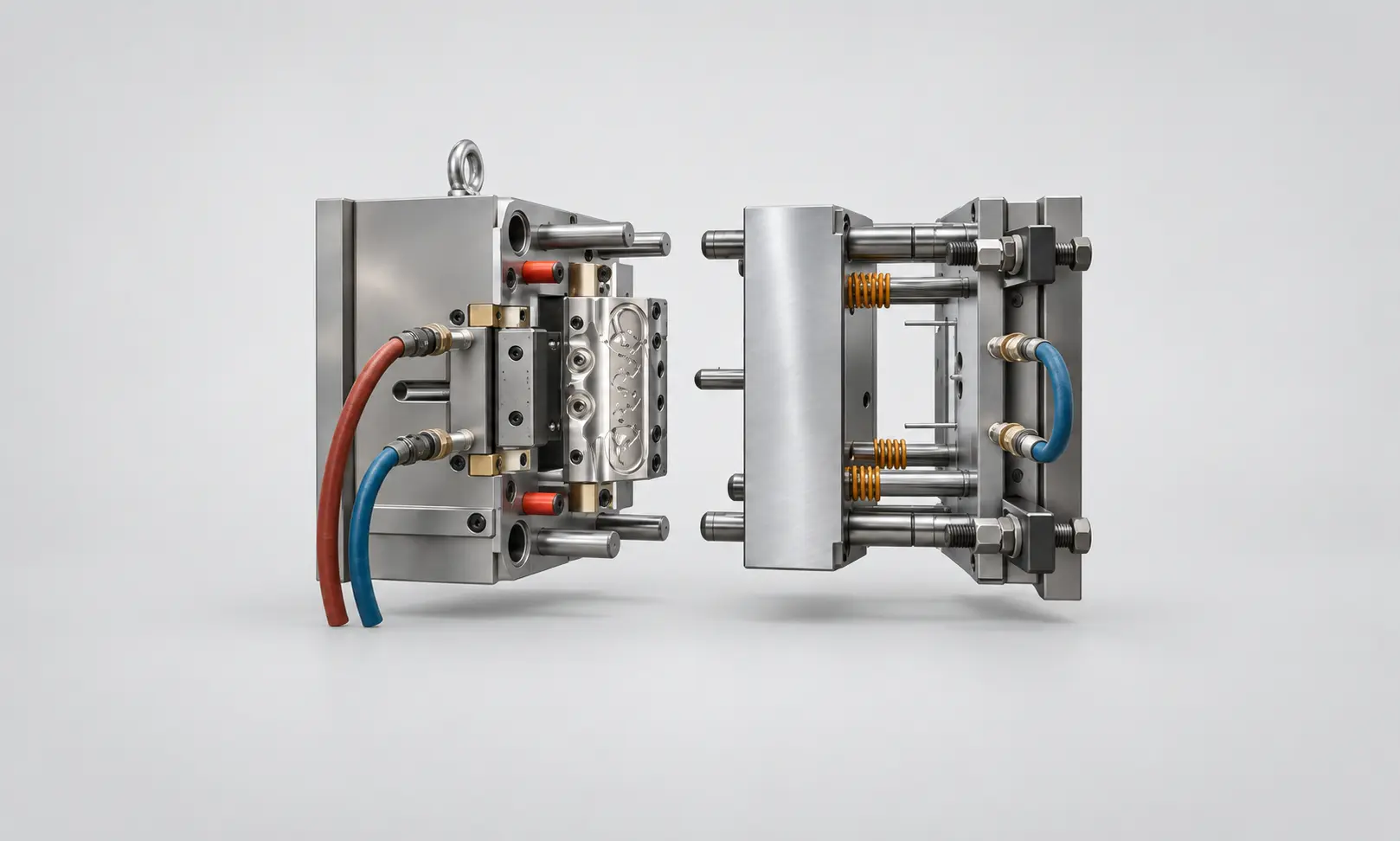
The mold is the heart of the injection molding process, as it directly determines the shape, size, and surface quality of the final automotive component. For automotive parts, mold design must adhere to strict dimensional tolerances (often within ±0.01 mm) to ensure compatibility with other vehicle components, such as fitting seamlessly with metal parts or integrating with electronic systems. Unlike molds for consumer goods, automotive injection molds are typically made from high-strength steel (e.g., H13 or S136) or aluminum alloys, depending on production volume and component complexity.
Key considerations in automotive mold design include cooling channels, ejection systems, and gate design. Cooling channels are strategically embedded in the mold to ensure uniform cooling of the molten plastic, preventing defects like warping, sink marks, or dimensional inaccuracies—critical issues for automotive parts that must maintain structural integrity under extreme temperatures (from -40°C to 80°C or higher). Ejection systems, often consisting of ejector pins or air blasts, are designed to gently release the finished part without causing damage, especially for delicate components like sensor housings or interior trim pieces. Gate design, which controls how molten plastic enters the mold cavity, is optimized to minimize flow marks and ensure complete filling; for large parts like bumpers or door panels, multiple gates may be used to distribute plastic evenly.
Before mass production, mold testing (trial runs) is conducted to identify and resolve issues such as uneven filling, flash (excess plastic), or poor surface finish. This step is crucial for automotive applications, as molds can cost hundreds of thousands of dollars, and rework can cause significant production delays. Advanced technologies like computer-aided design (CAD) and computer-aided engineering (CAE) are widely used to simulate mold filling, cooling, and ejection, reducing the need for physical trial runs and accelerating the design process.
1.2 Material Selection: Matching Performance Requirements
Automotive components face diverse operating conditions—from the high heat of engine bays to the constant wear of interior surfaces and the structural demands of safety-critical parts. As a result, material selection for injection molding is a meticulous process that balances performance, cost, and manufacturability. The most commonly used materials for automotive injection molding include thermoplastics, thermosets, and fiber-reinforced composites, each chosen for specific applications.
Thermoplastics are the most widely used due to their flexibility, recyclability, and ease of processing. Polypropylene (PP) is a staple for interior components (e.g., dashboards, door panels, and seat covers) and exterior parts (e.g., bumpers) because of its lightweight, impact resistance, and chemical stability. For high-strength applications, long glass fiber-reinforced polypropylene (LGF-PP) copolymers—such as SABIC’s STAMAX™ series—are used for semi-structural parts like instrument panels, front-end modules, and EV battery covers, offering a balance of stiffness, impact resistance, and flowability for thin-walled designs. Acrylonitrile Butadiene Styrene (ABS) is favored for components requiring a smooth, paintable surface, such as grilles and interior trim, due to its high impact strength and dimensional stability.
For under-hood components exposed to high temperatures (e.g., engine covers, fuel system parts), heat-resistant materials like polyamide (PA, or nylon) and polycarbonate (PC) are used. PA, often reinforced with glass fibers, offers excellent mechanical strength and chemical resistance, making it suitable for sensor housings and fuel line components. PC is used for transparent parts like headlight lenses, thanks to its high optical clarity and impact resistance. Thermosets, though less common, are used for parts requiring exceptional heat resistance and dimensional stability, such as brake pads and electrical components.
Material preparation is another key step in pre-production. Many automotive-grade plastics are hygroscopic (absorb moisture), which can cause defects like bubbles or surface cracks during molding. For example, PA原料 must be dried to a dew point of ≤-40℃ and a moisture content of ≤0.02% to ensure optimal performance. Plastic pellets are often mixed with additives (e.g., UV stabilizers, flame retardants, or colorants) to meet automotive requirements, such as UV resistance for exterior parts or flame retardance for EV components.
1.3 Equipment Setup and Calibration
Automotive injection molding requires high-precision machines capable of maintaining consistent pressure, temperature, and speed—critical for producing parts with uniform quality. Injection molding machines for automotive applications typically range from 50 to 5,000 tons of clamping force, depending on the size of the component (e.g., small sensors vs. large bumpers). The machine consists of three main components: the clamping unit, the injection unit, and the control system.
The clamping unit secures the two halves of the mold (core and cavity) tightly during injection to prevent molten plastic from leaking (flash). For automotive parts, clamping force must be precisely calibrated—too little force causes flash, while too much can damage the mold or the part itself. Modern machines use hydraulic or electric clamping systems, with electric systems offering higher precision and energy efficiency, which is increasingly important for sustainable manufacturing.
The injection unit melts the plastic pellets and injects the molten material into the mold cavity. The barrel of the injection unit is equipped with heaters that maintain a precise temperature gradient (typically 180°C to 300°C, depending on the material) to ensure complete melting without degradation. A rotating screw within the barrel mixes and conveys the plastic, applying pressure to push the molten material through the nozzle and into the mold. The control system, often computerized, monitors and adjusts key parameters (temperature, pressure, injection speed) in real time to ensure consistency across production batches.
2. The Injection Molding Process: Step-by-Step Execution
Once pre-production preparation is complete, the injection molding process proceeds through four core stages: clamping, injection, cooling, and ejection. Each stage is tightly controlled to ensure the final part meets automotive quality standards, with minimal defects and consistent performance.
2.1 Clamping: Securing the Mold
The first stage of the injection molding cycle is clamping, where the two halves of the mold are brought together and secured by the clamping unit. The mold is mounted on the machine’s platens, and the clamping system applies sufficient force to keep the mold closed during injection. For automotive parts, clamping force is calculated based on the size of the mold cavity, the material’s viscosity, and the injection pressure—typically ranging from 100 to 1,000 bar. A proper clamping force is essential to prevent flash, which can render a part unusable (especially for precision components like sensors or connectors) and damage the mold over time.
During clamping, the mold is also preheated to a specific temperature (usually 40°C to 120°C) to ensure the molten plastic adheres properly to the mold surface and cools uniformly. Preheating is particularly important for materials with high melting points, such as PC or PA, and for parts with complex geometries that require precise surface detail.
2.2 Injection: Filling the Mold Cavity
Once the mold is securely clamped and preheated, the injection stage begins. Plastic pellets are fed into the hopper of the injection unit, where they are conveyed into the heated barrel. The rotating screw within the barrel melts the pellets by applying shear force and heat, turning them into a homogeneous molten plastic (melt). The temperature of the barrel is carefully controlled to avoid overheating, which can degrade the plastic and cause defects like discoloration or brittleness.
The molten plastic is then injected into the mold cavity through the nozzle and gate at high speed and pressure. Injection speed and pressure are critical parameters for automotive parts: too little pressure or speed results in incomplete filling (short shots), while too much can cause warping, sink marks, or damage to the mold. For complex automotive components (e.g., dashboard assemblies with integrated vents and controls), injection speed is often adjusted in multiple stages (slow-fast-slow) to ensure uniform filling and minimize flow marks. The injection phase typically takes 0.5 to 5 seconds, depending on the part size and complexity.
After the mold cavity is filled, a holding pressure is applied to compensate for the shrinkage of the plastic as it cools. Holding pressure is typically 50% to 70% of the injection pressure and is maintained for a short period (1 to 10 seconds) to ensure the mold remains fully filled. This step is crucial for preventing sink marks and ensuring dimensional accuracy—key requirements for automotive parts that must fit with other components precisely.
2.3 Cooling: Solidifying the Part
The cooling stage is the longest phase of the injection molding cycle, often accounting for 50% to 80% of the total cycle time. During this stage, the molten plastic in the mold cavity cools and solidifies into the shape of the mold. The cooling process is controlled by the cooling channels embedded in the mold, which circulate water or oil to draw heat away from the plastic efficiently.
For automotive parts, uniform cooling is essential to prevent defects like warping, internal stress, or dimensional inaccuracies. The cooling time is determined by the material’s thermal properties, the part’s thickness, and the mold temperature. Thicker parts (e.g., EV battery enclosures) require longer cooling times to ensure complete solidification, while thinner parts (e.g., interior trim) cool more quickly. For example, a small sensor housing may cool in 10 to 20 seconds, while a large bumper could take 60 to 90 seconds or more.
Cooling is also critical for maintaining the part’s mechanical properties. For fiber-reinforced materials, proper cooling ensures the fibers are evenly distributed, maximizing strength and durability. In addition, cooling channels are often designed to follow the shape of the part (conformal cooling) to ensure uniform temperature distribution, reducing the risk of defects and improving production efficiency.
2.4 Ejection: Removing the Finished Part
Once the plastic has fully solidified, the ejection stage begins. The clamping unit releases the mold, opening the two halves (core and cavity). The ejection system—typically consisting of ejector pins, sleeves, or air blasts—then pushes the finished part out of the mold. For automotive parts, ejection must be gentle to avoid damaging the part or leaving visible marks (e.g., pinholes on interior trim).
Some automotive parts, such as small clips or fasteners, may fall out of the mold automatically, while larger or more complex parts (e.g., dashboards) may require mechanical assistance or robotic arms to remove. Robotic ejection is increasingly used in automotive manufacturing for its precision and efficiency, reducing human error and speeding up the production cycle. After ejection, the mold closes again, and the cycle repeats—typically every 10 to 120 seconds, depending on the part size and complexity.
3. Post-Processing: Refining the Final Product
While many automotive parts are ready for assembly immediately after ejection, some require post-processing to meet quality standards or functional requirements. Post-processing steps vary depending on the part’s application and material, but common processes include trimming, finishing, and quality inspection.
3.1 Trimming and Deburring
During injection molding, excess plastic (flash) may form around the edges of the part or at the gate location. This flash must be removed to ensure the part meets dimensional tolerances and has a smooth surface. For automotive parts, trimming is often done using automated machines (e.g., CNC routers or laser trimmers) for precision, especially for parts like bumpers or door panels that require a clean, seamless finish. Deburring is also performed to remove sharp edges, which is critical for safety (e.g., interior components that come into contact with passengers) and for ensuring compatibility with other parts.
3.2 Surface Finishing
Many automotive parts require surface finishing to enhance their appearance or performance. For interior components (e.g., dashboards, steering wheels), finishing processes may include painting, coating, or texturing. Painting is often done using electrostatic painting or spray painting to ensure a uniform, durable finish that resists scratches and fading. Texturing (e.g., matte or grainy surfaces) is used to improve grip (e.g., steering wheels) or hide minor defects. For exterior parts like bumpers, a clear coat may be applied to protect against UV radiation and environmental damage.
3.3 Quality Inspection and Testing
Quality control is paramount in automotive injection molding, as even minor defects can compromise vehicle safety and performance. Every batch of parts undergoes rigorous inspection to ensure compliance with automotive industry standards (e.g., ISO 13485 for medical-grade components, or specific OEM standards for major automakers). Inspection methods include visual inspection (for surface defects like scratches, bubbles, or flash), dimensional measurement (using calipers, micrometers, or 3D scanners), and mechanical testing (for strength, impact resistance, and durability).
In addition, statistical process control (SPC) is used to monitor production parameters (e.g., temperature, pressure, cycle time) in real time, identifying variations that could lead to defects. This proactive approach ensures consistent quality across production batches, reducing waste and rework. For safety-critical parts (e.g., airbag components, brake system parts), additional testing is performed to ensure they meet strict performance requirements under extreme conditions.
4. Challenges and Innovations in Automotive Injection Molding
While injection molding is a mature technology, automotive manufacturers face several challenges, including the demand for lighter parts (to improve fuel efficiency and EV range), stricter environmental regulations (e.g., recyclability), and the need for more complex component designs. To address these challenges, the industry is embracing several innovations:
1. Lightweight Materials: The adoption of fiber-reinforced composites (e.g., carbon fiber-reinforced plastics) and bio-based plastics is increasing, offering a balance of strength and light weight. For example, SABIC’s STAMAX™ resins replace steel and aluminum in EV battery components, reducing weight while maintaining structural integrity.
2. Smart Molding: The integration of IoT sensors and AI into injection molding machines allows for real-time monitoring and adjustment of production parameters, reducing defects and improving efficiency. Smart molds with embedded sensors can track temperature, pressure, and cooling rates, providing valuable data for process optimization.
3. Sustainable Manufacturing: Automakers are increasingly focused on recycling and reducing waste. Many injection molding processes now use recycled plastics (e.g., recycled PP or ABS) for non-critical components, and mold designs are optimized to minimize material waste. Additionally, energy-efficient machines and processes are being adopted to reduce carbon emissions.
4. Multi-Material Molding: This technology allows for the production of parts with multiple materials (e.g., hard and soft plastics) in a single cycle, reducing assembly time and cost. For example, interior door panels can be molded with a hard structural layer and a soft, comfortable surface layer in one step, improving both functionality and aesthetics.
5. Conclusion
Injection molding is a cornerstone of modern automotive manufacturing, enabling the production of high-quality, precise, and cost-effective plastic components that meet the industry’s evolving demands. From pre-production preparation (mold design, material selection, equipment setup) to the core molding stages (clamping, injection, cooling, ejection) and post-processing (trimming, finishing, inspection), every step of the process is carefully controlled to ensure consistency and performance. As the automotive industry continues to shift toward electric vehicles, lightweight design, and sustainability, injection molding will remain a critical technology, driving innovation and enabling the next generation of automotive components. Its ability to produce complex, durable, and lightweight parts makes it indispensable for automakers striving to balance performance, safety, and environmental responsibility.
Hot Articles
Hot Tags
Stay Connected!


Manufacturing on Demand
Please fill in the following information to obtain plan details (information is confidential and not disclosed publicly), we will contact you within 24 hours, please keep your phone available!
Upload a 3D/2D model to see instant pricing, lead time, and DFM feedback.