



From 3D Printing to Production for a Compact Moving Head Light


Early Validation Under Cost Pressure
How can a compact moving head light move from concept to validation without overspending or slowing iteration?
This product appears to be a compact stage lighting unit with a lamp head, yoke, and base structure, commonly seen in performance equipment. At the early stage, teams must validate fit, alignment, and visual consistency while keeping development costs tightly controlled. For this European client, the main difficulty was not only the product itself, but also managing multiple suppliers across different stages, which slowed iteration and increased coordination effort.
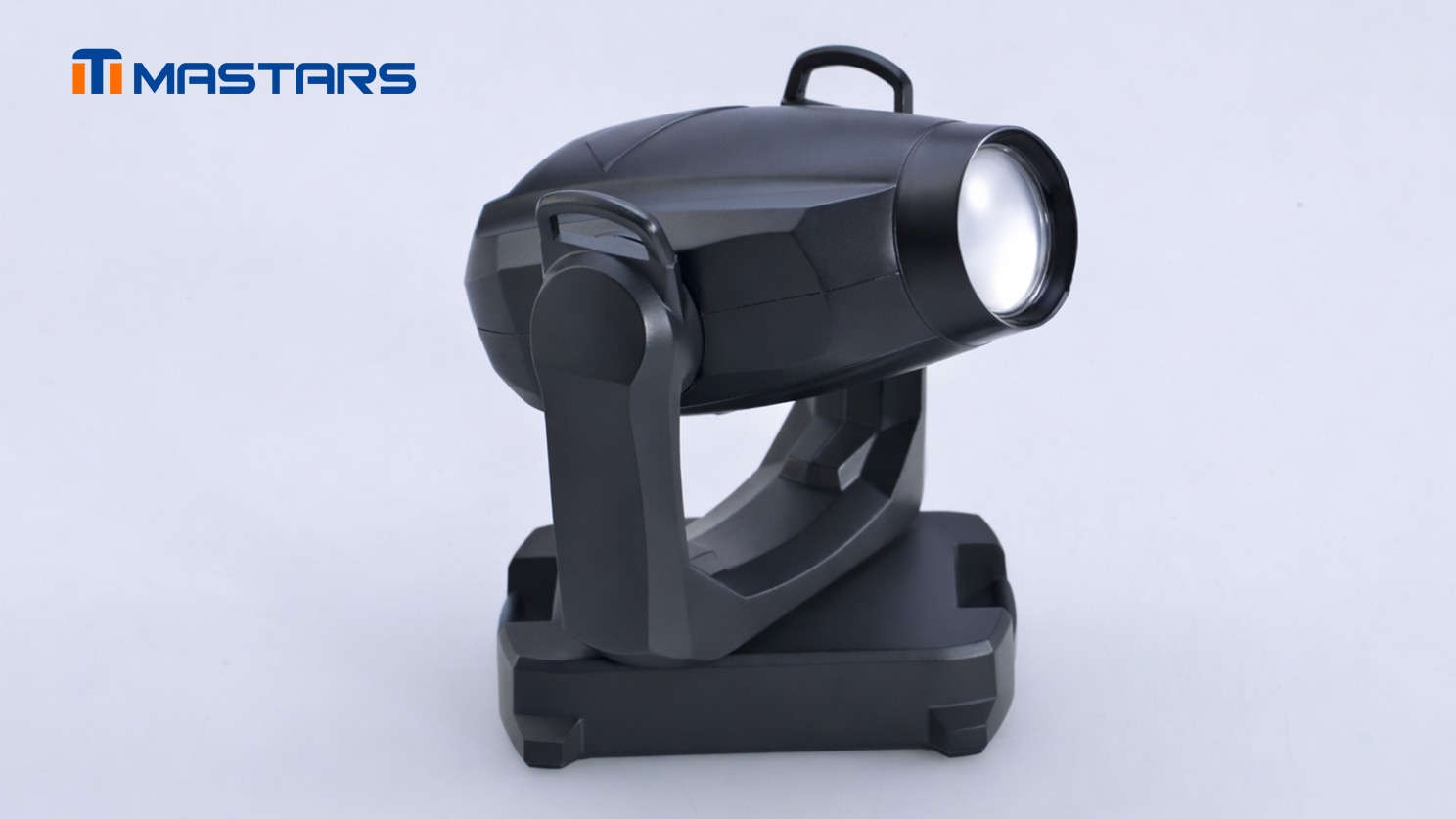
A compact moving head light prototype for early-stage validation, with clean surfaces and stable assembly structure.
From Rapid Prototypes to Stable Parts
Mastars supported a staged validation path, starting with 3D printing to quickly build and assemble early prototypes for structural and functional checks. This allowed the client to confirm geometry, internal layout, and assembly logic at low cost and high speed.
After initial validation, the process transitioned into CNC machining and vacuum casting to simulate production-level parts and enable small-batch assembly testing. CNC was applied to critical structural areas for accuracy verification, while vacuum casting was used for appearance-consistent outer parts. This combination supported multiple-unit assembly testing without early tooling investment, while maintaining stable part matching between lamp head, yoke, and base.
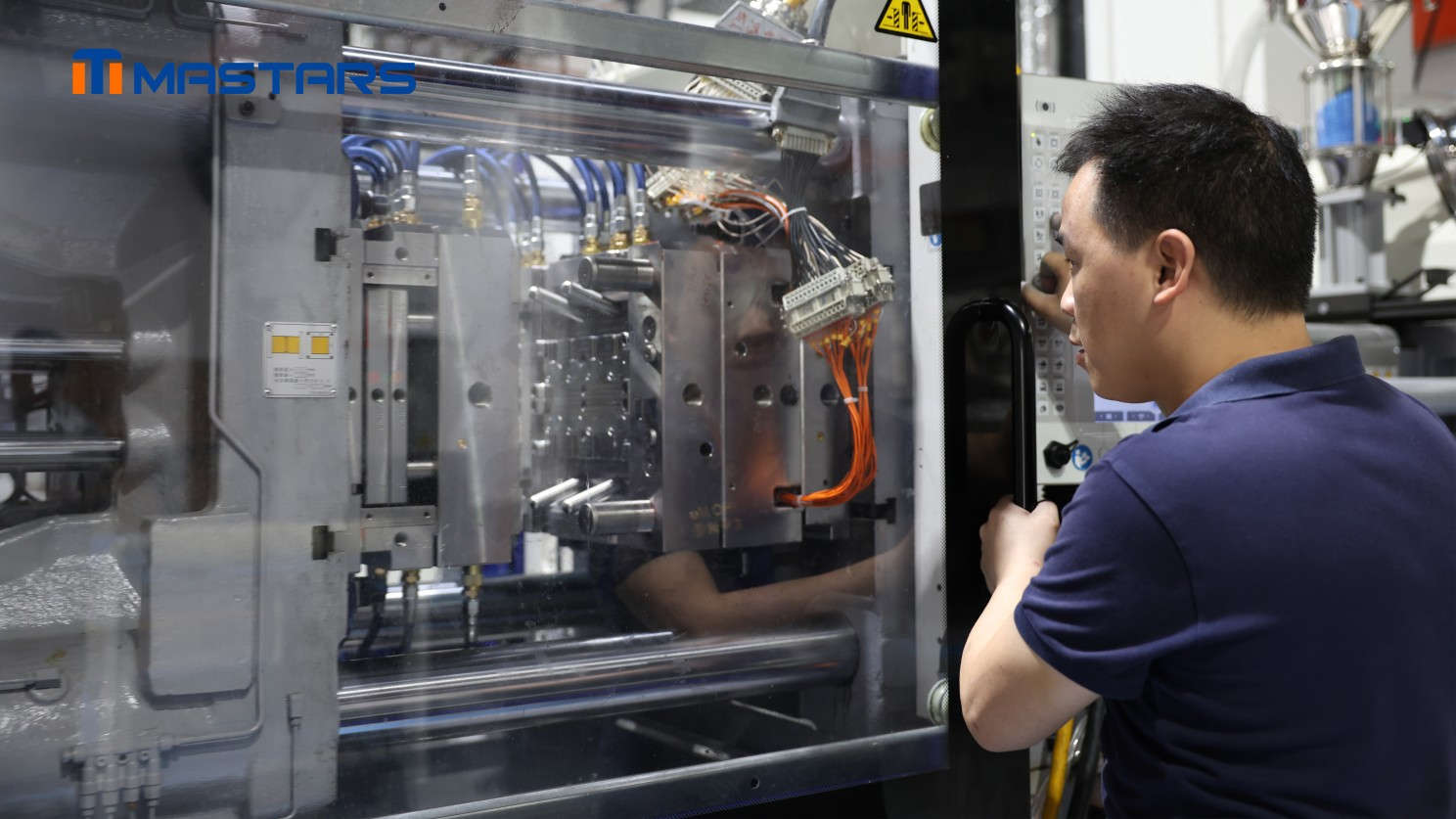
Injection molding in progress, supporting the transition from validated protytypes to stable mass production.
Quantified Gains Across Validation Stages
Client core value: By using a staged validation workflow, the client reduced early development cost by about 40%, shortened the prototype-to-tooling decision cycle by around 3 weeks, and reduced supplier coordination effort by nearly 60%.
✅ 3D printing shortened initial structural validation by about 5-7 days
✅ CNC verification reduced repeated fitting adjustments by about 30%
✅ Vacuum casting enabled 10-15 sets for assembly testing before tooling
✅ Staged validation reduced upfront tooling risk and cost by about 50%
✅ One supplier workflow reduced cross-team coordination time by nearly 60%
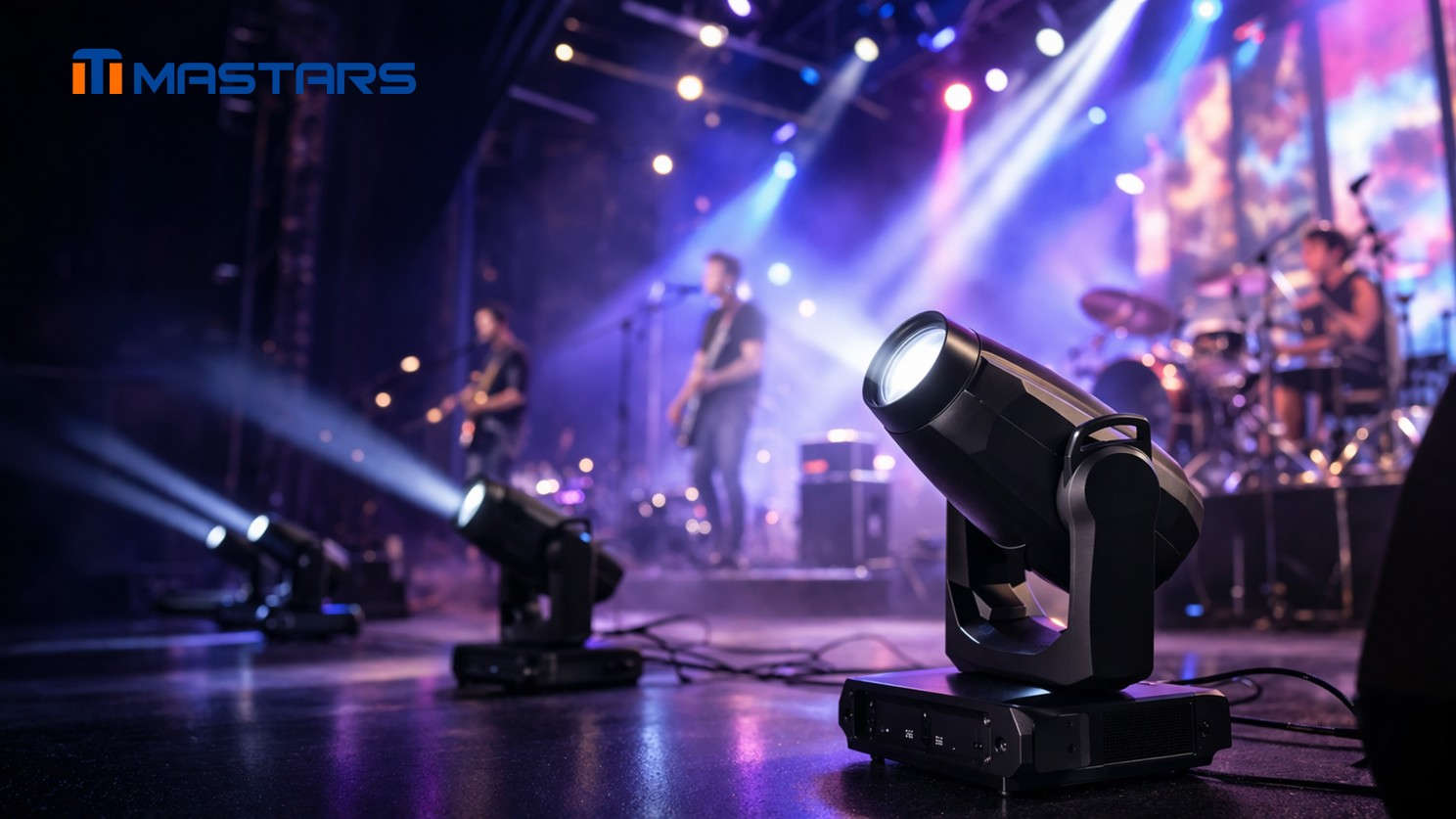
Compact moving head lights in a live stage setting, showing real application and lighting performance.
One Partner Across All Stages
This development path is not unique to stage lighting. Many industries require fast concept validation, structural confirmation, and small-batch testing before committing to tooling. When different suppliers handle these stages, timelines often stretch, and iteration slows.
- Consumer electronics — compact enclosure development
- Medical devices — handheld housing validation
- Industrial equipment — control module assembly
- Smart hardware — integrated lighting units
- Automotive interior — low-volume functional trim
If your team is planning a similar validation process, are you still coordinating multiple suppliers across stages? Work with Mastars to simplify your workflow and move faster from prototype to production.
 Mastars, the most trusted one-stop manufacturing services provider for low-volume production worldwide!
Hot Articles
Hot Tags
Stay Connected!


Manufacturing on Demand
Please fill in the following information to obtain plan details (information is confidential and not disclosed publicly), we will contact you within 24 hours, please keep your phone available!
Upload a 3D/2D model to see instant pricing, lead time, and DFM feedback.