



What is Prototyping? Definition, Types, Advantage


Prototyping: A Detailed Overview
1. Executive Summary
Prototyping is the process of creating a preliminary, physical or digital model of a product or component before it goes into full-scale production. It is a fundamental activity in the fields of engineering, design, and manufacturing, serving as a tangible answer to the question: "Will this idea work?"
The primary goal of prototyping is not to create a perfect final product, but to learn, test, and communicate. It enables designers, engineers, and stakeholders to validate concepts, identify potential issues, and gather user feedback early in the development cycle, thereby reducing risk, saving time, and ultimately leading to a better final product.
2. Core Principles & Philosophy
The philosophy of prototyping is rooted in iterative design and the principle of "failing fast, failing cheap." By creating inexpensive models early, teams can discover flaws and make improvements before committing significant resources to tooling and production.
Key Philosophies:
Iteration: Prototyping is cyclical. You build a prototype, test it, learn from the results, and then build an improved version.
Communication: A physical model is often more effective than a drawing or a description for communicating ideas within a team or to a client.
De-risking: It identifies technical, usability, and market risks before mass production.
Validation: It moves the design process from abstract assumptions to concrete evidence.
3. The Prototyping Process Workflow
Prototyping is not a single event but a process that evolves in fidelity and complexity.
- Define Objective: Clearly state what you want to learn or test with the prototype (e.g., "Does the mechanism work?" "Is the user interface intuitive?" "Does the form factor feel comfortable?").
- Select Fidelity & Method: Choose the appropriate level of detail and the best technology to achieve the objective.
- Fabricate: Create the prototype using the selected method (e.g., 3D printing, CNC machining, hand-crafting).
- Evaluate & Test: Subject the prototype to rigorous testing, which may include functional tests, user feedback sessions, or technical validation.
- Iterate or Proceed: Based on the feedback, the design is modified, and the cycle repeats until the objectives are met. The project then proceeds to the next stage (e.g., pre-production, manufacturing).
4. Types of Prototypes (Categorized by Purpose)
Prototypes serve different purposes throughout the development process.
Type | Purpose | Typical Fidelity | Example |
Proof-of-Concept (PoC) / Concept Model | To validate the core principle or functionality of an idea. Often crude and built with readily available materials. | Very Low | A mechanism made from cardboard, rubber bands, and tape. |
Form / Appearance Model | To evaluate the aesthetic, ergonomics, size, and shape of a product. Not functional. | Medium to High | A full-size, painted model of a new smartphone, made to look like the final product. |
Functional / Works-Like Prototype | To test the product's performance, strength, and mechanics. It may not look like the final product. | Medium | A 3D-printed gearbox that functions correctly, even if made from plastic instead of metal. |
User Experience (UX) / Feels-Like Prototype | To test the interaction flow, user interface, and overall user experience. Can be digital (e.g., a clickable app mockup) or physical. | Medium | A foam model of a power tool to test grip comfort and button placement. |
Engineering / Pre-Production Prototype | A high-fidelity prototype that looks and functions as close as possible to the final product. Used for final validation before manufacturing. | Very High | A CNC-machined part made from the final material, used for compliance testing. |
5. Fidelity Levels
- Low-Fidelity Prototype: Quick, cheap, and easy to change. Used for initial idea exploration and basic concept validation. Examples: Sketches, paper mockups, foam models.
- High-Fidelity Prototype: Closely resembles the final product in look, feel, and function. Used for detailed usability testing and final design validation. Examples: 3D-printed models with a smooth finish, functional prototypes using production-grade materials.
6. Common Prototyping Technologies
The choice of technology depends on the prototype's purpose, required material properties, timeline, and cost.
Technology | Best For | Pros | Cons |
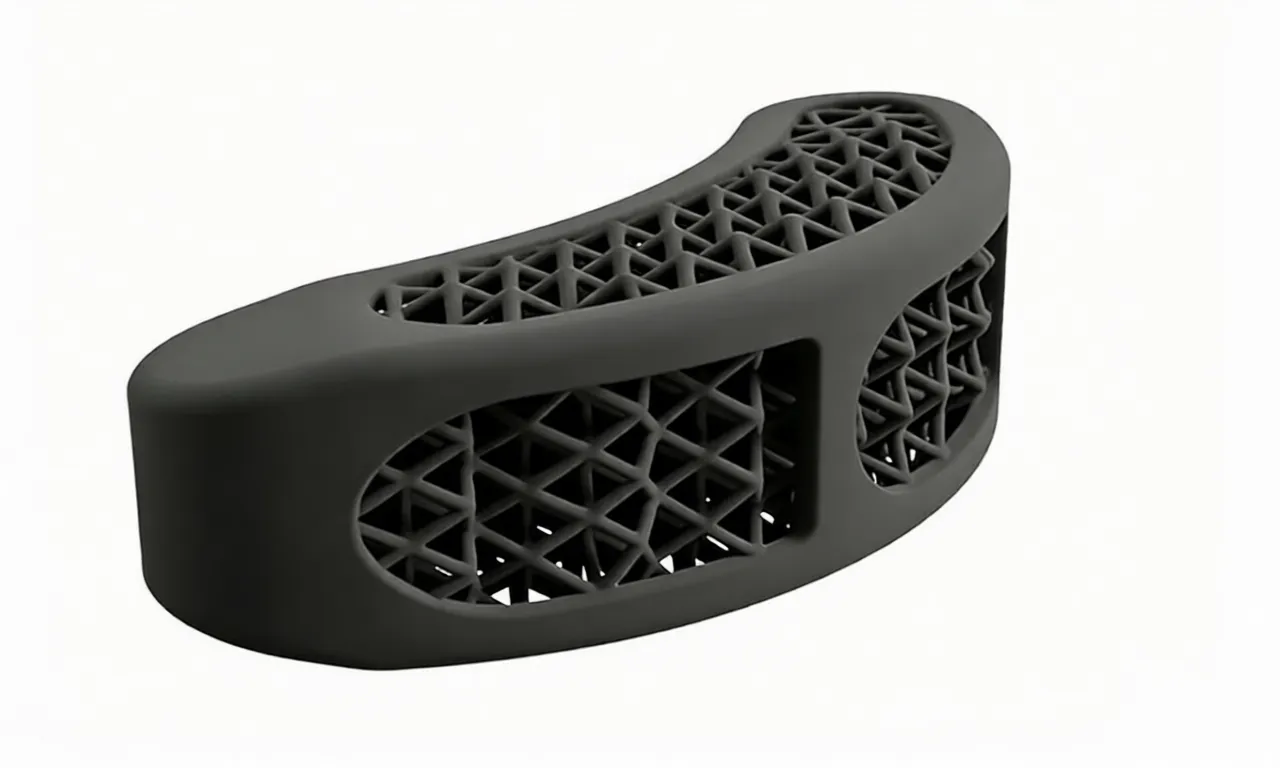
3D Printing (Additive Manufacturing) | Form models, functional testing, complex geometries. | Speed, design freedom, no tooling required. | Can be anisotropic; material properties not always production-grade. |
CNC Machining (Subtractive Manufacturing) | High-fidelity, functional prototypes. Excellent material properties. | High accuracy, uses real engineering materials (metals, plastics). | Higher cost, geometric limitations, can be slower than 3D printing. |
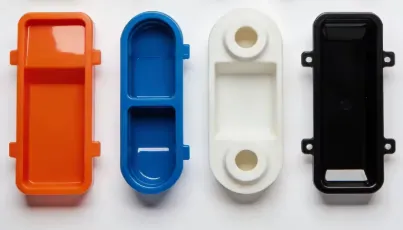
Vacuum Casting (Urethane Casting) | Small batches (10-25 units) of appearance models that look and feel like injection-molded parts. | Good surface finish, can simulate production materials (ABS-like, PP-like). | Requires a master pattern (often 3D printed); limited mold life. |
Sheet Metal Prototyping | Enclosures, brackets, chassis. | Uses production processes; strong and durable parts. | Limited to sheet metal forms. |
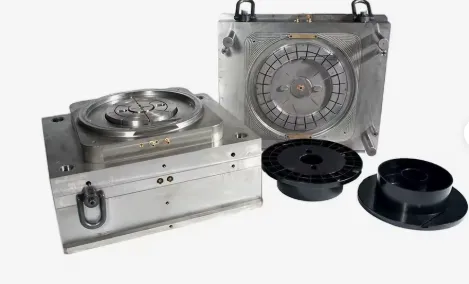
Rapid Tooling / Prototype Molding | Bridge manufacturing. Producing 100s-1,000s of parts in the final material before full-scale production tooling is made. | Parts are in the final material; validates the manufacturing process. | Higher cost and lead time than other methods; still requires tooling. |
7. Advantages and Limitations
Advantages | Limitations |
Reduces development risk and cost by identifying problems early. | Can be time-consuming and expensive, especially for high-fidelity prototypes. |
Improves communication and aligns stakeholder expectations. | Potential for "falling in love" with a prototype, making it difficult to accept necessary changes. |
Facilitates user feedback leading to a more user-centric design. | May not fully represent the final product in terms of performance or durability. |
Allows for exploration of multiple design concepts without major investment. | Can create intellectual property (IP) disclosure risks if not managed properly. |
Conclusion
Prototyping is an indispensable methodology in modern product development. It transforms abstract ideas into tangible artifacts that can be evaluated, tested, and refined. By strategically employing different types of prototypes at various stages—from a simple proof-of-concept to a high-fidelity pre-production unit—teams can de-risk the development process, save significant resources, and dramatically increase the likelihood of bringing a successful, well-designed product to market.
Hot Articles
Hot Tags
Stay Connected!


Manufacturing on Demand
Please fill in the following information to obtain plan details (information is confidential and not disclosed publicly), we will contact you within 24 hours, please keep your phone available!
Upload a 3D/2D model to see instant pricing, lead time, and DFM feedback.