



Terminology associated with Prototyping


Prototyping: Professional Terminology
Category 1: Core Concepts & Philosophies
Term | Definition & Context |
Prototype | A preliminary model of a product, built to test a concept, validate functionality, or communicate ideas. |
Prototyping | The process of creating a prototype. A core activity in design thinking and agile development. |
Proof of Concept (PoC) | A prototype built solely to verify that a certain concept or theory has the potential to be used. Focuses on core functionality, not form. |
Minimum Viable Product (MVP) | A prototype with just enough features to satisfy early customers and provide feedback for future product development. It tests the product's value in the market. |
Iterative Design | A cyclical design methodology based on prototyping, testing, analyzing, and refining a product. |
Fail Fast, Fail Cheap | A key philosophy of prototyping. The goal is to discover flaws and shortcomings as early and inexpensively as possible. |
Design Validation | Using a prototype to confirm that the product meets the intended design specifications and user needs. |
User Testing | The process of having end-users interact with a prototype to identify usability issues and gather feedback. |
Category 2: Fidelity & Purpose
These terms describe the detail level and primary goal of a prototype.
Term | Definition & Context |
Fidelity | The level of detail and functionality of a prototype. Ranges from Low-Fidelity to High-Fidelity. |
Low-Fidelity (Lo-Fi) Prototype | A simple, abstract, and quick-to-make prototype. Used to explore concepts, test flow, and layout without distraction. Examples: Sketches, wireframes, paper prototypes. |
High-Fidelity (Hi-Fi) Prototype | A prototype that closely resembles the final product in look, feel, and interaction. Used for detailed usability testing and final design validation. |
Horizontal Prototype | A broad but shallow prototype that shows a wide range of features but with little detail (e.g., a mockup of an entire website's top-level navigation). |
Vertical Prototype | A narrow but deep prototype that implements a single feature or workflow in full detail from start to finish. |
Looks-Like Prototype | A prototype that accurately represents the final product's visual design, form, and aesthetics, but may not be functional. |
Works-Like Prototype | A prototype that functions like the final product (e.g., electronics, mechanics) but may not have the final exterior. |
Feels-Like Prototype | A prototype focused on the user experience (UX), interaction, and ergonomics. |
Category 3: Physical Prototyping Methods & Outputs
Term | Definition & Context |
Appearance Model | A high-fidelity, non-functional model created to represent the final product's exact size, shape, color, and texture. Used for marketing and approval. |
Engineering Prototype | A functional prototype built to test technical performance, durability, and manufacturing feasibility. |
Scale Model | A prototype that is a proportional enlargement or reduction of the actual product. |
Mock-up | A often full-scale model used for design, evaluation, or promotion. It may be static or have limited functionality. |
Breadboard | An early-stage electronics prototype, typically on a perforated board, used to test circuit design without soldering. |
Form Factor Model | A prototype built specifically to test the physical dimensions, layout, and ergonomics of a device. |
Category 4: Digital/Software Prototyping
Term | Definition & Context |
Wireframe | A low-fidelity, skeletal outline of a digital interface (website/app), showing the layout of elements and functionality. |
Mock-up | A medium-fidelity static design of a digital product. It incorporates visual design (colors, typography) but is not interactive. |
Interactive Prototype | A clickable simulation of a digital product. It allows users to navigate between screens and experience the flow. |
Digital Twin | A virtual model of a physical product or process, used for simulation, analysis, and control. |
Category 5: Modern Manufacturing Methods for Prototyping
Term | Definition & Context |
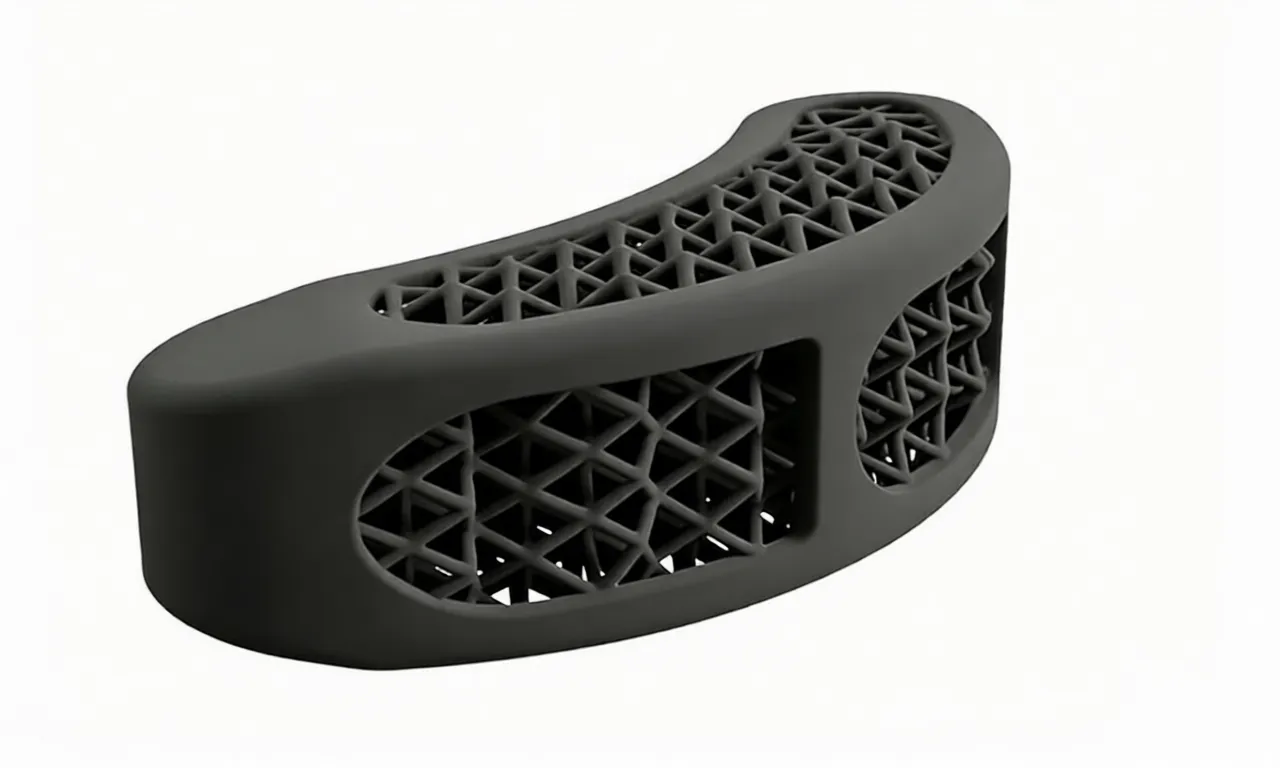
Additive Manufacturing (AM) | The formal term for 3D printing. Building parts layer-by-layer from digital models. |
3D Printing | The common term for Additive Manufacturing. Ideal for rapid iteration of complex geometries. |
Fused Deposition Modeling (FDM) | A common 3D printing process that uses a continuous filament of thermoplastic material. |
Stereolithography (SLA) | A 3D printing process that uses a laser to cure liquid resin into hardened plastic. Known for high detail and smooth surface finish. |
Selective Laser Sintering (SLS) | A 3D printing process that uses a laser to sinter powdered material (typically nylon). Known for creating strong, functional parts without support structures. |
Subtractive Manufacturing | The opposite of additive; starting with a solid block of material and removing material (e.g., milling, cutting, turning) to create a part. |
CNC Machining | Computer Numerical Control machining. A subtractive process ideal for creating high-strength, precise prototypes from real engineering materials (metals, plastics). |
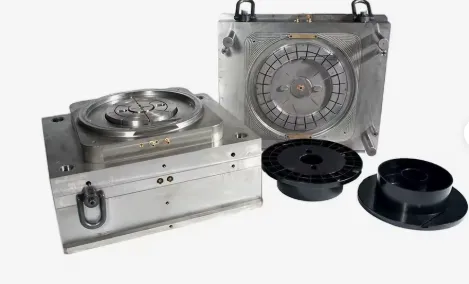
Rapid Tooling | Methods to create molds quickly for short-run production of prototypes in the final material (e.g., Urethane Casting, 3D-printed mold inserts). |
Vacuum Casting | A process where a silicone mold is made from a master pattern (often 3D printed) and used to cast multiple copies of a part in polyurethane resin. |
Category 6: The Prototyping Workflow & Evaluation
Term | Definition & Context |
Iteration | A single cycle of the design process: prototype -> test -> learn -> refine. |
Design for Manufacturability (DFM) | The practice of designing parts to simplify the manufacturing process, reducing cost and increasing quality. Prototyping is key to DFM. |
Usability Testing | Observing users as they interact with a prototype to identify points of confusion and areas for improvement. |
Feedback Loop | The process of gathering feedback on a prototype and using it to inform the next iteration. |
A/B Testing | Comparing two versions of a design (A and B) with users to see which one performs better against a defined goal. |
Hot Articles
Hot Tags
Stay Connected!


Manufacturing on Demand
Please fill in the following information to obtain plan details (information is confidential and not disclosed publicly), we will contact you within 24 hours, please keep your phone available!
Upload a 3D/2D model to see instant pricing, lead time, and DFM feedback.