



FAQ About SLM (Selective Laser Melting)


I. Basic Understanding
1. What is SLM (Selective Laser Melting)?
SLM is an advanced metal additive manufacturing (3D printing) technology that uses a high-energy laser beam to selectively melt metal powder layer by layer. It constructs fully dense 3D metal parts by fusing metal powder particles completely according to the cross-sectional data of the CAD model, stacking layer upon layer from the bottom to the top. SLM is characterized by high forming density (up to 99.5%-99.9%), excellent mechanical properties, and the ability to process complex metal structures, widely used in high-end manufacturing fields.
2. What are the core differences between SLM and other 3D printing technologies (such as SLA, FDM, SLS)?
The key differences lie in materials, forming principles, and part performance: ① Materials: SLM uses metal powders (such as titanium alloy, stainless steel, aluminum alloy), while SLA uses liquid photopolymer resin, FDM uses thermoplastic filaments, and SLS uses polymer or ceramic powders; ② Forming principle: SLM achieves full melting and fusion of metal powder via high-energy laser, SLA cures resin with UV light, FDM extrudes molten filaments, and SLS sinters powder at below-melting temperature (no full fusion); ③ Performance: SLM parts have density and mechanical properties comparable to forging, with high precision; SLA has excellent surface finish but brittle resin parts; FDM is low-cost but with obvious layer lines; SLS has good toughness but lower density than SLM.
3. What types of metal powders are commonly used in SLM, and their applicable scenarios?
Mainstream metal powders and applications: ① Titanium alloy (Ti-6Al-4V): High strength-to-weight ratio, excellent corrosion resistance and biocompatibility, used in aerospace (engine components, aircraft brackets) and medical (implants, surgical instruments); ② Stainless steel (316L, 17-4PH): Good corrosion resistance and mechanical properties, suitable for industrial parts (valves, nozzles), molds, and daily necessities; ③ Aluminum alloy (AlSi10Mg): Lightweight, high thermal conductivity, used in automotive (lightweight structural parts) and aerospace (cabin components); ④ Nickel-based superalloy (Inconel 718): Excellent high-temperature and corrosion resistance, for aerospace engine hot-end parts; ⑤ Cobalt-chromium alloy (CoCrMo): Biocompatible and wear-resistant, used in dental restorations (dental crowns) and orthopedic implants.
II. Process Characteristics
4. What are the main process steps of SLM?
The standard process includes seven steps: ① Model preparation: Design a 3D CAD model, export it as an STL file, and slice it into thin layers (layer thickness 0.02mm-0.1mm) with slicing software, while adding support structures to prevent deformation; ② Powder preparation: Dry and sieve the metal powder to remove agglomerates and impurities, ensuring powder fluidity (apparent density ≥1.4g/cm³) and particle size distribution (15μm-53μm is common); ③ Chamber preprocessing: Fill the SLM machine chamber with inert gas (argon or nitrogen) to reduce oxygen content (below 100ppm) and prevent metal oxidation; ④ Layer-by-layer melting: The powder spreading roller lays a thin layer of powder on the build platform, and the laser scans and melts the powder according to slice data; ⑤ Platform lowering: After melting one layer, the platform lowers by a layer thickness, and the next layer of powder is laid; ⑥ Post-processing: Remove the part from the platform, cut off support structures, and perform heat treatment (to eliminate internal stress); ⑦ Finishing: Polish, grind, or perform surface treatment (such as sandblasting, passivation) to meet precision and surface requirements.
5. What are the advantages of SLM technology?
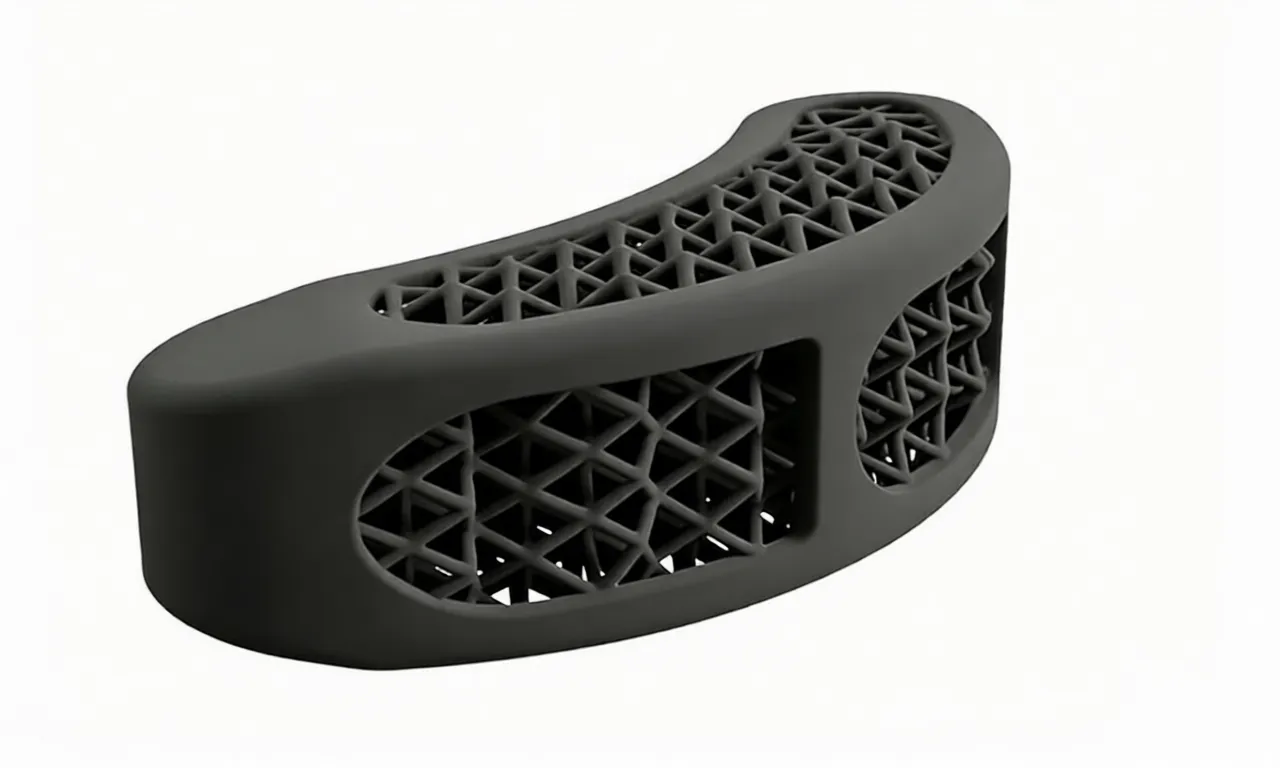
Core advantages focus on metal forming capability and performance: ① Complex structure forming: Can fabricate parts with internal channels, lattice structures, undercuts, and other complex shapes that are impossible or difficult to process by traditional methods (such as CNC machining, forging); ② High part density and performance: Full melting of metal powder ensures density up to 99.9%, with mechanical properties equivalent to or even exceeding forged parts; ③ Design flexibility: No need for molds, enabling rapid iteration of product designs and small-batch customized production; ④ Material utilization: Metal powder not melted can be recycled (recovery rate 80%-90%), reducing material waste; ⑤ Precision control: Dimensional tolerance up to ±0.02mm, suitable for high-precision metal parts.
6. What are the limitations of SLM technology, and how to address them?
Main limitations and solutions: ① High cost: SLM equipment, metal powder, and inert gas are expensive; reduce costs by recycling powder, improving production efficiency, and selecting cost-effective powders for non-high-end parts; ② Part deformation and residual stress: Rapid heating and cooling during laser melting cause internal stress, leading to deformation; solve by optimizing support structures, adjusting laser parameters (reducing scanning speed, increasing layer thickness), and performing post-heat treatment (annealing, stress relief); ③ Limited forming size: Restricted by the build chamber volume; split large parts into small ones for printing and then weld them with laser; ④ Surface roughness: Parts have inherent surface roughness (Ra 3μm-10μm) due to powder particle size; improve via post-processing (polishing, grinding, electrochemical polishing); ⑤ Powder handling requirements: Metal powder is flammable (such as aluminum powder) and may cause dust pollution; use closed powder handling systems, wear protective equipment, and control indoor dust concentration.
III. Applications and Quality
7. In which industries is SLM mainly applied?
Core applications cover high-end manufacturing fields: ① Aerospace: Lightweight structural parts (titanium alloy brackets), engine components (nickel-based superalloy blades), and satellite parts, leveraging high strength-to-weight ratio and complex structure capability; ② Medical: Customized orthopedic implants (hip joints, knee joints), dental restorations (crowns, bridges), and surgical guides, relying on biocompatibility and personalized design; ③ Automotive: High-performance parts (racing engine components, lightweight aluminum alloy brackets) and small-batch customized parts; ④ Mold manufacturing: Complex mold cores, cooling channels, and insert parts, improving mold cooling efficiency and product quality; ⑤ Military: Precision weapon components, armor parts, and customized military equipment; ⑥ Energy: Oil and gas exploration parts (corrosion-resistant valves) and new energy equipment components.
8. What are the common defects of SLM parts and their causes?
Typical defects and causes: ① Porosity: Insufficient laser energy, excessive scanning speed, or poor powder fluidity, leading to incomplete melting of powder; ② Cracks: Large temperature gradient during melting, residual stress, or inappropriate powder composition (such as high carbon content); ③ Balling effect: Low laser power, high scanning speed, or poor powder wettability, causing molten metal to form spherical droplets instead of continuous layers; ④ Deformation/warpage: Uneven stress distribution, unreasonable support structures, or improper post-heat treatment; ⑤ Inclusions: Impurities in metal powder, oxidation during printing, or contamination of the build chamber.
9. How to inspect and improve the quality of SLM parts?
Quality inspection and improvement methods: ① Dimensional inspection: Use coordinate measuring machine (CMM), laser scanner to detect dimensional accuracy and shape deviation; ② Internal quality inspection: Adopt X-ray computed tomography (CT), ultrasonic testing (UT) to detect porosity, cracks, and inclusions; ③ Metallographic inspection: Analyze grain structure and phase composition via metallographic microscope to evaluate internal quality; ④ Mechanical performance testing: Test tensile strength, yield strength, impact strength, and hardness, adjusting laser parameters and heat treatment processes if needed; ⑤ Improvement measures: Optimize laser parameters (power, scanning speed, hatch spacing), use high-quality and dry powder, enhance support design, perform sufficient post-heat treatment, and maintain a low-oxygen environment in the chamber.
IV. Production and Environmental Protection
10. What are the requirements for SLM equipment and operating environment?
Equipment and environment requirements: ① Equipment: The laser (fiber laser with wavelength 1064nm is common) must have stable power and beam quality; the powder spreading system needs uniform powder laying accuracy; the build chamber must have excellent airtightness to maintain inert gas atmosphere; ② Environment: Temperature control at 20℃-25℃, humidity below 50% RH (to prevent powder moisture absorption); clean and dust-free workshop (Class 1000 or higher) to avoid powder contamination; good ventilation to discharge potential harmful gases; ③ Safety equipment: Equip with inert gas monitoring system, fire extinguishing equipment (dry powder or CO₂), dust collection system, and personal protective equipment (dust masks, gloves).
11. How to handle SLM waste powder and used parts environmentally?
Environmental protection disposal methods: ① Waste powder: Collect unused powder, sieve to remove impurities and agglomerates, and reuse it after drying (mix with new powder in a certain ratio); unrecyclable powder (contaminated or oxidized) should be sealed and handed over to professional hazardous waste treatment institutions, avoiding random disposal; ② Used parts: Scrap metal parts can be recycled as raw materials for remelting; medical parts must be disinfected first, then disposed of in accordance with medical waste regulations; ③ Auxiliary waste: Inert gas is non-toxic and can be directly discharged; waste heat treatment furnace sludge should be collected and treated professionally; ④ Energy saving: Turn off laser and inert gas supply when not in use, and optimize process parameters to reduce energy consumption.
12. What are the key points of SLM equipment maintenance?
Core maintenance points: ① Laser system: Regularly check laser power, beam quality, and optical components (lens, reflector), clean or replace components with wear to avoid power attenuation; ② Powder system: Clean the powder spreading roller, powder tank, and recovery system regularly to prevent powder agglomeration and blockage; calibrate powder laying accuracy; ③ Build chamber: Clean the chamber inner wall and build platform after each print, check airtightness and inert gas pipeline for leaks; ④ Motion system: Lubricate the guide rail and screw of the build platform and powder spreading system to ensure stable operation; ⑤ Software and parameters: Update slicing and control software in time, back up process parameters, and calibrate the machine regularly.
V. Selection and Cost
13. Which products are suitable for SLM instead of other 3D printing technologies?
Scenarios preferred for SLM: ① High-precision metal parts with complex structures (internal channels, lattice structures) that cannot be processed by traditional methods; ② Small-batch customized metal parts (such as medical implants, aerospace components) requiring high mechanical properties; ③ Parts requiring lightweight design (lattice structures) while ensuring strength; ④ High-temperature, corrosion-resistant metal parts (nickel-based superalloy components). For resin prototypes, low-cost plastic parts, or large-scale metal parts, SLA, FDM, or traditional forging/machining are more suitable.
14. What constitutes the cost of SLM production, and how to control costs?
Cost composition and control methods: ① Equipment cost (40%-50%): High initial investment in SLM machines; choose equipment with appropriate build size according to production needs to avoid idle capacity; ② Powder cost (20%-30%): Metal powder is expensive; improve powder recovery rate (optimize sieving and drying processes), mix recycled powder with new powder reasonably; ③ Auxiliary cost (10%-15%): Inert gas, energy, support materials; optimize gas consumption, adjust process parameters to reduce energy use, and minimize support structures via design optimization; ④ Labor and maintenance cost (10%-15%): Train professional operators to reduce printing failures, and perform regular maintenance to extend equipment service life; ⑤ Post-processing cost: Optimize part design to reduce post-processing workload (polishing, grinding), and adopt automated post-processing equipment.
Hot Articles
Hot Tags
Stay Connected!


Manufacturing on Demand
Please fill in the following information to obtain plan details (information is confidential and not disclosed publicly), we will contact you within 24 hours, please keep your phone available!
Upload a 3D/2D model to see instant pricing, lead time, and DFM feedback.