



5-Axis Machining Technology in National Defense Industrial Products: Application, Difficulty Breakthrough and Engineering Practice


1. Introduction
The national defense industry serves as the core pillar of national military security and high-end equipment manufacturing. Modern military equipment is iteratively upgraded toward lightweight, complication, high precision, and extreme working condition adaptability. Core national defense products such as aero-engine blades, special-shaped missile shells, pressure-bearing components of nuclear submarines, and precision cavities of military radars generally feature special-shaped curved surfaces, thin-walled deep cavities, and composite structures. Meanwhile, they are mostly manufactured from difficult-to-machine materials including titanium alloys, superalloys, and high-strength special steel, imposing stringent requirements on machining accuracy, structural integrity, and mechanical properties.
Relying on the coordinated movement of three linear axes (X, Y, Z) and two rotary axes, 5-axis linkage machining technology breaks through the motion limitations of traditional 3-axis machine tools. It enables arbitrary spatial adjustment of tool posture and one-step integrated machining of complex curved surfaces and special-shaped structures, which significantly reduces cumulative errors caused by repeated clamping. Hence, it has become a core technical means for the precision manufacturing of high-end national defense equipment. Compared with civilian machining scenarios, 5-axis machining in the national defense industry demands higher standards for machining stability, precision consistency, material integrity, and processing safety. It also faces prominent technical challenges such as difficult cutting of special materials, frequent structural machining interference, strict control algorithm requirements, and imperfect process systems.
Based on the actual production conditions of the national defense industry, this paper systematically analyzes the core technical difficulties in 5-axis machining of military products, proposes targeted comprehensive solutions, refines standardized implementation procedures, and elaborates on the application achievements after technology implementation combined with engineering cases. The research provides references for the optimization of 5-axis machining of similar military precision components and facilitates the independent and high-end development of high-end defense manufacturing technologies.
2. Core Technical Difficulties of 5-Axis Machining in National Defense Industry
The special service conditions and structural design criteria of military defense products determine that their 5-axis machining is different from ordinary civilian mechanical processing. Combined with the machining practices in aviation, aerospace, coastal defense, and weapon industries, the current application of 5-axis machining technology mainly encounters technical difficulties in five dimensions: materials, structures, equipment, techniques, and detection. These difficulties are mutually coupled, restricting the improvement of machining quality and production efficiency.
2.1 Extreme Cutting Difficulty of Special Military Materials
Pressure-bearing, high-temperature resistant, and corrosion-resistant core defense components are mostly made of special materials such as titanium alloys, nickel-based superalloys, and martensitic stainless steels. The poor physical and chemical properties of these materials bring severe challenges to 5-axis cutting. Firstly, the thermal conductivity of titanium alloys is only 1/5 of that of ordinary steel. Heat is highly concentrated on the cutting edge during machining and cannot be dissipated rapidly, easily causing high-temperature wear and edge chipping of cutting tools. Secondly, the cutting resistance of superalloys is 2-3 times that of ordinary steel. Uneven multi-axis force during 5-axis linkage machining tends to induce machine tool vibration, resulting in tool marks and scratches on workpiece surfaces. Thirdly, these materials have high chemical activity. At high cutting temperatures, diffusion adhesion reactions occur between metals and tools, aggravating tool loss and damaging the surface layer of workpieces. This impairs the mechanical properties of components, failing to meet the fatigue resistance and corrosion resistance requirements of military products.
2.2 Machining Interference and Precision Loss of Complex Special-Shaped Structures
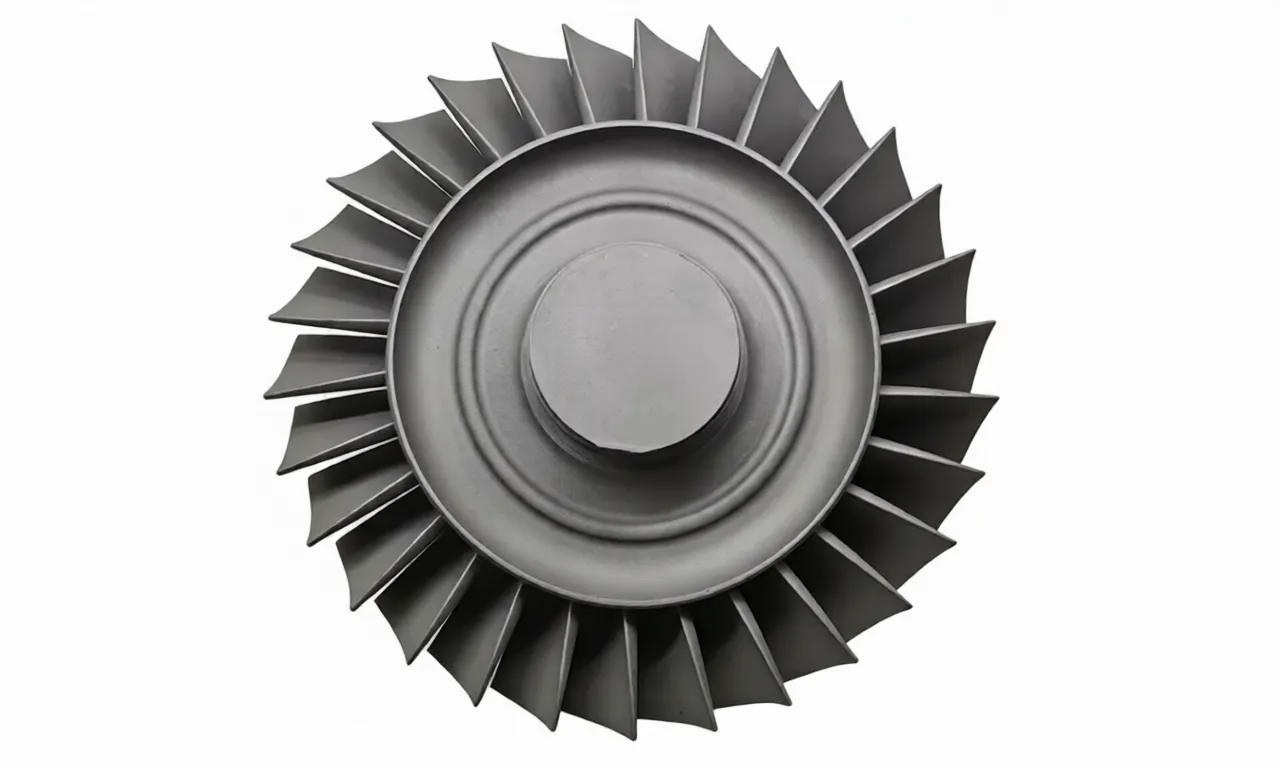
Military products including aero-engine blisks, missile fairings, integral titanium alloy frames for fighter jets, and deep-sea sealed cavities generally have twisted curved surfaces, narrow deep cavities, and thin-walled special-shaped structures with extremely high geometric complexity. On the one hand, traditional 3-axis machine tools require multiple clamping disassembly for processing, with a cumulative positioning error and a rejection rate of over 12%. Although 5-axis machining can adjust tool posture, collisions between tools, spindle heads, workpiece inner walls, and jigs frequently occur in narrow deep cavities, and conventional tool path planning cannot adapt to the machining of blind special-shaped areas. On the other hand, thin-walled structures have poor rigidity. Cutting force during high-speed 5-axis machining easily causes micro-deformation of workpieces. Meanwhile, the swinging of rotary axes generates dynamic following errors, making it difficult to control inter-axis linkage deviations. This often leads to curved surface connection misalignment and tool joint steps. For instance, a 0.3 mm step difference long existed in the front and back machining of helicopter honeycomb components, failing to meet military assembly precision standards.
2.3 Technical Deficiencies of High-End 5-Axis Equipment Control Systems
High-precision 5-axis linkage CNC machine tools are core equipment for national defense machining, yet high-end CNC systems have long been restricted by technical barriers. Firstly, the multi-axis synchronous control accuracy is insufficient. Dynamic coupling errors are obvious during the linkage of linear and rotary axes, and ordinary control systems cannot achieve submicron deviation control, with inter-axis following errors expanding after long-term machining. Secondly, thermal deformation exerts a prominent impact. Military products require continuous long-hour machining, and heat generated by the operation of spindles, guide rails, and rotary axes causes micro-deformation of mechanical structures due to temperature gradients, resulting in positioning accuracy offset. Thirdly, the RTCP (Rotated Tool Center Point) algorithm of domestic equipment is insufficiently optimized, leading to tool center point trajectory deviation in curved surface machining, poor smoothness of complex curved surfaces, and difficulty in meeting the military ultra-high surface roughness requirement of Ra 0.8 μm.
2.4 Imperfect Specialized Machining Process System for Military Industry
Most current domestic 5-axis machining processes adopt general civilian schemes, lacking customized process systems adapted to defense products. Firstly, the matching degree of tool selection and cutting parameters is low. Blind application of general parameters without targeted optimization of feed speed, cutting depth, and spindle speed for special alloys results in low machining efficiency and severe tool loss. Secondly, jigs have poor universality. Special-shaped military components are difficult to position, and conventional clamping methods have insufficient rigidity, prone to displacement deviation during machining. Thirdly, the absence of simulation verification systems means tool paths and motion postures cannot be virtually simulated before machining, making it impossible to predict collision risks and causing extremely high scrap costs for valuable military test pieces.
2.5 Difficulties in Precision Detection and Quality Traceability
After the machining of defense products, conventional measuring tools such as calipers and micrometers are incapable of detecting the dimensions of complex curved surfaces and inner cavities, failing to accurately capture curved surface radian, inner cavity tolerance, and microscopic surface defects. Meanwhile, military products have strict quality traceability requirements. The unsystematic storage of multi-axis motion data, cutting parameters, temperature changes, and error compensation data during 5-axis machining hinders the traceability of hidden processing hazards once quality defects occur, which fails to comply with military product quality management specifications.
3. Comprehensive Solutions for 5-Axis Machining Technical Difficulties
Combined with the machining characteristics of national defense industrial products and the above technical difficulties, an integrated 5-axis machining solution is constructed adhering to the core principles of material adaptation, structural optimization, equipment upgrading, process customization, precise detection, and safety controllability. Aiming to achieve qualified machining quality, efficiency improvement, cost controllability, and technological independence of military precision components, systematic solutions are formulated from six dimensions: material cutting optimization, intelligent tool path planning, equipment precision compensation, jig improvement, process system construction, and detection traceability optimization, so as to balance machining accuracy, structural integrity, and production stability and meet the stringent production standards of defense products.
3.1 Material Cutting Optimization: Reduce Machining Loss of Special Materials
For difficult-to-machine materials such as titanium alloys and superalloys, special coated tools and auxiliary machining technologies are adopted to optimize the physical cutting environment. High-temperature resistant and wear-resistant cemented carbide coated tools are selected to reduce material adhesion and high-temperature wear. Ultrasonic elliptical vibration-assisted cutting technology is introduced to weaken cutting resistance and disperse cutting heat, solving the problems of poor thermal conductivity and vibration deformation. Meanwhile, the cooling and lubrication scheme is optimized with high-pressure minimal quantity cooling to precisely reduce the temperature of cutting areas and protect the surface mechanical properties of workpieces.
3.2 Intelligent Tool Path Planning: Avoid Interference and Control Machining Deformation
A virtual machining simulation platform is built based on professional 5-axis CAM software. One-to-one 3D modeling is carried out for complex special-shaped components to simulate tool motion trajectories and spindle swinging postures in advance, thereby eliminating collision risks in deep cavities and blind areas. An adaptive tool path algorithm is adopted to optimize curved surface cutting paths, reduce the cutting force on thin-walled structures, and control workpiece micro-deformation with rigid positioning and clamping methods. The curved surface connection tool path is optimized to eliminate tool joint steps and control curved surface machining errors at the micron level.
3.3 Equipment Precision Upgrading: Optimize Control System and Error Compensation
Domestic high-end 5-axis CNC systems are upgraded, and a multi-axis cross-coupled closed-loop control algorithm is reconstructed to establish a dynamic error compensation model, realizing dual error management of feedforward prediction and real-time closed-loop correction. Equipped with high-resolution linear gratings and full-axis real-time temperature monitoring modules, an active thermal deformation compensation algorithm is applied to offset precision deviation caused by machine tool thermal deformation. The RTCP rotation center point control algorithm is optimized to improve the smoothness of multi-axis linkage and ensure long-term continuous machining precision stability.
3.4 Customized Process System: Build Specialized Machining Procedures for Military Industry
General civilian machining processes are abandoned. Processing grades are divided according to the material, structure, and precision requirements of different military products, and customized cutting parameter libraries, tool libraries, and jig libraries are established. Integrated special jigs are designed, and the rigid bushing positioning method is adopted to optimize clamping benchmarks and reduce clamping errors. A complete process flow including rough machining, semi-finish machining, finish machining, and deburring is formulated with strictly controlled machining allowances for each procedure to avoid component deformation caused by stress concentration.
3.5 Improved Detection and Traceability: Construct Military Quality Control System
High-precision testing equipment such as industrial CT, coordinate measuring machines (CMM), and surface roughness detectors are introduced to realize non-destructive high-precision detection of complex curved surfaces and inner cavities. A processing data management platform is built to collect real-time data including axis motion parameters, cutting data, compensation data, and temperature data, forming electronic archives for individual products. This meets the full-process quality traceability requirements of military products and strengthens product quality management capabilities.
4. Detailed Implementation Procedures for 5-Axis Machining of Defense Products
To ensure the implementation of solutions, the 5-axis machining optimization process is divided into five stages in accordance with military enterprise production specifications: preliminary preparation, simulation preprocessing, trial cutting debugging, batch processing, detection and review, with refined standardized implementation steps to guarantee controllable processing and qualified precision.
4.1 Preliminary Preparation: Product Analysis and Equipment Jig Preparation
First, conduct product process review, disassemble the technical requirements of military product drawings, clarify material properties, structural characteristics, precision tolerances, surface quality, and mechanical performance indicators, mark difficult processing areas such as deep cavities, thin walls, and special-shaped curved surfaces, and determine processing risk levels. Second, select and debug equipment; adopt domestic high-precision 5-axis linkage machining centers and complete machine tool precision calibration. The positioning accuracy and repeated positioning accuracy of linear and rotary axes are tested to meet the basic precision standard of ±0.003 mm. Third, customize jigs and tools; design integrated rigid jigs based on product structures and optimize clamping benchmarks with rigid bushing positioning structures. Special coated tools for special material processing are matched, and tool dynamic balance detection is completed in advance. Fourth, build a cooling system and debug the high-pressure minimal quantity cooling device to adapt to heat dissipation requirements in high-temperature cutting.
4.2 Simulation Preprocessing: Tool Path Planning and Collision Prediction
Professional 5-axis programming software including HyperMILL and UG is used to import 3D product models and build an integrated virtual machining scene covering machine tools, tools, and jigs. Tool swing angles and safe moving distances are set according to product structural characteristics, and adaptive tool paths are generated by combining contour milling and surface flow line milling. For narrow deep cavities, tool entry and exit angles are optimized to avoid interference between spindles, jigs, and workpieces. After tool path programming, full-process virtual machining simulation is carried out to simulate continuous motion trajectories, eliminate hidden dangers such as blind area collisions, tool path stuttering, and connection misalignment, and iteratively optimize tool path schemes. The programming time is reduced by more than 60%, and the processing program is output only after confirming no abnormalities in virtual machining.
4.3 Trial Cutting Debugging: Parameter Optimization and Error Compensation
Test cutting is carried out with waste workpieces of the same material to verify the feasibility of tool paths and process adaptability. Core parameters such as spindle speed, feed rate, and cutting depth are gradually adjusted during trial cutting, and differentiated cutting parameters are set for titanium alloys and superalloys to reduce cutting vibration and tool loss. The system error compensation function is enabled synchronously to collect real-time multi-axis linkage errors and thermal deformation errors, correct control algorithm parameters, and stabilize inter-axis synchronous deviation at the submicron level. After trial cutting, a CMM is used to detect the dimensional accuracy and surface roughness of test pieces, analyze defects such as tool joint steps and deformation, and optimize clamping force and tool posture until all indicators meet military acceptance standards.
4.4 Batch Processing: Standardized Management and Real-Time Monitoring
Batch processing of military products is carried out after qualified trial cutting in strict accordance with standardized technological processes. Accurate positioning and clamping of workpieces are completed before machining, with clamping errors controlled within 0.05 mm. Temperature and vibration monitoring modules are enabled during processing to collect real-time machine tool operating data, and the system automatically completes dynamic compensation for thermal deformation and cutting force. The processing procedures are strictly divided: reasonable machining allowances are reserved in rough machining to release residual material stress; surface flatness is optimized in semi-finish machining; dimensional tolerances are strictly controlled in finish machining; burrs are automatically removed after processing to avoid errors caused by secondary manual processing. Regular equipment maintenance including worn tool replacement and machine tool impurity cleaning is implemented to ensure batch processing stability.
4.5 Detection and Review: Precision Detection and Data Archiving
After batch processing, non-destructive testing of finished products is conducted using industrial CT and high-precision CMM, focusing on detecting special-shaped curved surface radian, inner cavity size, wall thickness tolerance, and surface roughness. Unqualified products are screened out and defect causes are analyzed. Full-process processing data including tool path parameters, cutting parameters, error compensation data, and equipment operation data are summarized to establish electronic data archives for each military product and realize full-process quality traceability. Processing problems are reviewed to iteratively optimize process schemes, improve the military dedicated machining process library, and provide technical support for the processing of similar products in the future.
5. Application Achievements after Technical Optimization Implementation
With the above technical optimization schemes and standardized implementation procedures, 5-axis machining technology has been widely applied in aerospace, space, and coastal defense industries. Multiple technical bottlenecks have been broken through, achieving remarkable results in machining accuracy, production efficiency, product performance, cost control, and technological independence, with many indicators reaching domestic leading and international advanced levels.
5.1 Greatly Improved Machining Accuracy and Optimized Product Qualification Rate
Relying on multi-axis error compensation, intelligent tool path planning, and rigid positioning clamping technology, the machining accuracy of complex military components has achieved leapfrog improvement. The key dimensional error of fighter titanium alloy integral frames is controlled within 0.02 mm; the profile error of aero-engine blades is reduced to ±0.005 mm; the surface roughness of curved surfaces is optimized from Ra 3.2 μm to Ra 0.8 μm. The 0.3 mm tool joint step problem of helicopter honeycomb components is successfully solved, and the clamping error is stably controlled within 0.05 mm. After optimization, the product rejection rate drops from 12% to less than 2%. The high-precision and high-consistency machining quality meets the stringent assembly and service requirements of military equipment.
5.2 Simplified Production Process and Multiplied Machining Efficiency
The integrated 5-axis machining mode replaces the traditional separate processing with multiple equipment and procedures, reducing the frequency of workpiece disassembly, positioning, and calibration. The processing of a key pressure-bearing component for nuclear submarines originally required 3 sets of equipment, 10 working procedures, and 3 months, which is shortened to 1 month with one-piece integral forming on a single 5-axis machine tool. The production cycle of aerospace impeller components is shortened by 40%, and the programming time is reduced by 60%. Meanwhile, the ultrasonic auxiliary cutting technology improves cutting smoothness, reduces tool loss rate by 35%, and increases the comprehensive production and processing efficiency by more than 40%, effectively ensuring the batch delivery capacity of military products.
5.3 Upgraded Mechanical Properties and Enhanced Service Reliability of Equipment
After process optimization, machining stress is evenly released, surface processing defects are significantly reduced, and component structural integrity is greatly improved. The integral forming technology eliminates weak connection points in traditional splicing processing. The fatigue resistance of nuclear submarine pressure-bearing components is increased by 15%, with enhanced tightness and deformation resistance in deep-sea high-pressure environments. The high-temperature resistance and corrosion resistance of aerospace superalloy components are optimized, extending the service life of engine blades. It effectively reduces the later maintenance cost of military equipment and improves the combat adaptability and service stability of military equipment.
5.4 Broken Technical Barriers and Realized Independent Control of Core Technologies
This technical optimization is fully based on domestic 5-axis machine tools, independently developed numerical control algorithms, and localized processing techniques, breaking the technical monopoly of imported high-end 5-axis equipment and systems. Domestic 5-axis equipment represented by Ked CNC and Dalian Guangyang has been successfully applied to the processing of core military components. The optimized cross-coupled closed-loop control algorithm and thermal deformation compensation technology reach the international top level. A dedicated process database adapted to the national defense industry is formed, making up for the shortcomings of domestic high-end military precision machining, promoting the transformation of key 5-axis machining technologies from technological bottlenecks to independent control, and strengthening the security of the national defense industrial industry.
5.5 Constructed Standardized System with Outstanding Industry Reuse Value
Through this engineering practice, a standardized 5-axis machining process dedicated to the military industry has been established, covering a cutting parameter library for different materials, tool path planning standards for special-shaped components, jig design specifications, and quality traceability management systems, forming replicable and promotable technical schemes. This system has been successfully applied to many military enterprises in the fields of aero-engine, aerospace, and weaponry, providing technical references for the processing of similar complex military precision components and promoting the standardized and large-scale development of the domestic national defense 5-axis machining industry.
6. Conclusion and Future Outlook
As a core key technology for high-end national defense equipment manufacturing, 5-axis machining faces technical difficulties including difficult cutting of special materials, interference of special-shaped structures, insufficient equipment control accuracy, and imperfect process systems. Adopting the integrated solution of material optimization, intelligent programming, equipment upgrading, process customization, and precise detection, this paper divides standardized processing steps and successfully breaks through multiple technical bottlenecks, realizing high-precision, high-efficiency, and high-reliability machining of military products. The optimization not only greatly improves the processing quality and production efficiency of military products, but also realizes the independent control of core processing technologies, laying a solid technical foundation for the high-quality development of the national defense industry.
In the future, national defense equipment will continue to develop toward ultra-precision, large-scale integration, and extreme environment adaptability, requiring further iterative upgrading of 5-axis machining technology. Subsequent research can combine artificial intelligence, big data, and industrial internet technologies to develop intelligent adaptive 5-axis machining systems with autonomous prediction, parameter adjustment, and error correction capabilities. The core components of domestic high-end 5-axis machine tools will be further optimized to improve equipment stability under extreme working conditions. In-depth research on new materials and processes will be conducted to solve the machining difficulties of ultra-high hardness composite materials and oversized special-shaped components. Continuous improvement of the national defense industrial 5-axis machining technology system will promote the upgrading of China's military precision manufacturing capability to a higher level, providing a solid technical guarantee for national defense security and the development of the high-end equipment industry.
Hot Articles

Hot Tags
Stay Connected!


Manufacturing on Demand
Please fill in the following information to obtain plan details (information is confidential and not disclosed publicly), we will contact you within 24 hours, please keep your phone available!
Upload a 3D/2D model to see instant pricing, lead time, and DFM feedback.