



Processing Technology and Precision Control of Modern Mold Manufacturing


1. Introduction
Mold manufacturing is an indispensable foundational industry in modern mechanical manufacturing. It provides core forming tools for automobiles, electronic products, medical equipment and daily consumer goods. The manufacturing quality of molds directly determines the dimensional accuracy, surface quality and batch production consistency of industrial products. With the continuous upgrading of industrial manufacturing standards, modern molds have gradually developed toward high precision, high hardness, long service life and complex curved surface structure. Traditional empirical processing methods can no longer meet the stringent requirements of tolerance control, surface finish and assembly coordination in industrial mass production. Therefore, standardized processing logic, hierarchical technological arrangement and systematic process control have become the core means to improve mold manufacturing quality. This article systematically sorts out the mainstream processing flow of industrial molds, analyzes the key technical points in machining, heat treatment and surface modification, summarizes common defects and control methods in the manufacturing process, and discusses the optimization direction of modern mold production technology. The purpose is to form a complete and rigorous technical analysis of mold manufacturing, providing practical reference for factory processing and precision production. The total word count of this paper is about 2000 words.
2. Basic Classification and Structural Characteristics of Industrial Molds
2.1 Common Classification of Molds
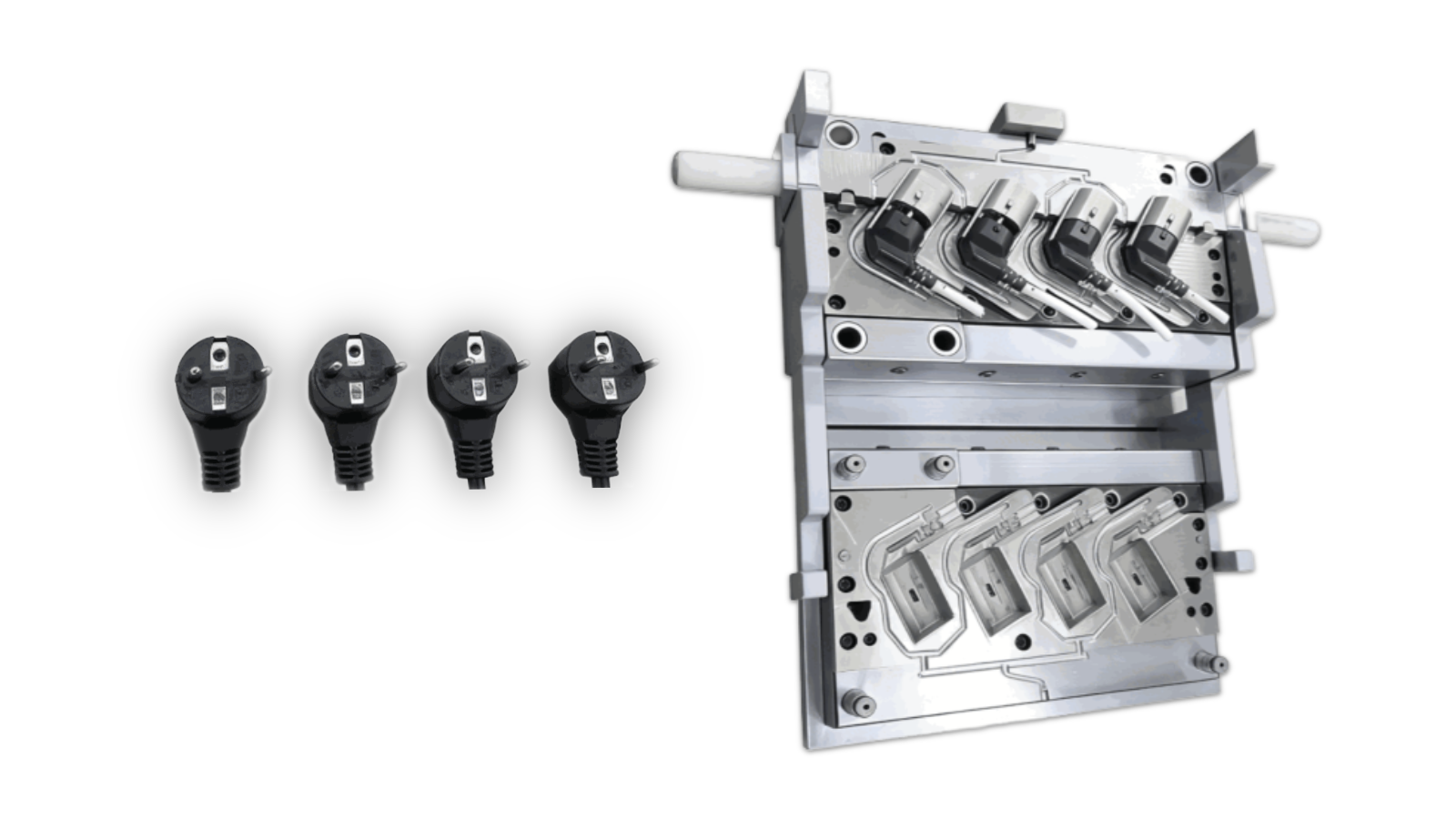
According to different forming principles and application scenarios, industrial molds can be divided into injection molds, stamping molds, die-casting molds and extrusion molds. Injection molds are widely used in plastic product processing, featuring complex cavity structure and high requirements for demolding uniformity. Stamping molds are applied to metal sheet processing, requiring high structural rigidity and fatigue resistance. Die-casting molds are suitable for aluminum alloy and zinc alloy casting parts, which need to bear high temperature and high pressure for a long time. Different types of molds have obvious differences in material selection, processing difficulty and tolerance standard. Clarifying mold classification is the primary premise to formulate reasonable manufacturing schemes.
2.2 Core Structural Entities of Mold
A complete set of industrial molds consists of multiple interconnected structural components. The core entities include mold base, cavity, core, guide mechanism, pouring system and cooling system. The cavity and core directly determine the shape and size of the product, which are the key processing parts of the mold. The guide post and guide sleeve ensure the accurate closing of the movable mold and fixed mold. The pouring channel controls the flow rate and uniformity of the raw material. The cooling water channel adjusts the temperature balance during molding. Each component has independent processing standards, and the assembly coordination between components directly affects the overall service performance of the mold. Clear division of structural entities helps to realize refined processing and hierarchical quality inspection.
3. Standard Manufacturing Process of Mold Processing
3.1 Material Selection and Blank Processing
Material performance is the fundamental factor affecting mold hardness, wear resistance and service life. Common mold steels include S136, P20, H13 and SKD11. For plastic molds requiring high surface finish, S136 stainless steel is usually selected due to its excellent polishing performance and corrosion resistance. For high-temperature die-casting molds, H13 hot work mold steel is preferred to maintain thermal stability under repeated temperature changes. Before formal machining, the steel blank needs to undergo forging and stress relief annealing to eliminate internal residual stress. This step effectively avoids mold deformation and cracking in subsequent processing and long-term use.
3.2 Rough Machining and Finishing
Machining is the main link of mold shaping, which is divided into rough machining and finish machining. In the rough machining stage, CNC milling machines are used to quickly remove redundant materials, preliminarily shape the cavity contour, and reserve a processing margin of 0.3mm to 0.8mm for the finished surface. The cutting feed and spindle speed are reasonably controlled to reduce tool loss and processing time. In the finishing stage, high-precision milling and wire cutting processes are adopted to control the dimensional tolerance within ±0.01mm. For complex curved surfaces and narrow grooves, electrode discharge machining is used to ensure structural completeness and dimensional consistency. The hierarchical processing mode can effectively balance processing efficiency and manufacturing accuracy.
3.3 Heat Treatment and Surface Strengthening
Heat treatment is an essential process to improve mold mechanical properties. The conventional process includes quenching, tempering and low-temperature stress relief. After heat treatment, the hardness of mold steel can be increased from 20-30HRC to 50-58HRC, which greatly improves wear resistance and compression resistance. In addition, surface strengthening treatments such as nitriding and titanium plating are carried out for the cavity surface. These treatments form a dense protective film on the metal surface, reducing mold adhesion and improving surface smoothness. Reasonable heat treatment and surface modification can extend the service life of the mold by more than twice.
3.4 Assembly, Debugging and Inspection
After the independent processing of all components, the mold enters the assembly stage. Workers assemble the guide mechanism, positioning pins, ejection system and cooling pipeline in accordance with standardized assembly sequences to ensure smooth mold opening and closing without jamming. The debugging process includes trial molding, pressure adjustment and temperature parameter optimization. By observing the filling state and surface quality of the trial product, workers modify the pouring channel and exhaust groove. Finally, three-dimensional coordinate measuring instruments and roughness detectors are used for comprehensive inspection to ensure that all dimensional indicators meet industrial design standards.
4. Common Defects and Precision Control Measures
4.1 Typical Defects in Mold Manufacturing
In the actual production process, molds are prone to various processing defects. Common problems include dimensional deviation of cavity, uneven parting surface, surface tool marks and assembly clearance. In the molding stage, defects such as product shrinkage, burrs and deformation often occur due to unreasonable cooling structure and unbalanced injection pressure. These defects are mainly caused by unreasonable process arrangement, unstable processing parameters and insufficient stress relief. Classifying defect types and summarizing causes is the key to realize precision control.
4.2 Precision Optimization and Control Methods
To reduce processing errors and improve molding stability, factories need to adopt systematic control measures. Firstly, optimize the machining sequence, process thick parts first and then thin parts, and process simple structures before complex curved surfaces to avoid stress accumulation. Secondly, keep the processing environment constant in temperature to prevent thermal expansion and contraction of metal materials from affecting dimensional accuracy. Thirdly, regularly detect and maintain cutting tools to reduce surface tool lines and cutting vibration. In addition, the cooling system should be evenly distributed to ensure consistent cooling speed of each position of the cavity and inhibit product shrinkage deformation.
5. Current Development Status and Industrial Difficulties
5.1 Development Status of Modern Mold Industry
At present, the mold manufacturing industry has formed a complete industrial chain from design, processing to after-sales maintenance. A large number of mold enterprises have gradually replaced traditional manual processing with automated CNC equipment. The popularization of CAD, CAM and CAE software realizes digital modeling and simulation analysis, which shortens the mold development cycle. High-precision molds for medical and aerospace industries have achieved independent production, and the overall manufacturing level continues to improve.
5.2 Existing Technical Difficulties
Despite the rapid development of the industry, many technical bottlenecks still exist. The processing efficiency of complex ultra-thin wall molds is low, and the curved surface fitting accuracy is difficult to break through. The thermal fatigue resistance of high-temperature molds is insufficient, resulting in short service life. In addition, the production standard of small and medium-sized mold factories is not unified, and the empirical processing mode leads to unstable product quality. The lack of standardized production system restricts the overall upgrading of the industry.
6. Development Trend of Mold Manufacturing Technology
6.1 Standardization and Refined Production
In the future, the mold industry will further realize unified production standards. The material parameters, processing procedures and inspection indicators will be formulated in accordance with industrial specifications to replace scattered empirical operation methods. Refined processing will be popularized in medium and high-end molds, and the tolerance control standard will be upgraded from 0.01mm to 0.005mm to meet the manufacturing demand of precision electronic parts.
6.2 Intelligent Equipment and Simulation Technology
Intelligent machining equipment such as five-axis linkage milling machines and automatic polishing machines will be widely used in mold factories. Fluid simulation and thermal deformation simulation software can predict molding defects in advance, optimize runner layout and cooling pipeline structure, and reduce repeated modification times in mold debugging. The combination of simulation technology and physical processing effectively saves production cost.
6.3 Environmental Protection and High Durability Design
With the improvement of industrial environmental protection standards, low-energy consumption processing technology and pollution-free surface treatment will become the mainstream. Enterprises will focus on optimizing mold steel formula and surface coating materials to improve corrosion resistance and high-temperature resistance. High durability molds can reduce replacement frequency, which is conducive to energy conservation and sustainable development of the manufacturing industry.
7. Conclusion
As the mother of industrial manufacturing, molds determine the production level and product quality of the manufacturing industry. Modern mold manufacturing relies on standardized process flow, reasonable material selection, hierarchical machining and strict quality inspection to realize high-precision production. Through the optimization of processing sequence, heat treatment technology and cooling structure, common defects such as dimensional deviation and molding deformation can be effectively suppressed. At present, the mold industry is gradually moving toward standardization, refinement and intellectualization. Although there are technical bottlenecks in complex curved surface processing and material durability, with the upgrading of mechanical equipment and manufacturing technology, the comprehensive performance of industrial molds will continue to be improved. In the future, high-quality mold manufacturing will provide stable and reliable technical support for automobile, medical, electronic and other industries, and promote the steady development of the global precision manufacturing industry.
Hot Articles
Hot Tags
Stay Connected!


Manufacturing on Demand
Please fill in the following information to obtain plan details (information is confidential and not disclosed publicly), we will contact you within 24 hours, please keep your phone available!
Upload a 3D/2D model to see instant pricing, lead time, and DFM feedback.