



How to Choose the Right Injection Molding Process: A Comprehensive Guide


Injection molding is a cornerstone of modern manufacturing, enabling the mass production of high-precision, complex parts across industries ranging from automotive and electronics to medical devices and consumer goods. With its ability to produce consistent, cost-effective components from a wide range of materials, it has become an indispensable technology for businesses seeking scalability and quality. However, the effectiveness of injection molding hinges on selecting the right process variant—one that aligns with your product’s design, material properties, production volume, and performance requirements. Choosing the wrong process can lead to costly defects, inefficient production, missed deadlines, and compromised product functionality. This guide provides a detailed framework to help manufacturers, engineers, and product designers navigate the complexities of selecting an injection molding process, covering key considerations, popular process variants, and practical decision-making steps.
1. Introduction to Injection Molding: Core Principles and Significance
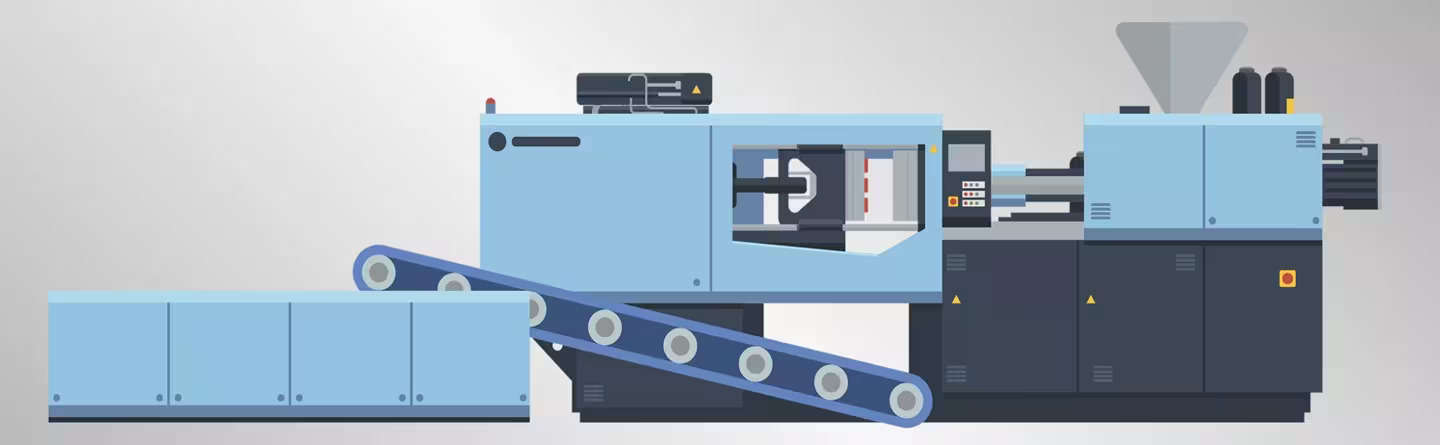
Before diving into process selection, it is critical to understand the fundamental principles of injection molding. At its core, injection molding is a cyclic manufacturing process that involves melting thermoplastic (or, in some cases, thermoset) materials, injecting the molten material into a closed mold cavity under high pressure, cooling the material until it solidifies, and then ejecting the finished part. The cycle repeats continuously, enabling high-volume production with consistent part quality when optimized correctly. The key components of an injection molding system include the injection unit (which melts and delivers the material), the mold (which defines the part’s shape), the clamping unit (which secures the mold during injection), and the control system (which regulates temperature, pressure, and cycle time).
The versatility of injection molding stems from its ability to accommodate diverse materials, part geometries, and production scales. From tiny micro-components used in medical devices to large automotive interior panels, injection molding can handle a wide spectrum of applications. However, no single injection molding process is suitable for all scenarios. Each variant—from conventional injection molding to specialized techniques like gas-assisted injection molding or micro-injection molding—has unique strengths, limitations, and ideal use cases. The goal of process selection is to match these characteristics to your specific needs, ensuring that the final product meets design specifications, performance standards, and cost targets.
2. Key Factors to Consider Before Selecting an Injection Molding Process
Selecting the right injection molding process begins with a thorough assessment of several critical factors. These factors act as guiding principles, helping narrow down the available options and identify the most suitable process for your application. Below are the most important considerations:
2.1 Product Design and Geometry
The design and geometry of your part are the foundation of process selection, as they directly influence the mold design, material flow, and cooling requirements. Key design elements to evaluate include:
• Part Size and Weight: Small, lightweight parts (e.g., micro-components for electronics) may require specialized processes like micro-injection molding, which offers precise control over small shot sizes and tight tolerances. Large parts (e.g., automotive bumpers or industrial enclosures) may need high-capacity machines or processes like structural foam injection molding to reduce weight and avoid defects like warping.
• Wall Thickness: Uniform wall thickness is critical for consistent cooling and material flow. Parts with thick walls (exceeding 3mm) are prone to shrinkage, sink marks, and extended cooling times, making processes like gas-assisted injection molding (GAIM) or structural foam molding ideal. Thin-walled parts (less than 1mm) require high injection speeds and pressures to ensure complete filling, favoring thin-wall injection molding or precision injection molding.
• Complexity and Intricacy: Parts with complex geometries—such as undercuts, internal cavities, threads, or intricate details—may require specialized mold designs (e.g., slides, lifters) or processes like insert molding (for integrating metal components) or two-shot molding (for multi-material parts). For parts with extremely complex internal structures that cannot be achieved with conventional molds, fusible core injection molding may be necessary.
• Tolerances: High-precision parts (e.g., medical devices, optical components) require tight tolerances (often ±0.005mm or tighter), which demand processes like precision injection molding or micro-injection molding. These processes use advanced machinery and control systems to minimize variations in temperature, pressure, and material flow.
2.2 Material Properties
The choice of material is closely intertwined with the selection of the injection molding process, as different materials have unique melting points, flow characteristics, shrinkage rates, and mechanical properties. Common injection molding materials include thermoplastics (e.g., PP, ABS, PC, PA), thermosets (e.g., epoxy, phenolic resins), liquid silicone rubber (LSR), and even metals (via metal injection molding, MIM) and ceramics (ceramic injection molding, CIM). Key material properties to consider include:
• Melt Flow Index (MFI): Materials with a high MFI (e.g., PP, PE) flow easily, making them suitable for complex parts or thin walls. Materials with a low MFI (e.g., PC, PPS) require higher injection pressures and temperatures, favoring processes that can deliver consistent heat and pressure control.
• Shrinkage Rate: All materials shrink as they cool, but the rate varies significantly. Materials with high shrinkage rates (e.g., PE, PP) are more prone to warping and dimensional inaccuracies, requiring processes that optimize cooling and pressure control (e.g., precision molding, gas-assisted molding).
• Thermal Stability: Materials that degrade at high temperatures (e.g., PVC, some TPEs) require processes with precise temperature control to avoid discoloration or material breakdown. High-temperature materials (e.g., PEEK, PEI) need specialized machines capable of handling elevated melt temperatures (up to 400°C).
• Functional Requirements: If the part requires specific properties—such as flexibility (TPE/TPU), transparency (PC, PMMA), chemical resistance (PTFE), or biocompatibility (medical-grade PP, LSR)—the process must be compatible with these materials and their processing needs. For example, LSR requires liquid silicone injection molding, which uses specialized mixing and injection systems.
As noted in industry resources, a material’s characteristics—such as flowability, cooling speed, and thermal stability—directly impact the molding process, and selecting a process that aligns with these properties is critical to avoiding defects and ensuring product performance.
2.3 Production Volume and Scale
Production volume is a key determinant of process selection, as it influences mold cost, cycle time, and overall cost per part. Injection molding is most cost-effective for high-volume production, but specialized processes may be justified for low-to-medium volumes depending on part complexity and quality requirements:
• High Volume (10,000+ parts): Conventional injection molding with multi-cavity steel molds is ideal for high-volume production. Steel molds are durable, capable of withstanding hundreds of thousands of cycles, and offer consistent part quality. Processes like hot runner injection molding can further optimize efficiency by reducing waste and cycle time, making them suitable for high-volume runs of parts with tight tolerances or complex geometries.
• Medium Volume (1,000–10,000 parts): For medium volumes, aluminum molds may be used to reduce upfront tooling costs. Processes like insert molding or two-shot molding are often viable here, as they can integrate multiple components into a single part, reducing assembly costs. Gas-assisted injection molding may also be used to improve part quality without significantly increasing tooling costs.
• Low Volume (100–1,000 parts): Low-volume production may not justify the high cost of steel molds. In such cases, processes like prototype injection molding (using soft tooling, e.g., epoxy or aluminum molds) or 3D-printed molds (for very small runs) can be used. These processes offer faster turnaround times and lower upfront costs, albeit with higher cost per part.
• Micro Production (100+ micro-components): Micro-injection molding is specifically designed for small-scale production of tiny parts (e.g., medical micro-catheters, electronic connectors), offering precise control over shot size and tolerances.
It is important to note that mold cost is a significant factor here—complex molds can cost tens of thousands of dollars, making them only economical for production volumes exceeding 5,000 parts. For smaller volumes, alternative processes or tooling materials may be more cost-effective.
2.4 Cost Considerations
Cost is a critical factor in any manufacturing decision, and injection molding is no exception. The total cost of an injection molding project includes tooling costs, material costs, labor costs, energy costs, and post-processing costs. Different processes have varying cost structures, and selecting the right process requires balancing upfront costs (e.g., mold design and fabrication) with long-term operational costs (e.g., cycle time, waste, maintenance):
• Tooling Costs: Steel molds are more expensive upfront but offer lower long-term costs for high-volume production. Aluminum molds are cheaper and faster to fabricate but have a shorter lifespan. Specialized processes like gas-assisted injection molding or two-shot molding require more complex molds, increasing tooling costs.
• Cycle Time: Processes that reduce cycle time (e.g., hot runner molding, water-assisted injection molding) lower labor and energy costs per part. For example, water-assisted molding can reduce cooling time by 30–50% compared to conventional molding, significantly improving production efficiency.
• Waste: Processes that minimize waste (e.g., hot runner molding, which eliminates cold runner waste) reduce material costs. Conventional cold runner molding generates waste from the runner system, which must be recycled or discarded—adding to material costs and environmental impact.
• Post-Processing: Parts that require minimal post-processing (e.g., trimming, sanding, painting) reduce labor costs. Processes like precision injection molding or hot runner molding produce parts with high surface quality, minimizing the need for post-processing.
2.5 Quality and Performance Requirements
The quality and performance standards of your product will dictate the process selection. For example:
• Surface Finish: Parts requiring a high-gloss or matte finish (e.g., consumer electronics, automotive interiors) may benefit from processes like hot runner molding or precision injection molding, which reduce surface defects like sink marks, weld lines, and scratches. Gas-assisted injection molding is particularly effective at eliminating sink marks in thick-walled parts.
• Mechanical Strength: Parts subjected to high stress (e.g., automotive structural components, industrial gears) require processes that ensure uniform material distribution and minimal internal stress. Structural foam injection molding, for example, produces parts with a strong, rigid outer skin and a lightweight foam core, balancing strength and weight.
• Biocompatibility and Sterility: Medical devices (e.g., syringes, implants) require processes that use biocompatible materials and maintain sterility. Liquid silicone injection molding (LSR) and precision injection molding are commonly used for medical applications, as they can produce parts with tight tolerances and minimal contamination risk.
• Consistency: High-volume production requires consistent part quality across thousands of units. Processes with advanced control systems (e.g., precision molding, hot runner molding) ensure minimal variation in part dimensions and properties.
3. Overview of Common Injection Molding Process Variants
With the key selection factors in mind, it is essential to understand the most common injection molding process variants, their advantages, limitations, and ideal use cases. Below is a detailed overview of the most widely used processes:
3.1 Conventional Injection Molding (CIM)
Conventional injection molding is the most basic and widely used variant, accounting for over 60% of all injection molding applications according to industry reports. It follows the standard injection molding cycle: melting, injection, cooling, and ejection. This process uses a cold runner system, where the molten material flows through a runner system to the mold cavity, and the runner material solidifies along with the part, creating waste that must be recycled.
Advantages: Low upfront tooling costs (compared to specialized processes), simplicity, compatibility with most thermoplastics, and suitability for a wide range of part sizes and geometries. It is ideal for high-volume production of simple to moderately complex parts.
Limitations: Higher waste due to cold runner system, longer cycle times (especially for thick-walled parts), and potential for surface defects like sink marks and weld lines. It is not ideal for parts with extremely tight tolerances or complex internal structures.
Ideal Use Cases: Consumer goods (e.g., plastic containers, toys), automotive parts (e.g., dashboards, door panels), and electronic enclosures. It is best suited for parts with uniform wall thickness, moderate complexity, and high production volumes.
3.2 Hot Runner Injection Molding
Hot runner injection molding is an advanced variant that eliminates the cold runner system by heating the runner system to keep the material molten. This means that only the material that enters the mold cavity solidifies into the part, reducing waste to nearly zero. The hot runner system is integrated into the mold, with heating elements controlling the temperature to ensure consistent material flow.
Advantages: Minimal waste (reducing material costs by 15–50% compared to conventional molding), faster cycle times (due to no need to cool the runner), improved part quality (fewer weld lines, sink marks, and surface defects), and better control over material flow. It is ideal for high-volume production of parts with tight tolerances and complex geometries.
Limitations: Higher upfront tooling costs (due to the hot runner system), more complex mold design and maintenance, and compatibility with only certain materials (e.g., materials with high thermal stability).
Ideal Use Cases: High-volume production of precision parts, such as medical devices (e.g., syringes), electronic components (e.g., connectors), and automotive parts (e.g., sensors). It is particularly suitable for parts with intricate details or tight tolerances.
3.3 Gas-Assisted Injection Molding (GAIM)
Gas-assisted injection molding is a specialized process that injects a pressurized gas (usually nitrogen) into the mold cavity after partially filling it with molten material. The gas displaces the molten material, pushing it to the mold walls and creating a hollow core. The gas remains under pressure during cooling, reducing shrinkage and eliminating sink marks.
Advantages: Eliminates sink marks and warping (success rate over 95% for sink mark reduction), reduces material usage by 15–40%, shortens cycle times (by reducing cooling time for thick-walled parts), and improves part rigidity and strength. It is particularly effective for parts with thick walls or uneven wall thicknesses (maximum to minimum thickness ratio >3:1).
Limitations: Higher tooling costs (due to the need for gas channels and control systems), more complex process control (gas pressure, timing, and flow must be precisely regulated), and potential for gas leakage or uneven gas distribution.
Ideal Use Cases: Thick-walled parts (e.g., automotive dashboards, home appliance casings), parts with complex geometries (e.g., washing machine augers), and parts requiring high surface quality. A notable case study involves Maytag, which used GAIM to reduce the molding cycle time of washing machine augers by hollowing out thick sections while maintaining structural integrity, with the help of simulation tools to ensure proper gas distribution.
3.4 Water-Assisted Injection Molding (WAIM)
Water-assisted injection molding is similar to GAIM but uses high-pressure water instead of gas. Water has a higher heat capacity than gas, enabling faster cooling and more precise control over the hollow core. The water is injected into the mold cavity after the molten material, displacing it to create a hollow structure, and is then drained before ejection.
Advantages: Faster cooling times (30–50% shorter than GAIM), more uniform wall thickness (tolerance ±0.2mm or tighter), smoother internal surfaces, and lower energy costs (water is cheaper and more efficient at heat transfer than gas). It is ideal for long, hollow parts with high aspect ratios (length-to-diameter >10:1).
Limitations: Higher tooling costs (due to water channels and sealing systems), potential for water contamination (requiring proper drying), and compatibility with only certain materials (e.g., materials that do not absorb water).
Ideal Use Cases: Long, hollow parts such as plastic pipes, automotive fuel lines, shower hoses, and chair legs. Industry cases show that WAIM can reduce molding cycle time from 60 seconds to 35 seconds and lower the defect rate from 5% to 1.2% for automotive fuel line production.
3.5 Insert Molding
Insert molding is a process that integrates pre-manufactured inserts (e.g., metal pins, screws, electronic components) into the plastic part during molding. The inserts are placed in the mold cavity before injection, and the molten plastic surrounds and bonds to the inserts, creating a single, integrated part.
Advantages: Eliminates post-assembly steps (reducing labor costs by 30% or more), improves part strength (metal inserts can increase tensile strength by 2–5 times), and enables the integration of multiple materials (e.g., plastic and metal) into a single part. It also reduces the risk of component failure due to loose or misplaced inserts.
Limitations: Requires precise positioning of inserts (increasing mold complexity), longer cycle times (due to insert placement), and potential for insert damage during injection (if not properly designed).
Ideal Use Cases: Electronic components (e.g., connectors with metal pins), automotive parts (e.g., plastic brackets with steel inserts), medical devices (e.g., sensors with ceramic inserts), and power tools (e.g., handles with metal fasteners).
3.6 Two-Shot (Dual-Shot) Injection Molding
Two-shot injection molding (also known as dual-shot or multi-shot molding) uses two injection units and a rotating mold to produce parts with two different materials or colors in a single cycle. The first material is injected into the mold cavity, cooled slightly, and then the mold rotates to a second position, where the second material is injected over or around the first material.
Advantages: Eliminates post-assembly (reducing labor costs), creates seamless multi-material or multi-color parts, improves part durability (materials bond at the molecular level), and reduces waste. The bond strength can reach 80–90% of that of a single material.
Limitations: High upfront tooling costs (due to the rotating mold and dual injection units), complex process control (timing, temperature, and pressure must be precisely coordinated), and longer cycle times.
Ideal Use Cases: Consumer goods (e.g., toothbrushes with soft-grip handles, keyboard keys with two colors), automotive parts (e.g., steering wheels with hard cores and soft grips), and medical devices (e.g., syringes with flexible seals).
3.7 Precision Injection Molding
Precision injection molding is a specialized process designed to produce parts with extremely tight tolerances (±0.005–0.05mm) and high surface quality. It uses advanced machinery with precise control over temperature, pressure, and injection speed, as well as high-precision molds (machined to ±0.005–0.01mm using five-axis machining centers).
Advantages: Exceptional dimensional accuracy, consistent part quality, high surface finish, and compatibility with high-performance materials (e.g., LCP, PPS). It is ideal for parts that require strict performance standards.
Limitations: High tooling and machinery costs, longer cycle times (due to precise control), and limited to small to medium-sized parts.
Ideal Use Cases: Medical devices (e.g., insulin pen components, micro-catheters), electronic components (e.g., camera lenses, micro-connectors), and optical parts (e.g., LED lenses). The global precision injection molding market is growing rapidly, with a 2023 market size of $280 billion and an annual growth rate exceeding 8%.
3.8 Micro-Injection Molding
Micro-injection molding is a subset of precision injection molding designed for producing extremely small parts (typically weighing less than 1g and measuring less than 1mm in size). It uses specialized machinery with micro-shot capabilities (as low as 0.001g) and high-precision molds to ensure accurate filling and cooling.
Advantages: Ability to produce tiny, complex parts with tight tolerances, high repeatability, and compatibility with a wide range of materials (including LSR and high-performance thermoplastics). It is ideal for micro-manufacturing applications.
Limitations: Very high tooling and machinery costs, complex process control, and limited production volume (compared to conventional molding).
Ideal Use Cases: Medical devices (e.g., micro-implants, lab-on-a-chip components), electronics (e.g., micro-sensors, micro-connectors), and aerospace components (e.g., tiny structural parts).
3.9 Structural Foam Injection Molding
Structural foam injection molding uses a chemical or physical foaming agent mixed with the molten plastic to create a part with a rigid, dense outer skin and a lightweight, cellular inner core. The foaming agent expands during injection, filling the mold cavity and reducing the amount of material used.
Advantages: Reduces part weight by 10–30%, lowers material costs, improves part rigidity and impact resistance, and minimizes warping (due to uniform cooling). It is ideal for large, thick-walled parts that require lightweighting.
Limitations: Lower surface quality (compared to conventional molding), higher tooling costs (due to the need for foaming agent delivery systems), and limited compatibility with some materials.
Ideal Use Cases: Large parts such as automotive interior panels, industrial enclosures, and furniture (e.g., chair seats, table tops). It is particularly useful in industries where lightweighting is a priority, such as automotive and aerospace.
4. Step-by-Step Guide to Selecting the Right Injection Molding Process
Now that you understand the key factors and process variants, follow this step-by-step guide to select the right injection molding process for your application:
Step 1: Define Your Product Requirements
Start by clearly defining your product’s design, material, performance, and production requirements. Document the part’s size, weight, wall thickness, complexity, tolerances, surface finish, and functional needs (e.g., strength, flexibility, biocompatibility). Also, specify the production volume, budget, and timeline. This will serve as the foundation for all subsequent decisions.
Step 2: Evaluate Material Options
Based on your product’s functional requirements, select the most suitable material. Consider factors like melt flow index, shrinkage rate, thermal stability, and cost. Consult with material suppliers to ensure the material is compatible with injection molding and meets your performance standards. For example, if you need a transparent part, PC or PMMA may be suitable; if you need a flexible part, TPE or TPU may be better.
Step 3: Narrow Down Process Variants Based on Design and Material
Using your product’s design and material properties, narrow down the compatible process variants. For example:
• If your part has thick walls and requires a high surface finish, gas-assisted or water-assisted injection molding may be suitable.
• If your part requires two materials (e.g., hard and soft), two-shot injection molding is the best choice.
• If your part is tiny and requires tight tolerances, micro-injection molding is ideal.
• If your part includes metal components, insert molding is necessary.
Step 4: Evaluate Cost and Production Volume
Compare the upfront and long-term costs of the narrowed-down processes. For high-volume production, conventional or hot runner molding may be most cost-effective. For low-volume production, prototype molding or 3D-printed molds may be better. Consider tooling costs, cycle times, waste, and post-processing costs to determine the total cost per part.
Step 5: Test and Validate
Before committing to full-scale production, conduct prototype or pilot runs to test the selected process. This will help identify any issues (e.g., defects, dimensional inaccuracies) and allow for adjustments to the mold or process parameters. Use simulation tools (e.g., C-Mold) to optimize the process before physical testing, as demonstrated in the Maytag case study for gas-assisted molding. Validate that the parts meet your design, performance, and quality requirements.
Step 6: Optimize the Process
Once the process is selected and validated, optimize the parameters (e.g., temperature, pressure, injection speed, cooling time) to improve efficiency, reduce waste, and ensure consistent part quality. Work with your injection molding partner to fine-tune the process and address any issues that arise during production.
5. Common Mistakes to Avoid in Process Selection
Even with careful planning, it is easy to make mistakes in injection molding process selection. Below are some common pitfalls to avoid:
5.1 Ignoring Part Design for Manufacturability (DFM)
Failing to consider DFM during the design phase can lead to poor process selection. For example, a part with uneven wall thickness may require gas-assisted molding, but if the design is not optimized for gas flow, the process will not produce quality parts. Work with mold designers and injection molding experts early in the design phase to ensure the part is compatible with the selected process.
5.2 Focusing Only on Upfront Costs
Choosing a process based solely on low upfront tooling costs can lead to higher long-term costs. For example, using a conventional cold runner mold for high-volume production may have lower upfront costs but higher material waste and longer cycle times, increasing the total cost per part over time. Consider the total cost of ownership (upfront costs + operational costs) when selecting a process.
5.3 Overlooking Material Compatibility
Not all materials are compatible with all injection molding processes. For example, LSR requires liquid silicone injection molding, and high-temperature materials (e.g., PEEK) require specialized machinery. Failing to ensure material-process compatibility can lead to defects, material degradation, and production delays.
5.4 Underestimating Process Complexity
Specialized processes like gas-assisted or two-shot molding require more complex mold design and process control. Underestimating this complexity can lead to production issues, delays, and increased costs. Work with experienced injection molding partners who have expertise in the selected process.
5.5 Skipping Prototype Testing
Skipping prototype or pilot runs to save time and money can lead to costly mistakes in full-scale production. Prototype testing allows you to identify and resolve issues before investing in high-volume tooling and production.
6. Conclusion
Selecting the right injection molding process is a critical decision that impacts product quality, production efficiency, and cost. By carefully evaluating your product’s design, material properties, production volume, and performance requirements, you can narrow down the available process variants and choose the one that best aligns with your needs. From conventional injection molding for high-volume, simple parts to specialized processes like micro-injection molding for tiny, precision components, each variant has unique strengths and limitations that must be considered.
Remember to work with experienced injection molding partners and mold designers early in the process, as their expertise can help optimize your part design, select the right material and process, and avoid common pitfalls. By following the step-by-step guide outlined in this article, you can ensure that your injection molding project is successful, delivering high-quality parts at a competitive cost and on schedule.
Injection molding is a versatile and powerful manufacturing technology, but its success depends on making informed decisions. By taking the time to understand your requirements and the available process options, you can leverage the full potential of injection molding to bring your product to market efficiently and effectively.
Hot Articles

Hot Tags
Stay Connected!


Manufacturing on Demand
Please fill in the following information to obtain plan details (information is confidential and not disclosed publicly), we will contact you within 24 hours, please keep your phone available!
Upload a 3D/2D model to see instant pricing, lead time, and DFM feedback.