



Custom ceramic-insulated induction coils for a European customer,from prototype to low-volume


Who this is for and why
How do you keep a copper induction coil conductive while adding a ceramic insulation layer that survives high temperature and thermal cycling?
A customer in Europe needed prototype coils first They also wanted a clear path to low-volume production through one supplier.
The main requirements were controlled coil geometry stable terminal position and consistent insulation coverage so the coil fits the assembly every time. This type of coil is easy to make once, but hard to reproduce consistently.
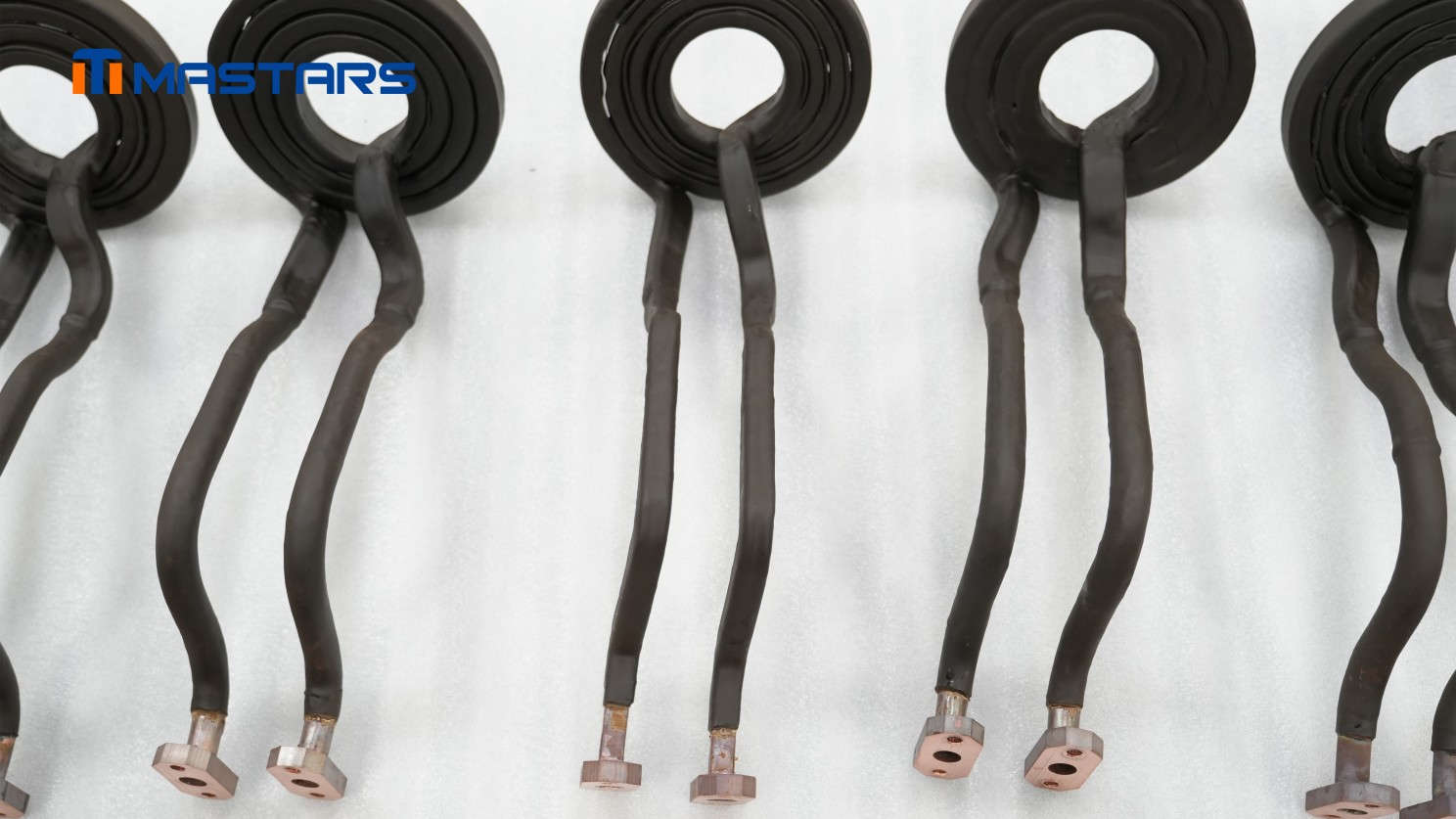
Consistent coil geometry and clean terminal interfaces.
How we control the build
Main technical risks include springback after forming pitch variation terminal alignment drift and coating adhesion at tight bends. Small deviations can become big issues during assembly, insulation testing, and thermal cycling.
Mastars uses a controlled flow: copper forming by bending and coiling CNC machining for copper terminals brazing for low-resistance joints and ceramic insulation coating with masking control
We verify geometry with a dedicated dimensional checking jig and keep inspection records for each build. From prototype to low-volume runs, we keep the same process window and quality checks.
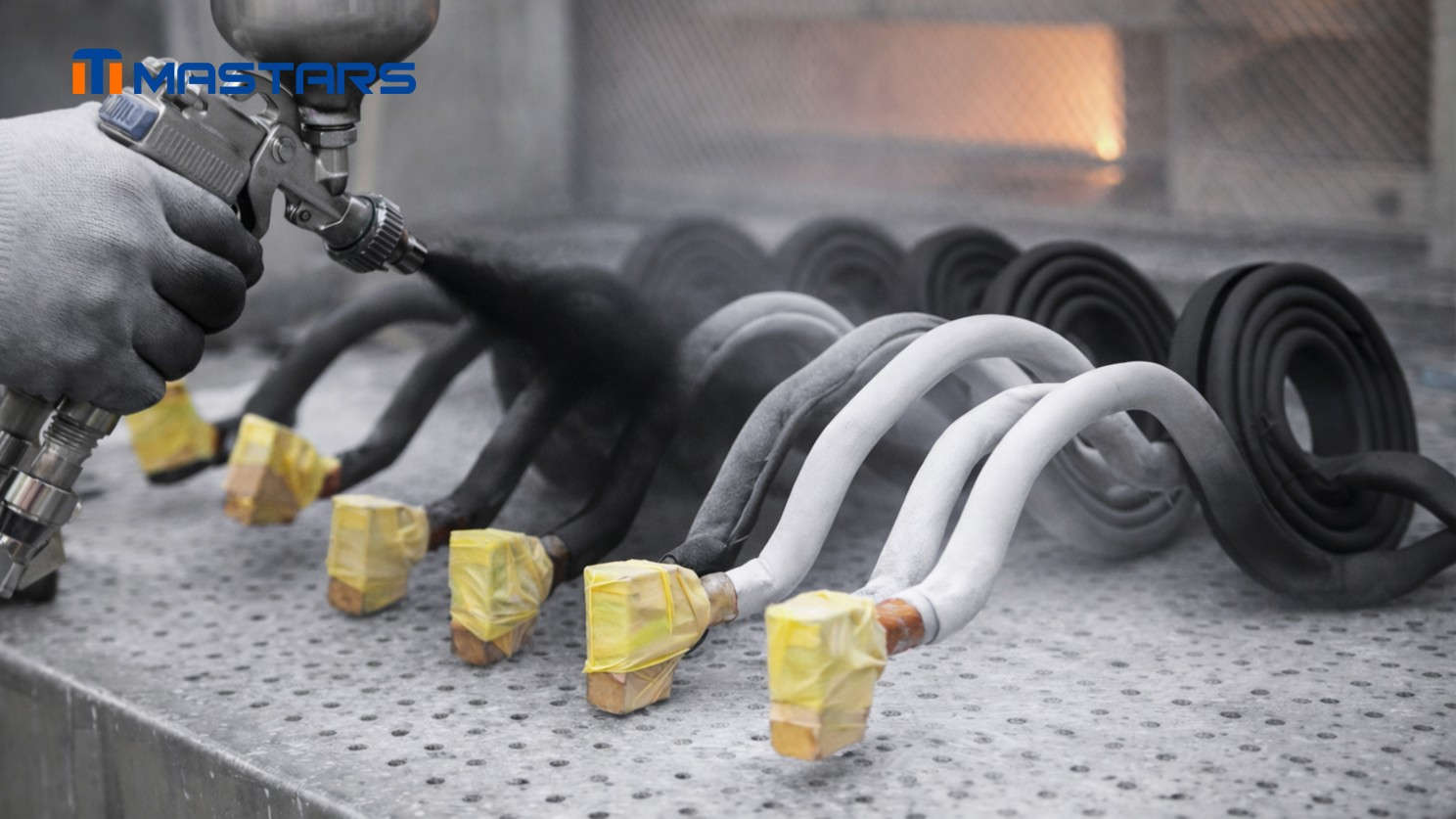
Sparing black ceramic insulation; masked terminals stay clean during coating.
Benefits that matter to buyers
Client outcome: a custom coil that is conductive insulated and repeatable in assembly.
More consistent coil geometry across builds
Better insulation coverage in critical bend areas
More stable terminal position for easier assembly
Clear inspection records for reviews and approvals
One Supplier from prototype to low-volume production
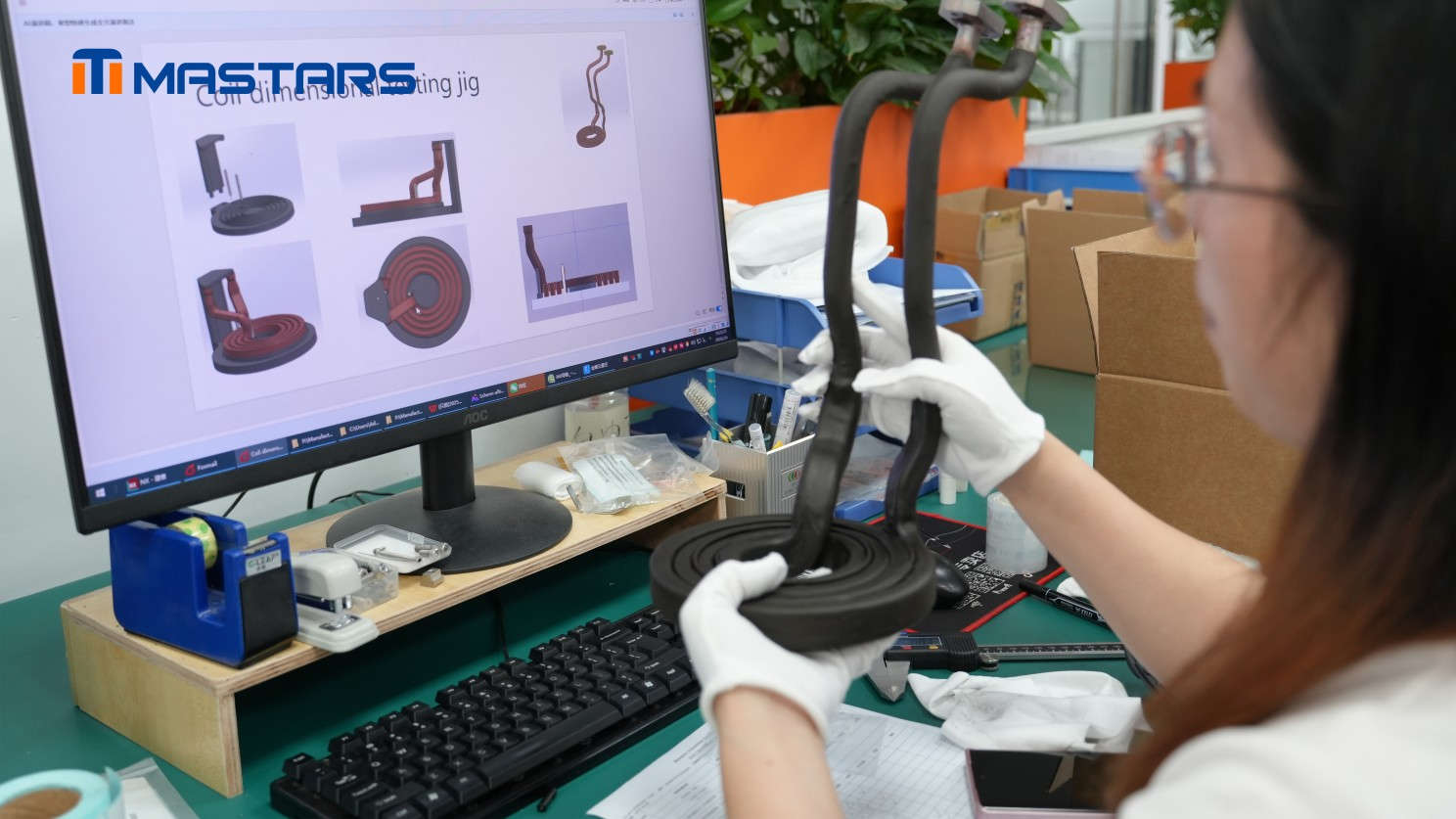
Dimensinal check: compare coated coil with CAD and jig.
Where this helps and next steps
Even if your product is not an induction heating system the same challenge appears whenever a conductive part also needs high-temperature insulation.
Medical equipment: heated tools and sterilization modules
EV and energy: power components and formed conductors
Industrial automation: heating stations and induction fixtures
Lab instruments: temperature control parts and heaters
Are you struggling with coil repeatability insulation failures or assembly fit issues Share your space envelope connection style and temperature range Mastars can propose a build and inspection plan.

Mastars the most trusted and reliable one-stop services partner for low-volume digital manufacturing worldwide!
Hot Articles
Hot Tags
Stay Connected!


Manufacturing on Demand
Please fill in the following information to obtain plan details (information is confidential and not disclosed publicly), we will contact you within 24 hours, please keep your phone available!
Upload a 3D/2D model to see instant pricing, lead time, and DFM feedback.