



Communication Molds: Core Foundation for Precision Molding of Communication Components


With the rapid evolution of global communication technology, from 5G commercialization to the gradual deployment of 5G-A and the rise of the Internet of Things (IoT), the demand for high-performance, miniaturized, and reliable communication components has surged. Communication molds, as the core manufacturing tool for key communication parts such as connectors, antenna housings, base station filters, and optical modules, directly determine the precision, consistency, and production efficiency of communication components. In the context of increasingly fierce market competition and continuous technological upgrading, high-quality communication molds have become a key link supporting the development of the communication industry, laying a solid foundation for the stable operation of global communication networks.
I. Core Demands of Communication Molds: Matching the Rigorous Standards of the Communication Industry
Communication components operate in complex environments such as high frequency, high temperature, and strong interference, and their structural design and performance indicators are extremely strict. This puts forward comprehensive and harsh requirements for communication molds, which are mainly reflected in four core dimensions, directly affecting the quality and service life of the final communication products:
• Micron-level dimensional accuracy and consistency: Key communication components such as RF connectors and optical fiber connectors require ultra-high dimensional precision, with tolerance control within ±0.005mm. For example, the core hole diameter of an optical fiber connector mold must be consistent with the optical fiber diameter to ensure signal transmission efficiency. Communication molds must achieve precise control of cavity size, parting surface, and guide mechanism to ensure that each component has consistent dimensions in mass production, avoiding signal attenuation or connection failure caused by dimensional deviation.
• Excellent material adaptability: Communication components often use special materials such as LCP (Liquid Crystal Polymer), PPS (Polyphenylene Sulfide), PC/ABS alloy, and modified engineering plastics, which have characteristics such as high temperature resistance, low dielectric constant, and good dimensional stability. Communication molds need to adapt to the processing characteristics of these materials, such as high melting point, high viscosity, and easy deformation, through optimized cavity design, temperature control system, and gating system, ensuring full filling and uniform cooling of materials.
• High structural stability and long service life: Communication component production is mostly mass production, with a single mold requiring millions of molding cycles. This requires communication molds to have high structural strength and wear resistance. The mold core, cavity, and other key parts are usually made of high-quality mold steel (such as S136, H13) through precision heat treatment and surface hardening, with surface hardness reaching HRC 50-60, ensuring that the mold does not deform or wear during long-term high-frequency production.
• Compatibility with complex structural design: With the miniaturization and integration of communication components, more complex structures such as micro-holes, thin walls, and multi-cavity designs are adopted. For example, 5G antenna housings often have thin-wall structures (wall thickness 0.8-1.2mm) and integrated rib structures, while connectors have multi-pin and micro-hole designs. Communication molds need to solve technical problems such as difficult filling, easy warping, and demolding difficulty of complex structures through advanced mold design and processing technology.
Traditional mold manufacturing technology is difficult to meet the above comprehensive requirements. The modern communication mold industry relies on precise design, advanced processing equipment, and strict quality control to form a systematic manufacturing system, which has become an important support for the upgrading of the communication industry.
II. Core Application Fields of Communication Molds
Communication molds cover almost all key components of the communication industry chain, from terminal equipment (mobile phones, routers) to infrastructure (base stations, optical communication equipment). According to the type of communication components, the core application fields of communication molds can be divided into the following categories, each with targeted mold design and processing solutions:
(I) Communication Connector Molds
Communication connectors (such as USB-C, HDMI, RF connectors, and optical fiber connectors) are the core components for signal transmission and connection, and their quality directly affects the stability of communication signals. Connector molds are the most representative type of communication molds, with the following characteristics:
1. Multi-cavity and high-efficiency design: To meet the mass production demand of connectors (annual output of a single model can reach hundreds of millions), connector molds usually adopt multi-cavity design (16-cavity, 32-cavity, or even 64-cavity), which significantly improves production efficiency. The mold gating system adopts hot runner technology to ensure uniform material distribution and reduce material waste.
2. Ultra-high precision control: The pin pitch, hole diameter, and coaxiality of connectors require micron-level precision. For example, the pin pitch of RF connectors is usually 0.3-0.5mm, and the positional accuracy must be controlled within ±0.003mm. Connector molds adopt precision machining technology such as CNC milling, EDM (Electrical Discharge Machining), and WEDM (Wire Electrical Discharge Machining) to ensure the precision of the cavity and core.
3. Anti-sticking and wear-resistant treatment: The surface of the mold core and cavity is treated with nitriding, titanium plating, or diamond-like coating (DLC) to improve wear resistance and anti-sticking performance, avoiding material adhesion during molding and ensuring the surface smoothness of the connector.
(II) 5G Antenna Housing Molds
The 5G antenna housing is a key component of 5G base stations and terminal equipment, which plays the role of protecting the antenna and ensuring signal transmission. Due to the high-frequency characteristics of 5G signals, the antenna housing requires low dielectric constant, low dielectric loss, and good signal penetration, which puts strict requirements on mold design and material selection:
1. Thin-wall and high-rigidity design: 5G antenna housings usually adopt thin-wall structures (wall thickness 0.8-1.2mm) to reduce signal attenuation, but they also need to have sufficient rigidity to resist external impact. Antenna housing molds adopt optimized cavity design and cooling system to avoid warping and deformation of thin-wall parts during molding.
2. Material matching: Common materials for 5G antenna housings include LCP, PPS, and modified PC/ABS. These materials have low dielectric constant (εr ≤ 3.0) and good dimensional stability. Antenna housing molds are designed with targeted gating and cooling systems according to the flow characteristics of different materials to ensure full filling and uniform cooling.
3. Integrated molding of complex structures: Modern 5G antenna housings often integrate rib structures, mounting holes, and sealing grooves. Antenna housing molds adopt slide block, inclined top, and other mold mechanisms to realize integrated molding of complex structures, avoiding secondary processing and improving production efficiency and product consistency.
(III) Base Station Filter Molds
Base station filters are core components for signal filtering and frequency selection in 5G base stations, which need to withstand harsh outdoor environments (high temperature, low temperature, rain, and dust) and have high structural stability and corrosion resistance. Filter molds mainly target components such as filter shells and resonant cavities, with the following characteristics:
1. High-strength and corrosion-resistant material adaptation: Filter shells are usually made of aluminum alloy or modified engineering plastics (such as PPS with glass fiber reinforcement). For aluminum alloy filter shells, die-casting molds are used; for plastic filter shells, injection molds are used. Both types of molds need to adapt to the material's processing characteristics and ensure the structural strength of the product.
2. Precision control of internal cavity: The resonant cavity of the filter has strict requirements on size and shape accuracy, which directly affects the filtering effect. Filter molds adopt precision machining technology to ensure the dimensional accuracy of the internal cavity, and the surface roughness is controlled within Ra ≤ 0.8μm to reduce signal reflection and attenuation.
3. Sealing performance guarantee: The filter needs to have good sealing performance to prevent moisture and dust from entering. Filter molds are designed with precise sealing groove structures, and the dimensional accuracy of the sealing groove is controlled within ±0.01mm to ensure the sealing effect of the product after assembly.

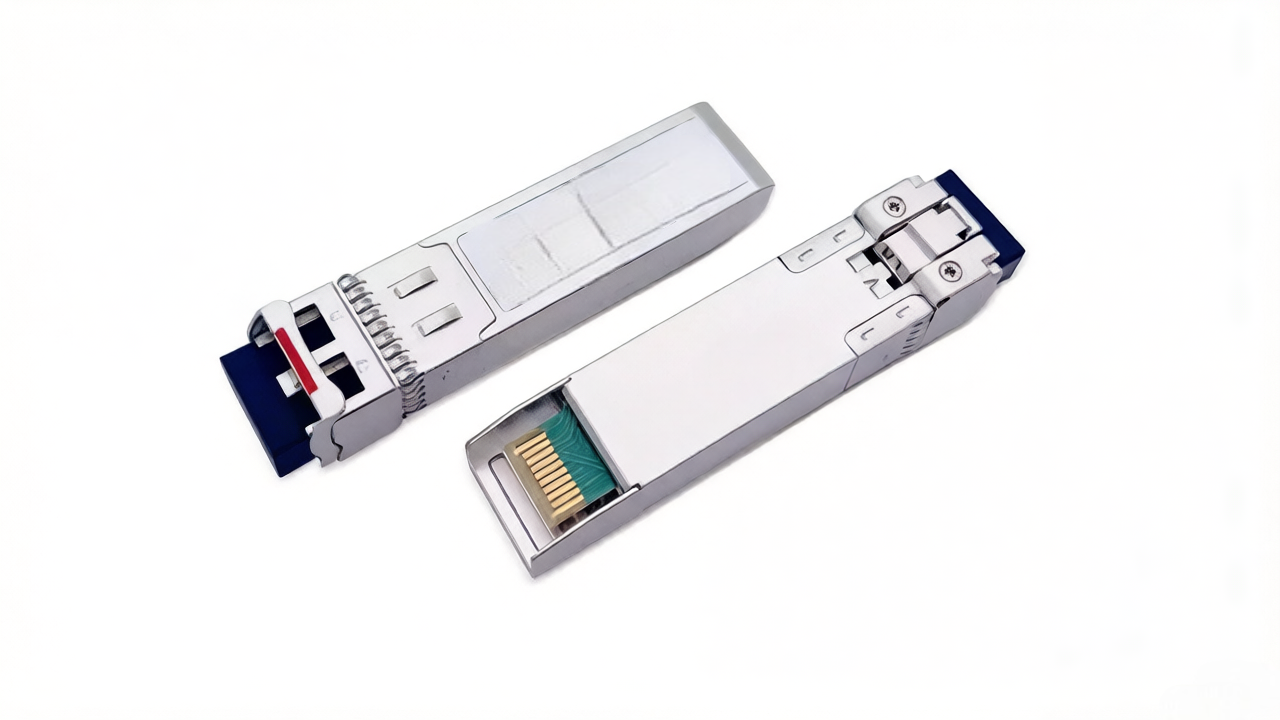
(IV) Optical Module Molds
Optical modules are core components of optical communication systems, responsible for converting electrical signals into optical signals and vice versa. Optical module components such as optical transceiver housings and lens holders require high precision and good optical performance. Optical module molds have the following characteristics:
1. High coaxiality and parallelism control: The lens holder and optical transceiver housing of the optical module require high coaxiality (≤0.005mm) and parallelism (≤0.01mm) to ensure the alignment of optical paths and reduce signal loss. Optical module molds adopt precision guide mechanisms and positioning systems to ensure the precision of the product.
2. Low birefringence and high surface quality: For optical module components that are in contact with optical signals, the material needs to have low birefringence, and the product surface needs to be smooth and free of defects. Optical module molds adopt polished cavity surfaces (Ra ≤ 0.02μm) and optimized molding parameters to avoid material degradation and surface defects during molding.
III. Key Technologies for Communication Mold Manufacturing
The manufacturing of communication molds is a systematic project involving mold design, material selection, precision machining, surface treatment, and assembly testing. The key technologies that determine the quality and performance of communication molds are mainly reflected in the following aspects:
(I) Precision Mold Design Technology
Mold design is the foundation of communication mold manufacturing. Modern communication mold design relies on CAD/CAE simulation technology to optimize the mold structure, gating system, cooling system, and demolding mechanism. For example, using Moldflow simulation software to analyze the filling, cooling, and warping of materials during molding, predict potential defects (such as bubbles, shrinkage, and warping), and adjust the mold design in advance to avoid rework and improve mold development efficiency. For complex components such as multi-cavity connectors and thin-wall antenna housings, simulation technology can effectively optimize the gating position and cooling channel layout, ensuring uniform material filling and cooling.
(II) High-Precision Machining Technology
High-precision machining is the core to ensuring the dimensional accuracy of communication molds. The key machining technologies include:
1. CNC precision machining: Using high-speed CNC milling machines and machining centers (spindle speed up to 20,000rpm) to process mold cores and cavities, with positioning accuracy up to ±0.002mm and repeated positioning accuracy up to ±0.001mm, ensuring the precision of complex structures and small-sized features.
2. EDM and WEDM technology: For mold parts with complex shapes, small holes, and narrow slits (such as connector pin cavities and filter resonant cavities), EDM and WEDM technologies are used. EDM can process high-hardness materials and complex cavities with a machining accuracy of ±0.003mm, while WEDM can process ultra-thin parts and narrow slits with a cutting accuracy of ±0.002mm.
3. Grinding and polishing technology: The surface of the mold core and cavity needs to be ground and polished to improve surface smoothness and reduce material adhesion. Precision grinding machines and polishing equipment are used to achieve surface roughness Ra ≤ 0.02μm, ensuring the surface quality of the final communication components.
(III) Material Selection and Heat Treatment Technology
The material of communication molds directly affects their service life and performance. Common mold materials include S136 (stainless steel mold steel), H13 (hot work mold steel), and P20 (pre-hardened mold steel). S136 has excellent corrosion resistance and polishability, suitable for molds for connectors and optical modules; H13 has high thermal stability and wear resistance, suitable for molds for high-temperature molding materials (such as LCP); P20 has good machinability and cost-effectiveness, suitable for mass production molds. After material selection, the mold parts need to undergo precision heat treatment (quenching, tempering, nitriding) to improve hardness, toughness, and wear resistance, ensuring that the mold can withstand long-term high-frequency production.
(IV) Surface Treatment Technology
Surface treatment of communication molds is mainly to improve wear resistance, anti-sticking performance, and corrosion resistance. Common surface treatment technologies include:
1. Nitriding treatment: Improves the surface hardness and wear resistance of the mold, with a surface hardness of up to HRC 60-65, suitable for mold cores and cavities of connectors and filters.
2. Titanium plating and DLC coating: Reduces the friction coefficient of the mold surface, improves anti-sticking performance, and is suitable for molds for materials with high viscosity (such as LCP and PPS).
3. Electroless nickel plating: Improves the corrosion resistance of the mold, suitable for molds used in humid or corrosive environments (such as outdoor base station component molds).
IV. Future Trends of Communication Molds
With the continuous development of communication technology towards 5G-A, 6G, and IoT, the communication industry will put forward higher requirements for the miniaturization, integration, high frequency, and high reliability of components, which will drive the continuous innovation and upgrading of communication molds. The future development trends of communication molds are mainly reflected in the following aspects:
(I) Towards Higher Precision and Miniaturization
The miniaturization of communication components (such as micro-connectors and miniaturized optical modules) will require communication molds to achieve nanometer-level precision control. The development of ultra-precision machining technology (such as atomic layer deposition and precision grinding) will promote the mold's dimensional accuracy to reach ±0.001mm or even higher, meeting the production needs of micro-components. At the same time, the mold structure will be more compact, and multi-cavity design will be further developed (such as 128-cavity or 256-cavity molds) to improve production efficiency.
(II) Intelligent Mold Design and Manufacturing
The integration of digital twin technology, artificial intelligence (AI), and the Internet of Things (IoT) into communication mold manufacturing will realize intelligent design, production, and monitoring. For example, using digital twin technology to build a virtual mold model, simulating the entire molding process in real time, and adjusting processing parameters dynamically to avoid defects; using AI algorithms to optimize mold design and processing parameters based on historical data, improving mold development efficiency and product yield; equipping molds with sensors to monitor temperature, pressure, and wear status in real time, realizing predictive maintenance and reducing downtime.
(III) Adaptation to New Materials and New Processes
The emergence of new materials for communication components (such as high-temperature resistant ceramics, carbon fiber composites, and bio-based engineering plastics) will require communication molds to adapt to new processing characteristics. The research and development of targeted mold materials, processing tools, and molding processes will become a key direction. At the same time, the combination of 3D printing technology and traditional mold manufacturing will realize the rapid prototyping of complex mold structures (such as conformal cooling channels), shortening the mold development cycle and improving molding efficiency. For example, 3D printed conformal cooling channels can improve the cooling uniformity of the mold, reducing the molding cycle by 20-30%.
(IV) Green and Low-Carbon Development
In response to the global "dual-carbon" strategy, communication mold manufacturing will develop towards green and low-carbon production. The promotion of energy-saving machining equipment, environmentally friendly cutting fluids, and material recycling technology will reduce energy consumption and environmental pollution. At the same time, the optimization of mold design and processing processes will reduce material waste and improve resource utilization. For example, the use of hot runner technology can reduce material waste by 30-50%, and the use of recyclable mold materials can reduce carbon emissions.
Conclusion
As the core manufacturing tool for communication components, communication molds are closely linked to the development of the global communication industry. From 5G base stations to terminal equipment, from optical communication systems to IoT devices, almost all communication products rely on high-quality communication molds to achieve precision molding. The strict requirements of the communication industry for component precision, reliability, and efficiency have promoted the continuous innovation of communication mold technology, from traditional mold manufacturing to intelligent, precise, and green manufacturing.
In the future, with the continuous advancement of 5G-A, 6G, and IoT technologies, communication molds will face more severe challenges and broader development opportunities. Through the innovation of key technologies such as precision design, ultra-precision machining, and intelligent manufacturing, communication molds will continue to meet the increasingly stringent requirements of the communication industry, providing strong support for the construction of global digital communication networks and the development of the information society. The communication mold industry will also move towards a more professional, intelligent, and sustainable development path, contributing to the continuous progress of the global communication industry.
Hot Articles
Hot Tags
Stay Connected!


Manufacturing on Demand
Please fill in the following information to obtain plan details (information is confidential and not disclosed publicly), we will contact you within 24 hours, please keep your phone available!
Upload a 3D/2D model to see instant pricing, lead time, and DFM feedback.