



Injection Molding: Core Technology for Manufacturing Disposable Medical Syringes


The global medical device industry has increasingly stringent requirements for product safety, precision, and consistency, especially for disposable medical devices that directly contact human tissues and body fluids. As a core tool for clinical drug delivery and fluid extraction, disposable medical syringes must meet rigorous standards for biocompatibility, dimensional accuracy, sterilization resistance, and cleanliness. Injection molding technology, with its advantages of high precision, high efficiency, mass production capacity, and ability to form complex structures, has become the dominant manufacturing process for disposable medical syringes, providing reliable technical support for clinical safety and medical quality improvement.
I. Core Demands of Disposable Medical Syringes: Rigorous Standards for Safe Clinical Application
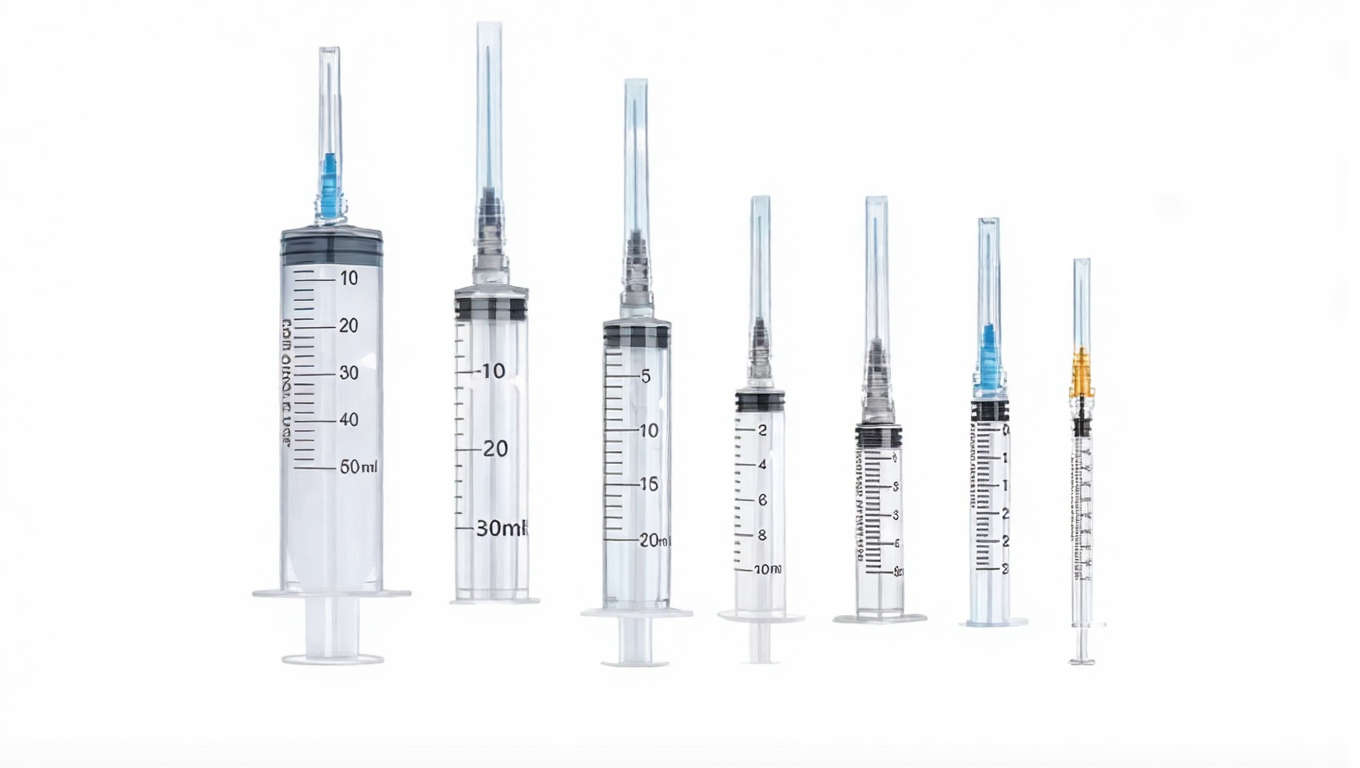
Disposable medical syringes consist of key components such as the barrel, plunger, backstop, needle cap, and Luer lock connector. Each component directly affects the safety and usability of the syringe in clinical scenarios. The special application environment of medical devices imposes extremely strict requirements on syringe manufacturing, which also determines the core challenges of injection molding technology in its production process:
Absolute biocompatibility: All materials in contact with drugs or body fluids must not cause immune reactions, inflammation, or toxic effects. They must comply with ISO 10993 series biological evaluation standards and USP Class VI certification. No harmful substances such as plasticizers, heavy metals, or residual solvents are allowed to leach, and drug adsorption or chemical reactions must be avoided to ensure drug efficacy and patient safety .
Micron-level dimensional accuracy: The syringe barrel requires a wall thickness of 0.3–0.5 mm to balance rigidity and material saving, and the positional accuracy of the liquid outlet hole must be controlled within ±0.002 inches. The plunger and barrel must fit perfectly to ensure airtightness—after 1000 push-pull cycles, the sealing performance must remain above 95%. Meanwhile, clear and accurate scale markings are required to ensure precise drug dosage .
Excellent sterilization resistance: Disposable syringes must withstand common clinical sterilization methods such as high-temperature steam (121°C), ethylene oxide (EO), and gamma radiation. After sterilization, there must be no thermal deformation, performance degradation, or material aging, and the sterile state must be maintained until use .
High cleanliness and low particle generation: The product surface must be smooth, free of bubbles, cracks, or burrs, and the manufacturing process must avoid particle generation. Any micro-particles may cause vascular blockage or infection when entering the human body, which puts strict requirements on the injection molding environment and process control .
Traditional manufacturing processes such as machining and blow molding are difficult to meet the above comprehensive requirements. Injection molding, with its mature process control system and precise molding capabilities, has become the irreplaceable core technology for disposable medical syringe production.
II. Core Applications of Injection Molding in Disposable Medical Syringe Manufacturing
Injection molding technology has formed a complete set of solutions for the production of disposable medical syringes, covering material selection, mold design, process optimization, and clean production. It can efficiently produce all key components of syringes and realize the integration of functionality and safety through advanced molding technologies.
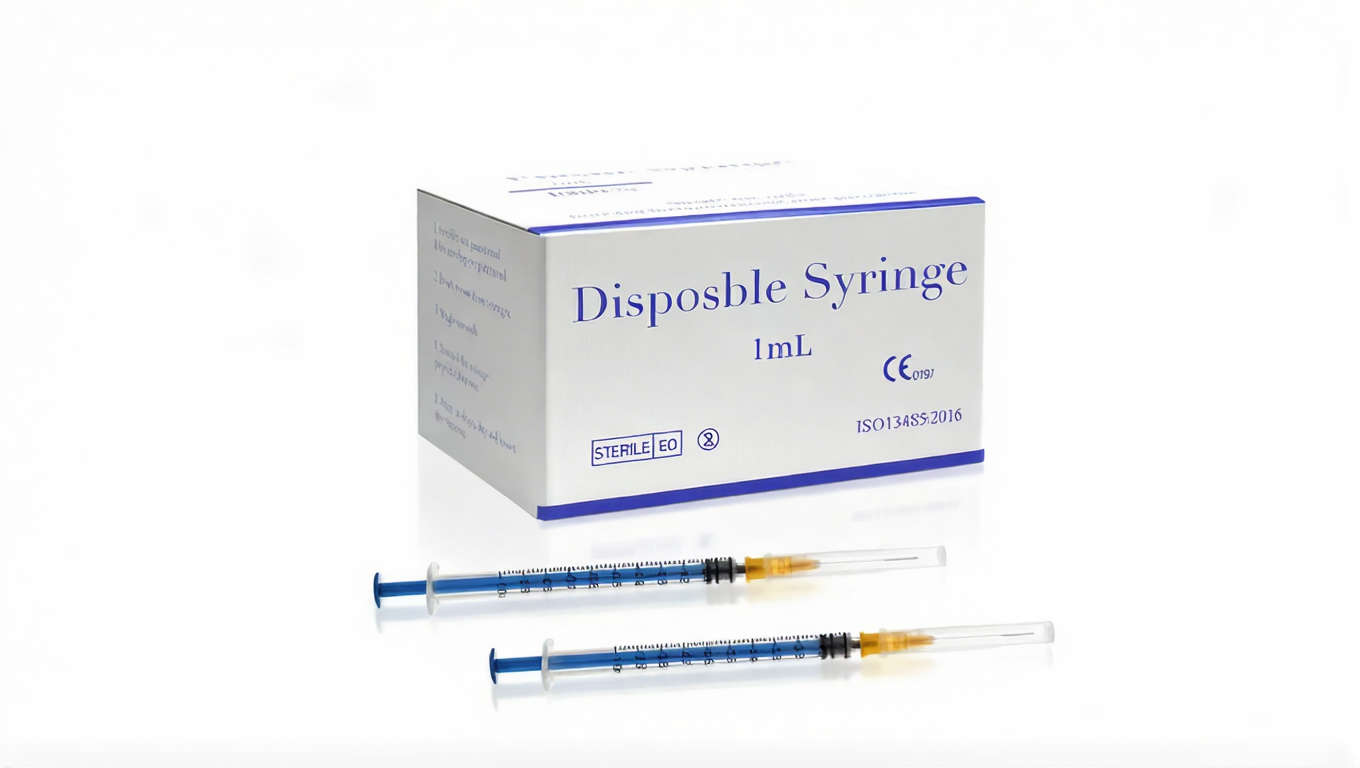
(I) Material Selection: Matching Safety and Process Performance
Material selection is the first line of defense for injection-molded medical syringes. Medical-grade polypropylene (PP) is the preferred material for syringe barrels and plungers due to its comprehensive performance advantages. It is non-toxic, odorless, has excellent chemical stability, and can withstand multiple sterilization cycles without degradation. Its high fluidity (melt flow rate 50–100 g/10 min) enables thin-wall molding of barrels, while low internal stress minimizes warpage and ensures smooth plunger movement . For syringes containing drugs sensitive to oxygen and moisture (such as some vaccines and biologics), a co-injection molding process using multi-layer materials is adopted: the inner and outer layers are medical PP, and the middle core layer is ethylene-vinyl alcohol copolymer (EVOH) with excellent barrier properties, which can effectively isolate gas and moisture and extend drug shelf life .
For key sealing components such as the backstop and plunger seal, liquid silicone rubber (LSR) is usually used in combination with secondary injection molding technology. LSR has excellent biocompatibility, high-temperature resistance, and elasticity. Through secondary injection molding, it can form a molecular-level combination with the rigid PP substrate, achieving reliable sealing performance and avoiding leakage risks. This process also ensures that the seal can maintain stable performance under repeated friction .
(II) Process Adaptation: Tailored Solutions for Multi-Component Molding
Disposable medical syringes have diverse structural requirements for different components, and injection molding technology can achieve precise molding through various process forms:
1. Single-component injection molding: Used for the production of syringe barrels and needle caps. High-flow medical PP is injected into precision molds at a controlled temperature (200–230°C) and pressure. The entire molding cycle is less than 10 seconds, which can meet the demand for mass production of hundreds of millions of units annually. The use of hot runner molds ensures uniform melt filling and reduces material waste, while also improving the surface smoothness of the barrel .
2. Co-injection molding: Applied to the production of multi-layer barrels with barrier functions. Two or more materials are injected into the same mold through a special hot runner system, forming an integrated multi-layer structure in one molding cycle. This process avoids the secondary assembly of multi-layer components, reduces particle generation, and improves production efficiency. For syringes with Luer lock connectors, co-injection molding can also realize the integrated molding of the barrel and the threaded connection part, solving the problem of poor consistency and particle pollution caused by traditional assembly processes .
3. Overmolding and insert molding: Used for the integration of soft and hard components. For example, the plunger adopts secondary injection molding (overmolding) of PP and LSR, where the rigid PP rod is first molded, and then LSR is injected onto its surface to form a sealing layer. For special syringes such as nasal syringes with atomizing functions, insert molding technology is used to integrate the PP tube and the atomizing bulb, and a 0.010-inch diameter atomizing hole is formed through a patented injection molding process, ensuring precise liquid atomization .
(III) Key Technical Guarantee: Overcoming Molding Challenges
The injection molding of disposable medical syringes requires precise control of every link to ensure product quality meets standards. In terms of mold design, precision molds with a surface roughness of Ra ≤ 0.02 μm are used, and the mold cavity is optimized through simulation analysis to avoid defects such as bubbles and shrinkage. The use of temperature control systems with an accuracy of ±1°C ensures uniform cooling of the product and stable dimensional accuracy .
In terms of process parameters, high-precision all-electric injection molding machines are preferred. Their servo motor control system can achieve precise speed and position control, with repeated positioning accuracy reaching ±0.01 mm, ensuring consistent product quality in mass production. At the same time, all-electric injection molding machines avoid hydraulic oil pollution, are easier to clean and maintain, and reduce the risk of cross-contamination in the production process . During the molding process, parameters such as injection speed, holding pressure, and cooling time are dynamically adjusted according to component characteristics—for example, the barrel adopts high-speed injection (100–200 mm/s) to ensure full filling of thin walls, while the plunger seal adopts low-pressure holding to avoid LSR material deformation .
In terms of clean production, the entire injection molding process is carried out in a GMP-class clean workshop (Class 8 or above). The production environment is equipped with high-efficiency air filtration systems, and operators must wear sterile protective clothing. After molding, the products are immediately transferred to a closed cleaning and packaging line to avoid environmental pollution and ensure the cleanliness of the final product .
III. Application Cases: Injection Molding Empowers High-Quality Syringe Production
In practical industrial applications, injection molding technology has been widely recognized by global medical device manufacturers, helping enterprises achieve efficient mass production while ensuring product safety and consistency.
Advantech Plastics, a U.S.-based medical injection molding enterprise, once undertook the development task of a nasal syringe for neurological clinical use. The product required a 0.6 cc Luer lock fluid delivery system, and the atomizing bulb needed to form a 0.010-inch diameter hole at a 45-degree angle to achieve precise liquid atomization. Faced with the challenges of small hole molding and component integration, the enterprise adopted a proprietary insert molding process based on two-shot injection molding. It first molded the PP tube, then injected the atomizing bulb onto the tube through precise mold rotation and hot runner control, successfully controlling the dimensional tolerance within ±0.002 inches. The final product passed air leak testing, dimensional inspection, and visual inspection, meeting ISO 13485-2016 standards, with a monthly output of 5,000 assembled syringes, which are now widely used in clinical practice in Europe and the United States .
Global medical device giants such as BD and Terumo also rely on advanced injection molding technology for syringe production. BD's Plastipak™ syringe uses high-purity medical PP as the raw material, adopting high-speed injection molding and precision mold technology to ensure the uniformity of the barrel wall thickness and the clarity of scale markings. After high-temperature steam sterilization, the product maintains stable performance and has been widely used in global vaccine inoculation and clinical drug delivery scenarios .
Domestically, many medical device enterprises have also introduced all-electric injection molding machines and GMP-class clean production lines. By optimizing injection molding parameters and adopting multi-layer co-injection molding technology, they have realized the mass production of high-quality disposable syringes. The products not only meet domestic medical standards but also are exported to overseas markets, providing cost-effective medical solutions for global public health.
IV. Future Trends: Injection Molding Technology Drives Syringe Manufacturing Upgrade
With the continuous advancement of medical technology and the increasing demand for clinical safety, disposable medical syringes are developing in the direction of miniaturization, functional integration, and intelligence. Injection molding technology, as the core manufacturing process, will also usher in continuous innovation and upgrading to meet new market demands.
In terms of material innovation, the development of high-performance bio-based medical plastics will reduce dependence on traditional petroleum-based materials while further improving biocompatibility and environmental friendliness. The application of modified PP materials with enhanced transparency and barrier properties will expand the application scope of syringes in biologics and precision drug delivery . In terms of process technology, the integration of digital twin technology and injection molding will realize real-time simulation and optimization of the molding process, predict and avoid defects in advance, and improve production efficiency and product yield. The popularization of intelligent injection molding equipment equipped with industrial cameras and online detection systems will realize 100% full inspection of products, ensuring zero defective products entering the market .
In addition, the integration of injection molding with other technologies will become a new trend. For example, the combination of injection molding and 3D printing will realize the rapid prototyping and small-batch production of personalized syringes; the integration of injection molding and intelligent sensing technology will develop syringes with dosage monitoring and feedback functions, further improving clinical medication safety. At the same time, the continuous optimization of clean production processes and the promotion of closed-loop recycling of medical plastic waste will make syringe production more in line with the global "dual-carbon" strategy .
Conclusion
As the core manufacturing technology of disposable medical syringes, injection molding has irreplaceable advantages in meeting the strict requirements of biocompatibility, precision, sterilization resistance, and mass production. From material selection to mold design, from process optimization to clean production, every link of injection molding technology is closely linked to the safety and reliability of syringes, providing a solid guarantee for clinical medical work.
With the continuous development of the global medical device industry, injection molding technology will continue to deepen innovation, integrate more advanced technologies and concepts, and promote the upgrading of disposable medical syringe manufacturing in the direction of higher precision, more functions, and greener production. It will continue to play a key role in protecting human health and promoting the progress of the medical industry.
Hot Articles
Hot Tags
Stay Connected!


Manufacturing on Demand
Please fill in the following information to obtain plan details (information is confidential and not disclosed publicly), we will contact you within 24 hours, please keep your phone available!
Upload a 3D/2D model to see instant pricing, lead time, and DFM feedback.