



The Ultimate 3D Printing Prototyping Terminology Glossary


Below is a comprehensive list of professional terminology related to 3D Printing Prototyping, presented in English, along with clear definitions. These terms are commonly used in engineering, product design, additive manufacturing, and rapid prototyping industries.
Professional Terminology in 3D Printing Prototyping
1. Core 3D Printing & Prototyping Terms
Term | Definition |
3D Printing | A process of creating three-dimensional objects by adding material layer by layer, based on a digital model. Also known as Additive Manufacturing (AM). |
Additive Manufacturing (AM) | The broader technical term for 3D printing; building objects by adding material rather than subtracting it. |
Rapid Prototyping (RP) | The fast fabrication of a physical model or part using 3D printing or other techniques, primarily for testing design concepts. |
Prototype | An early sample or model of a product built to test a concept or process. In 3D printing, it can be functional or non-functional. |
Iterative Design | A cyclical process of prototyping, testing, analyzing, and refining a product design. 3D printing enables fast iterations. |
Part Geometry | The shape, structure, and complexity of the 3D model being printed. |
Layer Height | The thickness of each individual layer of material deposited by the 3D printer; affects resolution and print speed. |
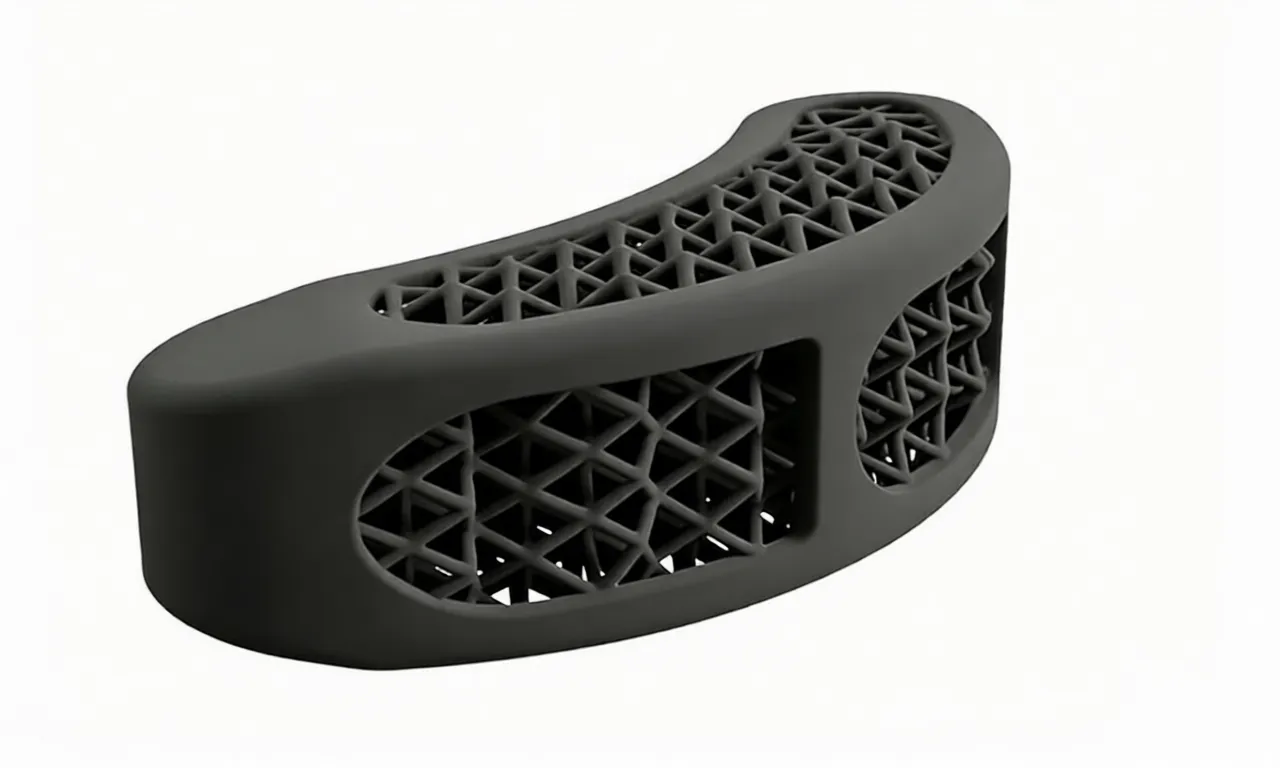
Infill | The internal structure of a 3D printed part, usually a grid or honeycomb pattern, which determines part strength and material usage. |
Support Structures | Temporary structures printed to support overhanging features during the build process; usually removed after printing. |
Overhang | A part feature that extends horizontally or at an angle without underlying support, often requiring supports. |
Print Bed / Build Plate | The flat surface where the 3D object is printed; must remain level and properly adhered for successful prints. |
Raft / Brim / Skirt | Additional structures printed around or under the main model to improve adhesion or stability. |
2. 3D Printing Technologies
Term | Definition |
FDM (Fused Deposition Modeling) | A common 3D printing method where a thermoplastic filament is melted and extruded through a nozzle, layer by layer. |
SLA (Stereolithography) | A resin-based 3D printing process that uses a laser to cure liquid photopolymer resin into solid layers. Known for high detail. |
DLP (Digital Light Processing) | Similar to SLA but uses a digital light projector for curing resin; faster than traditional SLA for some applications. |
SLS (Selective Laser Sintering) | A powder-based process where a laser sinters (fuses) powdered material (usually nylon) to create solid layers. |
SLM / DMLS (Selective Laser Melting / Direct Metal Laser Sintering) | Metal 3D printing technologies that use lasers to fuse metal powders together, often used for industrial prototypes. |
Binder Jetting | A process where a liquid binding agent is selectively deposited to join powder particles (metal, sand, etc.). |
PolyJet | A high-detail inkjet-based process that jets layers of liquid photopolymer and cures them with UV light; capable of multi-material and color printing. |
MJF (Multi Jet Fusion) | A powder-bed fusion technology (by HP) that uses fusing and detailing agents to produce functional nylon parts with good detail and strength. |
3. Materials Related Terms
Term | Definition |
Filament | The spooled thermoplastic material used in FDM 3D printing (e.g., PLA, ABS, PETG). |
Resin | Liquid photopolymer used in SLA, DLP, and similar resin-based 3D printing processes. |
Powder (Printing Powder) | Fine material (plastic, metal, or ceramic) used in SLS, SLM, Binder Jetting, etc. |
Thermoplastic | A type of plastic that becomes pliable when heated and solidifies upon cooling; commonly used in FDM. |
Engineering Materials | High-performance filaments or powders with specific mechanical properties (e.g., Nylon, PETG, TPU, PC). |
Functional Material | Material chosen for its specific physical properties such as strength, flexibility, heat resistance, or biocompatibility. |
Biocompatible Material | Material safe for contact with the human body, used in medical prototyping (e.g., certain resins or titanium). |
4. Design & Pre-Processing Terms
Term | Definition |
CAD (Computer-Aided Design) | Software used to create precise 3D models (e.g., SolidWorks, Fusion 360, AutoCAD). |
STL File (Stereolithography File) | The standard file format for 3D printing, representing the surface geometry of a 3D model using triangles. |
OBJ File | A 3D model file format that includes both geometry and texture information; sometimes used in 3D printing. |
Slicing Software | Software that converts a 3D model into G-code instructions for the 3D printer by slicing it into layers (e.g., Cura, PrusaSlicer, Simplify3D). |
G-code | The machine language that 3D printers read to execute the print job; generated by slicing software. |
Wall Thickness | The minimum thickness of the outer surfaces of a 3D model; too thin may cause structural failure. |
Clearance | The intentional space between moving or assembled parts to ensure they function correctly. |
Tolerance | The allowable limit of variation in a physical dimension; critical for functional parts. |
5. Post-Processing & Finishing Terms
Term | Definition |
Post-Processing | Any treatment applied to a 3D printed part after printing to improve appearance, strength, or functionality. |
Support Removal | The process of taking off support structures after printing. |
Sanding | Smoothing the surface of a print, often in preparation for painting or finishing. |
Priming & Painting | Applying primer and paint to improve aesthetics or simulate final product appearance. |
Polishing | Smoothing and shining the surface, often used with resin prints. |
Curing | Hardening a resin or printed part using UV light (common in SLA/DLP). |
Heat Treatment | Applying heat to improve mechanical properties, especially in metal or nylon prints. |
Surface Finish | The texture, smoothness, or visual quality of the printed part’s exterior. |
6. Quality & Performance Terms
Term | Definition |
Resolution | The level of detail a 3D printer can achieve, often defined by layer height and X/Y axis precision. |
Accuracy | How closely the printed part matches the intended dimensions of the 3D model. |
Tolerancing | The expected variation in size that is acceptable for the part to function correctly. |
Warping | A common FDM issue where the part distorts due to uneven cooling or temperature changes. |
Anisotropy | The property of a 3D printed part having different mechanical strengths depending on the direction of the layers. |
Porosity | Small voids or gaps within a printed part, often in metal or SLS prints, which can affect strength. |
Dimensional Accuracy | The closeness of a manufactured part’s dimensions to those intended in the design. |
7. Industry & Application Terms
Term | Definition |
Functional Prototype | A prototype that is designed to be tested for real-world use, including mechanical or thermal performance. |
Visual Prototype | A prototype created mainly for appearance, form, and aesthetics, not necessarily for function. |
Proof of Concept (PoC) | A prototype used to demonstrate the feasibility of an idea or design. |
Low-Volume Production | Manufacturing a small number of units, often using 3D printing for cost-effective customization. |
On-Demand Manufacturing | Producing parts only when needed, often enabled by digital 3D printing workflows. |
Digital Inventory | Storing product designs digitally and manufacturing parts via 3D printing as needed, reducing warehousing. |
Bonus: Commonly Used Verbs & Actions in 3D Printing Workflows
Action | Description |
Slice | To divide a 3D model into layers for printing using slicing software. |
Print / Print Job | The act of producing a physical object using a 3D printer. |
Generate G-code | Creating machine instructions from a 3D model for the 3D printer. |
Calibrate | Adjusting the printer settings or bed to ensure accurate prints. |
Adhere | Ensuring the first layer of the print sticks well to the print bed. |
Post-Cure | Additional curing process (often with UV light) to fully harden resin parts. |
Summary
Understanding these professional 3D printing prototyping terms will help you:
- Communicate effectively with engineers, designers, and manufacturers
- Make informed decisions about materials, technologies, and processes
- Optimize your design and printing workflows
- Troubleshoot and improve print quality
Hot Articles
Hot Tags
Stay Connected!


Manufacturing on Demand
Please fill in the following information to obtain plan details (information is confidential and not disclosed publicly), we will contact you within 24 hours, please keep your phone available!
Upload a 3D/2D model to see instant pricing, lead time, and DFM feedback.