



Manufacturing: Professional Terminology


Manufacturing: Professional Terminology
Category 1: Core Concepts & Philosophies
Term | Definition & Context |
Manufacturing | The process of transforming raw materials into finished goods on a large scale. |
Production | Often used interchangeably with manufacturing, but can have a broader meaning that includes creation of non-tangible goods (e.g., software production). |
Value-Added | The process of increasing the economic value of a material by changing its form or function. The core goal of manufacturing. |
Discrete Manufacturing | The production of distinct, countable items (e.g., automobiles, smartphones, screws). |
Process Manufacturing | Production that uses formulas or recipes, resulting in products that cannot be disassembled (e.g., chemicals, pharmaceuticals, gasoline). |
Assembly | The process of putting together components to create a final product. |
Fabrication | Often refers to the process of making individual components, particularly from metal or wood (e.g., sheet metal fabrication). |
Category 2: Production Systems & Methodologies
Term | Definition & Context |
Mass Production | The high-volume manufacturing of standardized goods, often using assembly lines. |
Batch Production | Manufacturing a specific quantity (a "batch") of a product. Equipment is reconfigured between batches. |
Job Shop Manufacturing | A facility that handles custom, low-volume production runs. Characterized by high flexibility and general-purpose equipment. |
Lean Manufacturing | A systematic method for waste minimization (Muda) without sacrificing productivity. |
Just-In-Time (JIT) | An inventory strategy where components arrive exactly when they are needed in the production process. |
Toyota Production System (TPS) | The pioneering system that inspired Lean Manufacturing, focusing on eliminating waste and continuous improvement. |
Automation | The use of control systems (e.g., PLCs, robots) to operate equipment with minimal human intervention. |
Computer-Integrated Manufacturing (CIM) | The use of computers to control the entire production process. |
Industry 4.0 | The current trend of automation and data exchange in manufacturing, including Cyber-Physical Systems (CPS), the Internet of Things (IoT), and the Smart Factory. |
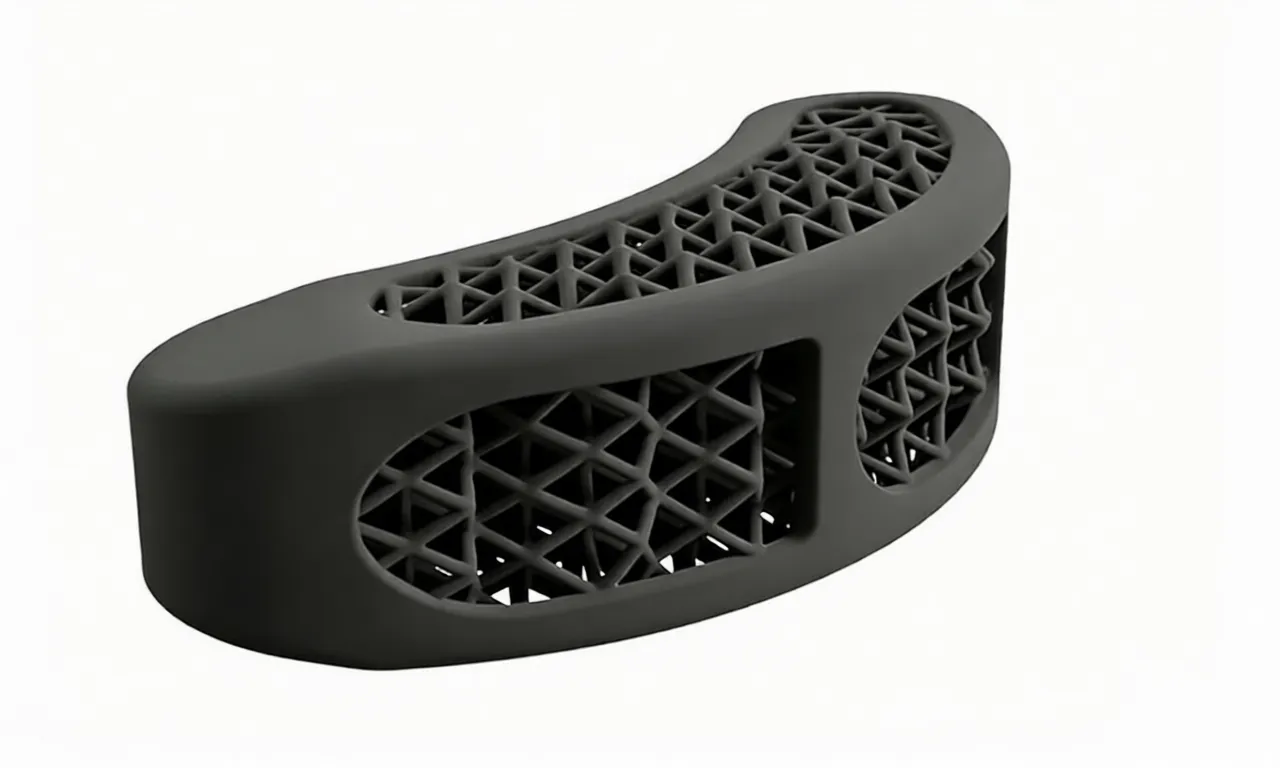
Additive Manufacturing (AM) | The formal term for 3D printing; building parts layer-by-layer from a digital model. |
Subtractive Manufacturing | Processes that create a part by removing material from a solid block (e.g., CNC Machining). |
Formative Manufacturing | Processes that shape material by deforming it (e.g., Casting, Forging). |
Category 3: Design & Engineering
Term | Definition & Context |
Computer-Aided Design (CAD) | Software used to create 2D and 3D models of a product. |
Computer-Aided Manufacturing (CAM) | Software that uses CAD models to generate toolpaths for CNC machines. |
Computer-Aided Engineering (CAE) | The use of software for simulation, validation, and optimization of products and manufacturing tools (e.g., FEA, CFD). |
Geometric Dimensioning & Tolerancing (GD&T) | A symbolic language used on engineering drawings to define the allowable variation in form, orientation, and location of part features. |
Bill of Materials (BOM) | A comprehensive list of raw materials, components, and instructions required to manufacture a product. |
Design for Manufacturability (DFM) | The practice of designing products to make them easier and cheaper to manufacture. |
Design for Assembly (DFA) | The practice of designing products with a minimal number of parts to make assembly easier and faster. |
Technologies used to quickly produce a physical part or model for concept validation and testing. |
Category 4: Processes & Operations
Term | Definition & Context |
Casting | Pouring liquid material into a mold where it solidifies (e.g., Die Casting, Investment Casting). |
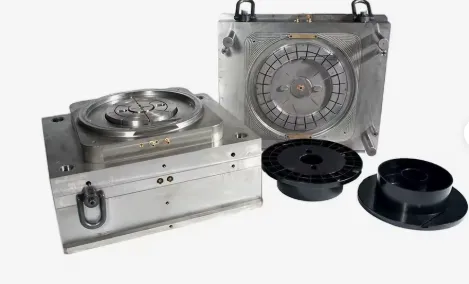
Molding | Shaping material using a rigid frame or pattern (e.g., Injection Molding, Blow Molding). |
Forming | Deforming material without adding or removing it (e.g., Forging, Stamping, Rolling). |
A subtractive process using machine tools (e.g., Milling, Turning, Drilling, Grinding). | |
Joining | Processes to connect materials (e.g., Welding, Brazing, Soldering, Adhesive Bonding). |
Finishing | Processes applied to the surface of a product (e.g., Painting, Plating, Powder Coating, Anodizing). |
Heat Treatment | Controlled heating and cooling of metals to alter their physical properties (e.g., hardness, strength). |
Category 5: Quality & Metrology
Term | Definition & Context |
Quality Control (QC) | The process of ensuring products meet specified requirements through inspection and testing. |
Quality Assurance (QA) | The process of preventing defects by focusing on the manufacturing process itself. |
Statistical Process Control (SPC) | Using statistical methods to monitor and control a process to ensure it operates at its full potential. |
Tolerance | The permissible limit of variation in a physical dimension. |
Metrology | The science of measurement. |
Calibration | Comparing a measurement device against a standard to ensure its accuracy. |
First Article Inspection (FAI) | A comprehensive verification of a part before full production begins to ensure it meets all design specifications. |
Non-Conformance / Non-Conformity | A failure of a characteristic to meet specified requirements. |
Corrective and Preventive Action (CAPA) | A process to investigate and address the root cause of non-conformities. |
Category 6: Facility & Operations Management
Term | Definition & Context |
Supply Chain | The entire network from raw material sourcing to delivery of the final product to the end consumer. |
Logistics | The management of the flow of goods between the point of origin and the point of consumption. |
Inventory | Raw materials, work-in-progress (WIP), and finished goods held by a company. |
Work-in-Progress (WIP) | Partially finished goods awaiting completion. |
Throughput | The rate at which a system produces finished goods. |
Cycle Time | The total time to complete one operation or produce one unit. |
Lead Time | The total time from when a customer places an order to when the final product is delivered. |
Overall Equipment Effectiveness (OEE) | A metric that measures the utilization of a manufacturing asset by evaluating availability, performance, and quality. |
Preventive Maintenance (PM) | Regularly scheduled maintenance to prevent equipment failure. |
Gemba | A Japanese term meaning "the real place." In manufacturing, it refers to the shop floor where value is added. Going to the Gemba means observing the process firsthand. |
This vocabulary provides a solid foundation for communicating effectively across engineering, production, and management functions within the manufacturing industry.
Hot Articles
Hot Tags
Stay Connected!


Manufacturing on Demand
Please fill in the following information to obtain plan details (information is confidential and not disclosed publicly), we will contact you within 24 hours, please keep your phone available!
Upload a 3D/2D model to see instant pricing, lead time, and DFM feedback.