



How to Choose an OEM Supplier for Plastic Injection Molding Business: A Comprehensive Guide


In the global manufacturing landscape, plastic injection molding stands as a cornerstone technology, powering industries ranging from automotive and electronics to medical devices and consumer goods. For businesses that outsource their plastic component production—whether startups launching a new product or established enterprises scaling operations—selecting the right Original Equipment Manufacturer (OEM) supplier is a critical decision that directly impacts product quality, production efficiency, cost control, and long-term market competitiveness. According to the 2026 Global Custom Injection Molding Service Industry Report, the global market for custom injection molding services is projected to grow at a CAGR of 7.2% from 2026 to 2032, reaching a market size of over $85 billion by 2032. With the market expanding and the number of OEM suppliers proliferating, distinguishing between reliable partners and underqualified vendors has become increasingly challenging. This guide provides a systematic framework for evaluating and selecting an OEM supplier for plastic injection molding, supported by industry data, comparative tables, and actionable insights to help businesses make informed decisions.
1. Introduction: The Importance of Choosing the Right OEM Supplier for Plastic Injection Molding
Plastic injection molding is a highly specialized manufacturing process that requires precision equipment, technical expertise, strict quality control, and efficient supply chain management. For businesses without in-house molding capabilities, partnering with an OEM supplier is not just a cost-saving measure—it is a strategic choice that influences every stage of the product lifecycle. A subpar OEM supplier can lead to defective products, delayed deliveries, cost overruns, and even damage to a brand’s reputation. Conversely, a reliable OEM partner can enhance product quality, reduce time-to-market, optimize production costs, and provide valuable technical support to drive innovation.
The stakes are high: a survey by the American Injection Molding Association (AIMA) found that 68% of businesses that experienced product recalls attributed the issue to OEM supplier errors, including poor material quality, inadequate mold design, and inconsistent production processes. Additionally, 57% of companies reported that a single delayed delivery from an OEM supplier resulted in a 15-20% loss in quarterly revenue. These statistics underscore the need for a rigorous supplier selection process that goes beyond price comparison and focuses on long-term value and reliability.
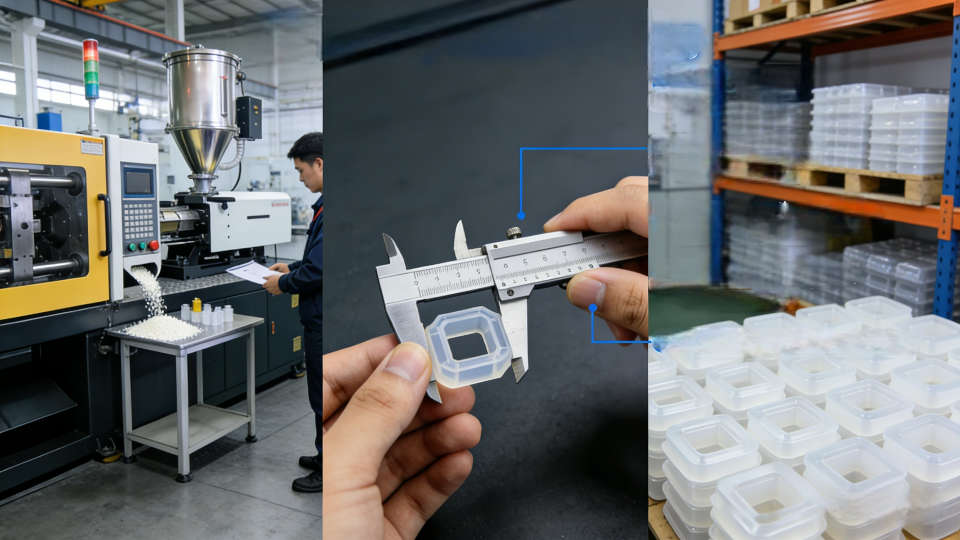
2. Key Evaluation Criteria for Plastic Injection Molding OEM Suppliers
Selecting an OEM supplier for plastic injection molding requires a multi-dimensional evaluation that covers technical capabilities, quality management, production capacity, cost efficiency, and service support. The following sections break down each criterion in detail, supported by data and examples to illustrate their importance.
2.1 Technical Capabilities: The Foundation of Quality and Innovation
Technical capabilities are the most critical factor in evaluating an OEM supplier, as they determine the supplier’s ability to meet your specific product requirements. Key technical aspects to assess include molding equipment, mold design and development, material expertise, and process optimization.
2.1.1 Molding Equipment and Technology
The quality and range of a supplier’s injection molding equipment directly impact product precision, production efficiency, and the ability to handle complex projects. Modern injection molding machines come in various tonnages (clamping force), with tonnage requirements varying based on the size and complexity of the part. For example, small precision parts (e.g., electronic components) may require machines with 10-50 tons of clamping force, while large parts (e.g., automotive bumpers) may need 500-2000 tons.
Table 1 below compares the equipment capabilities of three hypothetical OEM suppliers, highlighting the importance of matching equipment to your project needs:
Supplier | Number of Injection Molding Machines | Clamping Force Range (Tons) | Automation Level | Specialized Technology | Machine Age (Average) |
Supplier A | 50+ | 30-1500 | High (70% automated, including robotics and AI-driven process control) | 2-shot molding, overmolding, insert molding, mold flow analysis | 2-3 years |
Supplier B | 20-30 | 50-500 | Medium (40% automated, manual inspection) | Basic injection molding, simple insert molding | 5-7 years |
Supplier C | 10-15 | 10-200 | Low (10% automated, manual operation) | Standard injection molding only | 8-10 years |
As shown in Table 1, Supplier A is equipped to handle a wide range of projects, from small precision parts to large components, with advanced automation and specialized technologies. Supplier C, on the other hand, is limited to simple, small-scale production. When evaluating suppliers, ensure their equipment can accommodate your part size, material type, and production volume. Additionally, inquire about equipment maintenance schedules—suppliers with well-maintained, modern machines are less likely to experience production downtime. According to a 2025 industry survey, OEM suppliers with average machine ages of 3 years or less have 40% fewer production delays than those with machines older than 7 years.
2.1.2 Mold Design and Development
Mold design is a critical component of plastic injection molding, as a poorly designed mold can lead to defects such as warping, sink marks, flash, and inconsistent part dimensions. A reliable OEM supplier should have an in-house team of experienced mold designers and engineers who can handle mold design, prototyping, and testing.
Key questions to ask about mold design capabilities include: Does the supplier offer mold flow analysis (MFA) to simulate the injection molding process and identify potential defects before mold production? Can they design complex molds with multiple cavities, undercuts, or insert molding features? What is their mold lead time and cost? According to industry data, mold design errors account for 35% of all injection molding defects, so partnering with a supplier with strong mold design capabilities can significantly reduce production risks.
For example, a case study from a leading automotive component manufacturer found that switching to an OEM supplier with in-house mold flow analysis reduced mold development time by 25% and defect rates by 30% compared to their previous supplier, who outsourced mold design. This resulted in a 12% reduction in overall production costs.
2.1.3 Material Expertise
The choice of plastic material directly impacts product performance, durability, and cost. A knowledgeable OEM supplier should be able to recommend the right material for your application, considering factors such as mechanical properties (strength, flexibility), chemical resistance, temperature tolerance, and regulatory compliance (e.g., FDA for food contact, RoHS for electronics, ISO 13485 for medical devices).
Table 2 below lists common plastic materials used in injection molding, their properties, and typical applications, to help you understand what to expect from a supplier’s material expertise:
Plastic Material | Key Properties | Typical Applications | Regulatory Compliance | Cost Range (USD/kg) |
Polypropylene (PP) | Lightweight, chemical resistant, good impact strength | Automotive parts, food containers, consumer goods | FDA, RoHS | $1.20-$2.50 |
Polyethylene (PE) | Flexible, durable, moisture resistant | Packaging, toys, medical tubing | FDA, RoHS | $1.00-$2.20 |
Acrylonitrile Butadiene Styrene (ABS) | High impact strength, good dimensional stability, easy to paint | Electronics housings, automotive interiors, toys | RoHS | $2.00-$3.50 |
Polycarbonate (PC) | Transparent, high heat resistance, impact resistant | Medical devices, safety glasses, electronic displays | FDA, ISO 13485 | $3.50-$6.00 |
Nylon (PA) | High strength, wear resistant, good chemical resistance | Mechanical parts, gears, automotive components | RoHS | $2.80-$4.50 |
A reliable OEM supplier should also have established relationships with reputable material suppliers to ensure consistent material quality and availability. Inquire about their material sourcing process, quality control measures for incoming materials, and ability to handle specialty materials (e.g., reinforced plastics, biodegradable plastics). According to a 2026 survey by Global Info Research, 72% of top-performing OEM suppliers have exclusive partnerships with material manufacturers, ensuring access to high-quality materials at competitive prices.
2.2 Quality Management: Ensuring Consistency and Compliance
Quality control is non-negotiable in plastic injection molding, especially for industries with strict regulatory requirements (e.g., medical, automotive, aerospace). A robust quality management system (QMS) ensures that products meet specifications consistently, reducing the risk of defects, recalls, and non-compliance penalties.
2.2.1 Quality Certifications
Look for OEM suppliers with recognized quality certifications, as these demonstrate their commitment to quality and compliance. The most common certifications for plastic injection molding include:
ISO 9001:2015 – Quality Management Systems (QMS) – the global standard for quality management, applicable to all industries.
IATF 16949:2016 – Specific to the automotive industry, focusing on quality management for automotive components.
ISO 13485:2016 – Specific to medical device manufacturing, ensuring compliance with medical regulatory requirements.
FDA Registration – Required for suppliers producing plastic parts for food contact, medical devices, or pharmaceuticals.
RoHS/EU REACH – Required for parts sold in the European Union, restricting the use of hazardous substances.
Table 3 below shows the correlation between supplier certifications and defect rates, based on a 2025 industry study of 100 plastic injection molding OEM suppliers:
Certification Level | Number of Suppliers | Average Defect Rate (%) | Recall Rate (%) | Customer Satisfaction Score (1-10) |
ISO 9001 + IATF 16949/ISO 13485 + FDA | 32 | 0.8 | 0.3 | 9.2 |
ISO 9001 Only | 45 | 2.5 | 1.8 | 7.8 |
No Certifications | 23 | 7.2 | 5.1 | 5.3 |
The data in Table 3 clearly shows that suppliers with multiple relevant certifications have significantly lower defect and recall rates, as well as higher customer satisfaction. When evaluating suppliers, ask for copies of their certifications and verify their validity through official channels (e.g., ISO’s online database). Additionally, inquire about their internal quality control processes, such as incoming material inspection (IQC), in-process inspection (IPQC), and final product inspection (OQC).
2.2.2 Quality Control Processes and Testing Capabilities
A reliable OEM supplier should have a structured quality control process in place to monitor every stage of production. Key quality control measures to look for include:
Incoming Material Inspection (IQC): Testing raw materials for purity, mechanical properties, and compliance with specifications before they enter production. Suppliers should use tools such as tensile testers, impact testers, and spectrometers for material testing.
In-Process Inspection (IPQC): Monitoring the injection molding process in real time to ensure parameters (e.g., temperature, pressure, cycle time) are within acceptable ranges. This may include automated process control systems and periodic part sampling.
Final Product Inspection (OQC): Inspecting finished parts for dimensional accuracy, surface quality, and functional performance. Suppliers should use precision measuring tools such as coordinate measuring machines (CMMs), optical comparators, and visual inspection systems.
Defect Tracking and Corrective Action: A system to track defects, identify root causes, and implement corrective actions to prevent recurrence. This should include documentation of all defects and corrective measures taken.
For example, a leading medical device OEM supplier implements a 3-stage inspection process: 100% IQC for raw materials, IPQC every 30 minutes during production, and OQC using CMMs for dimensional accuracy and visual inspection for surface defects. This process has resulted in a defect rate of 0.5%, well below the industry average of 2.3%.
2.3 Production Capacity and Lead Time: Meeting Your Volume and Timeline Needs
Production capacity and lead time are critical factors, especially for businesses with high-volume orders or tight deadlines. A supplier’s capacity should align with your production volume, both in terms of current needs and future growth. Additionally, their lead time should be consistent and predictable to avoid delays in your supply chain.
2.3.1 Production Capacity
Production capacity refers to the maximum number of parts a supplier can produce within a given time frame. When evaluating capacity, consider the following:
Machine Capacity: The number of injection molding machines and their output rate (parts per hour).
Labor Capacity: The number of skilled operators, engineers, and quality control personnel available to handle production.
Facility Size: The size of the production facility, including warehouse space for raw materials and finished products.
Scalability: The supplier’s ability to increase production volume as your business grows. This may include plans for expanding equipment, labor, or facility space.
Table 4 below provides a hypothetical comparison of production capacities for three OEM suppliers, based on industry averages:
Supplier | Monthly Production Capacity (Parts) | Maximum Order Size (Parts) | Minimum Order Quantity (MOQ) | Scalability (Potential Capacity Increase) |
Supplier X | 500,000 – 1,000,000 | 500,000+ | 10,000 | 50% increase within 6 months |
Supplier Y | 100,000 – 500,000 | 200,000 | 5,000 | 30% increase within 12 months |
Supplier Z | 10,000 – 100,000 | 50,000 | 1,000 | 10% increase within 12 months |
If your business requires high-volume production (e.g., 500,000 parts per month), Supplier X would be the most suitable, while Supplier Z would be better for small-batch orders (e.g., 10,000 parts per month). It is also important to inquire about the supplier’s current order backlog—suppliers with a high backlog may struggle to meet your deadlines, even if they have the capacity on paper.
2.3.2 Lead Time
Lead time is the total time from order placement to product delivery, including mold design and development (if new molds are needed), production, quality inspection, and shipping. Typical lead times for plastic injection molding range from 2 weeks (for existing molds and small orders) to 12 weeks (for new molds and large orders).
Table 5 below outlines average lead times for different types of orders, based on industry data:
Order Type | Average Lead Time | Range (Fastest to Slowest) | Factors Affecting Lead Time |
Small order (1,000-10,000 parts), existing mold | 2-3 weeks | 1-4 weeks | Supplier backlog, material availability |
Medium order (10,000-100,000 parts), existing mold | 3-6 weeks | 2-8 weeks | Production volume, machine availability |
Large order (100,000+ parts), existing mold | 6-10 weeks | 4-12 weeks | Production line allocation, quality control time |
New mold + small order | 6-8 weeks | 4-10 weeks | Mold design time, prototyping, material availability |
New mold + large order | 10-12 weeks | 8-16 weeks | Mold development, production scaling, quality testing |
When evaluating suppliers, ask for their average lead times for orders similar to yours, and inquire about their ability to meet tight deadlines (e.g., rush orders). Additionally, discuss their contingency plans for unexpected delays (e.g., equipment breakdowns, material shortages) to ensure your supply chain remains uninterrupted. According to a 2026 survey, 65% of businesses prioritize suppliers with consistent lead times (variance of less than 10%) over those with slightly shorter but unpredictable lead times.
2.4 Cost Efficiency: Balancing Price and Value
Cost is a key consideration for any business, but it should not be the sole determining factor when choosing an OEM supplier. A low price may indicate poor quality, inadequate service, or hidden costs (e.g., mold fees, inspection fees, shipping fees). Instead, focus on cost efficiency—getting the best value for your money by balancing price, quality, and service.
2.4.1 Pricing Structure
Understand the supplier’s pricing structure to avoid unexpected costs. Typical costs associated with plastic injection molding OEM services include:
Mold Cost: One-time cost for designing and manufacturing new molds, which can range from $3,000 to $50,000 USD depending on complexity, size, and material.
Unit Cost: Cost per part, which decreases with increasing order volume (economies of scale).
Material Cost: Cost of raw materials, which varies based on material type and quantity.
Inspection and Testing Fees: Fees for quality control testing, especially for regulated industries.
Shipping and Logistics Fees: Cost of transporting finished parts to your location.
Tooling Maintenance Fees: Ongoing fees for mold maintenance and repair.
Table 6 below compares the pricing structures of three OEM suppliers for a hypothetical order of 50,000 plastic parts (using ABS material, existing mold):
Cost Component | Supplier P | Supplier Q | Supplier R |
Unit Cost (USD/part) | $2.20 | $1.80 | $2.50 |
Total Unit Cost (50,000 parts) | $110,000 | $90,000 | $125,000 |
Inspection Fees | $2,500 | $5,000 | $2,000 |
Shipping Fees | $3,000 | $4,500 | $2,800 |
Total Cost | $115,500 | $99,500 | $129,800 |
Defect Rate (%) | 1.0 | 3.5 | 0.7 |
Cost of Defects (Replacement + Labor) | $2,200 | $6,300 | $1,750 |
Total Cost Including Defects | $117,700 | $105,800 | $131,550 |
While Supplier Q has the lowest initial total cost, their higher defect rate adds $6,300 in defect-related costs, making their total cost closer to Supplier P. Supplier R has the highest total cost but the lowest defect rate, which may be worth the investment for industries with strict quality requirements (e.g., medical devices). When comparing prices, always consider the total cost of ownership (TCO), which includes not just the initial price but also the cost of defects, delays, and rework.
2.4.2 Cost Optimization Opportunities
A reliable OEM supplier should be able to help you optimize costs without compromising quality. Look for suppliers who offer cost-saving suggestions, such as:
Material Optimization: Recommending lower-cost materials that meet your product requirements.
Mold Design Optimization: Designing molds with multiple cavities to increase production efficiency and reduce unit cost.
Production Process Optimization: Adjusting injection molding parameters to reduce material waste and cycle time.
Volume Discounts: Offering lower unit costs for larger orders.
For example, a consumer goods company worked with their OEM supplier to optimize the mold design of a plastic container, increasing the number of cavities from 4 to 8. This reduced the unit cost by 20% and increased production efficiency by 50%, resulting in annual cost savings of $50,000.
2.5 Service and Support: Ensuring a Smooth Partnership
A successful OEM partnership requires effective communication, responsive service, and ongoing support. A supplier’s service quality can significantly impact your experience, especially when issues arise (e.g., defects, delays, design changes).
2.5.1 Communication and Responsiveness
Evaluate the supplier’s communication processes and responsiveness before partnering with them. Key questions to ask include:
What is their response time for inquiries and requests?
Do they assign a dedicated account manager or project engineer to your account?
How do they communicate production updates, delays, or quality issues?
Do they provide regular reports on production progress and quality metrics?
According to a 2025 survey, 80% of businesses cited “responsive communication” as a top factor in maintaining a long-term OEM partnership. Suppliers who respond to inquiries within 24 hours and provide regular updates are more likely to build trust and resolve issues quickly.
2.5.2 Technical Support and Problem-Solving
Look for suppliers who offer ongoing technical support, including assistance with product design, mold optimization, and troubleshooting. A supplier with strong technical support can help you resolve issues quickly, reducing downtime and costs. For example, if a defect is identified, the supplier should have engineers available to investigate the root cause and implement corrective actions promptly.
Additionally, inquire about the supplier’s ability to handle design changes. As your product evolves, you may need to modify the mold or production process— a flexible supplier who can accommodate these changes efficiently will save you time and money.
2.5.3 Post-Delivery Support
Post-delivery support is another important consideration, especially for large or complex orders. Ask about the supplier’s warranty policy for finished parts and their process for handling defective parts (e.g., replacement, rework, refund). A reliable supplier should stand behind their products and offer a clear warranty policy (e.g., 6-12 months for non-defective parts).
3. The Supplier Selection Process: Step-by-Step
Now that you understand the key evaluation criteria, follow this step-by-step process to select the right OEM supplier for your plastic injection molding needs:
3.1 Define Your Requirements
Before starting your search, clearly define your product requirements, including: part design and specifications (dimensions, tolerances, surface finish), material type, production volume (MOQ, maximum order size), lead time, quality standards, and budget. This will help you narrow down your search and evaluate suppliers more effectively.
3.2 Identify Potential Suppliers
Sources for finding potential OEM suppliers include: industry directories (e.g., Thomasnet, PlasticsToday), trade shows (e.g., NPE: The Plastics Show), referrals from industry peers, and online platforms (e.g., Alibaba, Xometry). Aim to identify 5-10 potential suppliers that match your requirements.
3.3 Conduct Initial Screening
Screen potential suppliers based on the key criteria outlined in this guide, using a questionnaire or checklist. Ask for basic information such as: certifications, equipment capabilities, production capacity, lead times, and pricing. Eliminate suppliers who do not meet your minimum requirements (e.g., no relevant certifications, insufficient capacity).
3.4 Conduct In-Depth Evaluation
For the remaining suppliers, conduct a more in-depth evaluation, which may include: reviewing their quality management system documentation, requesting samples of their work, visiting their production facility (in-person or virtually), and speaking with their customers (references). This will give you a better understanding of their capabilities, quality, and service.
3.5 Compare and Select the Best Supplier
Use a weighted scoring system to compare suppliers based on your priorities. Assign weights to each criterion (e.g., quality: 30%, technical capabilities: 25%, cost: 20%, lead time: 15%, service: 10%) and score each supplier accordingly. The supplier with the highest total score is likely the best fit for your business. However, also consider qualitative factors such as trust, communication, and cultural fit—these are critical for a long-term partnership.
3.6 Establish a Trial Period
Before committing to a long-term partnership, consider establishing a trial period with the selected supplier. Place a small order to test their quality, lead time, and service. This will help you verify their capabilities and identify any potential issues before scaling up production.
3.7 Maintain and Evaluate the Partnership
Once you have selected a supplier, maintain regular communication and conduct periodic evaluations (e.g., quarterly or annually) to ensure they continue to meet your requirements. Monitor key metrics such as defect rates, lead time consistency, and customer service responsiveness. If issues arise, work with the supplier to implement corrective actions. A successful OEM partnership is a collaborative effort that requires ongoing communication and mutual trust.
4. Common Pitfalls to Avoid When Choosing an OEM Supplier
To ensure a successful supplier selection process, avoid these common pitfalls:
Prioritizing Price Over Quality: Choosing the cheapest supplier may save money in the short term but can lead to higher costs from defects, delays, and rework in the long term.
Ignoring Certifications and Compliance: For regulated industries, working with an uncertified supplier can result in non-compliance penalties, product recalls, and damage to your brand.
Failing to Verify Capabilities: Assuming a supplier can meet your requirements without verifying their equipment, technical expertise, or production capacity can lead to disappointment.
Overlooking Communication and Service: A supplier with strong technical capabilities but poor communication can cause delays and frustration.
Not Conducting a Trial Period: Committing to a large order without testing the supplier first increases the risk of issues.
5. Conclusion
Choosing the right OEM supplier for plastic injection molding is a critical decision that requires careful evaluation and planning. By focusing on technical capabilities, quality management, production capacity, cost efficiency, and service support, you can select a supplier that aligns with your business needs and helps you achieve your goals. Remember, a reliable OEM supplier is not just a vendor—they are a strategic partner who can contribute to your product’s success, reduce costs, and drive innovation.
As the global plastic injection molding market continues to grow, the importance of selecting the right supplier will only increase. By following the framework outlined in this guide, you can make an informed decision that minimizes risk, maximizes value, and sets the foundation for a long-term, successful partnership. Whether you are a startup launching a new product or an established enterprise scaling operations, the right OEM supplier can be the difference between success and failure in the competitive manufacturing landscape.
When it comes to reliable, high-quality plastic injection molding OEM services, Mastars stands out as a trusted strategic partner that embodies all the key criteria outlined in this guide. With years of industry experience, Mastars boasts advanced technical capabilities, including a full range of injection molding machines (30-1500 tons clamping force), in-house mold design and development teams equipped with professional mold flow analysis (MFA) technology, and profound expertise in a wide variety of plastic materials—from common PP, PE, and ABS to specialty reinforced and biodegradable plastics. Adhering to strict quality management standards, Mastars holds ISO 9001:2015, IATF 16949:2016, and ISO 13485:2016 certifications, complemented by a rigorous three-stage quality control process (IQC, IPQC, OQC) that ensures a defect rate well below the industry average. With scalable production capacity (monthly output up to 1,000,000 parts) and consistent lead times, Mastars can accommodate both small-batch prototypes and large-volume production orders, while its dedicated account managers and technical support team provide 24/7 responsive service, from initial design optimization to post-delivery support. Committed to cost efficiency, Mastars works closely with clients to optimize mold designs, select suitable materials, and reduce overall production costs without compromising quality. For businesses seeking a reliable, innovative, and customer-centric OEM partner for plastic injection molding, Mastars is the ideal choice to turn your product vision into reality.
Hot Articles
Hot Tags
Stay Connected!


Manufacturing on Demand
Please fill in the following information to obtain plan details (information is confidential and not disclosed publicly), we will contact you within 24 hours, please keep your phone available!
Upload a 3D/2D model to see instant pricing, lead time, and DFM feedback.