



Aluminum Die Casting: Die Casting Process and Application of Automotive Transmission Housing


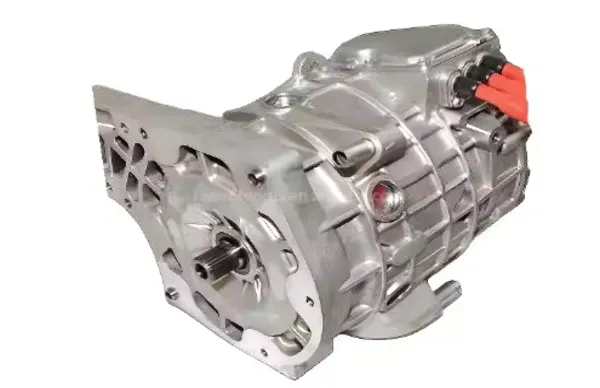
Aluminum die casting technology has become the mainstream forming process for core components in the automotive industry due to its advantages of high precision, high efficiency, excellent mechanical properties and lightweight. As a key component of the automotive powertrain, the transmission housing undertakes the important functions of supporting gears, sealing lubricating oil and transmitting power, and has strict requirements on structural strength, sealing performance, dimensional accuracy and lightweight. Traditional casting processes struggle to balance the forming of complex structures and mass production needs, while aluminum die casting can accurately replicate complex chamber structures through high-pressure and high-speed forming, and simultaneously achieve the unity of product lightweight and high strength. Taking the passenger car manual transmission housing as the target product, this article elaborates on the application process, technical points, quality control and industrial value of aluminum die casting technology, providing a reference for the production of similar automotive aluminum die cast components.
I. Product Characteristics and Compatibility with Aluminum Die Casting Technology
The passenger car manual transmission housing studied in this article has an irregular box structure with an overall size of 420mm×280mm×160mm and a wall thickness of 3-5mm. It integrates multiple sets of gear mounting chambers, bearing seats and lubricating oil channels inside. 24 bolt mounting holes need to be reserved on the end face of the housing, and the hole position accuracy directly affects the transmission assembly precision. The product must withstand vibration and impact generated by gear operation, requiring a tensile strength of ≥220MPa and a Brinell hardness of ≥80HB. Meanwhile, it must have excellent sealing performance to ensure no leakage of lubricating oil.
Aluminum die casting technology is highly compatible with the product requirements: ADC12 aluminum alloy is selected as the raw material, which contains aluminum, silicon, copper and other elements, with excellent die casting formability. After aging treatment, it can meet the mechanical performance requirements of the housing. Moreover, its density is only 1/3 of that of cast iron, which can reduce the weight of the transmission housing by more than 40%, contributing to automotive lightweight and fuel consumption optimization. The high-pressure forming characteristic of aluminum die casting enables the molten metal to fully fill complex chambers and small channels, with dimensional accuracy reaching IT8-IT10 grade and surface roughness Ra≤1.6μm, meeting assembly requirements without extensive subsequent processing. The short single-mold forming cycle (2-3 minutes per piece) adapts to the mass production needs of the automotive industry and greatly improves production efficiency.
II. Key Design Points of Aluminum Die Casting Mold for Transmission Housing
The mold is the core equipment for aluminum die casting forming, which needs to be designed in combination with the complex structure of the transmission housing, taking into account forming precision, exhaust efficiency and demolding smoothness. The overall mold adopts a two-plate structure suitable for horizontal cold chamber die casting machines, made of H13 hot work die steel. After quenching and tempering treatment and nitriding treatment, its high-temperature wear resistance and service life are improved. The core design points are as follows:
Parting surface and cavity design: The parting surface is set along the maximum contour line of the housing, avoiding key precision areas such as bearing seat holes and sealing end faces, so as to reduce the impact of parting surface dislocation on product precision. The cavity adopts an integral structure, and the core is designed inside according to the housing chamber and channel structure. The core surface is rounded (R1.5mm) to avoid casting cracks caused by stress concentration. For high-precision structures such as bearing seat holes, an insert design is adopted. The insert is made of SKD61 material, which is precision machined and then embedded into the cavity to ensure that the hole position dimensional tolerance is controlled within ±0.02mm.
Gating and exhaust system: A side gate + spreader cone gating system is adopted, with a main sprue diameter of 18mm. The spreader cone is designed in a conical shape to guide the molten metal to evenly distribute to all areas of the cavity, avoiding casting defects caused by excessive local impact. The exhaust system is equipped with exhaust grooves along the cavity end, around the bearing seat holes and on the parting surface, with a groove width of 0.2-0.3mm and a depth of 0.05-0.1mm. Meanwhile, an exhaust pin is set at the highest point of the cavity to quickly discharge air and molten metal volatiles in the cavity, preventing air holes and shrinkage holes in castings.
Cooling and ejection system: The cooling system adopts a zoned water channel design, fitting the outer wall of the cavity and the inside of the core, with a water channel spacing of 12-15mm. The water temperature is controlled at 30-40℃ by a constant temperature cooling machine to ensure uniform temperature in all areas of the mold and avoid casting deformation and shrinkage marks caused by uneven cooling. The ejection system adopts a combined structure of ejector pins and ejector plates. Ejector pins are evenly distributed on the non-appearance surface and inner wall of the cavity of the housing, and the ejector plate is attached to the bottom edge of the housing, ensuring uniform ejection force and avoiding deformation or scratches during casting demolding.
III. Aluminum Die Casting Manufacturing Process and Precision Control
The aluminum die casting of the transmission housing follows the full-process control of "raw material pretreatment - die casting forming - post-processing - quality inspection" to ensure that product performance and precision meet the standards. The specific process is as follows:
Raw material pretreatment and die casting forming: ADC12 aluminum alloy ingots are melted at high temperature (700-720℃). Refining agent is added during the melting process to remove impurities and gases, ensuring the purity of molten metal. A 2800kN horizontal cold chamber die casting machine is used for forming, with the following die casting parameters set: injection pressure 80-100MPa, injection speed 3-5m/s, mold temperature 180-220℃, holding pressure time 2-3s, and cooling time 30-40s. During die casting, the molten metal temperature, injection pressure and mold temperature are monitored in real time, and parameters are adjusted through an automatic control system to avoid casting defects caused by parameter fluctuations.
Post-processing procedures: After demolding, the gate, riser and flash are first removed. A combination of grinding wheel polishing and high-pressure air blowing is adopted to ensure that the housing surface is free of burrs and residual impurities. The casting is subjected to aging treatment (180℃ for 2 hours) to eliminate die casting residual stress and improve material mechanical properties. For key structures such as bearing seat holes and bolt mounting holes, precision drilling and reaming are performed to ensure hole position accuracy and surface finish. Finally, surface anti-rust treatment (cathodic electrophoresis) is carried out to improve the corrosion resistance of the housing and adapt to the complex working conditions of automobiles.
Quality inspection: Appearance inspection combines visual inspection and optical projector to check for surface defects such as air holes, cracks and shrinkage marks on castings, with the defect qualification rate controlled above 99.5%. Dimensional inspection uses a coordinate measuring machine to fully inspect 15 key dimensions including the length, width and height of the housing, bearing seat hole position and bolt hole spacing, with all dimensional deviations controlled within the allowable range. For mechanical performance sampling, 5 samples are selected per batch, and both tensile strength and hardness meet the design requirements. Sealing performance inspection adopts air tightness test, in which 0.4MPa compressed air is introduced, and no leakage within 30s of pressure holding is considered qualified.
IV. Application Value and Industry Development Trend
After the aluminum die casting transmission housing is put into production, the single-shift output reaches 800 pieces, which is more than 3 times higher than that of traditional sand casting, and the unit product production cost is reduced by 25%, adapting to the mass production demand of 100,000 passenger cars per year. The product weight is reduced by 8.5kg compared with cast iron housing, which can reduce fuel consumption by 0.3L/100km per vehicle, conforming to the trend of automotive lightweight and energy conservation and emission reduction. Meanwhile, the high-precision structural design of the aluminum die casting housing reduces the transmission assembly error to ±0.03mm, improving power transmission efficiency and operation stability, and reducing transmission noise.
With the upgrading of the automotive industry towards electrification and lightweight, the application of aluminum die casting technology in components such as transmission housings, motor casings and battery trays will be further expanded. In the future, by optimizing mold design, introducing vacuum die casting technology (to reduce casting air holes), and integrating automatic inspection and intelligent die casting systems, the precision and performance of aluminum die casting products can be further improved, the defect rate can be reduced, and the development of automotive aluminum die casting components towards high precision, integration and lightweight can be promoted.
Conclusion
Aluminum die casting technology, with its core advantages of high precision, high efficiency and lightweight, perfectly meets the complex forming and mass production needs of automotive transmission housings. Through scientific raw material selection, mold design, parameter regulation and full-process quality control, the high-performance forming of the transmission housing is successfully realized, providing technical support for improving the quality and efficiency of automotive powertrain components. Against the background of automotive industry upgrading, aluminum die casting technology will continue to iterate and optimize, deeply integrate with intelligent manufacturing and new material technologies, and play a greater application value in automotive, new energy, high-end equipment and other fields.
Hot Cases


Hot Tags
Stay Connected!


Manufacturing on Demand
Please fill in the following information to obtain plan details (information is confidential and not disclosed publicly), we will contact you within 24 hours, please keep your phone available!
Upload a 3D/2D model to see instant pricing, lead time, and DFM feedback.