



5-Axis Machining Application Article: Precision Machining of Aero-Engine Turbine Blades


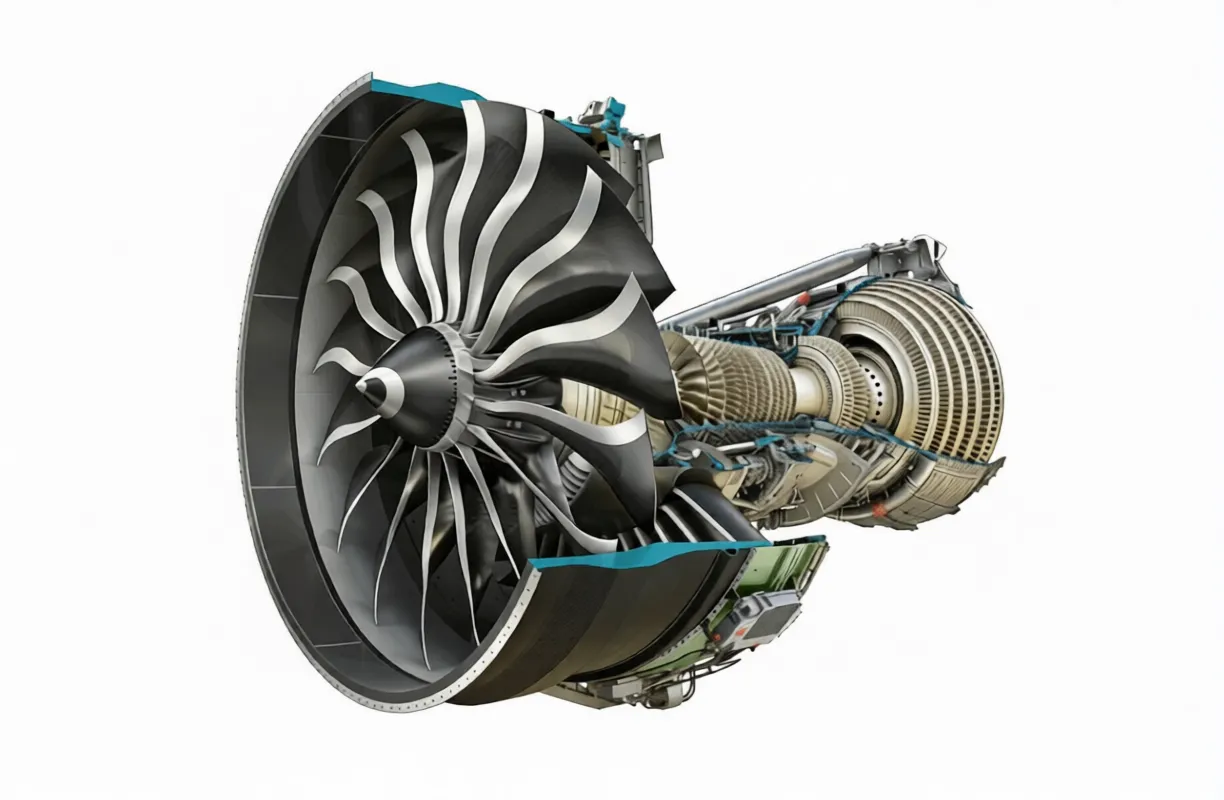
Turbine blades of aero-engines are core power components that must work stably under high-temperature, high-pressure, and high-speed rotating conditions. Their structure includes complex twisted profiles, tenons, and cooling channels, imposing stringent requirements on machining precision, surface quality, and mechanical properties. Traditional 3-axis machining requires multiple clampings, which easily causes positioning deviations and cannot meet the integrated forming needs of complex surfaces. With the advantage of multi-dimensional linkage, 5-axis machining realizes "one-time clamping, full-range machining" of blades, effectively solving the pain points of traditional processes. Taking Inconel 718 superalloy turbine blades as the machining object, this article elaborates on the application process, technical key points, and process value of 5-axis machining, providing a reference for the machining of similar complex parts.
I. Product Characteristics and Core Machining Requirements
The turbine blade processed this time is a high-pressure stage blade of an aero-engine, with an overall size of 320mm×80mm×50mm. The blade profile is a complex spatial twisted surface, with a chord width gradient range of 25-80mm and a twist angle of 35°. A dovetail tenon is designed at the root (for rotor installation), and 3 special-shaped cooling channels (diameter 2-3mm) are integrated inside. Inconel 718 superalloy is selected as the raw material, which contains nickel, chromium, molybdenum and other elements, with a tensile strength of 1200MPa and excellent high-temperature resistance. However, it is difficult to cut, prone to work hardening, and has extremely high requirements on tools and machining parameters.
The core control indicators for machining are strict: profile tolerance ±0.015mm, surface roughness Ra≤0.4μm, tenon dimensional tolerance ±0.01mm, cooling channel coaxiality ≤0.02mm. The machined blade shall have no residual stress concentration, and non-destructive testing shall be carried out to ensure no cracks, inclusions and other defects, meeting the aerospace industry standard AMS 5662.
II. Selection of 5-Axis Machining Equipment and Process Planning
A DMG MORI DMU 85 monoBLOCK 5-axis simultaneous machining center is selected, equipped with a Siemens 840D sl control system, supporting X, Y, Z three-axis linear motion and A, C-axis rotary motion. The spindle speed range is 0-18000r/min, with a repeat positioning accuracy of ±0.003mm. It is equipped with an adaptive cutting system and an on-line detection module, which can adjust machining parameters in real time and correct deviations. Solid cemented carbide coated tools are selected, with TiAlN+SiN composite coating. The specific configuration is: ball-end end mills (diameter 8mm, 12mm) for profile finish machining, end mills (diameter 5mm) for tenon machining, and twist drills (diameter 2-3mm) for cooling channel pre-drilling.
The process route is planned with the core of "reducing clamping, optimizing path, and controlling stress", and the flow is: raw material pretreatment → blank rough machining → 5-axis semi-finish milling of profile and tenon → cooling channel drilling → 5-axis finish milling forming → deburring → non-destructive testing → finished product acceptance. The strategy of "layered cutting for rough milling and micro-feeding for finish milling" is adopted. The rough milling stage removes 70% of the allowance, leaving 0.3mm for finish milling. Emulsified liquid (10% concentration) is used for cooling and lubrication throughout the process to reduce cutting temperature and tool wear.
III. Key 5-Axis Machining Processes and Technical Points
(I) Blank Pretreatment and Clamping Positioning
The blank is a forged part, first subjected to solution aging treatment (720℃ for 8 hours) to eliminate forging stress and improve material stability; then the blank shape is rough-milled by a 3-axis milling machine, leaving 5mm machining allowance to ensure the flatness of the blank reference surface. Clamping adopts a vacuum suction cup combined with a special fixture. The fixture fits the bottom of the blade tenon, and the suction force of the suction cup is adjusted to 0.7MPa. At the same time, 3 positioning pins are used to calibrate the blade reference, ensuring that the parallelism error between the clamped blade and the machine tool coordinate axis is ≤0.005mm, avoiding displacement or vibration during machining.
(II) 5-Axis Linked Machining of Profile and Tenon
Semi-finish milling stage: The spindle speed is 8000r/min, the feed rate is 800mm/min, and the cutting depth is 0.15mm. The profile is machined by 5-axis linked side milling, and the complex twisted contour is fitted through the machine tool interpolation function. At the same time, the dovetail tenon is rough-machined, leaving 0.05mm finish milling allowance. This link needs to optimize the tool path, adopt spiral feeding and arc transition strategies to reduce tool impact, and perform on-line detection every 50mm length to correct profile deviations.
The finish milling stage is the core process: the spindle speed is increased to 12000r/min, the feed rate is reduced to 500mm/min, the cutting depth is 0.03mm, and an 8mm ball-end end mill is selected for profile finishing, with the tool runout controlled within 0.002mm. The tenon finish milling adopts 5-axis positioning machining, and the A-axis and C-axis adjust the angle coordinately to ensure the perpendicularity error of the tenon side surface ≤0.008mm. The tool compensation function is used to correct the residual deviation of rough machining. During finish milling, the emulsified liquid is turned off and replaced with air cooling to avoid surface finish degradation caused by residual cooling liquid.
(III) Cooling Channel Machining and Deburring
The cooling channel adopts a composite process of "pre-drilling + finish boring". The drill angle is adjusted through 5-axis linkage to drill along the preset path inside the blade. The spindle speed is 6000r/min, the feed rate is 300mm/min, and the drill is retracted every 2mm to remove chips, preventing channel scratches caused by chip winding. After drilling, a diamond boring tool is used for finish boring the channel to ensure the inner wall roughness Ra≤0.6μm and qualified coaxiality.
Deburring is performed by manual operation combined with ultrasonic cleaning. A special diamond file is used to polish burrs at profile corners, tenon edges and channel ports (burr height ≤0.002mm), then ultrasonically cleaned with absolute ethanol for 30 minutes to remove residual cutting chips and oil stains, avoiding sharp edges affecting assembly and working condition stability.
IV. Quality Inspection and Process Advantage Summary
Finished product inspection adopts the mode of "100% inspection of key indicators + non-destructive testing": the profile is inspected by a coordinate measuring machine, 20 feature points are sampled, and the profile error is controlled within ±0.012mm; the tenon size and cooling channel coaxiality are inspected by an optical measuring machine, with a qualification rate of 100%; the surface quality is inspected by a roughness meter, with Ra value ≤0.35μm, no scratches or tool adhesion marks. Non-destructive testing adopts penetrant testing and ultrasonic testing to ensure no cracks or inclusions inside the blade. The mechanical performance sampling inspection passes the tensile test, meeting the requirements of high-temperature working conditions.
Compared with traditional 3-axis machining, 5-axis machining shows significant advantages: the machining efficiency is increased by more than 60%, and the machining cycle of a single blade is shortened from 8 hours to 3 hours; one-time clamping avoids multiple positioning deviations, greatly improving profile precision and assembly adaptability; the optimized tool path reduces tool wear, controls the scrap rate below 0.3%, and reduces residual stress to extend the blade service life.
Conclusion
With multi-dimensional linkage, high-precision positioning and integrated forming capabilities, 5-axis machining has become a core technology for the machining of complex precision parts such as aero-engine turbine blades. This case of Inconel 718 turbine blade machining effectively breaks through the pain points of difficult superalloy cutting and low complex surface machining precision through scientific equipment selection, process planning and parameter optimization, verifying the application value of 5-axis machining in the aerospace manufacturing field. With the in-depth integration of 5-axis machining technology with adaptive control and on-line detection technology, it will further empower the aerospace, high-end equipment and other fields in the future, realizing efficient, precise and low-cost production of complex parts.
Hot Cases
Hot Tags
Stay Connected!


Manufacturing on Demand
Please fill in the following information to obtain plan details (information is confidential and not disclosed publicly), we will contact you within 24 hours, please keep your phone available!
Upload a 3D/2D model to see instant pricing, lead time, and DFM feedback.