



Vacuum Casting: High-Precision Rapid Manufacturing for Prototypes and Low-Volume Production


Introduction to Vacuum Casting Technology
In modern product development, manufacturers face a persistent challenge: balancing rapid iteration, high part fidelity, and cost efficiency for prototype validation and small-batch production. Traditional manufacturing methods, such as steel mold injection molding, involve lengthy tooling cycles and high upfront costs, while basic 3D printing often fails to deliver production-grade surface quality and mechanical consistency. As a versatile rapid manufacturing technology, vacuum casting (also known as urethane vacuum casting) fills this critical gap. It enables the fast production of dimensionally accurate, bubble-free plastic and elastomer parts that closely match the performance and appearance of mass-produced components, making it a staple solution for industrial product iteration and low-volume commercial manufacturing.
At its core, vacuum casting is a mold replication technology that relies on vacuum-assisted resin infusion to replicate intricate part geometries. Unlike conventional gravity casting that easily traps air and creates internal defects, the entire material mixing and filling process takes place in a high-vacuum chamber. This controlled negative pressure environment eliminates air pockets in both the mold cavity and liquid resin, ensuring full material wetting of every fine feature of the mold. The process primarily uses flexible silicone molds and two-component polyurethane (PU) resins, delivering parts with exceptional surface finish, tight dimensional tolerance, and customizable material properties suitable for functional testing and end-use applications.
Standard Workflow of Vacuum Casting
The vacuum casting workflow is systematic and standardized, with every step directly impacting the final part quality. The entire cycle from master model preparation to finished parts can be completed within days, far faster than traditional tooling-based manufacturing. Each stage follows strict operational specifications to ensure dimensional stability, surface quality and mechanical performance of the final products.
1. Master Pattern Design and Fabrication
The process starts with master pattern creation, the foundation of high-precision replication. Engineers typically fabricate a high-fidelity master model using SLA 3D printing or precision CNC machining. This master pattern requires rigorous post-finishing, including polishing, deburring, and surface smoothing, as any minor flaw on the master will be duplicated on all cast parts. The finished master must maintain stable physical properties under moderate heating conditions to withstand subsequent mold curing processes, ensuring no deformation or damage during silicone mold production.
2. Silicone Mold Manufacturing and Curing
Silicone mold fabrication is the most critical link for batch replication and consistent part quality. The refined master model is fixed in a customized mold frame, then liquid silicone rubber is poured to fully encase the pattern. The assembly is placed in a vacuum chamber to remove trapped air in the silicone, preventing mold porosity and surface defects. After vacuum defoaming, the silicone is cured in a heating chamber at a constant temperature. Once fully hardened, the solid silicone mold is carefully split open, the master pattern is removed, and a seamless, high-precision hollow cavity is formed. A single silicone mold can reliably produce 10 to 50 identical parts, meeting typical low-volume production demands for industrial prototypes and customized components.
3. Vacuum Resin Casting and Thermal Curing
The core casting and curing process follows mold preparation. Before production, technicians select suitable PU resins based on part functional requirements, including rigid ABS-like, transparent PC-like, soft rubber-like, and flame-retardant grades. The two-component resin is precisely proportioned and thoroughly mixed in a vacuum environment to eliminate air bubbles generated during blending. The degassed liquid resin is then gravity-poured into the closed silicone mold under continuous vacuum (typically below 5 mbar). This vacuum-driven filling ensures the resin penetrates every tiny groove, thin wall, and complex undercut of the mold cavity without voids or incomplete filling. After filling, the mold is transferred to a thermal curing oven, where the resin fully solidifies within 1 to 2 hours under constant temperature to form stable mechanical properties.
4. Demolding, Post-Processing and Quality Inspection
The final stage is demolding and post-processing. Once cured, parts are extracted from the flexible silicone mold effortlessly, with minimal damage risk to intricate structures. Basic post-processing includes removing gate residues and parting line burrs. For advanced application needs, parts can undergo sanding, polishing, painting, electroplating, and texture treatment to achieve diverse surface effects, from matte and glossy finishes to simulated metal textures. Precision dimensional inspection and appearance testing are also conducted to verify compliance with design tolerances and industrial quality standards.
Key Advantages of Vacuum Casting Technology
Vacuum casting stands out in rapid manufacturing due to its unique combination of precision, efficiency, and cost performance, addressing core pain points in product research and development and small-batch production. Compared with traditional manufacturing and rapid prototyping methods, it delivers comprehensive competitive advantages.
1. Superior Precision and Surface Finish
Vacuum casting delivers exceptional precision and surface quality that outperforms ordinary 3D printing. The vacuum defoaming and filling system completely eliminates internal bubble defects, while the high-resolution silicone mold captures fine details down to 0.05mm, achieving surface smoothness comparable to formal injection-molded parts. This enables the production of aesthetically refined parts suitable for high-standard appearance verification, official sample display and even end-use commercial applications.
2. Low Cost and Fast Iteration for Low-Volume Production
This technology offers outstanding time and cost efficiency for low-volume batches. Unlike injection molding that requires weeks of steel mold manufacturing and huge upfront tooling investment, vacuum casting uses low-cost, fast-fabricated silicone molds, cutting the pre-production cycle from months to only 3–7 days. For batch sizes ranging from 5 to 50 parts, it completely avoids the excessive fixed costs of hard tooling, significantly reducing the financial risk of product trial production and new product iteration.
3. Flexible Material and Performance Customization
Vacuum casting features highly flexible material and performance customization. With hundreds of mature PU resin formulations available on the market, manufacturers can freely adjust part hardness, toughness, transparency, heat resistance, and flame retardancy to simulate the properties of mainstream engineering plastics and elastomers. This allows cast parts to support rigorous functional testing, including assembly matching, structural strength verification, and environmental adaptability trials, fully meeting diverse industrial application requirements.
4. High Adaptability to Complex Structural Parts
The process boasts strong adaptability to complex product structures. The flexible silicone mold can accommodate intricate designs such as ultra-thin walls, deep grooves, dense fine structures, undercuts, and special curved surfaces that are difficult for traditional CNC machining and hard mold injection. It requires no complex demolding mechanisms or secondary processing, greatly expanding design freedom for engineers and supporting innovative product structure design.
Main Industrial Applications of Vacuum Casting
Thanks to its comprehensive performance advantages, vacuum casting is widely adopted across multiple high-precision manufacturing industries, serving the full cycle of product development from prototype verification to small-batch commercialization.
1. Automotive Industry Prototype and Custom Parts Production
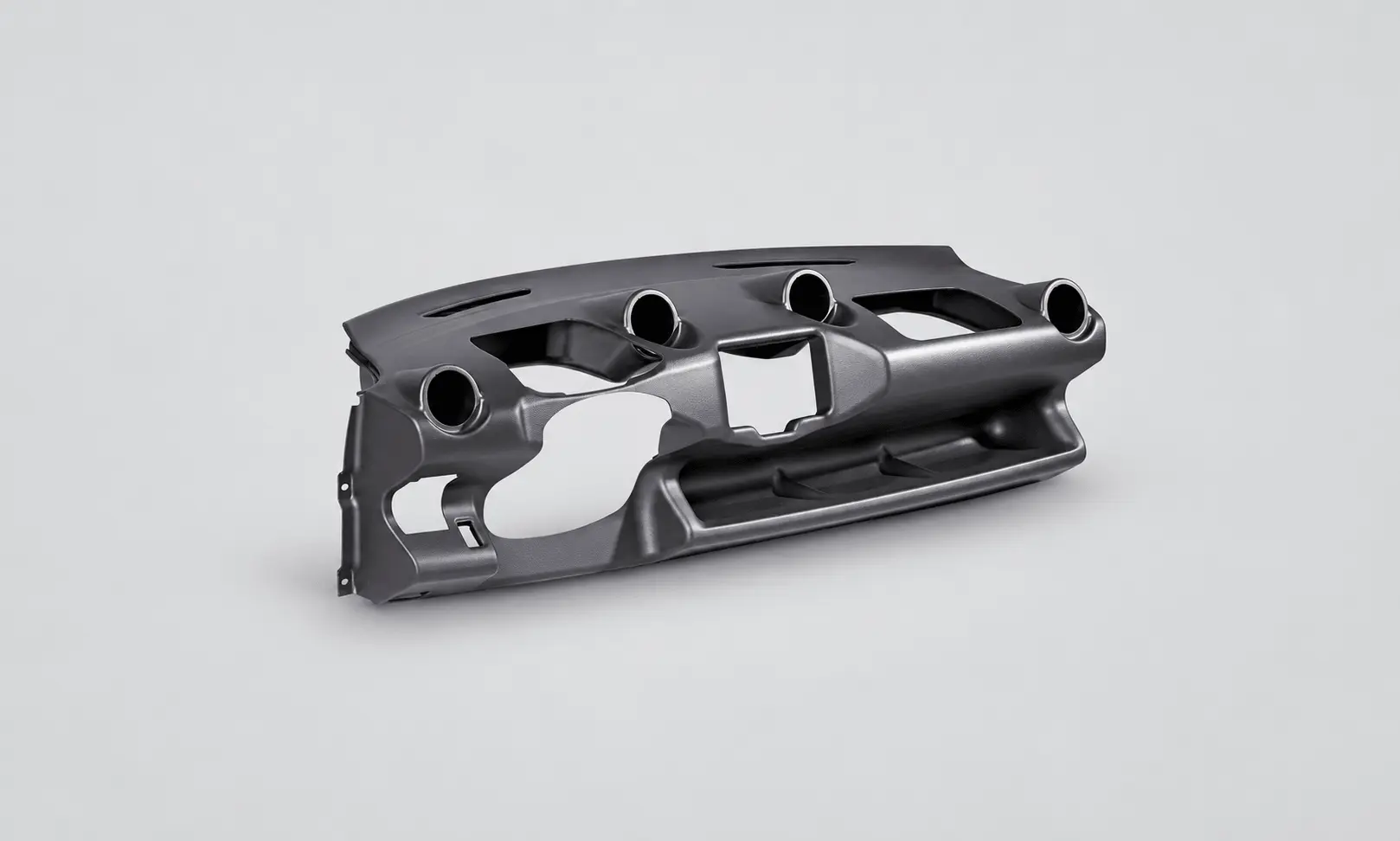
In the automotive industry, vacuum casting is extensively used for interior and exterior component development, including dashboard trim, door panel accessories, lamp housings, and soft rubber sealing parts. It supports rapid iteration of automotive prototype parts and verifies assembly accuracy and surface matching effects before mass production, effectively accelerating vehicle model upgrading. In addition, it is widely applied to low-volume production of customized automotive functional parts for special vehicles and modified vehicles.
2. Consumer Electronics Precision Component Manufacturing
For consumer electronics, vacuum casting produces high-precision equipment casings, button components, transparent protective covers, and internal structural brackets. The process meets the electronics industry’s strict requirements for smooth surface, precise dimensional tolerance, stable mechanical properties and appearance consistency. It enables manufacturers to quickly verify product appearance and structural rationality during new product development, shortening the R&D cycle of electronic consumer products.
3. Medical Device Customized Trial Production
The medical device industry benefits greatly from this technology. By adopting high-standard biocompatible resin materials, vacuum casting manufactures low-volume medical auxiliary parts, instrument casings, and soft contact components. The bubble-free, high-purity casting quality ensures parts meet strict medical safety and hygiene standards, making it ideal for customized medical equipment trial production, medical accessory verification and small-batch clinical supply.
4. Consumer Goods and Industrial Equipment Trial Manufacturing
In consumer goods and general industrial equipment, vacuum casting is applied to toy prototypes, household appliance accessories, and small-batch industrial plastic structural parts. It helps brands quickly complete market test production, verify product usability and consumer feedback, and optimize product designs in advance before launching formal mass-produced versions, effectively reducing market promotion risks.
Conclusion
As a mature and reliable rapid manufacturing solution, vacuum casting perfectly bridges the gap between low-precision rapid prototyping and high-cost mass production. Its high dimensional precision, fast iteration speed, low tooling cost, and flexible material customization make it an irreplaceable process in product R&D verification and low-volume manufacturing. For engineers and product developers seeking to balance product quality, production efficiency and manufacturing cost, vacuum casting provides a pragmatic, high-efficiency manufacturing choice, greatly shortening product launch cycles and reducing R&D risks in the increasingly competitive industrial market.
Hot Articles
Hot Tags
Stay Connected!


Manufacturing on Demand
Please fill in the following information to obtain plan details (information is confidential and not disclosed publicly), we will contact you within 24 hours, please keep your phone available!
Upload a 3D/2D model to see instant pricing, lead time, and DFM feedback.