



Types of Electrical Discharge Machining: Wire EDM, Sinker EDM, and Hole Drilling EDM Process Selection Guide


The three main types of electrical discharge machining (EDM) are Wire EDM, Sinker EDM, and Hole Drilling EDM. Each process is designed for different manufacturing features.
Wire EDM is mainly used for precision profiles, through slots, and complex contours.
Sinker EDM is used for blind cavities, deep ribs, internal corners, and complex mold details.
Hole Drilling EDM is applied to small, deep, or difficult-to-machine holes, including start holes required for Wire EDM.
For engineers, the difficult part is usually not identifying the three EDM types. The challenge is deciding which process fits a specific feature.
That decision depends on:
- Part geometry
- Material properties
- Electrode or tool accessibility
- Required tolerance
- Surface finish requirements
- Production quantity and cost
EDM is not selected simply because a part is complex. In many projects, the best manufacturing route comes from understanding where EDM adds value and where another process may be more practical.
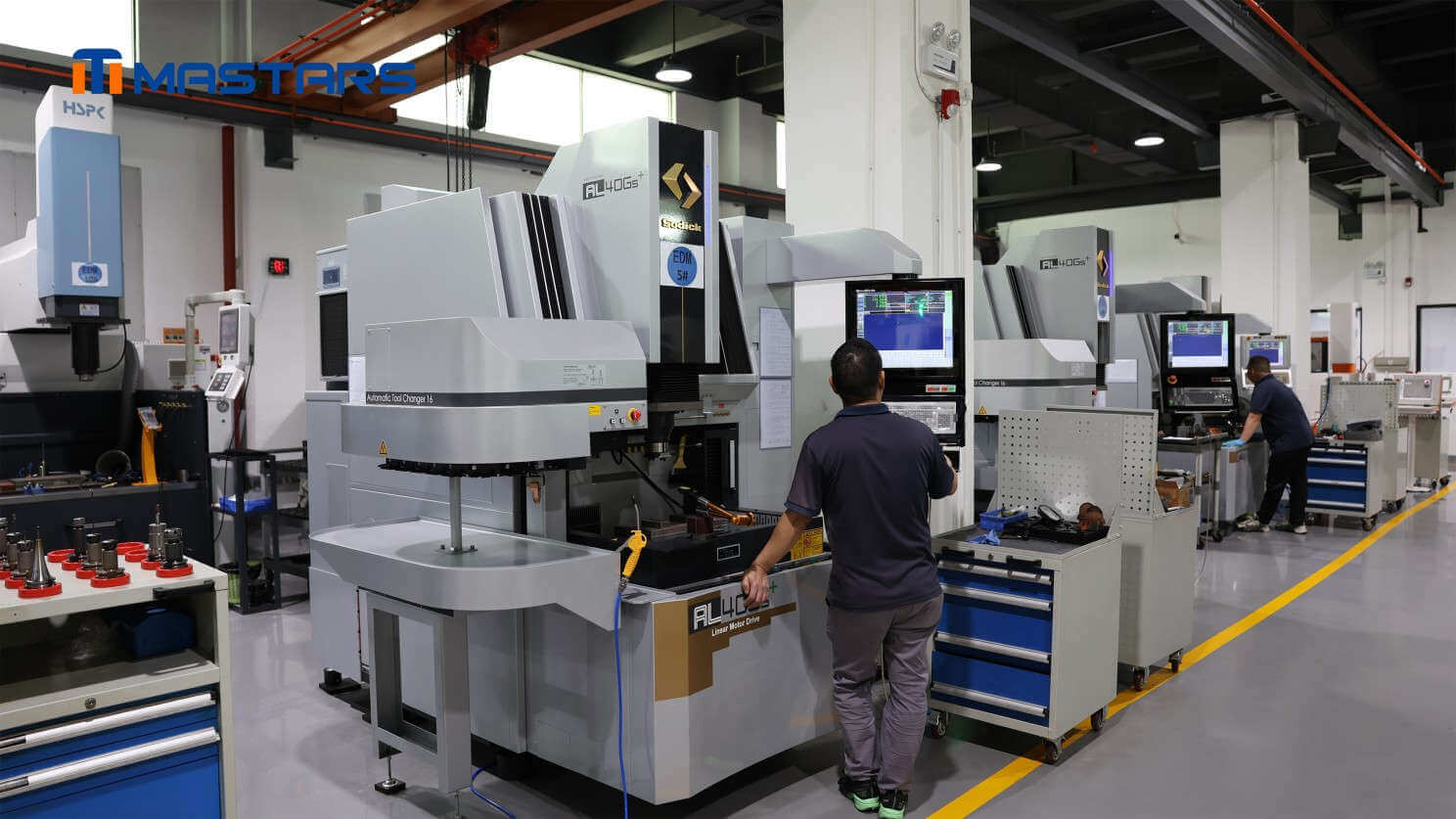
What Are the 3 Main Types of EDM Processes?
The three main EDM processes remove conductive materials through controlled electrical discharge rather than direct cutting force. The difference between them comes from the electrode design and the type of feature they are intended to create.
Quick Comparison: Wire EDM vs Sinker EDM vs Hole Drilling EDM
| Feature | Wire EDM | Sinker EDM | Hole Drilling EDM |
|---|---|---|---|
| Electrode type | Continuous metal wire | Custom-shaped electrode | Tubular electrode |
| Main purpose | Precision profiles and through cuts | Cavities, ribs, blind features | Small and deep holes |
| Typical parts | Punches, dies, inserts | Mold cavities, deep ribs | Start holes, cooling holes |
| Custom electrode required | No | Usually yes | No |
| Main limitation | Requires wire access path | Electrode design and wear | Mainly limited to hole features |
| Common dielectric | Deionized water | Dielectric oil | Deionized water |
Understanding these differences is the first step. The real manufacturing decision starts when engineers compare EDM with other possible processes such as CNC milling, drilling, or grinding.
What Parts Are Best Suited for Wire EDM?
Wire EDM is typically selected for conductive parts where the main challenge is creating accurate through profiles, narrow slots, or complex contours. It is especially useful for hardened materials that become difficult to machine after heat treatment.
Typical Wire EDM applications include:
- Punches
- Dies
- Mold inserts
- Precision profiles
- Narrow slots
- Hardened steel components
Wire EDM is especially valuable when the feature is defined by a two-dimensional or through-profile geometry.
For example, a hardened tool steel punch may require a sharp profile and stable dimensions after heat treatment. Traditional milling may face tool wear, cutting force, or accessibility issues. Wire EDM can create the required contour through controlled spark erosion.
How Does Wire EDM Work?
Wire EDM uses a continuously moving wire electrode to remove material through controlled electrical discharge between the wire and the conductive workpiece.
The basic process is:
- A charged wire electrode moves along a programmed CNC path.
- Electrical sparks generate localized heat between the wire and workpiece.
- Small amounts of material are melted and removed.
- Dielectric fluid flushes away debris and maintains machining stability.
Unlike conventional machining, the wire does not physically cut the material. The process relies on thermal energy created by electrical discharge.
This makes Wire EDM suitable for hardened conductive materials that are difficult to machine after heat treatment.
When Should Engineers Choose Wire EDM?
Wire EDM is commonly considered when the feature depends on profile accuracy, access conditions, or material hardness.
Precision Through Profiles
Parts such as punches, dies, and inserts often depend on profile accuracy rather than material removal speed.
Narrow Slots and Thin Features
Small slots and fine contours may become difficult to machine with milling tools because tool diameter, rigidity, and cutting force begin to affect the feature.
Hardened Materials
After heat treatment, materials may become too hard for conventional machining. Wire EDM allows engineers to finish these features after hardening.
Complex External Shapes
When the wire can pass through the required cutting path, Wire EDM can create complex contours without the cutting forces associated with conventional machining.
What Are the Limitations of Wire EDM?
Wire EDM has clear advantages, but the process also depends on how the feature can be accessed and flushed during machining.
Engineers should consider several limitations before selecting this process.
Wire Access Requirements
Because the wire must enter and travel through the cutting path, enclosed features often require a start hole or another access method before machining.
A completely enclosed internal cavity usually cannot be produced directly by Wire EDM.
Workpiece Thickness and Flushing
As workpiece thickness increases, removing machining debris becomes more difficult, which can affect discharge stability and surface quality.
Internal Corner Requirements
Wire EDM can create very sharp internal corners compared with milling tools, but the final geometry is still influenced by wire diameter and machining conditions.
Through Feature Limitation
Wire EDM is most effective for through features. Blind cavities, deep pockets, and three-dimensional internal details usually require Sinker EDM or another machining method.
A difficult feature does not automatically mean Wire EDM is the right solution.
What Parts Are Best Suited for Sinker EDM?
Sinker EDM is typically selected when a part requires three-dimensional cavities, blind features, or internal details that cannot be reached with a cutting tool or wire electrode.
In mold manufacturing, Sinker EDM is often introduced after initial machining, especially when hardened mold steel or complex cavity details make conventional cutting more difficult. At this stage, the goal is not simply to remove material, but to achieve the required cavity geometry while maintaining dimensional control and surface requirements.
Common Sinker EDM applications include:
- Injection mold cavities
- Deep ribs and narrow slots
- Internal corners
- Hardened mold inserts
- Complex 3D cavity details
For injection mold manufacturing, Sinker EDM is often a critical process because many mold features are deep, enclosed, and difficult for cutting tools to access.
Mastars integrates mold design, CNC machining, EDM processing, polishing, and inspection into its mold manufacturing workflow to support complex tooling projects. The company's mold manufacturing process includes DFM review, mold design, electrode preparation, CNC machining, EDM, polishing, assembly, trial molding, and inspection.
Why Can Sinker EDM Machine Features That Wire EDM Cannot?
The main difference between Wire EDM and Sinker EDM is how the electrode reaches the feature. Wire EDM relies on a continuous wire passing through the material, while Sinker EDM uses a shaped electrode that follows the required cavity geometry.
This allows Sinker EDM to create:
- Blind cavities
- Deep narrow ribs
- Internal corners
- Formed 3D surfaces
- Complex cavity geometry
For example, a mold insert may require a deep rib structure inside a cavity. Since there is no through path for a wire electrode, Wire EDM cannot directly create this feature. By controlling electrode shape, discharge conditions, and machining position, Sinker EDM can reproduce cavity features that are difficult to reach with traditional cutting methods.
Why Does Electrode Design Affect Sinker EDM Cost?
In Sinker EDM, machining time is only one part of the cost. For complex cavities, electrode planning often becomes one of the major factors affecting manufacturing efficiency.
Electrode strategy itself becomes part of the manufacturing cost.
Important factors include:
Electrode Geometry
The electrode must reproduce the cavity feature accurately. Complex shapes may require multiple electrodes or different machining orientations, which increases preparation time.
Electrode Material
Different electrode materials affect machining speed, wear rate, and surface quality.
Electrode Wear
During EDM, the electrode gradually wears during discharge. For critical dimensions, wear compensation and inspection planning need to be considered during the process setup.
Flushing and Burn Direction
Deep and narrow cavities require careful control of dielectric flow and discharge direction. Poor flushing conditions can affect machining stability and make cavity details more difficult to control.
For complex Sinker EDM projects, the challenge is usually decided before machining starts. Electrode design, machining sequence, and inspection requirements all influence the final manufacturing result.
Manufacturing Example: How EDM Fits Into Complex Mold Detail Production
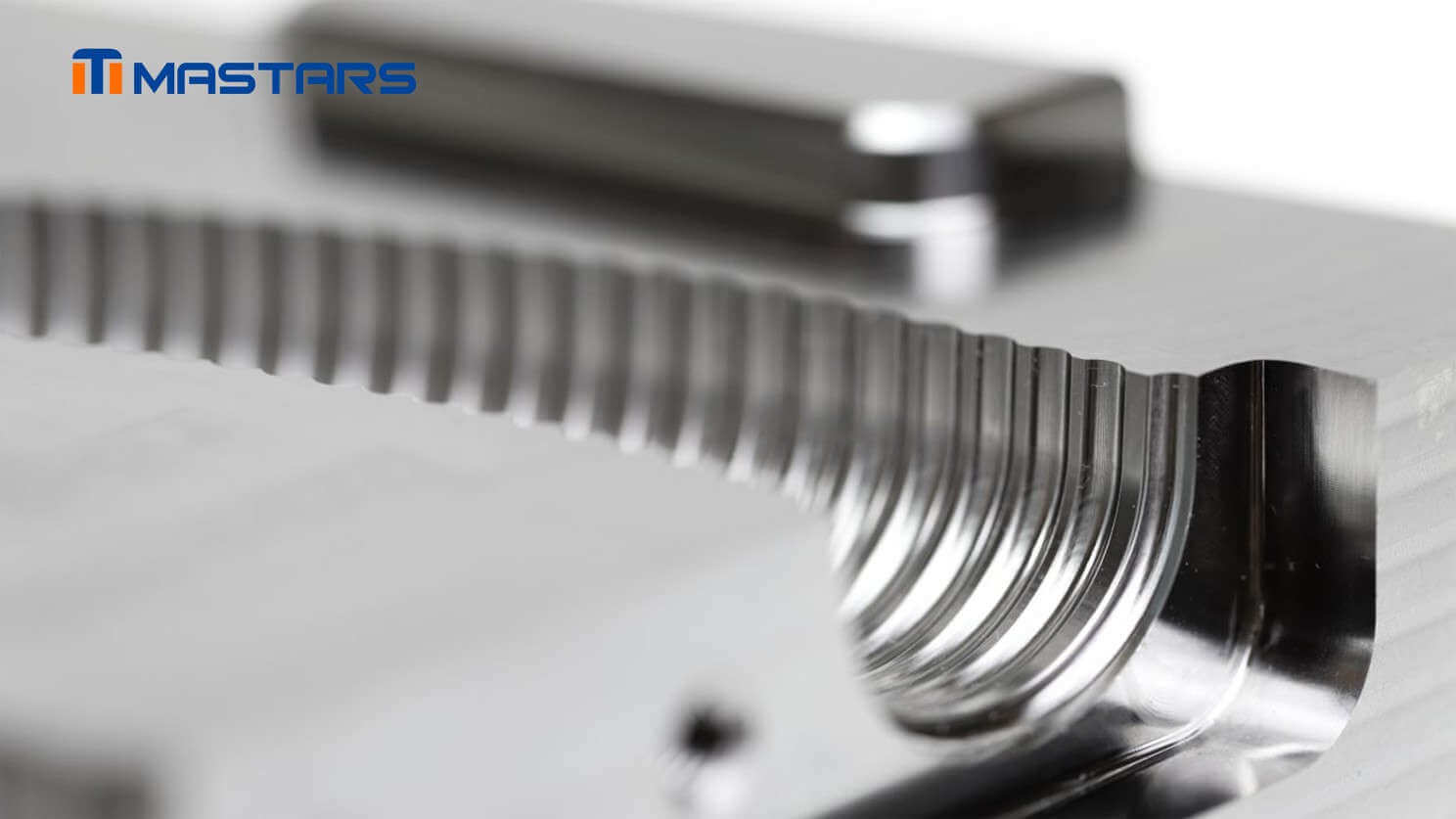
In mold manufacturing, EDM challenges rarely come from a single dimension. The difficult part is usually coordinating feature accessibility, surface requirements, dimensional control, and repeatability after the mold enters production.
For mold details such as deep ribs, narrow slots, blended bottoms, and polished internal corners, the manufacturing route needs to be considered before EDM programming begins.
The review normally focuses on:
- Whether the feature can be reached by the selected electrode
- Whether pre-machining should remove material before EDM
- How datum and fixture references affect accuracy
- Which dimensions and surfaces require inspection after machining
At Mastars, mold projects are managed through a structured workflow that connects DFM analysis, mold design, machining, EDM, polishing, trial molding, and inspection. This approach helps identify manufacturing risks earlier, before design or process changes become difficult to implement during production.
For difficult mold features, early manufacturing planning can change the process route before the geometry is finalized.
Read the full case: Deep Mold Detail Control With Mastars EDM Planning →
When Is Hole Drilling EDM Better Than Conventional Drilling?
Hole Drilling EDM is typically considered for small, deep, or difficult-to-access holes where conventional drilling may face limitations in tool strength, chip removal, or material hardness.
Typical applications include:
- Start holes for Wire EDM
- Cooling holes in molds
- Deep small-diameter holes
- Holes in hardened materials
- Features with difficult tool access
However, not every small hole requires EDM.
The correct decision depends on the relationship between hole diameter, depth, material hardness, geometry, accessibility, and production cost.
How Does Hole Drilling EDM Work?
Hole Drilling EDM uses a tubular electrode to create small holes by repeatedly generating controlled electrical discharges between the electrode and the conductive workpiece.
During machining:
- The tubular electrode approaches the conductive workpiece.
- Electrical sparks remove material from the hole location.
- Dielectric fluid flows through the electrode to flush debris.
- The electrode gradually penetrates the material to create the required hole depth.
Because the process does not rely on cutting force, Hole Drilling EDM can machine materials and geometries that are challenging for traditional drilling.
What Types of Holes Are Suitable for Hole Drilling EDM?
Hole Drilling EDM becomes valuable when the hole requirement creates challenges for conventional drilling.
Start Holes for Wire EDM
Wire EDM requires the wire electrode to enter the workpiece. For enclosed profiles, a precisely located start hole is often required before wire cutting begins.
Small and Deep Holes
Deep small-diameter holes are challenging for conventional drilling because the tool must maintain rigidity while removing chips from a confined space.
Hardened Materials
Hardened steels and other difficult materials may cause faster tool wear during conventional drilling, making EDM a practical alternative for specific hole features. EDM provides a non-contact method for creating these features.
Cooling Channels and Specialized Holes
In mold applications, these holes are often evaluated together with cooling layout, feature accessibility, and production requirements rather than treated as isolated machining operations. Injection molds and tooling components may require small cooling passages or complex hole structures where accessibility is limited.
Why Is EDM Not Always the Best Choice for Small Holes?
EDM is not automatically the most economical solution for every small hole.
For open, straight holes in easy-to-machine materials, conventional drilling may provide a faster and lower-cost solution.
Engineers should consider EDM when factors such as:
- Material hardness
- Hole depth-to-diameter ratio
- Required geometry
- Tool accessibility
- Dimensional requirements
make traditional drilling difficult or unreliable.
A small feature does not automatically require EDM. The best process is the one that meets the engineering requirement with the lowest overall manufacturing risk.
Are Types of EDM Machines and Types of EDM Processes the Same?
No. The terms describe different things. An EDM process explains how material is removed, while an EDM machine refers to the equipment used to perform that process.
The three common EDM machine categories are:
| EDM Machine Type | Corresponding Process | Typical Application |
|---|---|---|
| Wire-cut EDM machine | Wire EDM | Profiles, dies, precision contours |
| Sinker EDM machine | Sinker EDM | Cavities, ribs, mold details |
| Hole drilling EDM machine | Hole Drilling EDM | Small and deep holes |
The machine is only the platform. The process selection determines whether the part can be produced effectively.
How Do You Choose the Right Type of EDM Process?
EDM selection usually starts with the feature that needs to be created rather than the overall complexity of the part. A complex component may contain some features better suited for CNC machining and others that require EDM.
A useful starting point is to match the EDM process with the specific feature requirement.
| If Your Part Requires | Consider First |
|---|---|
| Precision through profile | Wire EDM |
| Narrow slots | Wire EDM |
| Punch or die profile | Wire EDM |
| Blind cavity | Sinker EDM |
| Deep ribs | Sinker EDM |
| Complex 3D cavity | Sinker EDM |
| Small deep holes | Hole Drilling EDM |
| Wire EDM threading hole | Hole Drilling EDM |
| Simple open holes | Conventional drilling may be better |
| Standard accessible cavity | CNC milling may be better |
What 6 Questions Should Engineers Ask Before Choosing EDM?
Before discussing EDM equipment, it is more practical to review the part requirement first.
1. Is the material electrically conductive?
EDM relies on electrical discharge, so the workpiece material must have suitable electrical conductivity for the process.
2. Is the feature a through feature or a blind feature?
Through profiles usually point toward Wire EDM.
Blind cavities usually require Sinker EDM.
3. How can the electrode access the feature?
Feature accessibility often determines whether the geometry can be produced efficiently with Wire EDM, Sinker EDM, or another machining method.
4. Is a start hole required?
Some Wire EDM applications need a pre-machined hole before cutting begins.
5. What are the critical dimensions and surface requirements?
Critical dimensions, surface requirements, and post-processing needs should be considered before choosing the machining route.
6. Is the EDM cost justified?
The process should justify the additional machining cost by solving a feature or material challenge that other methods cannot handle efficiently.
What Factors Affect EDM Accuracy, Surface Quality, and Cost?
EDM results are influenced by several factors beyond machine specifications. Feature geometry, electrode planning, material condition, and machining strategy all affect the final accuracy and surface quality.
Why Is Electrode Wear Important in Sinker EDM?
In Sinker EDM, electrode wear must be considered because the electrode shape directly influences the final cavity geometry.
Because the electrode gradually erodes during discharge, engineers need to consider:
- Electrode material selection
- Wear compensation
- Machining sequence
- Critical dimension control
For complex cavities, electrode planning is part of the manufacturing route and needs to be considered together with machining and inspection.
Why Does Flushing Matter in Deep Cavity EDM?
Deep and narrow cavities create more challenging flushing conditions because machining debris has less space to escape.
Poor debris removal can cause:
- Unstable discharge
- Reduced machining efficiency
- Surface defects
- Dimensional variation
Deep cavity EDM requires balancing electrode movement, dielectric flow, and machining conditions.
Why Are Roughing and Finishing EDM Operations Different?
EDM roughing and finishing operations serve different purposes. Roughing focuses on efficient material removal, while finishing focuses on surface quality and dimensional control.
Roughing operations prioritize material removal efficiency.
Finishing operations focus more on:
- Surface quality
- Detail reproduction
- Dimensional stability
Does EDM Leave a Recast Layer?
Yes. Since EDM removes material through thermal energy, a thin recast layer may form on the machined surface.
For many applications, this layer may be acceptable.
However, for critical mold surfaces, polished cavities, or components requiring specific surface integrity, additional finishing processes may be required.
This is why EDM planning should include not only machining but also post-processing and inspection requirements.
What Materials and Applications Are Suitable for EDM?
EDM is commonly used for conductive materials where hardness, geometry, or accessibility makes conventional machining more challenging.
Common materials include:
- Hardened tool steel
- Mold steel
- Tungsten carbide
- Titanium alloys
- Nickel-based alloys such as Inconel
The reason engineers choose EDM for these materials is not simply hardness. It is the combination of hardness, geometry, accessibility, and required precision.
Why Is EDM Widely Used in Mold Manufacturing?
EDM is widely used in mold manufacturing because many mold features combine deep cavities, narrow details, hardened materials, and strict surface requirements.
Typical EDM applications include:
- Deep ribs
- Narrow slots
- Blind cavities
- Sharp internal details
- Hardened mold steel features
- Polished cavity surfaces
These features can become difficult to machine after the mold material reaches its required hardness condition.
At Mastars, EDM is integrated into a broader mold manufacturing workflow that includes DFM analysis, mold design, CNC machining, electrode preparation, EDM processing, polishing, trial molding, and inspection.
For mold details with difficult accessibility or tight surface requirements, EDM is not an isolated process. It is part of a complete manufacturing strategy.
When Is EDM Not the Best Manufacturing Choice?
EDM is an effective solution for specific manufacturing challenges, but other processes may provide better efficiency when the feature does not require electrical discharge machining.
A difficult feature does not automatically mean EDM is the right process.
When Is CNC Milling Better Than EDM?
CNC milling is often preferred when the geometry is accessible and the cutting tool can reach the required surfaces efficiently.
- The tool can reach the required machining area
- Material hardness is suitable for cutting
- A large amount of material needs to be removed
- The geometry does not require EDM-specific features
For open pockets, general cavities, and common machining features, CNC milling may provide a more economical route with shorter machining cycles.
When Is Conventional Drilling Better Than Hole Drilling EDM?
Conventional drilling remains the practical choice when hole requirements are straightforward and standard cutting tools can achieve the required result.
- The hole is large enough for standard tools
- Material hardness is moderate
- Tool access is straightforward
- Production volume is high
Hole Drilling EDM becomes valuable when drilling limitations begin to affect reliability, accuracy, or tool life.
When Is Grinding More Suitable Than EDM?
Grinding may be considered when the main requirement is surface refinement rather than complex feature creation.
- Very flat surfaces
- High surface finish
- Precision finishing after heat treatment
Process selection should consider the complete manufacturing requirement:
Geometry + Material + Accessibility + Tolerance + Surface Finish + Quantity + Cost
How Should an EDM Project Start?
EDM planning should start during design review, before machining begins. Early evaluation helps identify feature accessibility, electrode requirements, and potential manufacturing risks.
Start With CAD and Technical Requirements
The initial review normally focuses on:
- Critical dimensions
- Material specifications
- Surface finish requirements
- Feature depth
- Accessibility
- Start hole requirements
- Datum references
These details determine whether EDM should be used as the primary process or combined with other machining operations. Early review helps identify manufacturing risks before production begins.
Decide Whether EDM Is the Main Process or a Supporting Process
In many manufacturing projects, EDM works together with other processes rather than replacing them completely.
A typical workflow may include:
CNC pre-machining → EDM → polishing → inspection
This combined approach is common in mold manufacturing, where each process is assigned to the feature it handles best.
Using EDM as part of a larger process chain often provides better cost and quality control than relying on EDM alone.
When Should DFM Review Happen?
DFM review is most valuable before the design is finalized, when manufacturing changes can still be made with lower impact.
For complex mold details, early manufacturing review can identify:
- Difficult-to-machine features
- Unnecessary tight tolerances
- Electrode requirements
- Potential cost drivers
At Mastars, engineering review is integrated into the manufacturing process to evaluate feasibility, identify potential risks, and define a practical production route before manufacturing begins. Its broader manufacturing capability covers mold manufacturing, precision machining, prototyping, and production support.
Need Help Choosing the Right EDM Process?
If your part includes EDM-related features but you are unsure whether Wire EDM, Sinker EDM, Hole Drilling EDM, or another process is the right fit, a CAD review is often the fastest way to clarify the options.
Share the part geometry, material information, critical dimensions, and surface requirements. We can help evaluate the manufacturing approach and identify possible process risks before production begins.
You do not need a complete manufacturing plan to start the discussion. Basic project information is enough for an initial engineering review.
Talk to Our Engineering Team →Conclusion
Wire EDM, Sinker EDM, and Hole Drilling EDM solve different manufacturing problems. Each EDM process has a specific role in manufacturing:
- Wire EDM → precision profiles and through features
- Sinker EDM → cavities, ribs, and complex internal details
- Hole Drilling EDM → small and deep holes
A suitable EDM process should match the feature requirement, material behavior, and production objective.
FAQs About Types of EDM
How do I choose between Wire EDM and Sinker EDM?
It depends on the feature you need to create. Wire EDM is typically used for through profiles, narrow slots, and precision contours where the wire can pass through the material. Sinker EDM is usually selected for blind cavities, deep ribs, internal corners, and 3D mold details that cannot be reached by a wire electrode.
For complex parts, the decision is often made by reviewing the feature geometry, material condition, accessibility, and surface requirements rather than the overall part size or complexity.
Can EDM replace CNC machining for complex parts?
No. EDM and CNC machining solve different manufacturing challenges, and they are often used together in the same project.
EDM is valuable for hardened materials, deep cavities, narrow features, and areas where cutting tools cannot effectively reach. CNC machining is usually more efficient for open pockets, general cavities, and larger material removal operations.
In many mold and precision component projects, a practical manufacturing route may combine CNC pre-machining, EDM, finishing, and inspection instead of relying on one process alone.
Does EDM require additional finishing after machining?
It depends on the application. EDM can achieve fine surface finishes, but some parts may require additional finishing after machining.
For example, injection mold cavities, polished surfaces, or appearance-critical features may require polishing or other finishing processes to meet the final requirement.
Surface expectations should be considered before machining because the required finish can influence electrode strategy, machining conditions, and the overall manufacturing route.
What information should I provide before requesting an EDM review?
Basic project information is usually enough to start.
A CAD model, material requirement, critical dimensions, tolerance requirements, surface finish expectations, and information about the feature requiring EDM can help determine the most suitable process.
If some details are not finalized, an early engineering review can still help identify potential manufacturing risks and possible process options.
Is EDM suitable for every complex part?
No. Part complexity alone does not determine whether EDM is the right solution.
EDM is highly effective for specific challenges such as hardened materials, deep cavities, narrow features, and difficult-to-access geometries. However, factors such as material conductivity, feature accessibility, tolerance requirements, production quantity, and cost still need to be considered.
A complex-looking feature may sometimes be better produced with CNC machining or another manufacturing method.
What are the 3 main types of EDM?
The 3 main types of EDM are Wire EDM, Sinker EDM, and Hole Drilling EDM.
Wire EDM is mainly used for precision profiles, through cuts, and complex contours. Sinker EDM is used for blind cavities, deep ribs, internal corners, and 3D mold details. Hole Drilling EDM is used for small, deep, or difficult-to-machine holes, including start holes required for Wire EDM.
Can EDM machine hardened steel?
Yes. EDM can machine hardened steel because material is removed through controlled electrical discharge rather than mechanical cutting force.
This makes EDM especially useful for hardened mold steel, tool steel, and other conductive materials that become more difficult to process after heat treatment.
What materials can EDM machine?
EDM can process many electrically conductive materials, including hardened tool steel, mold steel, tungsten carbide, titanium alloys, and nickel-based alloys.
These materials are often considered for EDM when hardness, wear resistance, geometry, or accessibility makes conventional machining more challenging.
What dielectric fluid is used in EDM?
Wire EDM commonly uses deionized water, while Sinker EDM typically uses dielectric oil.
The dielectric fluid helps control the electrical discharge process, remove machining debris, and maintain machining stability during operation.
What electrode materials are used in Sinker EDM?
Common Sinker EDM electrode materials include copper and graphite.
The selection depends on factors such as cavity geometry, required surface quality, machining efficiency, and electrode wear considerations. For complex cavities, electrode planning is an important part of the overall manufacturing strategy.
What surface finish can EDM achieve?
EDM can achieve fine surface finishes, but the final result depends on machining conditions, electrode strategy, material, and whether additional polishing is required.
For mold applications, the required cavity finish should be defined early because surface requirements may influence the EDM process plan and post-processing steps.
Is EDM more accurate than CNC machining?
Not necessarily. EDM and CNC machining are designed for different manufacturing requirements.
EDM provides advantages for hardened materials, complex cavities, and difficult-to-access features. CNC machining is often more efficient for accessible geometries, general machining operations, and larger material removal.
The better process depends on the feature requirement, not simply the advertised precision of the machine.
How should I prepare a part for EDM review?
Start with the CAD model, material information, critical dimensions, and surface requirements.
These details help determine whether Wire EDM, Sinker EDM, Hole Drilling EDM, or another process is the more practical manufacturing option.
For complex features, reviewing manufacturability before production begins can help identify accessibility issues, electrode requirements, and potential process risks earlier.
Hot Articles
Hot Tags
Stay Connected!


Manufacturing on Demand
Please fill in the following information to obtain plan details (information is confidential and not disclosed publicly), we will contact you within 24 hours, please keep your phone available!
Upload a 3D/2D model to see instant pricing, lead time, and DFM feedback.