



Brass vs Bronze vs Copper: Start With the Alloy


Copper, brass, and bronze are all copper-based materials, but they behave very differently in service and during manufacturing. Copper is usually chosen for electrical and thermal conductivity, brass for machinability and general-purpose components, and bronze for wear, load, fatigue, and demanding environments. The actual choice comes down to the alloy grade, material condition, application, and manufacturing process.
A material callout such as “brass,” “bronze,” or “copper” is usually too broad for a production drawing. C110 copper, C360 brass, C932 bearing bronze, and C954 aluminum bronze can have very different mechanical and machining characteristics.
For engineers and procurement teams, the more useful question is:
Which alloy provides the required performance, and can it be manufactured consistently at the required cost and tolerance?
The sections below focus on the material properties, alloy grades, manufacturing behavior, and application conditions that usually determine the answer.
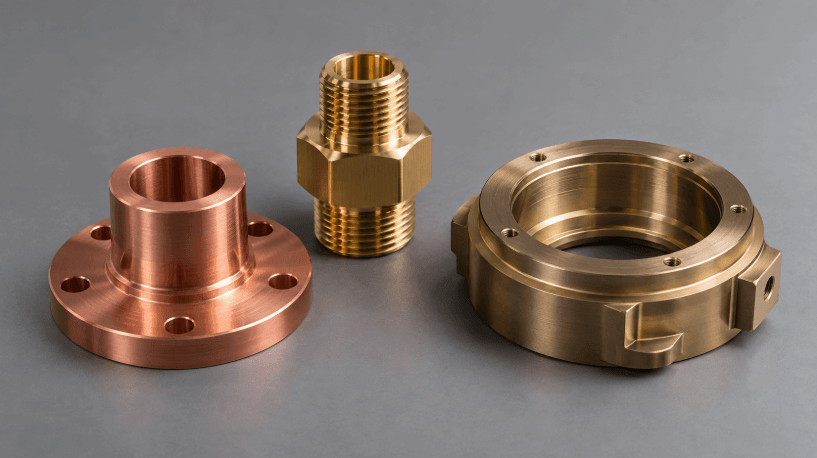
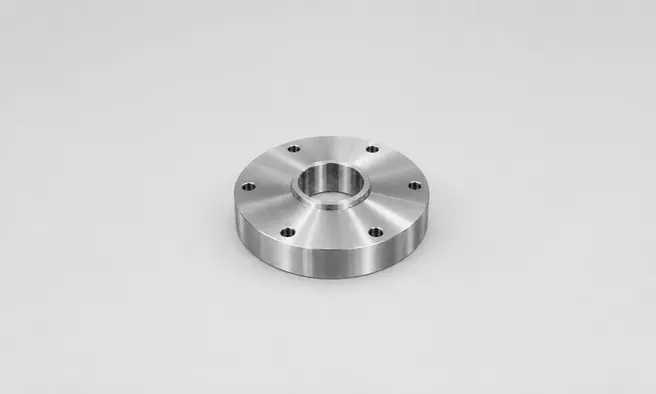
Figure 1: 3 precision-machined copper, brass, and bronze components
Brass vs Bronze vs Copper: Quick Comparison
Copper, brass, and bronze differ most in conductivity, machinability, strength, wear resistance, corrosion behavior, and manufacturing response. Copper generally leads in electrical and thermal conductivity, free-machining brass such as C360 is highly machinable, and selected bronze grades are well suited to wear, load, and corrosive environments.
| Property / Requirement | Copper | Brass | Bronze |
|---|---|---|---|
| Electrical conductivity | Highest | Moderate | Usually lower |
| Thermal conductivity | Highest or near highest | Lower | Grade dependent |
| Strength | Lower for pure copper; higher for some copper alloys | Moderate to high depending on grade | Often high in selected grades |
| Hardness | Relatively low | Moderate | Often higher |
| Wear resistance | Moderate | Moderate | Usually high |
| Machinability | Good, but soft grades can create burrs and tool adhesion | Excellent for free-machining grades | Strongly grade dependent |
| Formability | Excellent | Good to excellent for selected grades | Varies by alloy |
| Marine corrosion resistance | Good | Grade dependent; dezincification can matter | Often excellent for suitable grades |
| Typical applications | Electrical parts, busbars, heat-transfer components | Fittings, valves, connectors, precision hardware | Bushings, bearings, gears, pumps, marine components |
| Cost | Material and machining dependent | Often economical for precision machining | Grade and process dependent |
The table is a starting point rather than a material specification. The alloy grade determines much of the actual performance. A free-machining brass and a naval brass can behave differently during manufacturing, just as C932 bearing bronze and C954 aluminum bronze serve different mechanical requirements.
What Makes Copper, Brass, and Bronze Different?
Copper is the base metal; brass is primarily a copper-zinc alloy, while bronze covers several copper-alloy families. Elements such as zinc, tin, aluminum, silicon, manganese, nickel, and lead change hardness, strength, conductivity, corrosion resistance, wear behavior, and machinability.
Copper
Copper is commonly selected when electrical conductivity, thermal conductivity, ductility, or heat transfer controls the design.
Common engineering grades include:
- C101 / C10100
- C110 / C11000
- C102
- C122
- C145 / tellurium copper
Typical applications include:
- Electrical terminals
- Busbars
- Conductive components
- Heat-transfer components
- Heat sinks
- Electromagnetic components
The manufacturing challenge is often its softness. During CNC machining, some copper grades can produce burrs, long chips, or built-up material on the cutting edge. These problems become more important around small holes, fine threads, thin walls, and precision mating surfaces.
Brass
Brass is primarily copper and zinc, with additional elements used to modify machinability, strength, corrosion resistance, and forming behavior.
Common grades include:
- C26000 cartridge brass
- C27400
- C28000
- C36000 free-machining brass
- C46400 naval brass
Brass is widely used for:
- Fittings
- Valves
- Connectors
- Fasteners
- Electrical terminals
- Precision turned components
- General hardware
The important distinction is between machinability and formability. C360 is attractive for precision CNC parts with threads, holes, grooves, and repeated turning features. C260 is more useful when forming is a major part of the manufacturing route.
Calling both simply “brass” hides a decision that can affect cycle time, tooling, forming behavior, and final performance.
Bronze
Bronze is a broad family of copper alloys rather than one material. Common groups include:
- Tin bronze
- Phosphor bronze
- Aluminum bronze
- Silicon bronze
- Manganese bronze
- Leaded bronze
- Nickel aluminum bronze
Bronze is commonly considered when the part experiences:
- Sliding contact
- Wear
- Mechanical load
- Fatigue
- Corrosive environments
- Marine exposure
- Pump or valve service
C932 bearing bronze and C954 aluminum bronze illustrate the range. C932 is commonly associated with bearings and bushings, while aluminum bronze grades are useful where higher strength, wear resistance, and corrosion resistance are required.
Which Alloy Grades Should Engineers Compare?
Once the application and manufacturing route are clear, compare actual alloy grades rather than material families. C101/C110 copper, C260/C360 brass, C932 bearing bronze, and C954 aluminum bronze provide useful reference points because they represent different combinations of conductivity, machinability, strength, wear resistance, and corrosion performance.
| Material family | Representative grade | Main reason to consider it | Typical manufacturing use |
|---|---|---|---|
| Copper | C101 / C110 | High conductivity and thermal performance | CNC machining, formed conductive parts |
| Brass | C260 | Formability | Formed and stamped components |
| Brass | C360 | Machinability | CNC turned and milled precision parts |
| Bronze | C932 | Wear and bearing performance | Bushings, bearings, washers |
| Aluminum bronze | C954 | Strength, wear, corrosion resistance | Valves, pump parts, marine components |
Mastars’ CNC material information includes copper grades such as C101 and C110, brass grades including C260 and C360, and C932 bronze. Its 5-axis CNC material range also includes C103 copper, C27400/C28000/C36000 brass, beryllium copper, and tin bronze.
For production parts, the drawing should identify the required alloy and relevant material condition when they affect function, inspection, or certification. Temper and product form can change mechanical properties, so datasheet values should always be compared under equivalent conditions.
How Do Strength, Hardness, and Density Compare?
Copper, brass, and bronze do not have a universal strength ranking. Pure copper is generally softer, while many brass and bronze grades provide higher strength or hardness, but the comparison changes with alloy, temper, product form, and heat treatment.
For engineering selection, focus on the property that controls the failure mode:
- Electrical heating: conductivity and contact resistance
- Mechanical loading: yield and tensile strength
- Sliding contact: hardness, wear resistance, lubrication, and mating material
- Repeated loading: fatigue behavior
- Forming: ductility and work hardening
- Machining: chip formation, burrs, tool interaction, and dimensional stability
Density is relatively similar across these copper-based materials. If weight is a major design constraint, geometry or a different material family may have a larger effect than switching between copper, brass, and bronze.
Which Material Has Better Electrical and Thermal Conductivity?
Copper generally provides the highest electrical and thermal conductivity of the three material families. Alloying copper with zinc, tin, aluminum, or other elements can improve mechanical properties while reducing conductivity.
For an electrical component, start with current, allowable temperature rise, contact resistance, and mechanical loading.
Copper is a natural starting point for:
- Busbars
- Electrical terminals
- Conductive plates
- Heat-transfer components
- Heat sinks
- Electromagnetic components
Brass can make more sense when the component needs conductivity together with greater hardness or easier machining. Bronze is generally considered when conductivity is secondary to wear, strength, fatigue, or corrosion performance.
The design trade-off is straightforward: mechanical improvements through alloying usually come with some reduction in electrical or thermal conductivity.
Which Material Is Better for CNC Machining?
Free-machining brass such as C360 is usually the easiest choice when CNC productivity and dimensional consistency are major priorities. Copper can also be machined successfully, but soft copper may produce burrs, long chips, or tool adhesion. Bronze requires grade-specific machining because its behavior varies considerably across the alloy family.
CNC machining copper
Copper’s softness can become a manufacturing issue around:
- Small holes
- Fine threads
- Thin walls
- Deep pockets
- Sharp internal corners
- Burr-sensitive interfaces
Tool selection, workholding, cutting conditions, chip evacuation, and tool edge condition all matter. A geometry that machines cleanly in C360 brass may require a different strategy in C101 copper.
CNC machining brass
C360 free-machining brass is particularly useful for parts with many:
- Threads
- Small drilled holes
- Grooves
- Turning features
- Repeated precision dimensions
This makes it attractive for connectors, fittings, valve components, and precision hardware where machining time has a direct effect on production cost.
Other brass grades behave differently. A grade selected for forming may be less attractive for aggressive CNC production, so machinability needs to be considered alongside the reason for choosing the alloy.
CNC machining bronze
Bronze machining behavior depends strongly on the alloy. Bearing bronze, aluminum bronze, and other bronze families can require different tooling and cutting strategies.
For a bushing, the useful questions are:
- What is the bearing load?
- What is the sliding speed?
- What lubricant is used?
- What material runs against the bronze?
- What bore tolerance is required?
- Is the part cast or machined from bar stock?
Mastars supports CNC machining of copper, brass, and bronze materials, including the grades listed above, with 3-, 4-, and 5-axis machining available for complex geometries.
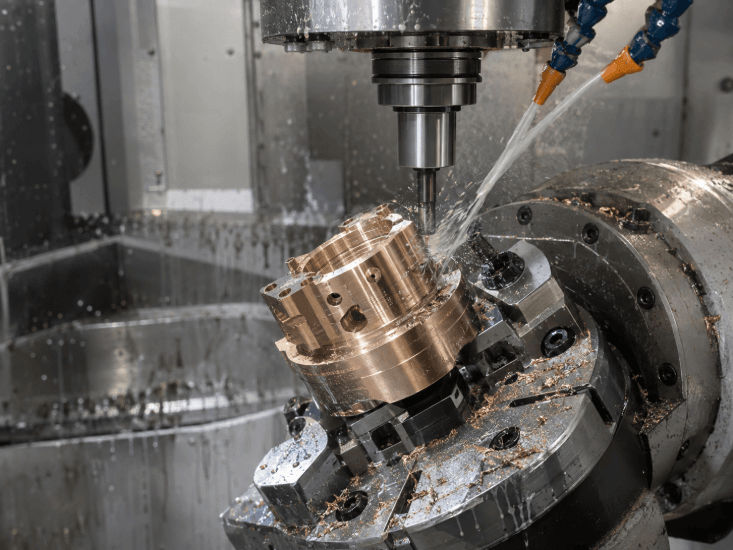
Figure 2: A copper, brass, or bronze component being milled or turned in an industrial CNC machine.
How Does Material Choice Affect Threads, Holes, and Tight Tolerances?
Material choice affects how small holes, threads, thin walls, and mating surfaces behave during machining. A material can meet a mechanical requirement and still create manufacturing problems through burr formation, tool interaction, chip evacuation, or dimensional movement.
For copper, burr control deserves attention around precision holes and mating interfaces. Burrs can interfere with:
- Thread engagement
- Electrical contact
- Sealing surfaces
- Bearing fits
- Assembly clearance
For brass, grade selection can have a large effect on machining efficiency. Free-machining brass is well suited to high-feature-count parts where holes, threads, grooves, and turned diameters need to be produced repeatedly.
For bronze, the grade and final application should be considered together. A bearing bore has different requirements from a non-contact mounting feature, particularly when surface finish and dimensional control affect the mating shaft.
A useful DFM approach is to identify critical dimensions first, then apply tighter tolerances where fit, function, or assembly requires them.
When Should Brass, Bronze, or Copper Be Cast Instead of Machined?
Casting becomes attractive when a part has complex geometry, substantial material volume, or production quantities that make machining the complete shape from solid inefficient. Copper-alloy components can also be cast and then CNC machined on critical interfaces.
A typical manufacturing route can be:
Casting → CNC machining → surface treatment → inspection
Casting establishes the overall geometry, while CNC machining controls features such as:
- Bores
- Threads
- Mounting faces
- Sealing surfaces
- Bearing fits
- Critical hole locations
Mastars’ manufacturing information includes copper-alloy pressure die casting, CNC post-machining, surface treatment, and internal-defect inspection, with C83600 leaded brass and C95400 aluminum bronze among the listed casting materials.
The manufacturing risk changes when casting is introduced. Porosity, shrinkage, dimensional variation, and machining allowance become part of the engineering review.
This is also why cast brass and wrought or forged brass should not automatically be treated as equivalent. The manufacturing route affects material structure, mechanical behavior, machining allowance, and dimensional performance.
Which Material Is Better for Marine Applications?
For marine components, selected bronze and aluminum bronze grades are usually stronger candidates than ordinary brass because saltwater exposure can occur alongside mechanical loading, wear, and galvanic corrosion.
The material decision should consider:
- Saltwater exposure
- Corrosion mechanism
- Mechanical load
- Impact
- Sliding or rotating contact
- Mating metal
- Required service life
Aluminum bronze and nickel aluminum bronze are common candidates for demanding marine and pump or valve applications. Selected naval and tin bronze grades may also be suitable depending on the service conditions.
Ordinary brass requires more scrutiny in seawater because some compositions are susceptible to dezincification. Similar appearance is not a sufficient reason to substitute one brass grade for another.
When copper alloys are assembled with steel, stainless steel, aluminum, or other dissimilar metals, galvanic corrosion also needs to be considered. Material pairing, isolation, drainage, and surface protection can all affect long-term performance.
Which Material Works Best for Bearings and Bushings?
Bronze is often the strongest starting point for bearings, bushings, and other sliding components because selected bronze grades combine wear resistance, load capacity, and suitability for lubricated sliding contact.
For a bearing or bushing, evaluate:
- Radial or axial load
- Sliding speed
- Lubrication method
- Temperature
- Mating shaft material
- Required service life
- Shaft and bore surface finish
C932 bearing bronze is a common candidate for this type of application. Other tin bronze, leaded bronze, or aluminum bronze grades may be more appropriate depending on load and operating conditions.
Machinability still matters because it affects production cost, but it should not override the service requirements. A brass grade that is cheaper to machine can become the more expensive choice if its wear performance is inadequate.
How Does Surface Finish Affect Copper, Brass, and Bronze Parts?
Surface finish should be specified according to function. Mating surfaces, sealing areas, bearing bores, visible faces, and non-critical surfaces can have very different requirements.
For CNC parts, review:
- Mating surfaces
- Threaded interfaces
- Bearing surfaces
- Sealing faces
- Visible cosmetic surfaces
- Burr-sensitive edges
Copper and brass may also be selected for appearance, making surface condition part of the product requirement. Bronze can develop oxidation and patina over time, which may be desirable for some decorative applications and undesirable for controlled cosmetic parts.
Any coating or plating should be reviewed against the dimensional requirements. Added thickness can affect critical diameters, thread fit, and mating clearances.
Can One Material Replace Another During Prototyping?
A substitute material can be useful for early prototypes when the main goal is checking geometry, fit, assembly, or appearance. It becomes risky when the test depends on conductivity, wear, thermal behavior, corrosion, hardness, or other material-specific properties.
A prototype made from brass may validate assembly while giving little information about the electrical or wear behavior of a production copper or bronze component.
If material properties affect the function being tested, use the production alloy or a deliberately selected substitute whose relevant properties are understood.
Prototype validation and production readiness are separate engineering decisions. Production also requires stable tolerances, repeatable processing, inspection, material control, quantity planning, and cost evaluation.
What Manufacturing Problems Should Be Reviewed Before Ordering?
The most expensive manufacturing problems are often visible in the CAD model before production starts. For copper, brass, and bronze parts, a DFM review should focus on material behavior, critical dimensions, geometry, manufacturing route, and inspection requirements.
1. Material grade
“Brass” or “bronze” may be insufficient. Specify the alloy grade and relevant material condition when they affect performance.
2. Critical dimensions
Identify the dimensions that control:
- Fit
- Assembly
- Sealing
- Electrical contact
- Bearing performance
- Alignment
3. Thin walls and deep features
Soft copper can behave differently from brass during machining. Thin walls can also move as residual stresses are released.
4. Small holes and threads
Review tool access, burr formation, chip evacuation, and feature geometry before manufacturing.
5. Cast-to-machined transitions
If casting is used, establish machining allowances and identify the surfaces that require CNC finishing.
6. Inspection
Critical parts may require dimensional inspection using appropriate gauges or CMM measurement. The inspection method should match the tolerance and functional requirement.
Mastars’ manufacturing information identifies front-end DFM analysis and CMM inspection among its quality and engineering capabilities.
How Should You Choose Between Brass, Bronze, and Copper?
Start with the property that controls the part’s function, then select the alloy grade and manufacturing process that can deliver it consistently.
| Primary requirement | Materials to evaluate first |
|---|---|
| Maximum electrical conductivity | C101 / C110 copper |
| Heat transfer | High-conductivity copper |
| Fast CNC machining | C360 free-machining brass |
| Formability | C260 and suitable formed brass grades |
| Precision fittings and connectors | C360 or application-specific brass |
| Bearings and bushings | C932 and other bearing bronze grades |
| High wear and mechanical load | Tin bronze or aluminum bronze |
| Marine corrosion resistance | Aluminum bronze, nickel aluminum bronze, or suitable naval/tin bronze |
| Complex cast components | Appropriate brass or bronze casting alloy |
| Conductivity plus higher mechanical performance | Selected copper alloys based on the required trade-off |
Then work through five questions:
1. What property controls the application?
Conductivity, strength, wear, corrosion, formability, or appearance?
2. Which alloy provides that property?
Compare actual grades rather than stopping at copper, brass, or bronze.
3. How will the part be manufactured?
CNC machining, turning, milling, casting, forming, or a combination?
4. Which dimensions actually require tight tolerances?
Separate functional interfaces from non-critical geometry.
5. Can the process produce those requirements repeatedly?
Production requires consistency, inspection, material control, and cost stability as well as a suitable material.
Common Material-Selection Mistakes
Several mistakes come from treating copper, brass, and bronze as simple material categories.
Choosing by color
Copper, brass, and bronze have recognizable appearances, but color does not identify the exact alloy grade or material condition.
Assuming all bronze is strong
Bronze includes multiple alloy families. Strength, hardness, machinability, corrosion resistance, and wear behavior can vary substantially.
Choosing brass only because it machines easily
C360 can be an excellent CNC material, but a forming application, marine component, or wear part may call for another brass grade or a bronze alloy.
Using a datasheet number without checking the condition
Strength and hardness depend on grade, temper, product form, and heat treatment. Compare equivalent conditions.
Treating cast and wrought material as identical
The manufacturing route can affect material structure, mechanical behavior, machining allowance, and potential internal defects.
Tightening every tolerance
Tighter tolerances can increase machining time, inspection requirements, scrap risk, and cost. Apply them where the assembly or function needs them.
Final Selection: Choose the Alloy Around the Job
Copper is usually the starting point for conductivity and heat transfer. Brass is a strong candidate for machinable precision hardware, fittings, connectors, and formed components. Bronze becomes more attractive when wear, load, fatigue, or harsh-environment performance drives the design.
The material decision becomes much clearer when the alloy and manufacturing process are considered together:
Which alloy, in which condition, made by which process, can deliver the required performance at the required production cost?
For CNC parts, the answer may depend as much on feature geometry and tolerance requirements as on the material itself. A copper component with fine holes and thin walls presents different manufacturing risks from a C360 brass connector or a C932 bearing bore.
Mastars can support the evaluation from material selection through CNC machining and, where appropriate, casting, post-machining, finishing, and inspection. The goal is to identify the important manufacturing questions before they become production problems.
Share your CAD file, material requirement, or application details. Include any critical dimensions, surface requirements, or performance requirements that could affect the build. Rough information is enough for an initial review.
FAQ
Is bronze stronger than brass?
Some bronze grades provide higher strength, hardness, and wear resistance than common brass grades, particularly aluminum bronze and selected tin bronze alloys. The actual comparison depends on the alloy, temper, product form, and heat treatment.
Is brass better than copper?
Brass is often the better choice when machinability, hardness, formability, or general mechanical performance matters more than maximum conductivity. Copper is usually the better starting point when electrical or thermal conductivity is the main requirement.
Is bronze more corrosion resistant than brass?
Many bronze grades provide better resistance to seawater and harsh environments than ordinary brass. Corrosion performance still depends on the alloy, environment, temperature, exposure, and contact with other metals.
Which is more conductive, copper, brass, or bronze?
Copper generally provides the highest electrical and thermal conductivity. Alloying elements such as zinc, tin, and aluminum can improve mechanical or corrosion properties while reducing conductivity.
Which is easiest to machine?
Free-machining brass such as C360 is generally the easiest choice when high CNC machinability is the priority. Copper can be machined successfully but may require more attention to burrs and tool adhesion. Bronze machinability varies significantly by grade.
Which is best for marine applications?
Aluminum bronze, nickel aluminum bronze, and selected naval or tin bronze grades are common choices for demanding marine applications. Ordinary brass should be evaluated carefully in seawater because some compositions are susceptible to dezincification.
Can brass, bronze, and copper be CNC machined?
Yes. Mastars lists copper grades such as C101 and C110, brass grades such as C27400, C28000, and C36000, and tin bronze among its CNC machining material options.
What information should I provide for a brass, bronze, or copper part?
A CAD file and the required material grade are enough to start an initial manufacturing review. If available, also provide critical dimensions, tolerance requirements, surface finish, quantity, application environment, and electrical, thermal, or wear requirements.
Useful information includes:
- 2D drawing and/or 3D CAD
- Exact material grade
- Quantity or expected production volume
- Critical dimensions
- GD&T requirements
- Surface finish requirements
- Functional interfaces
- Operating temperature
- Corrosion environment
- Electrical or thermal requirements
- Required inspection or certification
Rough information is fine for the first review. The important thing is to identify the material and manufacturing requirements early enough to act on them.
Hot Articles
Hot Tags
Stay Connected!


Manufacturing on Demand
Please fill in the following information to obtain plan details (information is confidential and not disclosed publicly), we will contact you within 24 hours, please keep your phone available!
Upload a 3D/2D model to see instant pricing, lead time, and DFM feedback.