



Turnkey Manufacturer: Services, Costs & How to Choose


A turnkey manufacturer coordinates an agreed scope of manufacturing work through one primary supplier, which may include engineering, material sourcing, part production, finishing, assembly, inspection, and delivery. For OEMs and product teams, this can simplify procurement and reduce the coordination required to bring custom parts and assemblies into production.
The value becomes clearer when one manufacturing step affects the next. A machined component may meet its drawing requirements before finishing, yet a coating can change the clearance available for assembly. Managing such interfaces early helps avoid problems that might otherwise surface during final assembly.
The sections below explain what turnkey manufacturing covers, how it compares with other sourcing models, and what to check when evaluating a manufacturing partner.
What Does a Turnkey Manufacturer Handle?
A turnkey manufacturer can coordinate several stages of production, from engineering review and material sourcing to finished-part delivery. The exact scope depends on the product and project requirements. For a custom assembly, it may cover multiple manufacturing processes and purchased components; for a simpler part, it may involve selected operations and logistics.
Typical services include:
- Engineering and DFM: Reviewing CAD models, drawings, material choices, critical dimensions, and manufacturing constraints before production.
- Material sourcing: Purchasing specified materials and components, with documentation where required.
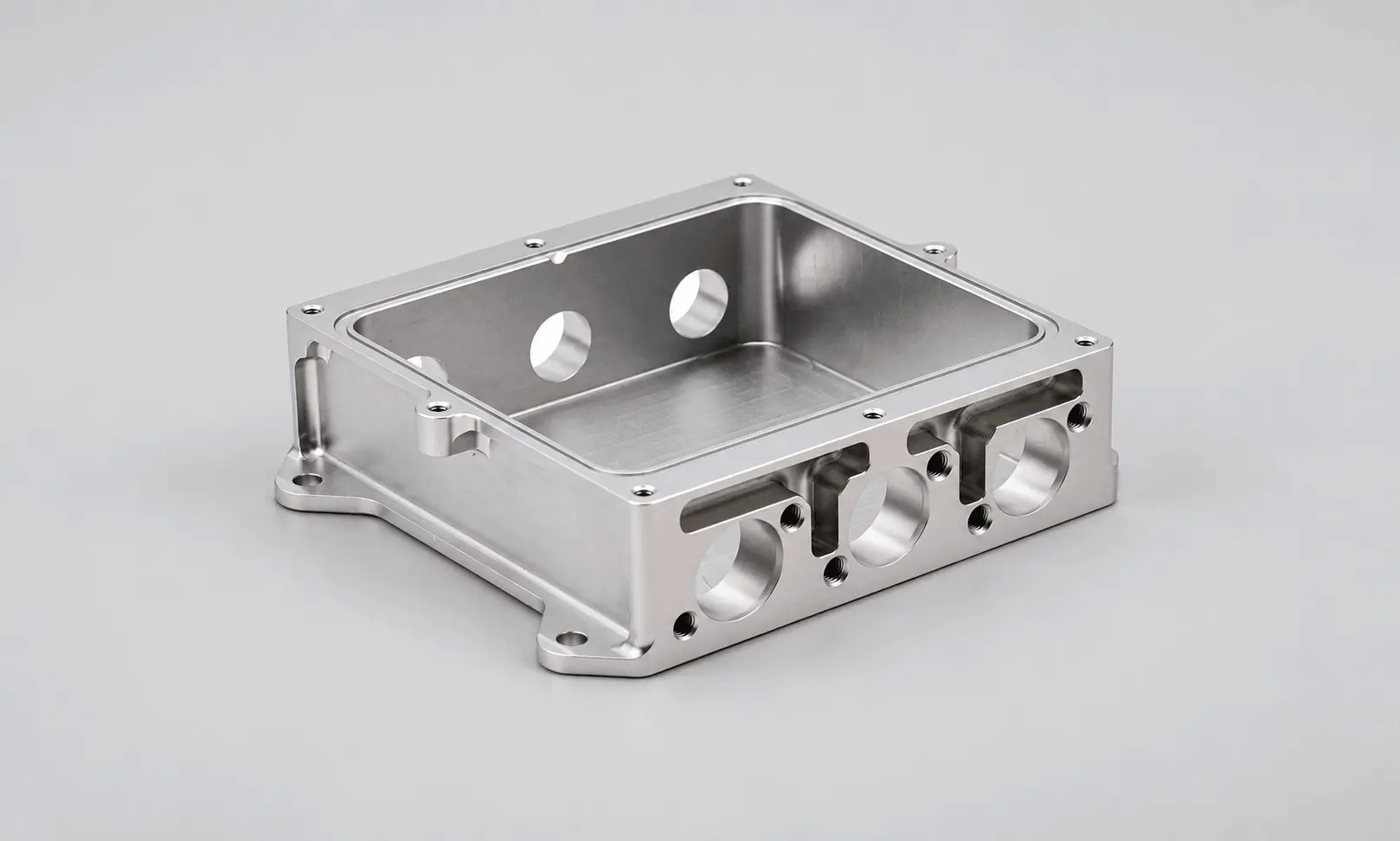
- Part manufacturing: Producing components through processes such as CNC machining, injection molding, pressure die casting, or sheet metal fabrication.
- Secondary operations: Coordinating surface finishing, heat treatment, or other specified processes.
- Assembly and inspection: Assembling components and verifying agreed acceptance criteria.
- Packaging and delivery: Protecting finished parts and coordinating shipment to the required destination.
Some operations may be subcontracted. In that case, the RFQ should identify who approves process changes, verifies the finished parts, and resolves problems between suppliers. This is more useful than simply asking whether every process takes place in one facility.
Is Turnkey Manufacturing Better Than Managing Multiple Suppliers?
Turnkey manufacturing can reduce the coordination work involved in multi-process projects, particularly when dimensions, finishes, purchased components, and assembly requirements interact. Managing separate suppliers may still be preferable when a part requires a highly specialized process, the internal team already has strong supplier controls, or direct control over each vendor is a priority.
| Factor | Turnkey manufacturer | Multiple specialist suppliers |
|---|---|---|
| Communication | One primary contact for the agreed scope | Your team coordinates between vendors |
| Process interfaces | Linked operations can be coordinated under one project scope | Interface checks must be assigned across suppliers |
| Quality responsibility | Depends on the agreed inspection and acceptance scope | Responsibilities are distributed across vendors |
| Cost visibility | May consolidate costs into one quote | Individual process costs may be easier to compare |
| Supplier flexibility | Depends on the manufacturer's process network | Easier to select specialists for individual operations |
| Internal workload | Can reduce purchasing and follow-up work | Requires more supplier management and schedule coordination |
A turnkey quote is not necessarily cheaper. It may include project coordination, subcontractor management, inspection, assembly, packaging, and logistics that appear as separate costs in a multi-supplier model. Compare the total delivered cost and the work your own team must perform, rather than comparing unit prices alone.
For a single machined component with straightforward requirements, a specialist machine shop may be the simpler choice. For an assembly combining castings, machined interfaces, coatings, and purchased hardware, coordinated management of the interfaces may justify a broader manufacturing arrangement.
How Does Turnkey Manufacturing Differ From Contract, Toll, and Consignment Manufacturing?
These terms describe different aspects of a manufacturing arrangement, and their meanings can overlap. Turnkey manufacturing generally emphasizes the breadth of responsibility assigned to one supplier, while contract, toll, and consignment arrangements describe how production or materials are managed. The agreement determines who buys materials, controls processes, owns tooling, and accepts the finished product.
| Model | Typical arrangement | Main point to clarify |
|---|---|---|
| Turnkey manufacturing | One supplier coordinates an agreed set of manufacturing activities and deliverables | Which processes, components, inspections, and logistics are included? |
| Contract manufacturing | A supplier manufactures products to a customer's requirements | Who manages design changes, sourcing, and downstream operations? |
| Toll manufacturing | A supplier processes customer-provided materials | Who owns the incoming material and is responsible for yield or scrap? |
| Consignment manufacturing or inventory | Materials or inventory are supplied or held under an agreed ownership arrangement | When does ownership transfer, and who carries inventory risk? |
| Partial turnkey | One supplier manages selected stages, while the customer retains other responsibilities | Where does the supplier's responsibility begin and end? |
For example, a customer may provide proprietary electronic components while asking a turnkey supplier to manufacture the enclosure, source the remaining hardware, complete assembly, and ship the finished product. That is a broader responsibility than a toll arrangement in which the supplier performs only a specified processing operation.
How Does the Turnkey Manufacturing Process Work?
A typical turnkey project moves from requirements review to engineering, sourcing, prototype validation, production, inspection, and delivery. The sequence varies by product and process, but the main checkpoints are where design decisions affect manufacturability, cost, or downstream assembly.
| Stage | Main activities | What needs to be resolved |
|---|---|---|
| 1. Requirements and RFQ | Review CAD files, drawings, BOM, quantities, and delivery needs | Critical dimensions, materials, finishes, acceptance criteria, and open requirements |
| 2. Engineering review | Assess DFM, component interfaces, and manufacturing risks | Tooling needs, tolerance feasibility, assembly clearances, and design changes |
| 3. Sourcing and planning | Select materials, processes, and suppliers; plan tooling and production | Material availability, subcontracted operations, and schedule dependencies |
| 4. Prototype or first article | Manufacture representative parts and check fit, form, function, and appearance | Whether the parts meet design requirements and what needs revision |
| 5. Production preparation | Finalize process settings, inspection plans, tooling, and documentation | Whether the process can repeatedly meet the required specifications |
| 6. Production and assembly | Manufacture components, complete secondary operations, and assemble as agreed | Process consistency, component compatibility, and handling requirements |
| 7. Inspection and delivery | Verify acceptance criteria, protect finished parts, and ship | Required records, packaging, quantity, and delivery conditions |
Prototype approval does not automatically establish production readiness. A prototype may confirm geometry or assembly fit without proving that tooling, material behavior, cycle conditions, and inspection methods will remain stable across a larger batch. Before production, identify which characteristics require ongoing control and how nonconforming parts will be handled.
Mastars' kitchen robot project illustrates why engineering work may begin before production drawings are complete. The project started with a concept that needed to be translated into 3D engineering and manufacturable requirements. It involved moving modules, food-contact components, heat from cookware, emergency-stop coordination, and hygiene considerations. The wider system also included a refrigerated cabinet using 304 stainless steel, marble, 12 mm glass, and food-grade pans.
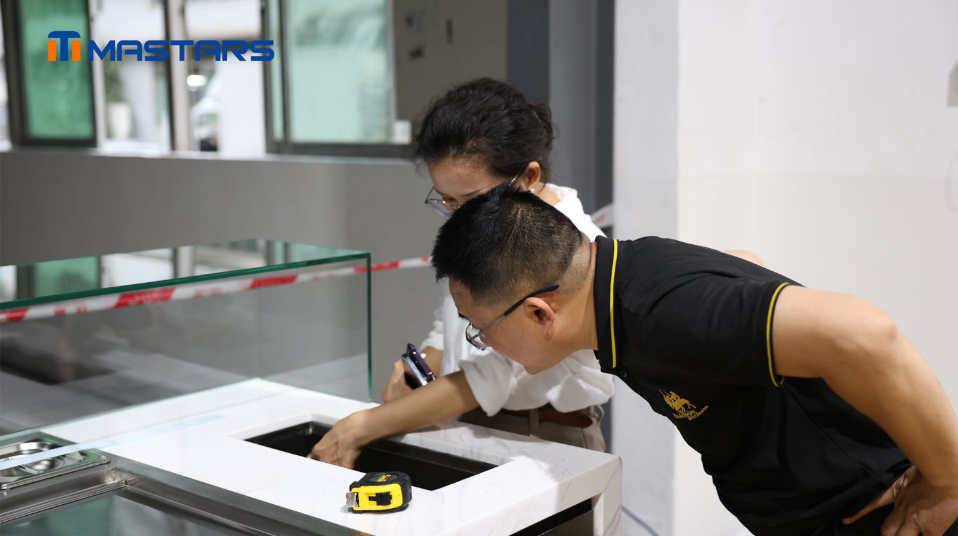
Mastars' Engineers On-site Inspecting Custom Product Details.
These requirements connect mechanical design with installation, safety, and the interfaces between modules. Reviewing each component in isolation would not address all the constraints affecting the assembled system.
What Affects Turnkey Manufacturing Costs and Lead Times?
Turnkey manufacturing costs and lead times depend on design maturity, tooling, materials, process selection, finishing, assembly, inspection, order quantity, and logistics. A quote covering several linked operations should be evaluated against its full scope and schedule dependencies. A low component price can become less attractive if it excludes tooling, finishing, inspection, or work needed to make parts ready for assembly.
| Cost or schedule factor | Potential impact | Information to provide |
|---|---|---|
| Design maturity | Unresolved dimensions or interfaces can trigger revisions | Current drawings, CAD files, and known design uncertainties |
| Tooling | Mold or die design, fabrication, and trials affect upfront cost and timing | Expected volume, material, and tooling-life requirements |
| Material | Grade, availability, certification, and purchasing quantity affect cost and supply | Exact material specification and documentation needs |
| Process choice | Different processes have different setup costs, capabilities, and limitations | Geometry, wall thickness, tolerances, appearance, and annual volume |
| Finishing | Coating or other treatments may add cost and affect critical dimensions | Finish specification and surfaces that must remain within tolerance |
| Assembly and testing | Fixtures, purchased components, and acceptance checks add work | BOM, assembly drawings, test procedures, and acceptance criteria |
| Quantity | Setup costs are distributed differently across order volumes | Prototype quantity, initial batch, and expected production demand |
| Packaging and logistics | Protection, shipment method, and destination affect delivered cost and timing | Delivery location, packaging requirements, and shipment schedule |
Ask for the schedule to identify major milestones, including design approval, tooling completion, sample review, material availability, production release, and shipment. If a customer change, a delayed purchased component, or a failed sample can move the delivery date, the project plan should explain how that affects the schedule.
How Can a Turnkey Manufacturer Control Quality Across Multiple Processes?
Quality control needs to cover the finished part and the effects of each manufacturing step on the next. A dimension that passes inspection after machining may become a problem after coating or assembly. The inspection plan should identify critical features, define when they are measured, and state which acceptance requirements apply to the completed product.
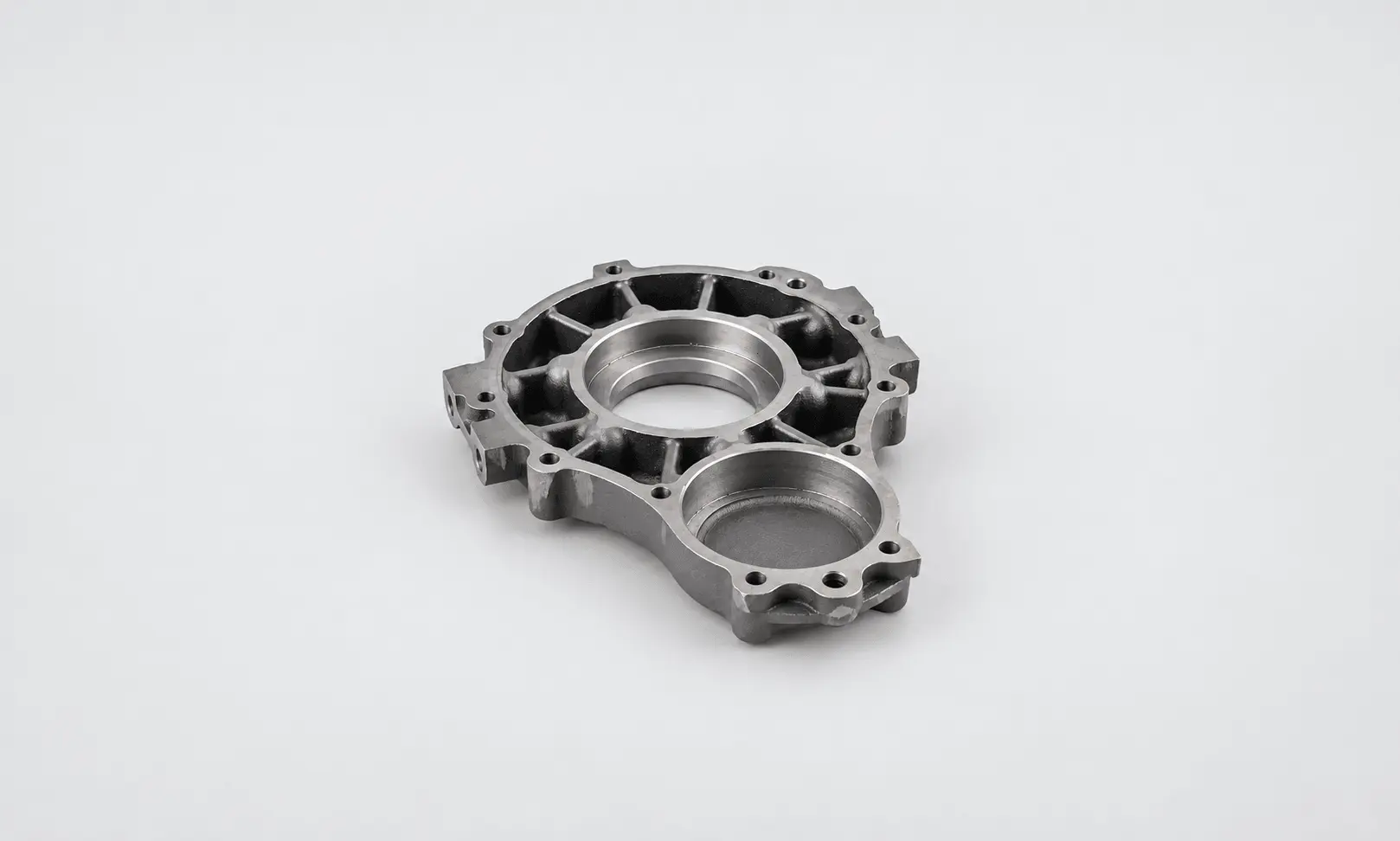
Consider a die-cast structural component with CNC-machined mounting features and a white powder-coated finish. Casting shrinkage, deformation, and surface condition can affect the machining allowance. Machining establishes the critical holes and mounting interfaces, while coating can reduce clearance around holes or mating surfaces. Inspection performed only before finishing may miss a problem that appears during assembly.
In a Mastars medical-equipment project, white powder-coated die-cast structural parts for a US customer required attention to tooling control, CNC accuracy at mounting areas, coating effects, inspection, protection, and packaging as the project moved from prototype approval toward low-volume production.
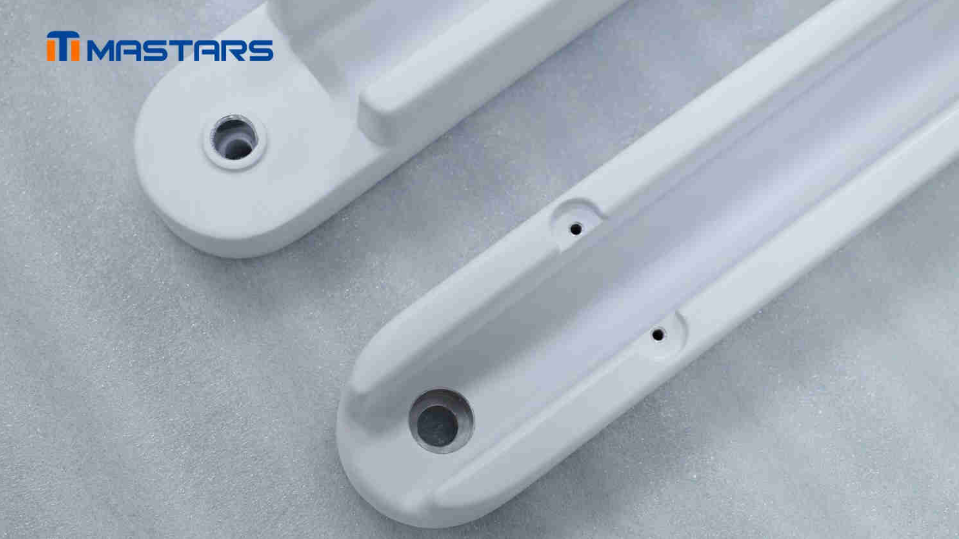
Powder-Coated Assembly Component.
A suitable control plan for this type of part may include:
- Drawing and revision control: Ensure manufacturing and inspection use the same approved revision.
- Material and process verification: Check specified materials and required process documentation.
- Critical-dimension inspection: Identify mounting holes, datums, mating faces, and other features that determine fit.
- Post-finish checks: Measure dimensions affected by coating or other finishing operations, rather than relying only on pre-finish inspection.
- Assembly verification: Check relevant fit and alignment when the acceptance scope includes assembly.
- Nonconformance handling: Define how deviations are documented, reviewed, corrected, and approved before affected parts are released.
Measurement methods should suit the geometry and tolerance requirements. A coordinate measuring machine (CMM) may be suitable for complex geometry and positional relationships, while simpler features may be checked with calibrated gauges or other appropriate instruments. Thin-wall parts require care during fixturing because clamping forces can distort the part and affect the result.
Before placing an order, agree on which dimensions are critical, what inspection records are required, and whether acceptance is based on individual components, the assembled product, or both.
How Do You Evaluate a Turnkey Manufacturing Company?
Evaluate a turnkey manufacturer by checking whether it can produce the required parts, coordinate the necessary processes, and provide evidence that the finished product meets your specifications. A broad service list is only a starting point. For a multi-process assembly, the supplier's approach to critical interfaces, subcontracted work, inspection, and change control is more informative than the number of processes it advertises.
| Evaluation area | Questions to ask |
|---|---|
| Engineering | Can the team review drawings, tolerances, assembly interfaces, and manufacturing risks before production? |
| Process coverage | Which operations are performed directly, and which are subcontracted? |
| Supplier management | Who approves changes to outsourced processes and resolves quality issues between operations? |
| Quality control | Which dimensions and characteristics are inspected, and at what production stages? |
| Testing | Which functional or assembly tests are included, and which require separate arrangements? |
| Project management | Who owns schedule updates, technical questions, and change communication? |
| Capacity | Can the proposed process support both the initial quantity and expected repeat orders? |
| Commercial terms | Are tooling, inspection, finishing, packaging, shipping, and revision costs clearly scoped? |
| Intellectual property | How are CAD files, drawings, tooling ownership, and confidentiality handled? |
Should You Audit the Factory or Review the Supplier's Process?
A factory audit or technical review can help establish whether a supplier's stated capabilities match the proposed manufacturing route. The depth of review should reflect project risk: a simple machined component may need less investigation than an assembly involving several outsourced operations or safety-critical features.
Useful evidence may include process flow documentation, inspection plans, relevant measurement capability, sample inspection records, and examples of how nonconforming parts are handled. If a critical operation is subcontracted, ask how the supplier verifies that operation and maintains traceability where required.
How Should You Protect Your Design and Tooling?
Agree on intellectual property, confidentiality, tooling ownership, and access to manufacturing files before work begins. For molded or die-cast parts, clarify who owns the mold or die, where it will be stored, who pays for maintenance, and whether it can be transferred to another supplier under the agreement.
Also define how revisions are approved and documented. A drawing update that changes a mounting hole, datum, or wall thickness may affect tooling, inspection, and assembly. Production should follow the agreed revision, not an informal update sent during a project discussion.
What Should You Include in a Turnkey Manufacturing RFQ?
A useful RFQ gives the supplier enough information to estimate the manufacturing route, identify major risks, and quote a comparable scope. Complete production drawings are ideal, but early-stage projects can start with preliminary CAD, target quantities, material preferences, and known functional requirements. Clearly label unresolved details so assumptions do not become hidden commitments in the quote.
Include the following where applicable:
- CAD files and drawings: Include dimensions, GD&T, datums, critical interfaces, and revision status.
- BOM and assembly information: Identify purchased components, fasteners, mating parts, and required assembly operations.
- Materials and finishes: Specify material grades, surface treatments, cosmetic requirements, and any material documentation.
- Quantities: State prototype quantity, initial production batch, and expected annual demand if known.
- Quality requirements: Identify critical characteristics, inspection reports, traceability, and applicable acceptance criteria.
- Testing requirements: Describe functional checks, fit tests, or other required verification.
- Commercial scope: Clarify tooling, packaging, shipping destination, delivery targets, and any customer-supplied materials or components.
If the design is still developing, state which decisions remain open—for example, material grade, surface finish, or tolerance at a mating interface. This allows the manufacturing route and quote to account for those uncertainties before they become expensive to change.
Is a Turnkey Manufacturer Right for Your Project?
A turnkey manufacturer is worth considering when a product combines several manufacturing processes, purchased components, finishing, or assembly and your team wants one supplier to coordinate that defined scope. It is particularly useful when a problem in one operation can affect the next, such as coating buildup changing a mounting interface or a component revision affecting an assembly fixture.
Before choosing, compare the cost of coordination against the supplier's added charges, subcontracting arrangements, and ability to control critical interfaces. For a single-process part, a specialist may still offer the simpler route. For a complex assembly, assess whether the proposed supplier can manage the required route at an acceptable cost, quality level, and delivery risk.
Simplify Your Manufacturing Project
Mastars supports product development and manufacturing through mechanical engineering, tooling, component production, assembly, quality inspection, and logistics, according to the agreed project scope. Its manufacturing services include CNC machining, injection molding, pressure die casting, and prototyping. The kitchen robot project and medical-equipment component project illustrate two different needs: translating an early product concept into manufacturable requirements and coordinating casting, machining, finishing, and delivery for structural components.
Share your available CAD files, BOM, estimated quantities, and any critical dimensions, material requirements, or surface specifications that could affect the build. If some information is preliminary, identify the open decisions so they can be reviewed during quotation.
Frequently Asked Questions
What manufacturing services can Mastars provide for a turnkey project?
Mastars provides mechanical engineering, tooling fabrication, component manufacturing, assembly, quality inspection, and logistics support within the agreed project scope. Manufacturing processes include CNC machining, injection molding, pressure die casting, and prototyping. For a project involving several processes, send the drawings or CAD files and BOM so the required parts, finishing operations, and assembly scope can be reviewed together.
Can Mastars help if my product design is not production-ready?
Yes. Mastars has supported projects that began with a concept rather than a complete set of production drawings. If your design is still evolving, share the concept, available CAD or 2D drawings, intended function, and known constraints. The next step is to identify what needs engineering definition before manufacturing can be quoted accurately.
Can Mastars manufacture both prototypes and production parts?
Yes. Mastars supports prototyping and manufacturing, including projects that move from prototype approval toward low-volume production. The appropriate route depends on the part geometry, material, required finish, quantity, and production requirements. Prototype approval can establish fit or appearance, but repeat production may still require confirmation of tooling, process stability, critical dimensions, and inspection criteria.
Can Mastars coordinate machining and finishing for the same component?
Yes. Mastars' manufacturing scope can include component production and secondary operations as agreed for the project. This matters when finishing affects a critical interface—for example, powder coating can reduce clearance around a mounting hole or mating surface. When requesting a quote, identify surfaces that must remain uncoated, critical hole sizes, mating features, and whether final dimensions must be checked after finishing.
What information should I send Mastars to get a useful quote?
Start with the files you have: 3D CAD, 2D drawings, a BOM if the product is an assembly, target quantities, material and finish requirements, and delivery destination. Mark critical dimensions and any open design decisions. You do not need to have every detail finalized before making an inquiry; identifying what is confirmed and what remains undecided helps clarify the next engineering and quotation steps.
Can Mastars handle a project that includes several different components?
Yes. Mastars' one-stop manufacturing scope can cover different components and manufacturing processes within an agreed project. For an assembly, provide the BOM, component drawings, mating relationships, and any assembly or functional requirements. These details help establish which parts need to be manufactured, which items must be sourced, and what checks are required before the assembled product can be accepted.
What quality checks can be included in a Mastars project?
Quality inspection is part of Mastars' stated manufacturing service scope. The specific checks and records should be defined against the drawings and purchase requirements. For parts involving machining and finishing, identify critical dimensions and features that may change during downstream operations. If you require dimensional reports, material documentation, traceability, or functional testing, list them in the RFQ so their inclusion can be confirmed before production.
Does Mastars have experience with projects involving multiple manufacturing stages?
Yes. Mastars supports projects from prototyping through manufacturing, with services including CNC machining, injection molding, pressure die casting, tooling, assembly, inspection, and logistics. The right combination depends on your part design, material, quantity, and production requirements. If you're still validating the design, share your current files and expected volumes. We can assess the manufacturing route based on the information available and identify what needs to be resolved before production.
Hot Articles
Hot Tags
Stay Connected!


Manufacturing on Demand
Please fill in the following information to obtain plan details (information is confidential and not disclosed publicly), we will contact you within 24 hours, please keep your phone available!
Upload a 3D/2D model to see instant pricing, lead time, and DFM feedback.