



Plastic Injection Molding FAQ: Common Questions & Professional Answers


Plastic Injection Molding is the most widely used manufacturing process for mass-producing precise, durable, and cost-effective plastic components. It is applied in automotive, electronics, medical devices, home appliances, and industrial equipment. For global buyers, product designers, and engineers, there are many common questions regarding molding principles, materials, costs, quality, and lead time. This FAQ page summarizes the most frequently asked questions with standardized, industry-professional answers to help customers understand injection molding clearly and quickly.
General Questions About Plastic Injection Molding
Q1: What is plastic injection molding?
Plastic injection molding is a high-volume manufacturing process that melts plastic pellets into a fluid melt, injects the molten material into a customized mold cavity under high pressure, and produces identical plastic parts after cooling, solidification, and ejection. It supports complex geometries, high precision, and mass production, making it the mainstream solution for industrial plastic component manufacturing.
Q2: How does an injection molding machine work?
An injection molding machine works through five core stages: clamping, plasticization, injection, holding pressure, and cooling ejection. The machine first closes and locks the mold, melts plastic pellets through barrel heating and screw rotation, injects the melt into the mold cavity at high speed and pressure, maintains holding pressure to compensate for shrinkage, cools the part to solidify, and finally opens the mold and ejects the finished product.
Q3: What are the main advantages of plastic injection molding?
Injection molding provides multiple industrial advantages: high production efficiency for mass orders, excellent dimensional accuracy and repeatability, support for complex structural designs, diverse material and surface finish options, low unit cost for large batches, stable product consistency, and full automation compatibility to reduce labor errors.
Q4: What are the limitations of injection molding?
The main limitations include high initial mold opening costs, which make it unsuitable for ultra-small batch production; long mold development lead time; strict requirements on product wall thickness and structural design; and a small number of plastic materials that cannot adapt to high-precision or extreme high-temperature working environments.
Injection Molding Material FAQ
Q5: What are the most common materials used in injection molding?
Common injection molding materials are divided into general plastics and engineering plastics. Typical materials include ABS, PP, PE, PS, PC, PA (Nylon), POM, PET, and TPU. Each material has unique properties in hardness, toughness, heat resistance, weather resistance, and fluidity to match different industrial scenarios.
Q6: What is the difference between thermoplastics and thermosetting plastics?
Thermoplastics can be repeatedly melted and reshaped with good recyclability, including ABS, PC, and PP, suitable for most mass production. Thermosetting plastics undergo irreversible chemical crosslinking after molding and cannot be remelted. They feature high temperature resistance and insulation performance, mainly used for special industrial and electrical parts.
Q7: How to choose the right plastic material for my product?
Material selection depends on product usage scenarios, functional requirements, and cost budgets. Manufacturers need to consider mechanical strength, heat resistance, weather resistance, chemical corrosion resistance, surface finish requirements, and batch production volume. For example, PC for transparent and impact-resistant parts, POM for wear-resistant precision parts, and ABS for electronic housing components.
Q8: Can injection molding use recycled plastic materials?
Yes. Recycled plastics can be used for non-high-precision and non-safety-critical products. However, recycled materials have unstable fluidity, lower mechanical performance, and higher impurity rates. For medical, automotive, and high-precision electronic parts, new pure plastic materials are strictly required to ensure product stability and safety.
Mold & Design FAQ
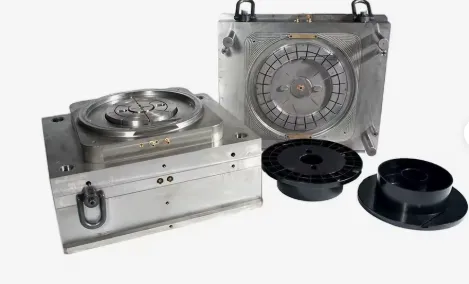
Q9: What is an injection mold made of?
Injection molds are mainly made of high-quality mold steel. Common steel types include P20 for medium and low-volume production, H13 for high-volume and high-precision products, and S136 for corrosion-resistant and high-surface-quality parts. High-hardness mold steel ensures long mold life, stable repeated production, and low defect rates.
Q10: What is draft angle, and why is it important?
A draft angle is a slight taper designed on the vertical wall of plastic parts for smooth demolding. Without a reasonable draft angle, parts will stick to the mold, causing scratches, deformation, or ejection failure. The standard draft angle is 0.5° to 3° depending on surface texture and material toughness.
Q11: What wall thickness is suitable for injection molding parts?
The recommended wall thickness for most plastic parts ranges from 1.5mm to 3mm. Uniform wall thickness is critical to avoid molding defects. Too thin walls cause filling shortages, while overly thick walls lead to slow cooling, sink marks, bubbles, and severe warpage.
Q12: What is the difference between single-cavity and multi-cavity molds?
A single-cavity mold produces one part per molding cycle, suitable for large-size products or small-batch trial production. A multi-cavity mold can produce multiple identical or different parts in one cycle, greatly improving production efficiency and reducing unit costs, which is ideal for large-scale mass orders.
Quality Defect & Solution FAQ
Q13: Why do injection molded parts have sink marks?
Sink marks are mainly caused by uneven wall thickness, local thick areas, insufficient holding pressure, or unreasonable cooling speed. The solutions include optimizing product structure to reduce thick spots, increasing holding pressure and holding time, and adjusting mold cooling uniformity.
Q14: What causes warpage in plastic injection parts?
Warpage is generated by inconsistent shrinkage and residual internal stress during cooling. Uneven wall thickness, unreasonable gate position, improper injection parameters, and mismatched material shrinkage are the main causes. Optimizing structural design, adjusting process parameters, and using low-shrinkage materials can effectively improve warpage issues.
Q15: How to solve surface bubbles and silver streaks?
Bubbles and silver streaks are mostly caused by excessive moisture in raw materials or unstable melt temperature. Strict material drying before production, controlling reasonable barrel temperature, and exhausting air in the mold cavity can eliminate such surface defects.
Cost, Lead Time & Production FAQ
Q16: How much does plastic injection molding cost?
The total cost consists of mold opening cost, material cost, machine processing cost, and labor cost. Mold cost is determined by part complexity, cavity quantity, and mold steel grade. The unit product cost is mainly affected by material type, part weight, batch size, and surface processing requirements. Large-batch orders can significantly reduce unit prices.
Q17: How long does injection mold production take?
Simple structural molds take 7 to 15 working days. Medium-complexity molds require 15 to 30 days. High-precision, multi-cavity, or complex mechanism molds need 30 to 45 days for development, including design, machining, fitting, and trial production.
Q18: What is the minimum order quantity for injection molding?
Injection molding has no strict fixed minimum order quantity. However, considering mold opening cost and setup cost, it is cost-effective for batches above 500 pieces. For prototype verification, small-batch trial production is also supported with relatively higher unit prices.
Q19: What surface finishes can injection molding achieve?
Injection molding supports diverse surface treatments, including smooth mirror finish, matte finish, texture finish, frosted finish, and custom grain finishes. Secondary processing such as silk printing, spraying, UV coating, and electroplating can also be performed to meet high-end appearance requirements.
Q20: Is injection molding suitable for custom plastic parts?
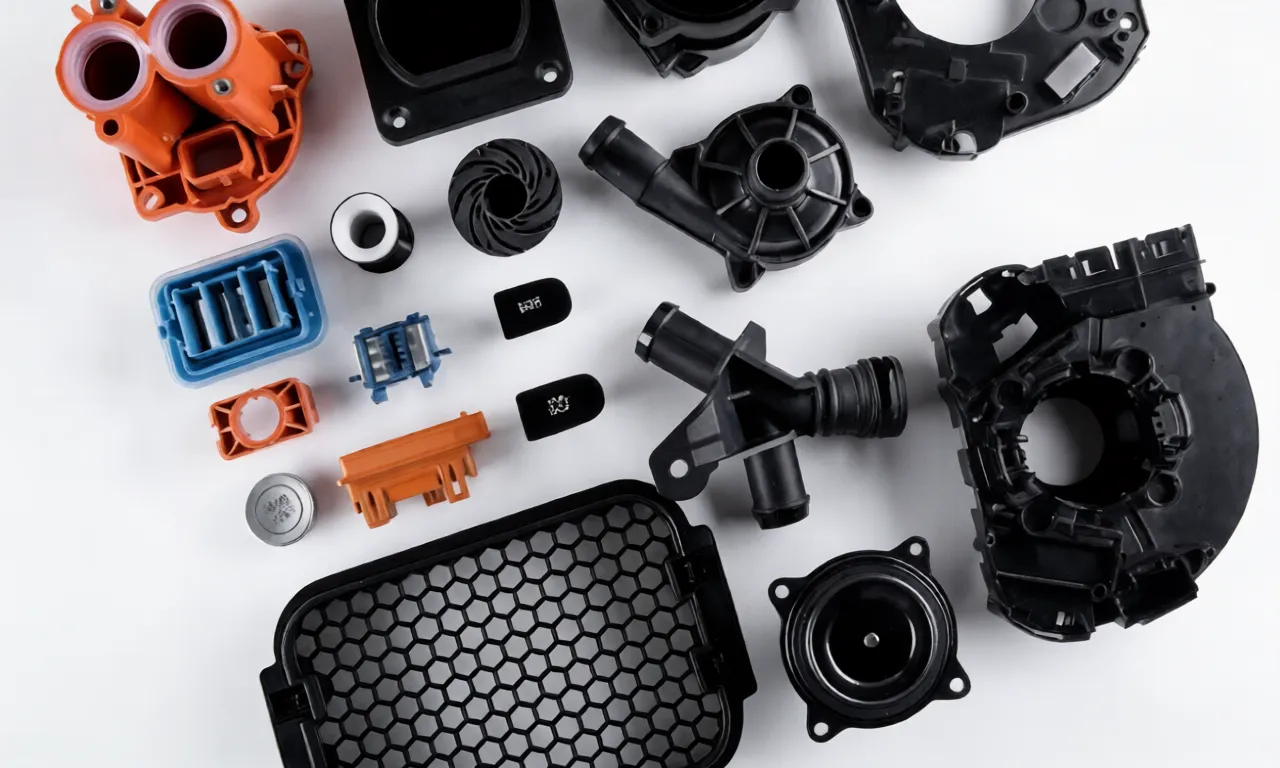
Absolutely. Plastic injection molding is the most flexible custom manufacturing method for plastic components. Manufacturers can customize part structures, sizes, materials, colors, surface effects, and functional performances according to customer drawings, samples, and application requirements, covering industrial, commercial, and consumer product customization needs.
Conclusion
Plastic injection molding is a mature, efficient, and highly customizable manufacturing technology. Most customer doubts focus on material selection, mold design, quality defects, cost budget, and production cycle. By standardizing design rules, selecting suitable materials, and optimizing processing parameters, manufacturers can provide high-precision, low-defect, and cost-effective custom injection molding solutions for global industrial clients.
Hot Articles
Hot Tags
Stay Connected!


Manufacturing on Demand
Please fill in the following information to obtain plan details (information is confidential and not disclosed publicly), we will contact you within 24 hours, please keep your phone available!
Upload a 3D/2D model to see instant pricing, lead time, and DFM feedback.